The latest collaboration between architects Jacques Herzog and Pierre de Meuron and artist Ai Weiwei may be called Hansel & Gretel, but it brings to mind just as much another literary classic: George Orwell’s 1984.
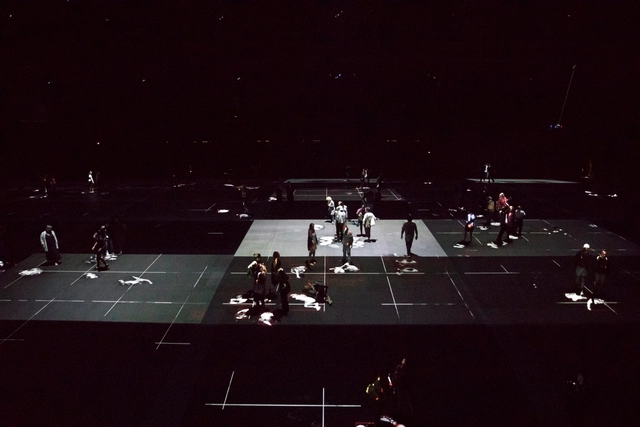
The immersive, site-specific installation, located within the expansive Wade Thompson Drill Hall at New York’s Park Avenue Armory, places visitors in a darkness-cloaked environment, where your every move is tracked and monitored by motion sensors, image captures and a team of surveillance drones. The work is a not-so-subtle interpretation of the expanding role of surveillance in modern-day society and the changing dynamics between the public and private realms.
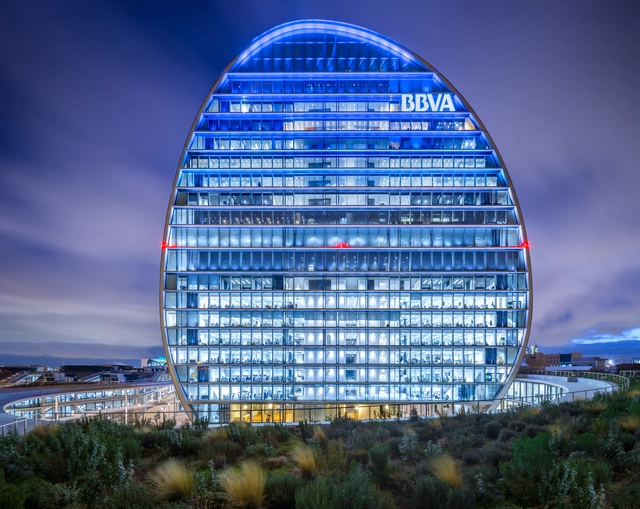
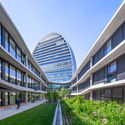
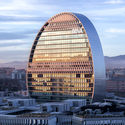
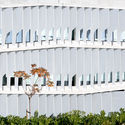
Completed in 2015 at the northern periphery of Madrid, the BBVA Headquarters by Herzog & de Meuron employs a complex network of passages, courtyards, and gardens to create a new corporate campus for the Spanish banking giant. Responding to local climatic needs, the building is recognized for its custom undulating brise-soleil along its facade and pebble-like central tower.
In this photoset, photographer Rubén P. Bescós turns his lens toward the new institutional landmark, capturing the building within its urban context.
Architecturally-trained designer KXIV has envisioned a custom pair of adidas UltraBOOST sneakers, inspired by the architecture of Herzog & de Meuron’s 2008 Beijing Olympics stadium, commonly referred to as the “Bird’s Nest.”
KXIV’s design features a unique lacing system that wraps around the sneaker, held in place with a series of 3D-printed double-loop cinch locks. Underneath, a lycra texture is covered with lace-like lines made from abrasive-resistant polyurethane, giving the shoe a layered look similar to that of the stadium. To get it to hold its form, the upper lace layer the upper lace layer was baked at 300 degrees, creating a structure that is both supportive and elastic.
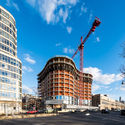
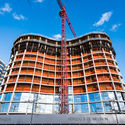
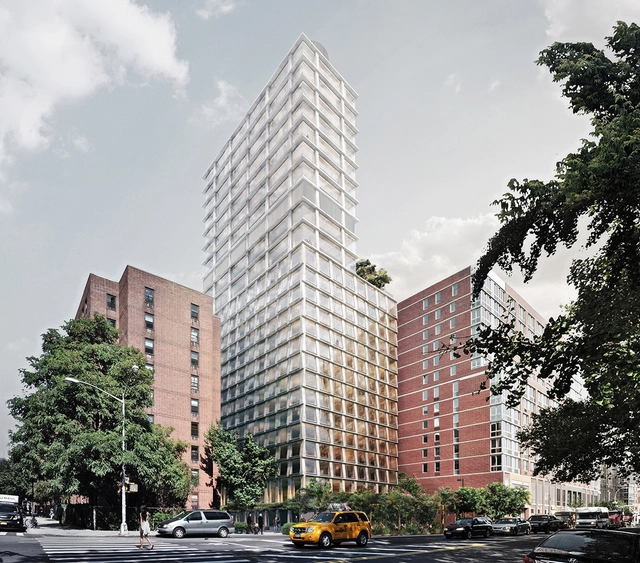
Herzog & de Meuron have completed construction of their latest project, a high-rise luxury residential skyscraper on 56 Leonard Street, New York City. Conceived as a stack of individual houses resembling a Jenga tower, the building is the tallest in its Tribeca neighborhood. With its tall and slender silhouette, 56 Leonard Street is the latest in a series of contemporary skyscrapers punctuating Manhattan’s skyline.
New renderings of Herzog & de Meuron’supcoming luxury hotel have been released, showing the 28-storey tower’s updated interiors at its location at 215 Chrystie Street in Manhattan’s Bowery District. Constructed of raw concrete, the 370 rooms are capped with eleven open-plan luxury residences and is set to open to the public in June.
“To introduce a sense of scale and to further foster the expression of each individual floor, each column is slightly inclined,” explained Jacques Herzog with the announcement of the project back in 2014. “The prominent corner of the building facing Chrystie Street is where the two geometries of the inclined columns meet. Rather than giving one direction priority, the two directions are braided together. The result is a sculptural corner column that becomes the visual anchor for the entire building.”
The Herzog & de Meuron-designed global corporate headquarters for pharmaceutical company AstraZeneca has topped out in Cambridge, UK, as the building pushes forward to a series of opening dates beginning in 2018. Developed alongside AstraZeneca researchers and executive architect/lead consultant BDP, the scheme consists of a ring-shaped volume containing a series of open laboratories and transparent glass walls intended to foster the company’s principle of collaboration across disciplines.
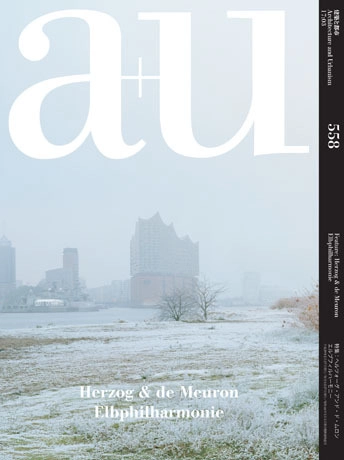
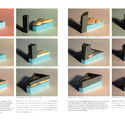
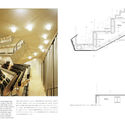
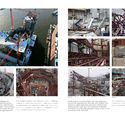
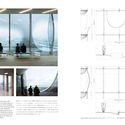
From the publishers. The March 2017 issue of a+u is a special issue dedicated to the Elbphilharmonie in Hamburg by Herzog & de Meuron. We invited the architects as guest editors to collaborate with us in documenting the entire process from the very beginning, in 2001, up to the opening concert in January 2017.
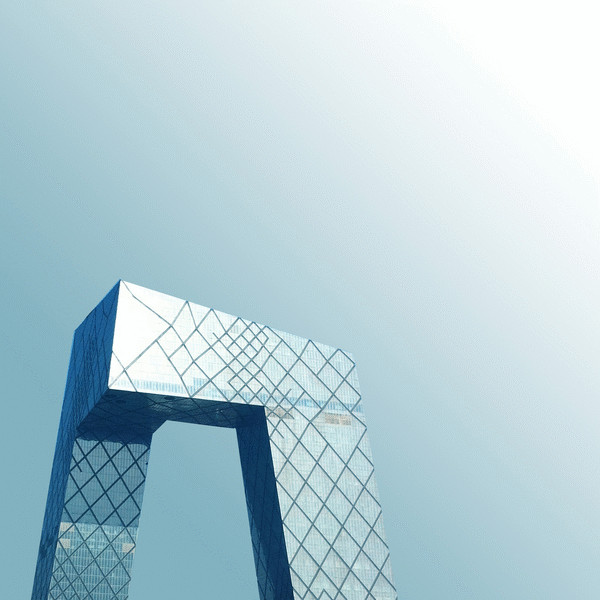
A simultaneous celebration of their cultural iconicity and distillation from their various contexts, Beautified China is a photographic essay by Kris Provoost (one-half of the vlogging duo behind #donotsettle) that tracks the evolution of Chinese architectural landmarks over the course of the past 7 years. Beginning his investigation with the 2010 World Expo in Shanghai, Provoost considers a decade of architecture proposed for China by the profession’s biggest names, many of which have been built now with monumental reputations in rising cities.
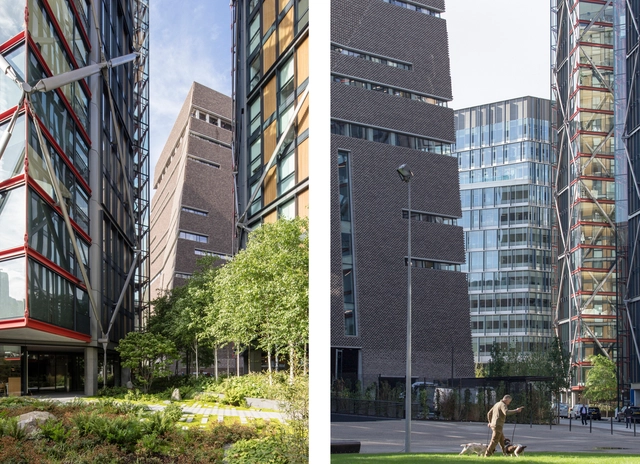
Residents of London's Neo Bankside residential building—a luxury complex of apartments designed by Rogers Stirk Harbour + Partners—have launched a legal bid against the Tate Modern to close one side of a public viewing platform, designed by Herzog & de Meuron and completed in 2016, which overlooks their properties. As reported by the Architects' Journal, "the applicants say that their human rights are being breached due to ‘near constant surveillance’ from visitors to the neighbouring attraction." The claim goes as far to argue that visitors to the Southbank gallery "constantly view their flats through binoculars, and post photographs and film of their homes on social media sites."
https://www.archdaily.com/869531/neo-bankside-london-residents-launch-legal-bid-against-herzog-de-meurons-tate-modern-switch-house-extensionAD Editorial Team
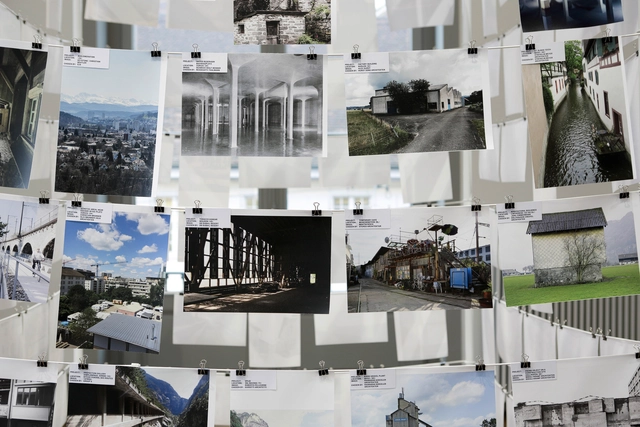
In one of his 1922 travel essays for the Toronto Star Ernest Hemingway wrote, in a typically thewy tone, of “a small, steep country, much more up and down than sideways and all stuck over with large brown hotels built [in] the cuckoo style of architecture.” This was his Switzerland: a country cornered in the heartland of Europe and yet distant from so much of its history. A nation which, for better or worse and particularly over the course of the 20th Century, has cultivated and become subject to a singularly one-dimensional reputation when it comes to architectural culture and the built environment.
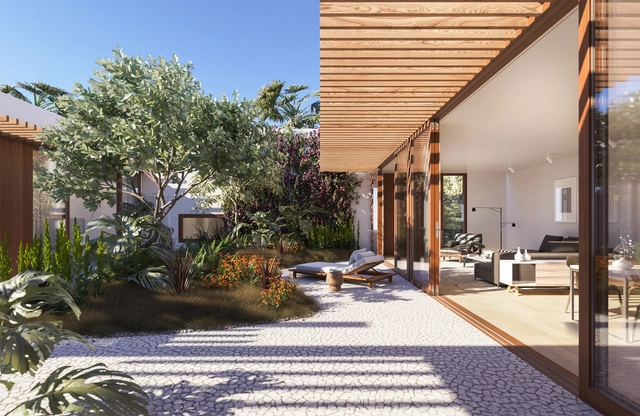
Renderings have been revealed for Herzog and de Meuron’s new luxury loft residences in Miami, designed in collaboration with local developer Robert Wennett. In contrast to the firm’s acclaimed parking garage located nearby, which capitalized on Miami’s surrounding views, 1111 Lincoln Residences will be a far more inwardly-focused endeavor, with the 2,115-square-foot lofts opening onto a series of rooftop courtyards.
Located near the city’s bustling intersection of Alton and Lincoln, the complex accommodates a multi-level parking garage, over 100,000 square feet of interior office space, dedicated event space on the seventh floor, as well as 11 selected retailers on the ground floor. Notable tenants include Alchemist, Jo Malone, Rosetta Bakery, and Chotto Matte, in addition to the various restaurants available to residents along Lincoln Road.
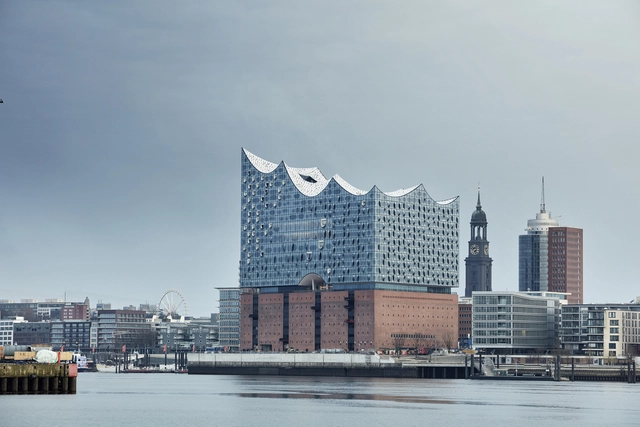
So much has already been written about Hamburg’s undeniably excellent Elbphilharmonie, which formally opened in January but has been publicly accessible, in part, since November. The chatter has mostly revolved around the same two talking points—the building’s on-the-tip-of-your-tongue shape and its fantastic price tag. In addressing the former, critics have called attention to the hall’s resemblance to an iceberg, an outcrop, a ship, circus tents, or the Sydney Opera House. And as for the costs, totaling $900 million, they point out how the project hemorrhaged cash, even if they have inadvertently exaggerated the figures. Having momentarily lost control of the narrative, the city felt compelled to set the record straight in time for the inaugural performance: The building cost just three—not ten!—times the initial budget.
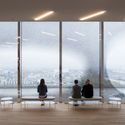
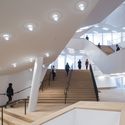
Photographer Laurian Ghinitoiuhas visited Herzog & de Meuron's Elbphilharmonie Hamburg, Germany – a 2017 winner of the ArchDaily Building of the Year award. The striking silhouette of this cultural centre and concert hall, which is identical in ground plan to the brick block of the older building upon which it sits, is often photographed as an isolated object. In this photo-essay, the context of the port around the project is often foregrounded – and unusual views offer new perspectives onto its iconic design.
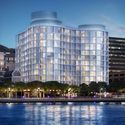
Construction on Herzog & de Meuron’s 160 Leroy condominium tower in New York’s West Village has nearly topped out, with 12 of its planned 15 floors now complete. The design, inspired by the great Brazilian architect Oscar Niemeyer, features a curved concrete and glass facade and contains 57 luxury condos ranging in price from $3.1 to $48.5 million.
View from the street. Image Courtesy of Los Angeles Department of City Planning
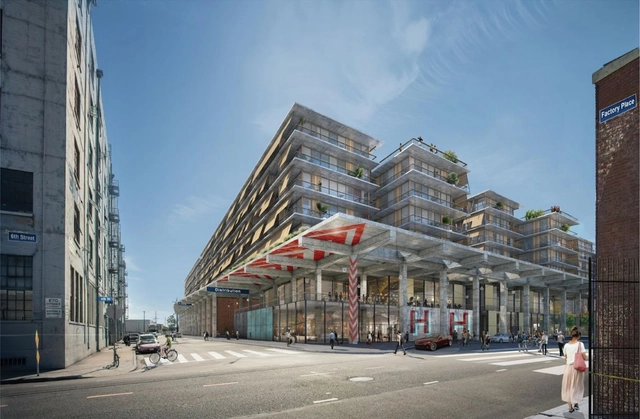
The Los Angeles Department of City planning has released a new study surrounding Herzog & de Meuron’s 6AM mixed-use development planned for LA’s Arts District. Originally revealed last fall, the estimated $2 billion complex would constitute the Swiss firm’s first project in the Southern California city, and could play a major role in the revitalization of the downtown area.
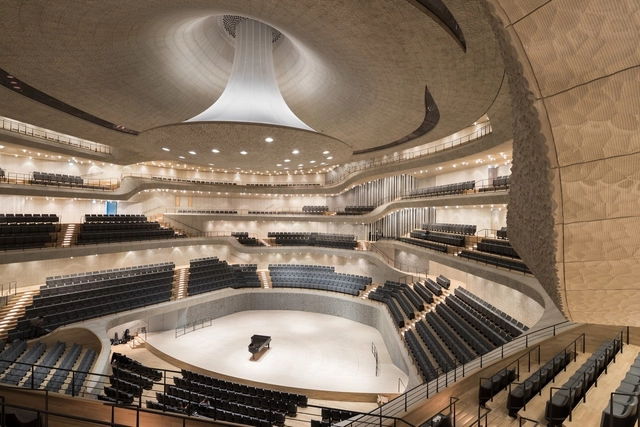
Of all its bells and whistles, the focal point of Herzog and de Meuron’s latest successful endeavor, the Hamburg Elbphilharmonie, is arguably the central auditorium, as explored in this new article by WIRED. An incredible example of the possibilities of parametric design, the hall is comprised of 10,000 individual acoustic panels that line the walls, ceilings, railings and balconies. Each of the panels consists of one million “cells” of varying dimensions, created to help define the sound within the space.
https://www.archdaily.com/805567/the-parametric-process-behind-the-hamburg-elbphilharmonies-auditoriumOsman Bari
After two weeks of nominations and voting, last week we announced the 16 winners of the 2017 Building of the Year Awards. In addition to providing inspiration, information, and tools for architecture lovers from around the world, ArchDaily seeks to offer a platform for the many diverse and global voices in the architecture community. In this year's Building of the Year Awards that range of voices was once again on display, with 75,000 voters from around the world offering their selections to ultimately select 16 winners from over 3,000 published projects.
Behind each of those projects are years of research, design, and labor. In the spirit of the world's most democratic architecture award, we share the stories behind the 16 buildings that won over our global readership with their urban interventions, humanitarianism, playfulness, and grandeur.

.jpg?1498063231 "Tate Modern's Blavatnik Building (Switch House) / Herzog & de Meuron © Iwan Baan")




















.jpg?1495045916&format=webp&width=640&height=580)
.jpg?1495045929 "© Herzog & de Meuron. Courtesy of Astrazeneca")
.jpg?1495045904 "© Herzog & de Meuron. Courtesy of Astrazeneca")
.jpg?1495045916)
















.jpg?1488821716&format=webp&width=640&height=580)
.jpg?1488821999 "© Laurian Ghinitoiu")
.jpg?1488822128 "© Laurian Ghinitoiu")
.jpg?1488821802 "© Laurian Ghinitoiu")
.jpg?1488821732 "© Laurian Ghinitoiu")
.jpg?1488821716)