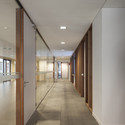
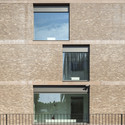
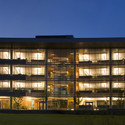
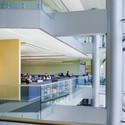
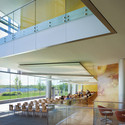
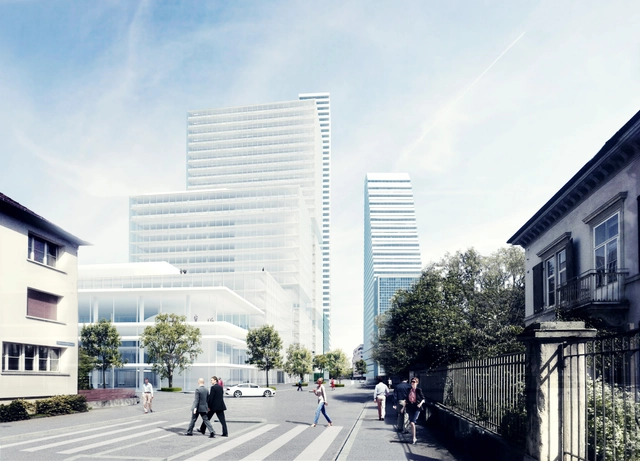
Herzog & de Meuron has unveiled plans for the modernization of the Roche pharmaceutical company’s Basel headquarters. With the first tower already under construction, the overall vision is to consolidate and update all existing facilities, including a historic Otto R. Salvisberg-designed office building, as well as construct a new, four-tower research center and 205-meter tall office tower by 2022.
"The planned consolidation of the existing industrial site will eliminate the need to build over green zones", emphasizes Jürg Erismann, Head of the Basel/Kaiseraugst Site. "Instead, Roche will be making more efficient use of those parts of the site that have already been developed but cannot be expanded.”
Material Minds, presented by ArchDaily Materials, is our new series of short interviews with architects, designers, scientists, and others who use architectural materials in innovative ways. Enjoy!
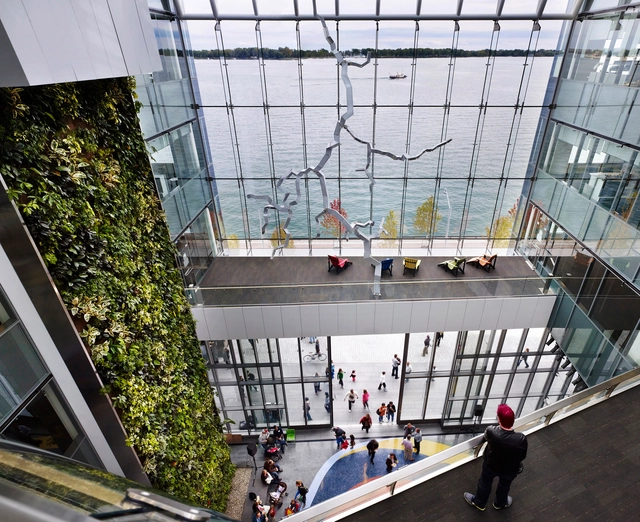
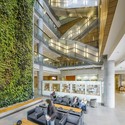
Green, or living, walls have begun popping up and growing across commercial interiors everywhere over the last decade. To understand how a living wall functions, and how to design one, we went straight to a pioneer in the profession: Ms. Birgit Siber of Diamond Schmitt Architects in Toronto. The synthesis of natural systems and building systems had been in her mind since her days as a student, but the major break came in 2000, when her team constructed a massive living wall for The University of Guelph-Humbar. To understand how architects are closing the gap between interior and exterior via the living wall, read the full interview after the break.
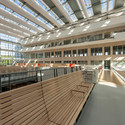
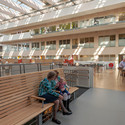
Feilden Clegg Bradley Studios(FCBS) has been awarded first prize in a competition to design a new facility hub and two laboratory buildings at the University of Edinburgh’s School of Biological Sciences. The commission, FCBS’ first in Scotland, will also include the modernization of an existing 10-story laboratory tower which was built in the 1960s at the University’s Kings Building Campus.
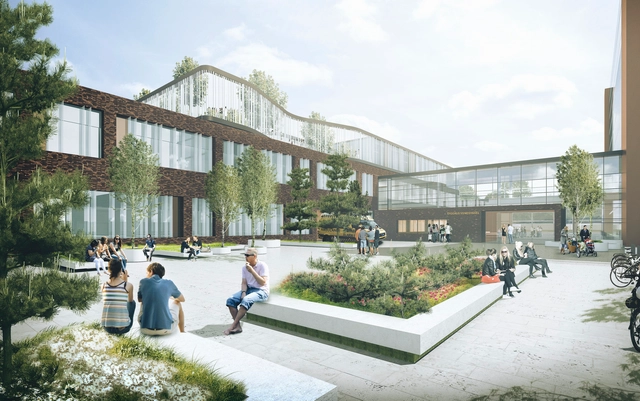
Danish firm C.F. Møller has won first place in a competition to design an extension and renovation of Vendsyssel Hospital in Hjørring, Denmark. This winning proposal will add 14,000 square meters to the existing structure, incorporating a new treatment center, a ward for mothers and children, and a rooftop children’s playground. The new facilities are arranged around large courtyards, and make use of large windows to display the path of travel through the hospital. This helps make navigating through the large building as easy as possible.
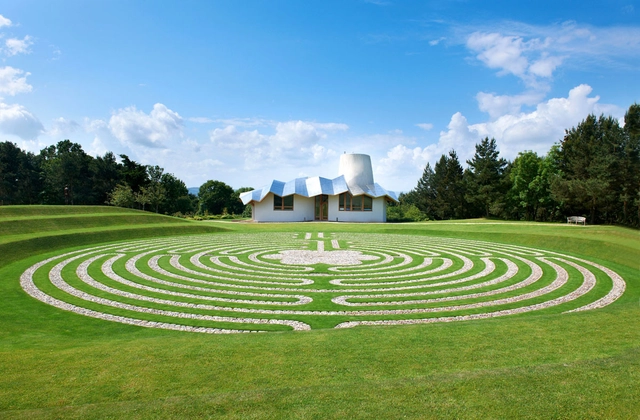
Dundee, Scotland, 2003 by Frank Gehry / Courtesy of Maggie's Centres. ImageThe third center was designed by Frank Gehry, a close friend of Maggie's. “Frank gave us so much publicity, and allowed us to raise the money,” Jencks says. Each center is self-financed through donations.
Maggie's Centres are the legacy of Margaret Keswick Jencks, a terminally ill woman who had the notion that cancer treatment environments and their results could be drastically improved through good design. Her vision was realized and continues to be realized today by numerous architects, including Frank Gehry, Zaha Hadid, and Snøhetta - just to name a few. Originally appearing in Metropolis Magazine as “Living with Cancer,” this article by Samuel Medina features images of Maggie's Centres around the world, taking a closer look at the organization's roots and its continued success through the aid of architects.
It was May 1993, and writer and designer Margaret Keswick Jencks sat in a windowless corridor of a small Scottish hospital, dreading what would come next. The prognosis was bad—her cancer had returned—but the waiting, and the waiting room, were draining. Over the next two years until her death, she returned several times for chemo drips. In such neglected, thoughtless spaces, she wrote, patients like herself were left to “wilt” under the desiccating glare of fluorescent lights.
Wouldn’t it be better to have a private, light-filled space in which to await the results of the next bout of tests, or from which to contemplate, in silence, the findings? If architecture could demoralize patients—could “contribute to extreme and mental enervation,” as Keswick Jencks observed—could it not also prove restorative?


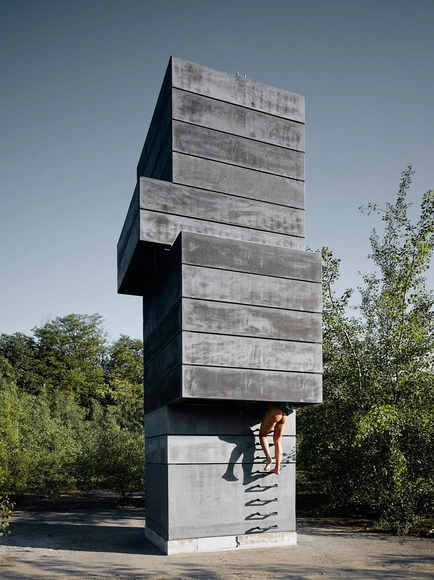
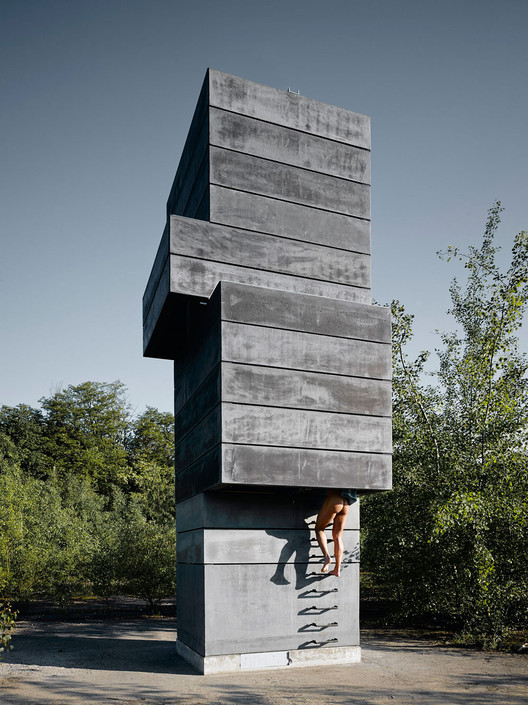
.jpg?1410393814 "© Albrecht Imanuel Schnabel")
.jpg?1410393714 "© Petra Rainer")

.jpg?1410393735 "© Albrecht Imanuel Schnabel")


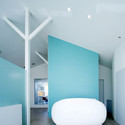



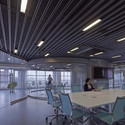
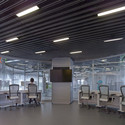
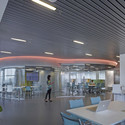
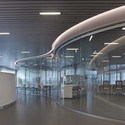


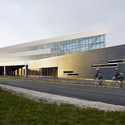
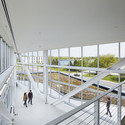
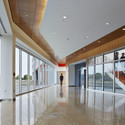
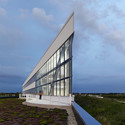












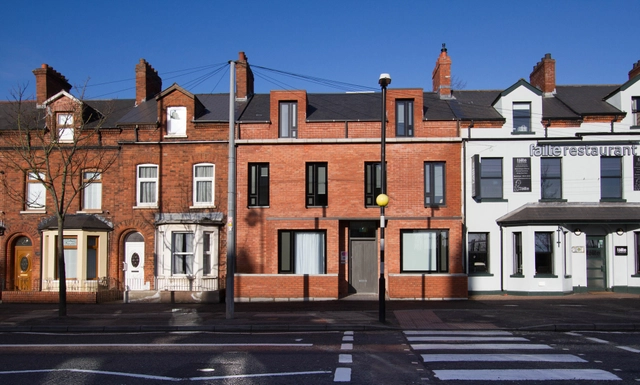




.jpg?1397700541 "Fife, Scotland, 2006 by Zaha Hadid Architects / © Werner Huthmacher. ImageAll sharp angles and painted a sinister black, Zaha Hadid's Fife center isn't the first thing you'd expect from a Maggie's Centre. The exterior invited comparisons to a bunker, despite the airy, humane spaces within. \"Zaha got a lot of criticism and her building is bloody good,\" Jencks says of his former student's design. The building was the architect's first in the UK.")