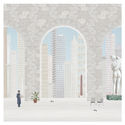
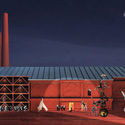
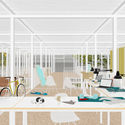
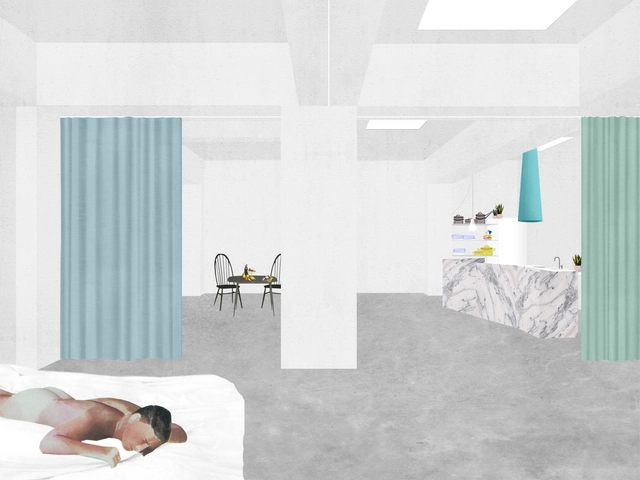
Over the following weeks we will be sharing a selection of unrealized student projects, alongside realized schemes by practices who explore representational techniques, in collaboration with KooZA/rch. The aim is "to explore the role of the architectural drawing as a tool for communication" and, in the process, provoke a conversation about the contemporary use, format, and role of drawing.
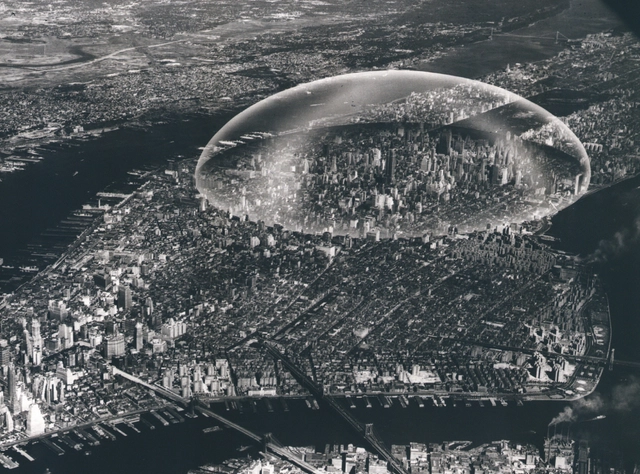
Buckminster Fuller Dome, 1961. Image Courtesy of Metropolis Books
The “Never Built” world so far includes Never Built Los Angeles, a book and exhibit, and the book, Never Built New York. Now, the Queens Museum hopes to continue the exploration into the New York that might have been with a Never Built New York exhibition and has launched a Kickstarter campaign with a goal of $35,000 to make it happen. The exhibition, curated by Sam Lubell and Greg Goldin and designed by Christian Wassmann, will explore 200 years of wild schemes and unbuilt projects that had the potential to vastly alter the New York we know today.
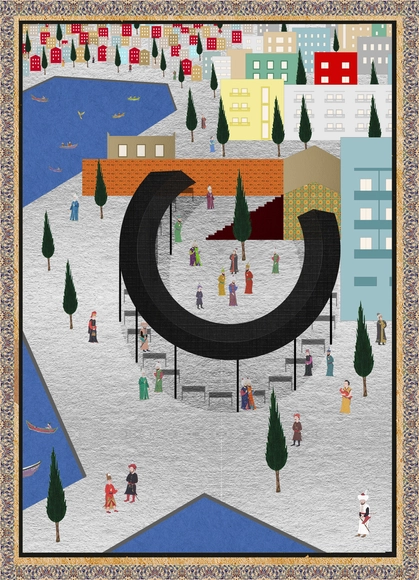
Digital technologies were supposed to kill the drawing. And in an obvious way they did, with CAD displacing hand draughtsmanship long ago. But drawing is more than mere delineation—measured construction drawings—or even the rendering, which has devolved into a mere marketing tool. Indeed, as Sam Jacob writes, it constitutes a fundamental “architectural act” that lies at the core of the discipline’s self-understanding.
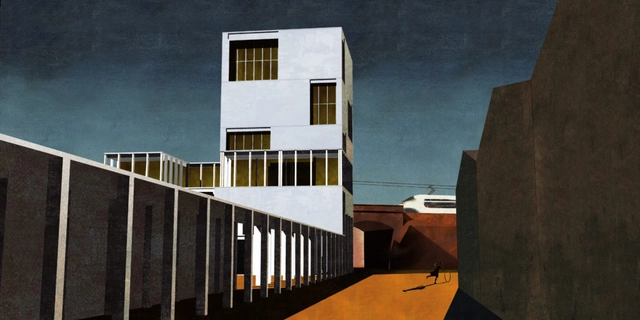
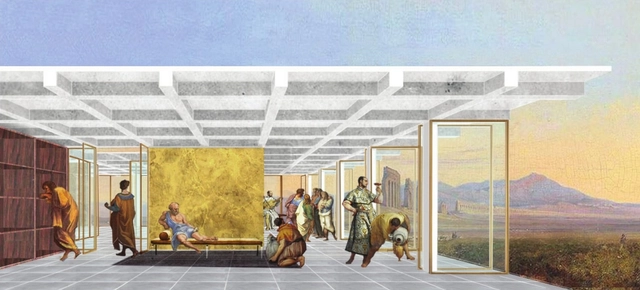
Jacob describes a new “post-digital” mode of drawing that incorporates narrative cues, art historical allusions, and software-enabled collage techniques. It recalls Mies’s sparse one-point perspectives and de Chirico’s metaphysical paintings as well as the affected irreverence of Postmodernism. It’s a style popularized by blogs such as KoozA/rch, which was founded by architect Federica Sofia Zambeletti three years ago. We spoke to Zambeletti about the resurgence of architectural drawing and how the style could soon exhaust itself.
目前在纽约市的现代艺术博物馆(MoMA)展出的是建筑师扎哈哈迪德(Zaha Hadid)为她的开创性未建成项目香港太平山(The Peak in Hong Kong)所做的概念画作。本作品作于1991年,正处于3D CAD软件的普及为建筑制图的革命注入了一剂强心针的时期边缘。太平山(The Peak)画作出现于建筑制图因其自身原因的革新的末期,和旨在展示现实世界的可缩放,滚动,渲染时代的来临。只有这种新的图像创作软件在绘图功能上与以前的时代具有很大不同并且开创了新的制图风格,工具和过程通过对用户与他们的互动施加预定的议程来对设计进行约束。
在这个数字时代,像勒布贝斯·伍兹(Lebbeus Woods)和迈克尔·格雷夫斯(Michael Graves)这样的以手绘艺术而闻名的建筑师,推翻了建筑制图中占据主导地位的超级现实主义。 然而,根据 Sam Jacob 在“Metropolis”杂志上发布的最新文章,我们可能正在进入以“后数字”(post-digital)所代表的时代。 在后数字时期,建筑师重回传统制图时代,但是是通过创造新的方法论和重新评估过去数十年来最适合的数字工具。目前在建筑实践中还是大大倾向于拼贴技术,但是对于后数字制图的研究仍旧会在事务所和高等学府中继续。
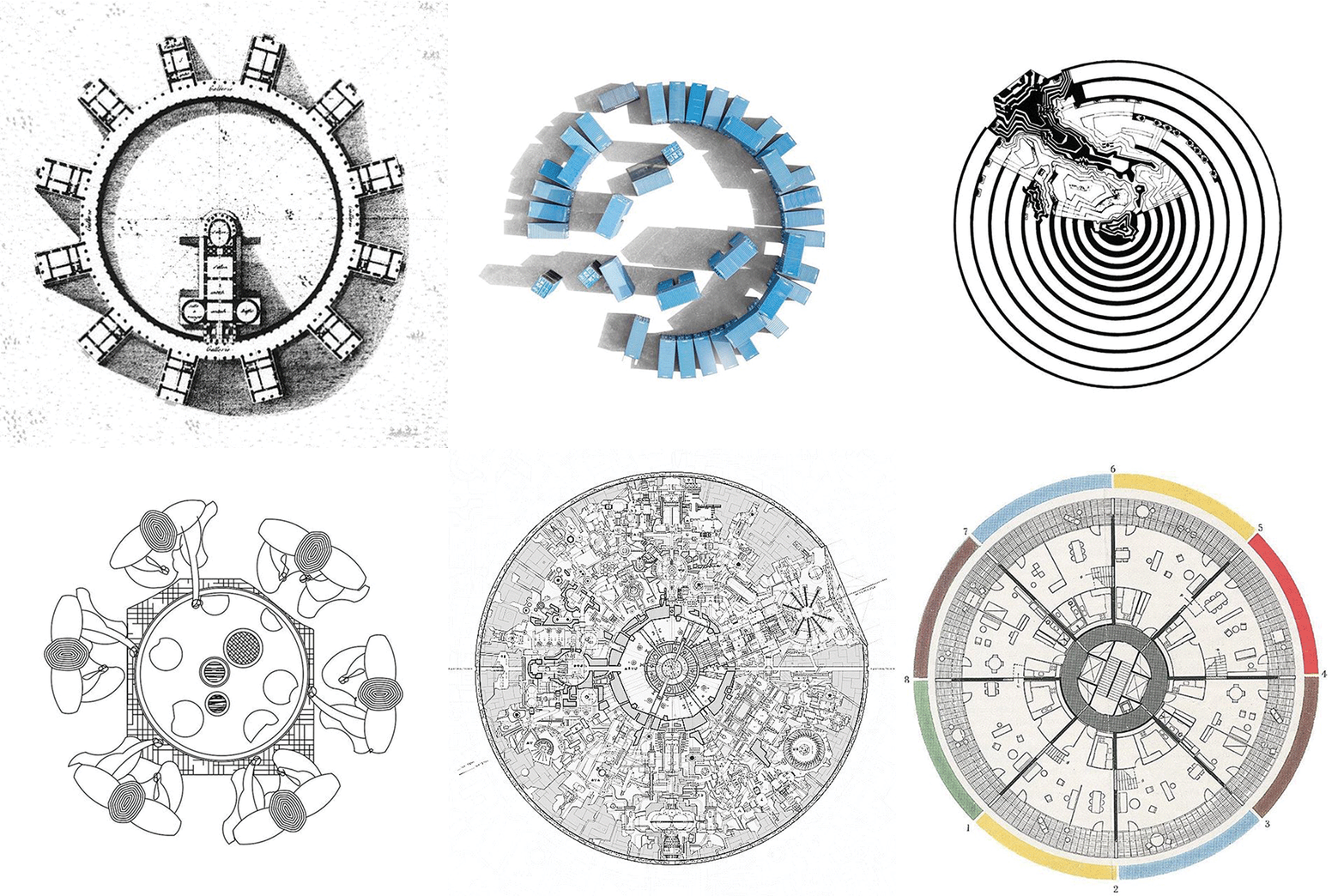
“The circle . . . is the synthesis of the greatest oppositions. [It] combines the concentric and the excentric in a single form, and in equilibrium. Of the three primary forms [triangle, square, circle], it points most clearly to the fourth dimension.”
Inspired by this obsession, one Instagram account titled “Circular Spaces” has collected many of the best examples of circles found in architecture. The account tracks the geometries at all scales, from the planet-sized plan of the Death Star to the familiar intimacy of a round dining table. Check out a selection from “Circular Spaces” below.
Architect and illustrator Diego Inzunza has created a new series titled "Architectural Classics," which presents and analyzes 20 iconic architectural works from the 20th-century. Using a graphic technique based upon axonometric views, the style allows each building to be seen from multiple sides, creating a comprehensive overall interpretation of the architecture.
Picture of the Chaktomuk Conference Hall taken by Japanese expert Masao Ishihara (ca. 1964). Image Courtesy of Masaaki Iwamoto
"New Khmer Architecture and Japan" is the first show in Cambodian History to focus on the architectural drawings of its modern movement. Cambodia is a country with mature architectural culture, not only of the great Angkorian heritage and vernacular timber temples, but also of modern buildings from the 1950s and 60s known as New Khmer Architecture. Since the 1990s, in the context of the post-war redefinition of the national identity as well as the recent expansion of environmental consciousness, this Cambodian modern movement, with their sensibility to the traditional culture and tropical climate, is being re-evaluated; though the drawings and documents of the movement were believed to be destroyed and lost in the turmoil of the Civil War.
Flagship stores excite both fashion shoppers and designers alike due to their role as visionary laboratories for the latest trends and stimulating retail experiences. Architects have developed various ways to dress haute couture stores, from distinctive icons in the day to seductive night-time images. The images accompanying this article, created by the Portuguese architect and illustrator André Chiote, help to explore the graphic potential of famous brands like Dior, Prada and Tod's. The illustrations clearly reveal the various techniques of playing with diaphanous layers, intimate views inside or the contrast of light and shadow.
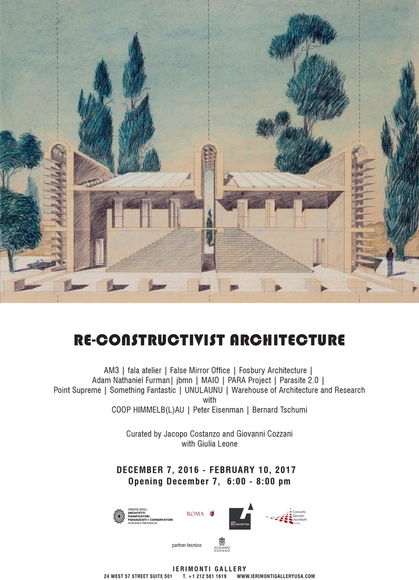
This reconstruction is primarily of language. The architects draw from archives—mental, digital or printed on paper—distant from the typical parametric and highly schematic rationales that characterized the last thirty years of design in architecture. Within the theoretical system that drives architectural composition, these archives inevitably become homages, references, and quotes.
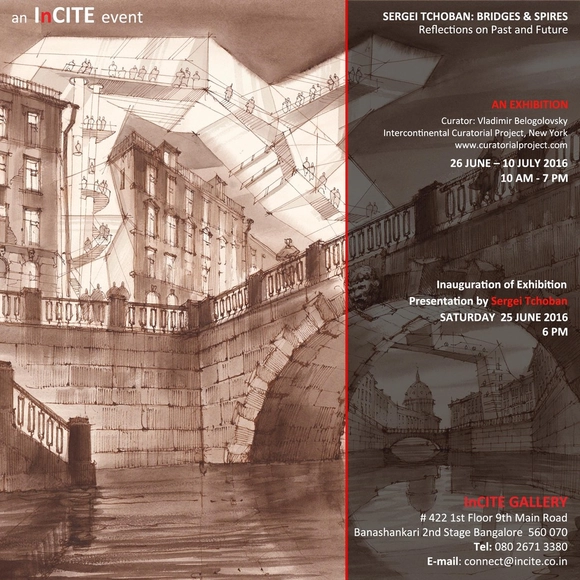
After receiving his education at the Repin Institute for Painting, Sculpture and Architecture in St. Petersburg, Sergei Tchoban moved to Germany at the age of 30. He now runs parallel practices in both Berlin and Moscow, after becoming managing partner of nps tchoban voss in 2003 and co-founding SPEECH with Sergey Kuznetsov in 2006. In 2009, the Tchoban Foundation was formed in Berlin to celebrate the lost art of drawing through exhibitions and publications. The Foundation’s Museum for Architectural Drawing was built in Berlin in 2013 to Tchoban’s design. In this latest interview for his “City of Ideas” series, Vladimir Belogolovsky spoke to Tchoban during their recent meeting in Paris about architectural identities, inspirations, the architect’s fanatical passion for drawing, and such intangibles as beauty.
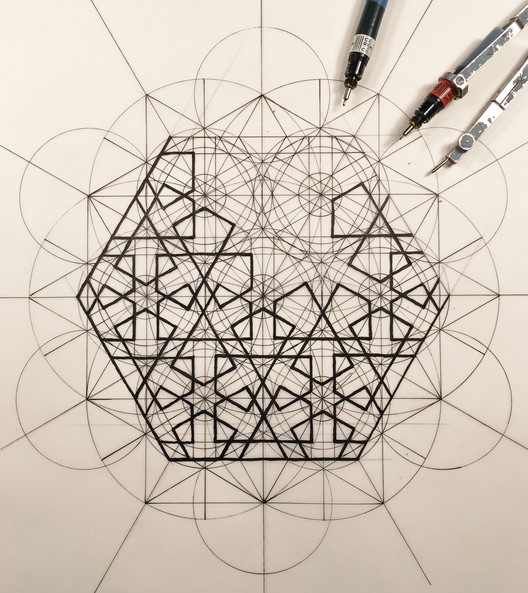
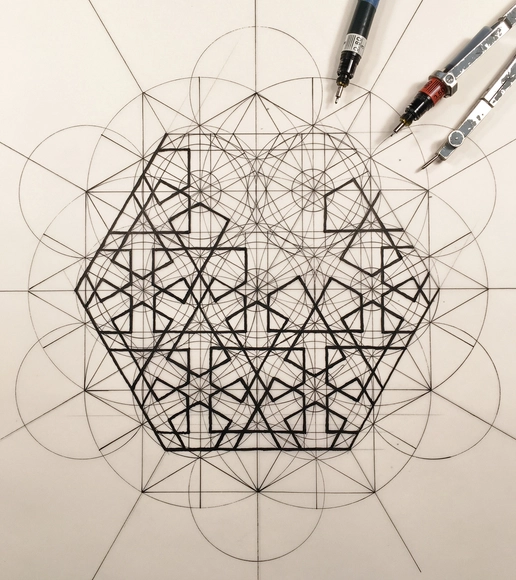
Rafael Araujo is a Venezuelan architect and illustrator who at the age of fifteen began to observe intelligent patterns in nature, giving rise to his interest in the golden ratio located in our natural environment.
More than 40 years later, the results of this hobby is a collection of beautiful illustrations of nature made entirely by hand, equipped with a pencil, a compass, a ruler and a protractor.
The artist's illustrations give his ability to represent the mathematical brilliance of the natural world, inciting the reunion of humans with nature.
Casa Cecchini a S. Maria di Galeria, Roma, 1971 - A. Anselmi (with C. Giannini) - edited by Warehouse of Architecture and Research with Valentino Danilo Matteis
Their theoretical, critical and historical approach attempts to rediscover a thoughtful dimension behind the architectural subject. Each firm will present a residential project for the Roman countryside, a design exercise meant as a typological investigation, or, more generally, as a meditation on the autonomy of the architectural discipline. The thirteen projects for thirteen houses showcased in the exhibit are intended as a homage to the city of Rome and its countryside.
As the birthplace of our most recent Pritzker Prize winner, Alejandro Aravena, Santiago, Chile is full of iconic architecture. Because many of these buildings are situated in busy urban areas, their superior design is easy to miss. In an effort to encourage viewers to slow down and appreciate the volume, facades, context, and function of these urban landmarks, Benjamin Oportot and Alexandra Gray of San Sebastian University guided their 4th-year students in producing axonometric drawings of 11 buildings. The project centered on medium-sized office buildings built between 1989 and 2015, particularly focusing on their use of reinforced concrete.
https://www.archdaily.com/799875/11-stunning-axonometric-drawings-of-iconic-chilean-architecturePola Mora
This special edition of a+u is a comprehensive issue dedicated to Sigurd Lewerentz's drawing collection, originally published as two issues in January and February 2016. Comprised of Lewerentz's hand drawings from the Swedish Centre for Architecture and Design (ArkDes) archive and photographs, the issue covers four of the architect's prominent works throughout his career: Malmö Eastern Cemetery, Social Security Institute, Villa Edstrand, and St. Petri Church in Klippan.
All architecture remains a fantasy up until the moment when it is fully materialized and ready for its intended use. Testing new spatial possibilities is a never-ending process. Physical scale models and sophisticated computer-generated renderings are widely used by contemporary practitioners to explore this creative endeavor. Undoubtedly, these will remain necessary tools in architects’ investigative pursuits. They are efficient, effective, and convincing. Still, there is something particularly authentic and candid about traditional hand drawing that other techniques can’t quite capture. They transmit artistic visions with the right balance of clarity and interpretation, and engage our wildest imaginations helping us envisioning new ideas and dreams in architecture.
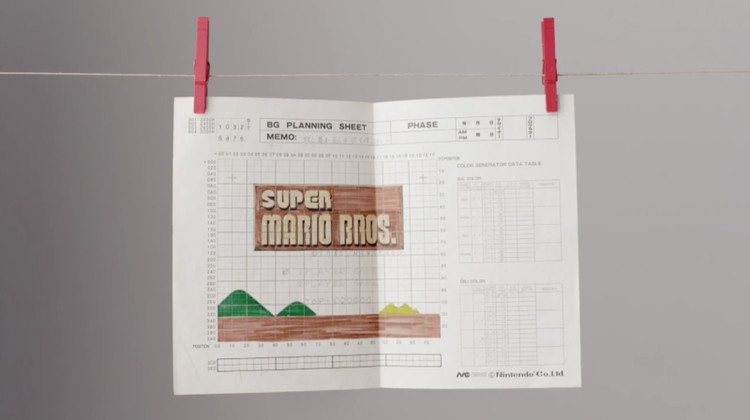
More than 6 million courses have been created for Super Mario Maker, a video game where players can create their own game levels with all of the available tools of the Mario universe. The plumber, who has entertained millions of people around the world with his adventures, turned 30 last September, the date of the release of his first solo odyssey, Super Mario Bros. The rest, as we know, is history.
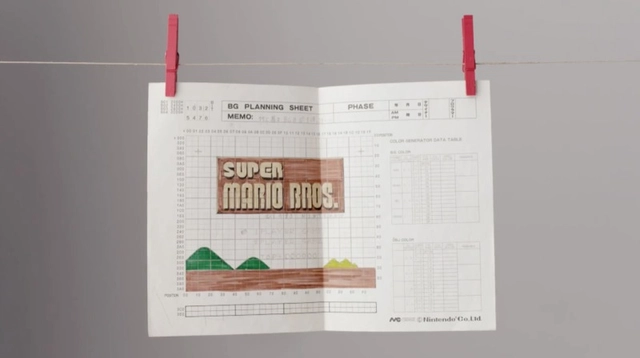
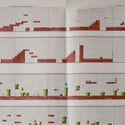
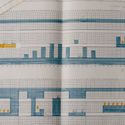
A few months ago, for the premiere of Super Mario Maker at the last Electronic Entertainment Expo (E3 2015), Shigeru Miyamoto and Takashi Tezuka, the creators of Super Mario Bros, explained how they designed the levels of the classic Nintendo video game in 1985: on graph paper.
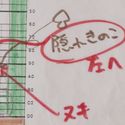
That's right, using graph paper and tracing paper, the Japanese artists drew each level in detail, adding and editing the position of enemies, traps, and even designing the game's cover art.
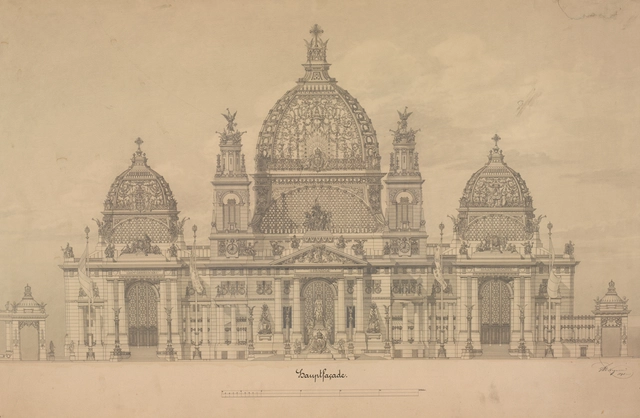
The Albertina is one of the most prominent collections in the world with over one million works covering six centuries of art history, from the late Middle Ages and the Renaissance to the present day. Its world famous Graphic Collection, rich in tradition, is by far the largest and most important department. The Architecture Collection of the Albertina is by no means less significant. It too spans across many periods, encompassing works by well-known architects. The exhibition in the Berlin Museum for Architectural Drawing allows a glimpse into this fantastic collection, showing hand drawn architecture across a wide spectrum with sketches, studies, vedute and project presentations by exceptional artists and architects such as Antonio Pisanello (1395–1455), Francesco Borromini (1599–1667), Hubert Robert (1733–1808), Egon Schiele (1890–1918), Hans Hollein (1934–2014) and Zaha Hadid (born 1950).
The architecture drawing gallery Tulpenmanie invites talented young authors (max 30 years old) from all over the world to submit an unpublished drawing about architecture, landscape and the city. During the next Salone del Mobile Milano 2016 the best works will be part of the exhibition 30<30.









_copy.jpg?1488996934 "Casa Gropius / Walter Gropius + Marcel Breuer / 1938 . Image Cortesía de Diego Inzunza - Estudio Rosamente")
_copy.jpg?1488997079 "Prairie Chicken House / Herb Greene / 1961. Image Cortesía de Diego Inzunza - Estudio Rosamente")
_copy.jpg?1488996911 "Casa de Vidrio / Philip Johnson / 1949. Image Cortesía de Diego Inzunza - Estudio Rosamente")
_copy.jpg?1488996891 "Casa Farnsworth / Mies van der Rohe / 1951 . Image Cortesía de Diego Inzunza - Estudio Rosamente")
_copy.jpg?1488996826)







.jpg?1480005281 "Courtesy of Rafael Araujo")
.jpg?1480005581 "Courtesy of Rafael Araujo")

_(2000x1616).jpg?1480005429 "Courtesy of Rafael Araujo")