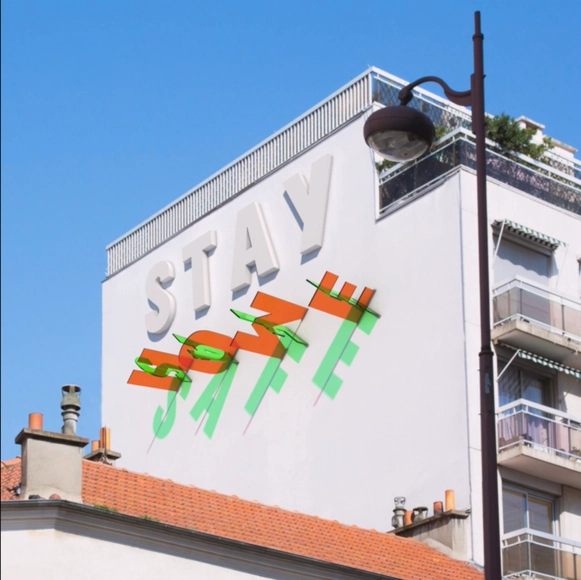
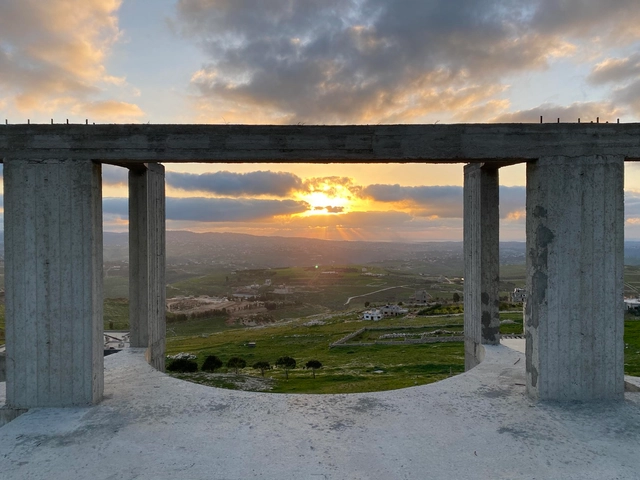
When transparent facade elements deliberately evolve from the course of the sun, we can explore a fascinating slow movement in stark contrast to the hectic urban street life on the ground. Especially the French designer Pierre Brault has responded to the accelerated rhythm of our society with facade installations that combine the principle of the sundial with colorful pop design. His three-dimensional works made of recycled colored plexiglass mesmerize through simple but dramatic movements of colored shadows. In the interview, Brault explains his inspiration, the experimental approach and his interest in working responsibly with material.
Beyond light as a physical phenomenon perceptible by the human eye, daylight is an inexhaustible architectural resource that is sometimes taken for granted. Just like the air we breathe, we are all aware of the existence of light, but rarely do we seek to do anything else with it. It is essential to recognize its presence as an enabler of experiences in space, due to its intrinsic relationship with architecture and human beings.
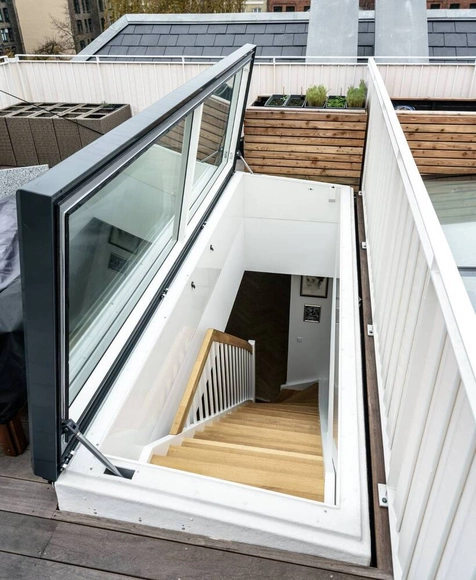
The incidence of light in architecture directly influences the way we perceive the passage of time. Since ancient times, constructions such as ziggurats have integrated strategies to capture the changing daylight through their roofs, evolving and remaining present in modern constructions such as the Villa Savoye. More recently, the flatness of roofs in contemporary buildings has been a great resource for incorporating architectural elements that also allow them to be inhabited, such as roof access hatches, which serve as a link between natural light and roof terraces.
Below, we review some of the latest technologies in skylights and access hatches, such as those developed by LAMILUX.
https://www.archdaily.com/997903/the-threshold-between-daylight-and-architecture-flat-roof-access-hatchesEnrique Tovar
Sunshine has been an integral part of life ever since the sun and the earth began their merry dance. The feel-good ambiance provided by natural light is a recurring theme in human culture, from popular music, fashion, and photography, to our most luxurious environments.
But our bodies’ craving for sunlight is more than just a feeling. Scientific research has proven it helps our bodies to produce more melatonin which aids sleep and reduces stress, vitamin D which improves immunity and strengthens bones, and serotonin which fights depression. As well as helping us to live healthier and happier lives, research suggests the sun also helps us to live longer, too.
Imagine if light would not only provide optimum visibility for tasks but convey meanings as well. Standards with recommended lux levels for various visual tasks have led to a quantitative understanding of lighting. However, lighting can also be used to contribute to emotion in rooms and to structure architecture. Would it be adequate to regard lighting as language sent by architects or interior designers and being received by inhabitants and citizens? Adding a semiotic perspective can help to recognize how light and shadow contributes to the meaning of the built environment.
As farmers water crops by moonlight, undocumented children head to school and villagers scan the sky for surveillance airplanes—these are glimpses of a complex culture that emerges in south Lebanon after dark. In collecting some of these nightly practices, Mohamad Nahleh—lecturer in architecture and urbanism at MIT—journeyed across the landscapes of Jabal ‘Amil hoping to build a new alliance between architecture and the night. His "Path of Nightrise" research has turned into a construction to revive a forgotten river path and was published by Places Journal. The interview with Nahleh argues for a new nocturnal imagination in design and reveals, not only how the night has changed in Lebanon over time, but also how he has changed alongside it.
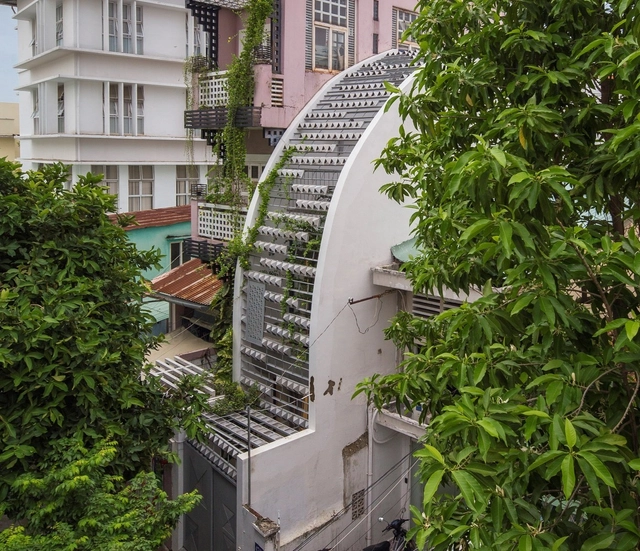
Walking down the streets of cities like Hanoi and Saigon in Vietnam, you might encounter houses with surprisingly narrow facades in contrast to the stacking of three to five floors, with windows for ventilation and natural light only on the front facade. These are the famous traditional Tube Houses. According to ancient popular culture, this type of housing emerged due to property taxes being based on the width of the facade, but the true reason is to optimize land use, allowing a larger number of plots in the same square.
However, this legacy is now being recreated in contemporary designs by Vietnamese architects. Old facades give way to innovative solutions featuring atriums for natural lighting and ventilation, courtyards and interior gardens, greenery incorporated into different environments, split-levels, etc., allowing for high-quality spaces. With that in mind, we have put together a selection of Tube Houses, together with their respective section drawings. Check out below:
During the first half of the 2nd century AD, one of the most important buildings in the history of Western architecture was erected in Rome: the Pantheon. Its main and most impressive feature is its coffered concrete dome, which ends in a perfectly round central opening. This oculus kicked off a series of later projects that noted the value of circular openings, which were replicated as glazed skylights and as compositional elements on facades. This eventually evolved, for example, into the detailed and colorful rose windows of the Gothic basilicas. In all its configurations, the oculus (meaning "eye" in Latin) holds symbolism that goes beyond that of a traditional window: its luminous projection gracefully marks the passage of time, solemnly highlighting an architectural space.
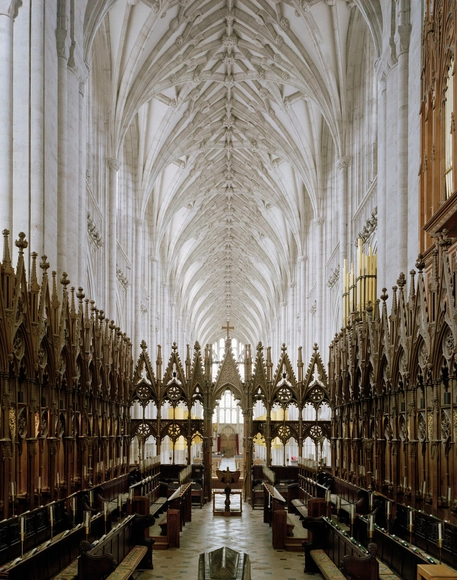
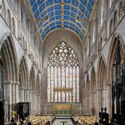
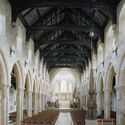
Using only natural light to document English cathedrals can turn into a logistical and technical challenge. However, Peter Marlow's photography has resulted in a remarkable series of iconic spiritual sites whose contemplative atmosphere is rarely accessible to others. Looking east with the camera towards the nave as the dawn light streamed through the main window opens a purist and mystical perspective to the time when these sacred structures were erected.
Videos
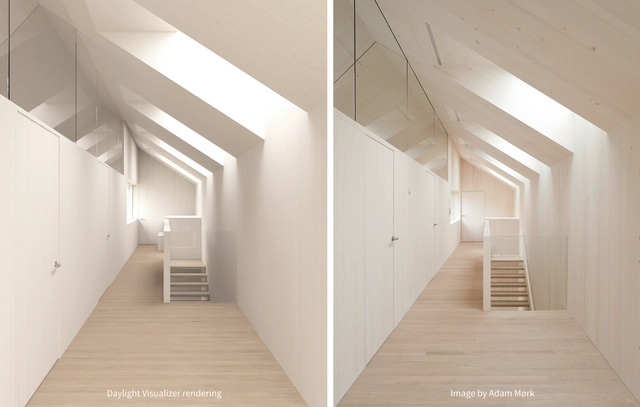
Photo-realistic luminance rendering from VELUX Daylight Visualizer (left) compared with photo from built project (right). Image Courtesy of VELUX Group
Daylight is core to realizing healthy and sustainable buildings, but its dynamic nature and the complex ways in which it interacts with its environment make it a difficult discipline to master. The new version of VELUX Daylight Visualizer makes climate-based daylight modeling more accessible than ever, empowering architects to make the best use of daylight anywhere in the world.
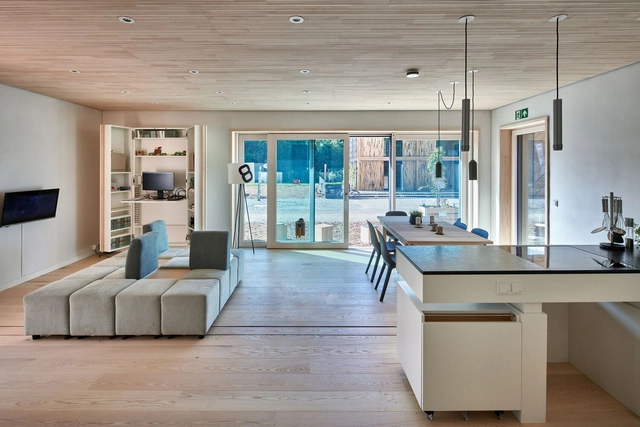
The motto of the Solar Decathlon Europe 21/22 was to convert and expand rather than to demolish and reconstruct. Recycling windows, using biodegradable materials for luminaires and connecting light with sensors represented just some innovative examples of the international university-level student competition in Wuppertal, Germany. For the first time, the competition presented an award for sustainable architectural lighting. This was a question of quality as much as quantity, and that applies equally to daylight and artificial light.
On August 27th, 1883, the volcano of Krakatoa in the Indonesian islands erupted. Ashes and rocks flew miles high. Barometers wobbled three and a half times as they recorded the atmospheric pressure wave circumnavigating the globe. The noise was heard across the Indian Ocean and Australia. And for years, small ash particles floated in the atmosphere, diffusing the sun’s light and scattering colors around the world.
Living in an urban environment is demanding. Busy and competitive lifestyles leave people numbed from the effects of stress. Individuals in urban areas are more prone to mental health issues and demonstrate a noticeable lack of personal connection. Rosy city lights and skyscrapers are thorned with rising stress levels, posing an essential question to architects - how do spaces affect wellbeing?
Whether it is a small balcony, access to green space or a private garden, the outdoor space has become a privilege for many, especially upon the dawn of the Covid-19 pandemic and the multiple lock down periods that followed. Green space in the city is constantly under threat, particularly since governments seek to increase housing densities in order to feed a growing demand for suburban development. As a result, the garden and access to green/outdoor spaces has decreased in recent times, as priorities lie in housing as many as possible, often with disregard to beneficial features such as access to outdoor areas in residential developments.
In terms of living conditions the lack of access to these spaces presents evident inequalities, uncovered during periods of lock down and restrictions during the pandemic. People were confined to their homes and local outdoor spaces, where they could exercise. Those who had access to these public spaces and had their own gardens/external space were very lucky in the sense that they were able to enjoy an element of the outside. While those less fortunate in flats and areas of depravity faced claustrophobic and demoralizing conditions, contained within the shell of their homes.
Windows are the elements that connect us to the outside world. It is from them that views are framed, privacy, lighting and natural ventilation are defined. Nowadays in the construction market we find different types of openings. Find out how to choose the type that best fits your project needs here.
Understanding how shadows will act in and around an area is a necessary understanding to ensure greater spatial quality. Shadows can influence natural lighting - therefore, the perception of space - and also issues of thermal comfort. Thus, mapping your projections and visualizing their movements during each season of the year can be fundamental to improve your project. The good news is that there are simple tools that help you visualize this in your city and in natural environments.
https://www.archdaily.com/979759/mapping-shadows-in-cities-the-solar-trajectory-in-digital-and-interactive-toolsEquipe ArchDaily Brasil
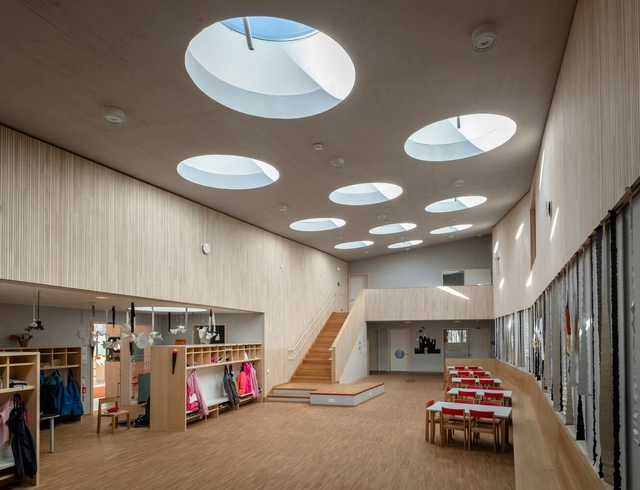
Kindergarten “St. Severin”, Garching. Image Courtesy of LAMILUX
Our environment influences how we feel; we have all experienced this. For students, it is easier to study in a bright place, artists look for inspiring atmospheres, and our mood can improve with the right color scheme. These aspects are also important for kindergartens, daycare centers and schools, because a child-friendly design can stimulate the curiosity and imagination of children, so that they learn in a playful way. The design of a room supports the learning and creativity of children. Daylight systems, for example, flood rooms with light, making them appear larger and friendlier.