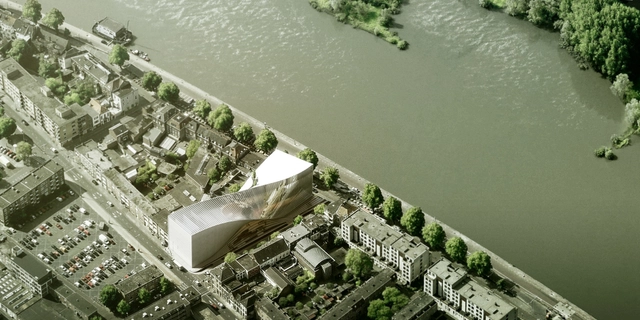
As we announced yesterday, four impressive teams have unveiled their shortlisted proposals to design a new house for an existing art museum and film theater on a waterfront site in Arnhem. Competing to design the “ArtA” cultural center includes BIG, who teamed up with Amsterdam-based Allard Architecture to propose a scheme that would merge the two facilities by constructing “a simple building volume of two poles: The Film Theater facing the city and the Art Museum facing the river.”
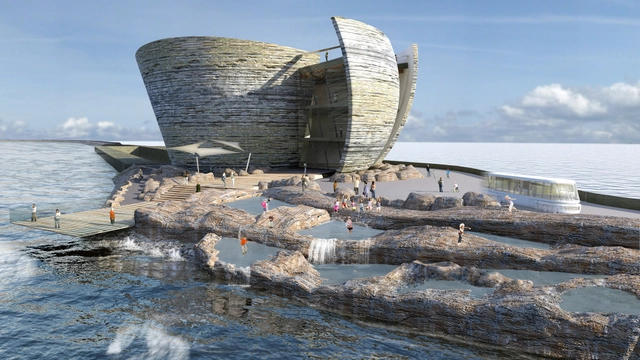
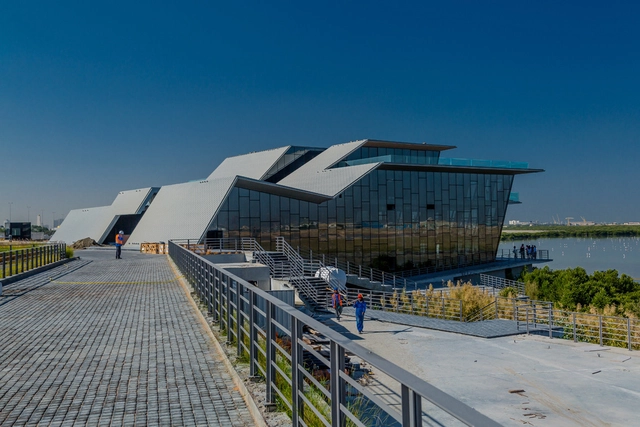
London based practice Juice Architects has unveiled designs for an offshore visitor centre as part of the proposed tidal lagoon for Swansea Bay, Wales. A series of overlapping shells are sculpted to form a bowl like structure, providing shelter from the wind and waves of the Welsh coast. Sat on a manmade island platform at the end of a collection of land piers, the building will act as a cultural and educational base housing public galleries, a café, a lecture theatre and exhibition space with working turbine propellors visible through the the ground floor gallery. As an entirely self sufficient building all energy will be captured from renewable sources.
UNK Project Architects' entry for the Ministry of Culture of the Russian Federation's National Centre for Contemporary Arts (NCCA) competition centres around the interplay between art and architecture: "It’s what touches our soul and motivates us to pursue radical new ideas." Reaching the second stage of the international competition, which has been won by Heneghan Peng Architects, UNK Project Architect's proposal offers an intriguing, "almost airtight" space veiled by a monolithic façade facing landscaped urban space in the centre of Russia's capital.
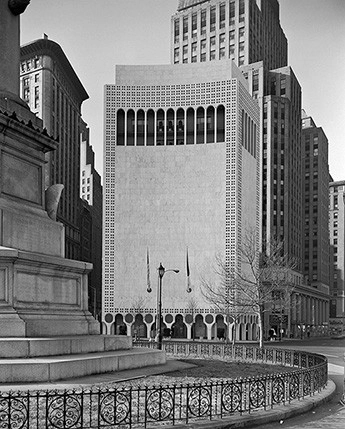
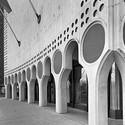
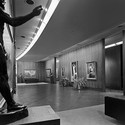
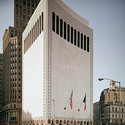
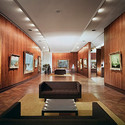
Located on a small and irregular shaped island at Columbus Circle, one of the busiest intersections in Manhattan, lies 2 Columbus Circle, formerly known as the Gallery of Modern Art. Famously described as a “die-cut Venetian palazzo on lollipops” by Ada Louise Huxtable, the New York Times architecture critic at the time, the 10-story poured concrete structure has been a source of consistent controversy and public response since the 1960s. Designed by Edward Durell Stone, an early proponent of American modern architecture, 2 Columbus Circle represents a turning point in his career. Uncharacteristic of Stone’s prior work, his use of ornament on an otherwise modern structure can be seen as an important precedent of the development of the soon-to-emerge Postmodern movement.
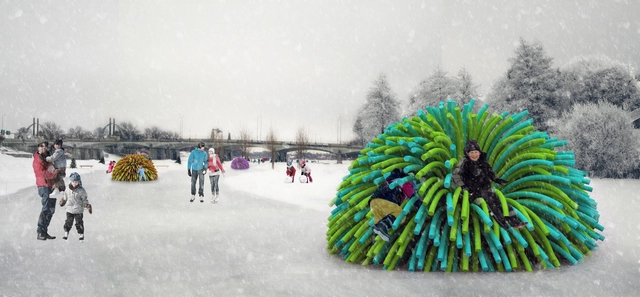
Toronto-based RAW Designhas been crowned winner of the annual Warming Huts competition, which is intended to “push the envelop of design, craft and art” by encouraging architects to design innovative warming shelters along the frozen Red River Mutual Trail in Winnipeg, Canada.
Moving away from the traditional notion of an enclosed shelter, the firm’s winning proposal “Nuzzles” engages skaters with a playful arrangement of “insulated appendages” (a.k.a. pool noodles) supported by a geodesic lattice structure that is illuminated and heated from within. Users are encouraged to “nestle into the structure” and manipulate its fur-like exterior into informal resting areas.
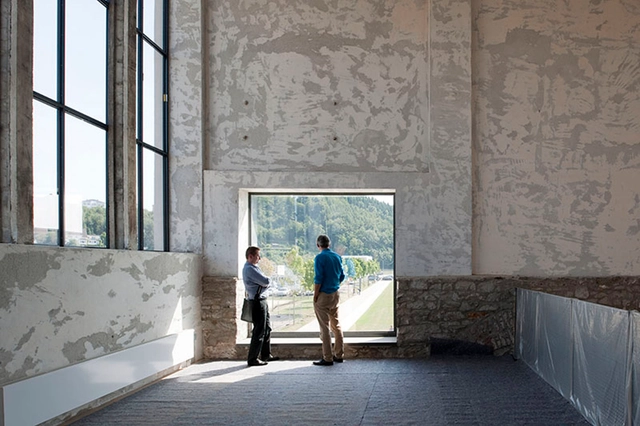
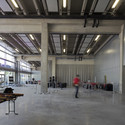
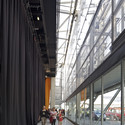
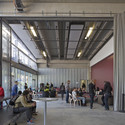
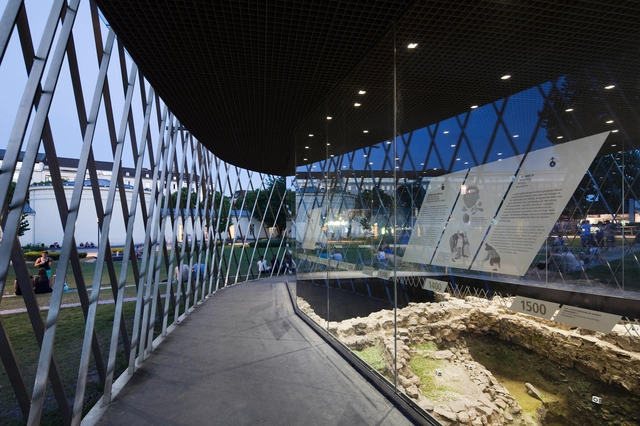
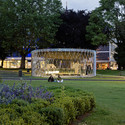
As part of the Shenzhen Architecture Biennale, Finnish practice Lassila Hirvilammi Architects entered into a collaboration with Chinese architect Gigi Leung to explore the themes of copying, authenticity and knowledge transfer between cultures. Working with master craftsmen, they created two versions of the same space (each influenced by their respective cultures), intentionally blurring the line between copying and taking inspiration.
Read on for more on this lesson in sharing differing architectural understandings
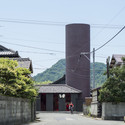
“This is the worst space I have ever encountered,” claimed Hiroshi Sugimoto in regards to the OMA-designed main gallery space at Seoul’s Leeum Samsung Museum of Art. Not a stranger to criticism, the Japanese photographer has decided to take museum design into his own hands, drafting what he claims to be the “ideal museum” on a coastal site in Japan’s Kanagawa Prefecture.


.jpg?1392350936&format=webp&width=640&height=580)
.jpg?1392351229 "Courtesy of Bahadir Kul Architects")
.jpg?1392351112 "© Ket Kolektif")
.jpg?1392350983 "© Ket Kolektif")
.jpg?1392351040 "Courtesy of Bahadir Kul Architects")
.jpg?1392350936)









_Tuomo_Tammenpa%C3%8C%CB%86a%C3%8C%CB%86.jpg?1391784293&format=webp&width=640&height=580)
_Tuomo_Tammenpa%C3%8C%CB%86a%C3%8C%CB%86.jpg?1391784314 "© Tuomo Tammenpää")
_Pekka_Turunen.jpg?1391784061 "© Pekka Turunen")
_Tuomo_Tammenpa%C3%8C%CB%86a%C3%8C%CB%86.jpg?1391784144 "© Tuomo Tammenpää")
_Tuomo_Tammenpa%C3%8C%CB%86a%C3%8C%CB%86.jpg?1391784245 "© Tuomo Tammenpää")
_Tuomo_Tammenpa%C3%8C%CB%86a%C3%8C%CB%86.jpg?1391784293)