Since the 2015 Paris agreement, mitigating climate change has been established as a common, world-encompassing goal; however, both the impacts of the climate crisis and the actions currently being taken vary widely across the globe. At the moment, the most prominent cities are outpacing governments in addressing the climate crisis and fostering a green transition, but their actions are counteracted by inaction and an increase in carbon emissions elsewhere. Moreover, the vulnerabilities and adaptive capacity to different levels of climate disruptions vary across nations. Discussing environmental inequalities through the lens of climate risks and mitigation actions, the following highlights the need for a global coordinated and transdisciplinary effort in addressing the climate crisis.
The way our world looks like today is a result of centuries and centuries of human migration, of complex natural phenomena that has resulted in the geographic appearance of the world’s continents today. We understand this world through our lived experiences, but we also understand this world through a two-dimensional man-made invention – maps. Maps define the many contested borders of the world and have been used in an oppressive capacity, in particular places, for example, segmenting off sections of a place from marginalised societal groups.
In the evolving campaign to combat climate change, big and bold solutions are increasingly easy to find, from the conceptual “water smart city” and ecologist Allan Savory’s vision for greening the world’s deserts to NYC Mayor Bill de Blasio’s plan to turn part of Governors Island into a “living laboratory” for climate research. Oyster reef restoration is occurring at nearly every critical junction along the eastern seaboard, from Florida to Maine. These are worthy efforts, and yet, when considered collectively, the onus for solving our climate crisis is being left largely to municipal governments and private actors, making most solutions piecemeal, at best. The success of one approach has little to no correlation with that of another. But what happens when all related solutions can be applied within a single, controlled ecosystem when environmentalism and urbanism are not at odds, but working in concert? Enter the experimental city.
https://www.archdaily.com/968595/rethinking-the-role-of-experimental-cities-in-combating-climate-changeJustin R. Wolf
Time magazine has released the World’s Greatest Places Of 2021, selecting 100 destinations from around the globe. With revitalized riverfronts, affordable artistic incubators, and superlative city-states, the list is a tribute to the built and natural environment that found a way “to adapt, build and innovate”, amidst the challenges of the past year.
Encompassing the world’s longest pedestrian suspension bridge, London’s Design District, new repurposed spaces in Helsinki, Historic gems in South Korea, and Hanoi’s renewed life in the old quarter, the World’s Greatest Places Of 2021 has a considerable selection of architectural destinations.
The Covid-19 pandemic has been going on for over a year now, so people have consequently been traveling less, and tourism has slowed down all over the world. But that doesn't mean we still can't get to visit faraway places. Since the beginning of the lockdown, several museums and organizations have been preparing virtual tours that allow users to explore their spaces through digital immersion. With that in mind, here are four different ways for you to explore places without leaving your home.
Cities we live in today have been built on principles designed decades ago, with prospects of ensuring that they are habitable by everyone. Throughout history, cities have been catalysts of economic growth, serving as focal points for businesses and migration. However, in the last decade, particularly during the last couple of years, the world has witnessed drastic reconfigurations in the way societies work, live, and commute.
Today’s urban fabric highlights two demographic patterns: rapid urbanization and large youth populations. Cities, although growing in scale, have in fact become younger, with nearly four billion of the world’s population under the age of 30 living in urban areas, and by 2030, UN-Habitat expects 60% of urban populations to be under the age of 18. So when it comes to urban planning and the future of cities, it is evident that the youth should be part of the conversation.
In this week's reprint from Metropolis, author Leilah Stones explores how across the globe, architects, designers, and planners are redefining what it means to be an advocate in the design profession, listing 6 initiatives that practice design justice.
https://www.archdaily.com/968178/six-initiatives-model-ways-to-practice-true-design-justiceLeilah Stone
Questioning the new now, especially with the new challenges of Covid-19, around the world, cities are advocating for structural change and collective action. Berlin questions, an annual, multi-day conference and a platform for transdisciplinary dialogue, in its 2021 edition “Metropolis: The New Now”, tackled the immediate present, creating a place for debate. Dedicated to local solutions to global challenges, the event took on a hybrid format, at various locations in Berlin and online, resembling the world we live in.
ArchDaily had the chance to meet up with the winner of the Iconic Awards 2021 in the Architects of the Year category Dorte Mandrup, architect, founder, and creative director of Dorte Mandrup Arkitekter at Berlin Questions, to discuss the firm’s latest project in the German capital, the Exile Museum and to reflect on her career and visions.
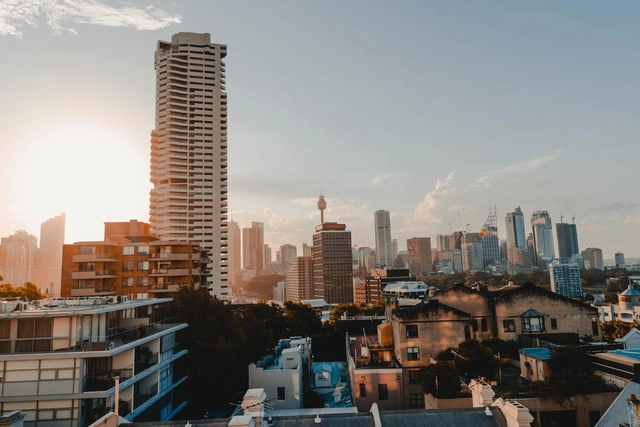
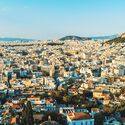
Prolonged heatwaves have been increasingly common in recent years, and cities are devising various strategies for combating the urban heat island effect. As Sydney experienced blistering summer temperatures of up to 50 degrees Celsius, the authorities have recently banned dark roofs on new homes and mandated lighter-coloured alternatives to reflect solar radiation. In Europe, Athens has taken the example of Miami and hired a Chief Heat Officer, tasked with finding coping strategies as the city confronts with heatwaves and wildfires that prompted a large number of residents to vacate the capital.
Questioning the new now, especially with the new challenges of Covid-19, around the world, cities are advocating for structural change and collective action. Berlin questions, an annual, multi-day conference and a platform for transdisciplinary dialogue, in its 2021 edition “Metropolis: The New Now”, tackled the immediate present, creating a place for debate. Dedicated to local solutions to global challenges, the event took on a hybrid format, at various locations in Berlin and online, resembling the world we live in.
ArchDaily had the chance to meet up with Lesley Lokko, architect, academic, and novelist at Berlin Questions, to discuss her talk “Africa as the lab for the future”, her visions for the future of architecture education and the future of big cities on a social, cultural and urban level.
Mogilevich’s study of how the Lindsay administration leveraged political and on-the-ground will to build pocket parks, stump for closing streets and introducing outdoor dining, and reducing racial economic inequality could point the way forward for modern architects and planners. Image Courtesy of Minnesota Press
In this week's reprint from the Architect's Newspaper, author Karen Kubey, an urbanist specializing in housing and health questions if the invention of Public Space is "Invented Or Agreed Upon?" Basing her ideas on a book by Mariana Mogilevich, The Invention of Public Space, the article asks if public spaces are a product of negotiation in the city.
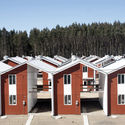
Chile is a country used to natural disasters as much as to the reconstruction process. However, the frequency of these cycles has increased over the years. According to the Ministry of Interior (Homeland), 43% of all natural disasters recorded in Chile since 1960 happened between 2014 and 2017. In fact, the government is already involved in several reconstruction processes across the country.
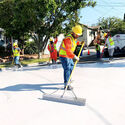
The climate has changed, and we have been left grappling with the consequences: high temperatures, flooding, drought and much more. As the world shifts (or tries to shift) to ways to mitigate the crisis, the architecture and construction industry finds itself in a particularly important position whose choices can create real impact. Some of these choices can include innovative products that offer real solutions to complex problems, such as the cooling down of temperatures in highly dense cities.
https://www.archdaily.com/966730/white-paint-can-cool-down-our-heating-citiesDaniela Porto
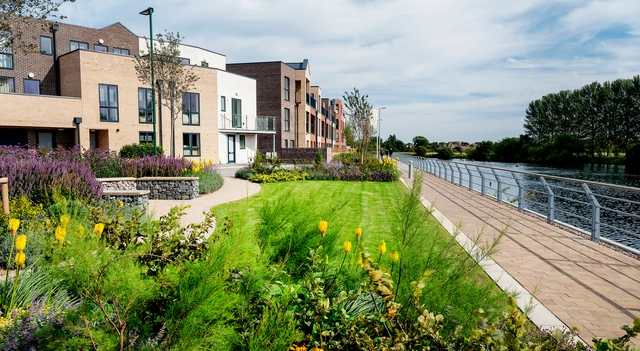
Courtesy of Trent Basin, Nottingham, UK. Blueprint Regeneration, Martine Hamilton Knight
A new report from the Intergovernmental Panel on Climate Change (IPCC) states that global warming of 1.5°C (2.7 °F) is essentially inevitable in coming decades. The question now is whether the world can prevent further, more destructive warming of 2°C (3.6°F), or, even worse, 3°C (5.4°F), which is what current policies put us on a trajectory to experience. Our economies can only put another 420 gigatons of greenhouse gas emissions into the atmosphere if we want a good chance of keeping a temperature increase to 1.5°C instead of 2°C. At our current pace, the world’s carbon budget will be used up before 2030. We need to phase out fossil-fuel use, build thousands of new clean power plants -- and swiftly move to power our homes, offices, schools, and transportation systems with clean energy.
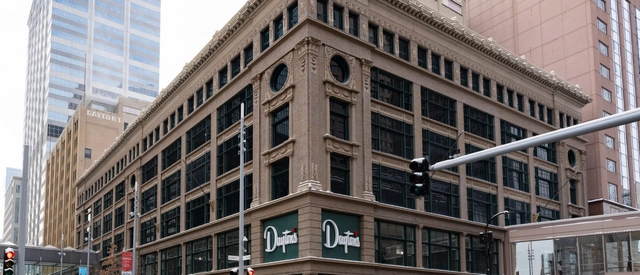
"For more than a generation, federally funded historic tax credits (HTCs) have been instrumental in incentivizing developers to revive and reuse historic buildings and keep them economically viable, rather than replace them with shiny new objects. These credits create jobs, promote responsible development, and leverage billions in private investment to enable income-generating buildings". Read the interview between Justin R. Wolf and Meghan Elliott, founding principal of New History, a firm specializing in adaptive reuse.
https://www.archdaily.com/966687/why-use-is-the-best-form-of-preservationJustin R. Wolf
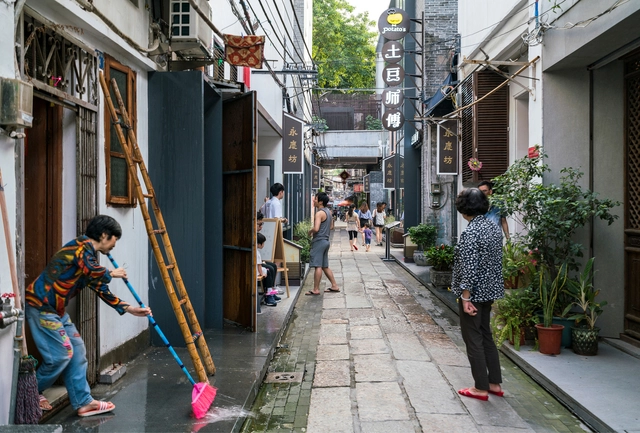
ASLA 2020 Urban Design Honor award. Yongqing Fang Alleyways: An Urban Transformation. Guangzhou, China. Lah D+H Landscape and Urban Design. Image Courtesy of The Dirt
People living in dense cities are among the least happy. Their rates of depression are 40 percent higher than other populations, and their rates of anxiety are 20 percent higher. Why? Because the built environment is directly linked with happiness and well-being, and too often urban environments fail to put people at ease.
In spite of the lull in the global construction industry over the last couple of years, megacity projects in Africa have continued unabated, as new developments are springing up in major cities all over the continent. Though we’re inspired by the growth of modern African cities and the opportunities offered to city residents, we shouldn’t ignore their shortcomings, the glaring disconnect between the utopian visions of local city officials and the economic and cultural realities of the local populations who live here. Many questions whether these new cities could be built in other ways, or if Africans will ever have an alternative to the current model of placemaking, hodgepodge urbanism foisted on it, largely by colonialists.
Jeffry Burchard explores in his essay the "opportunity found by extending the life and purpose of viable existing buildings", that have shaped our cities. Arguing that "we have an abundant supply of buildings", the author proposes four essential steps to transform existing buildings.


.jpg?1632124377)

















.jpg?1562105063&format=webp&width=640&height=580)
.jpg?1562105063)