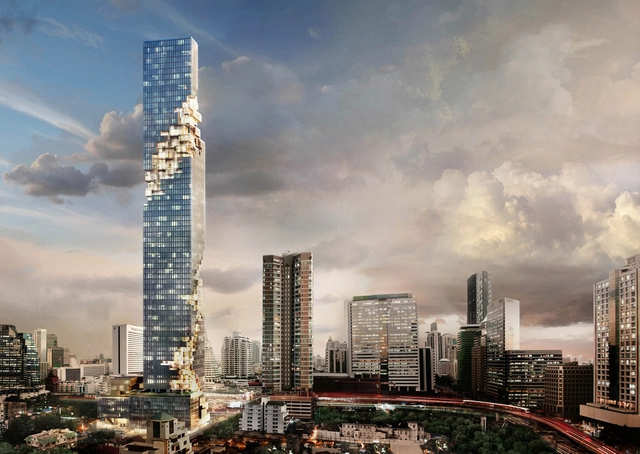
Hong Kong- and Beijing-based Büro Ole Scheeren is expanding with the opening of two new offices in Berlin and Bangkok. As its founder, German architect Ole Scheeren says, the expansion will extend the practice's range of work with projects in Europe and North America. "Büro Ole Scheeren’s Berlin studio will act as a European base for work across the western hemisphere, while Büro Ole Scheeren in Bangkok, together with its subsidiary HLS, is charged with the further design development and construction supervision of the MahaNakhon tower, soon to be completed as Thailand’s tallest skyscraper," says the practice.
Participating in the What Can Design Do conference in Amsterdam, Ole Scheeren took time, along with several other creators, to discuss the impact of the working environment. Playfully dubbed, “Pod Sessions,” each talk takes place in De Vorm’s contemporary Pod chair, the PET plastic improving acoustics and signature Dutch felt providing comfort. In his Pod Session, Ole Scheeren, founder of Buro OS and lead designer on the CCTV Building in China, talks about the nature of a transitional workplace, the importance of collaboration, offices as a creative tool and the necessity of having a personal presence in a project. Having participated in projects across the world, Scheeren frequently moves to the site of his latest projects, as was the case with the CCTV Building.
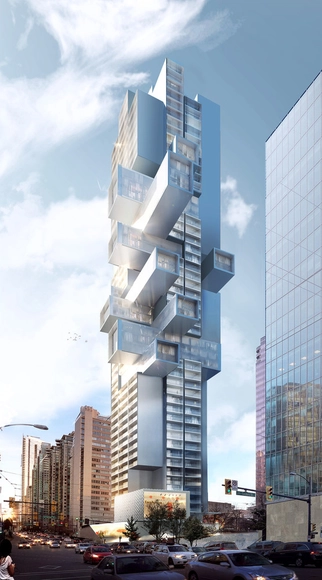
Büro Ole Scheeren has envisioned a "future vision for vertical living." Designed to serve as an "urban pivot" on one of Vancouver's main avenues, 1500 West Georgia Street, the multifaceted tower features a system of vertically shifted apartment modules and outdoor terraces that branch out horizontally to "engage the space of the city and activate Vancouver's waterfront skyline."
“Vancouver possesses a unique balance of urban conditions surrounded by spectacular nature that provides fertile ground for envisioning new possibilities for future living in a cosmopolitan and environmentally-friendly city” says Ole Scheeren. “The design for this building exemplifies our ambition to reconnect architecture with the natural and civic environment and go beyond the hermetic confines of towers that increasingly inscribe our lives.”
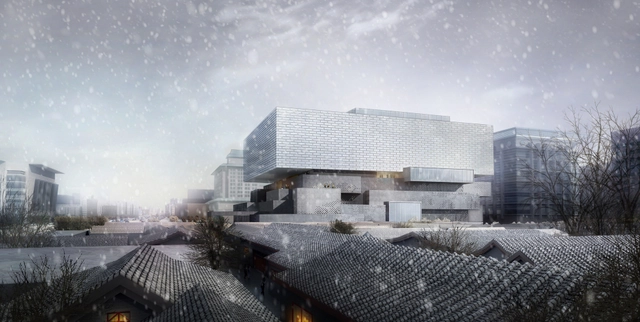
The Guardian Art Center features none of the dramatic cantilevers and futuristic formal experimentation of Büro Ole Scheeren's other works. Instead the "hybrid art space" - located in the heart of Beijing, just a stone's throw from the Forbidden City - references the scale and materiality of the adjacent traditional buildings. The lower floors, containing an auction house and a museum with a 1,700 square meter exhibition-events space, comprise an aggregation of small "pixelated" blocks, clad in stone with a pattern of perforations derived from a 700-year-old Chinese landscape painting. Though the upper portion of the building, containing a 120-room hotel and a restaurant, is larger in scale, it is broken down by a facade of oversized glass "bricks," again a reference to the materials of the hutong next door and a "humble and non-elitist symbol in Chinese culture," according to the press release.
To find out more about this intriguing building, we spoke to Ole Scheeren, who assured us that in spite of its appearance, the Guardian Art Center is just as radical as his previous works. Read on after the break for the full interview.
In this interview, conducted by the Council for Tall Buildings and Urban Habitat, Ole Scheeren discusses the ideal height for sustainable buildings. Drawing reference from two of his projects, MahaNakhon and The Interlace, he speaks to the difference between height and density, and how those two interplay when creating livable spaces in urban areas. He goes on to talk about how large buildings such as skyscrapers can be made more open to the surrounding city, both visually through programming. Watch the full clip above!
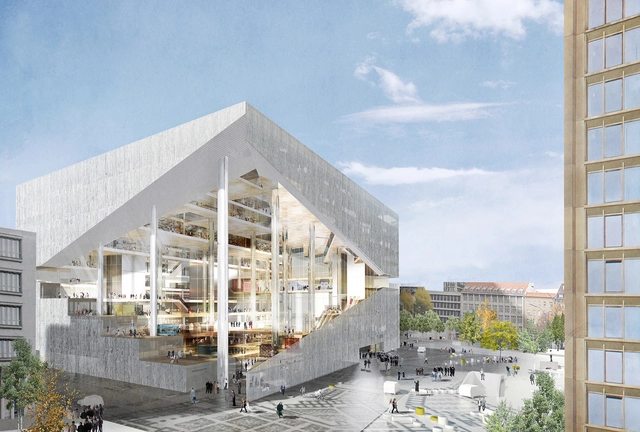
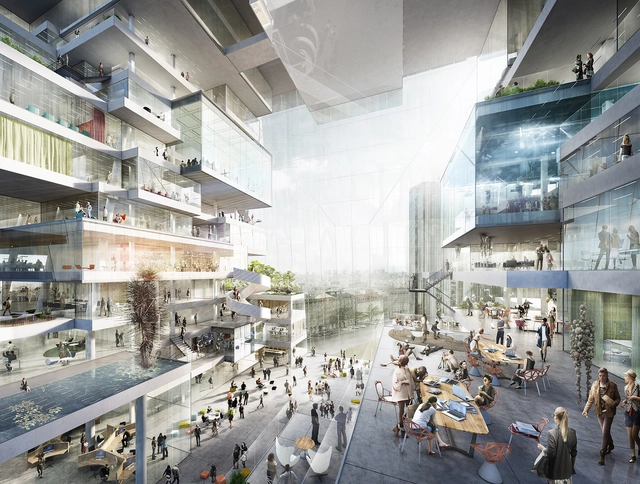
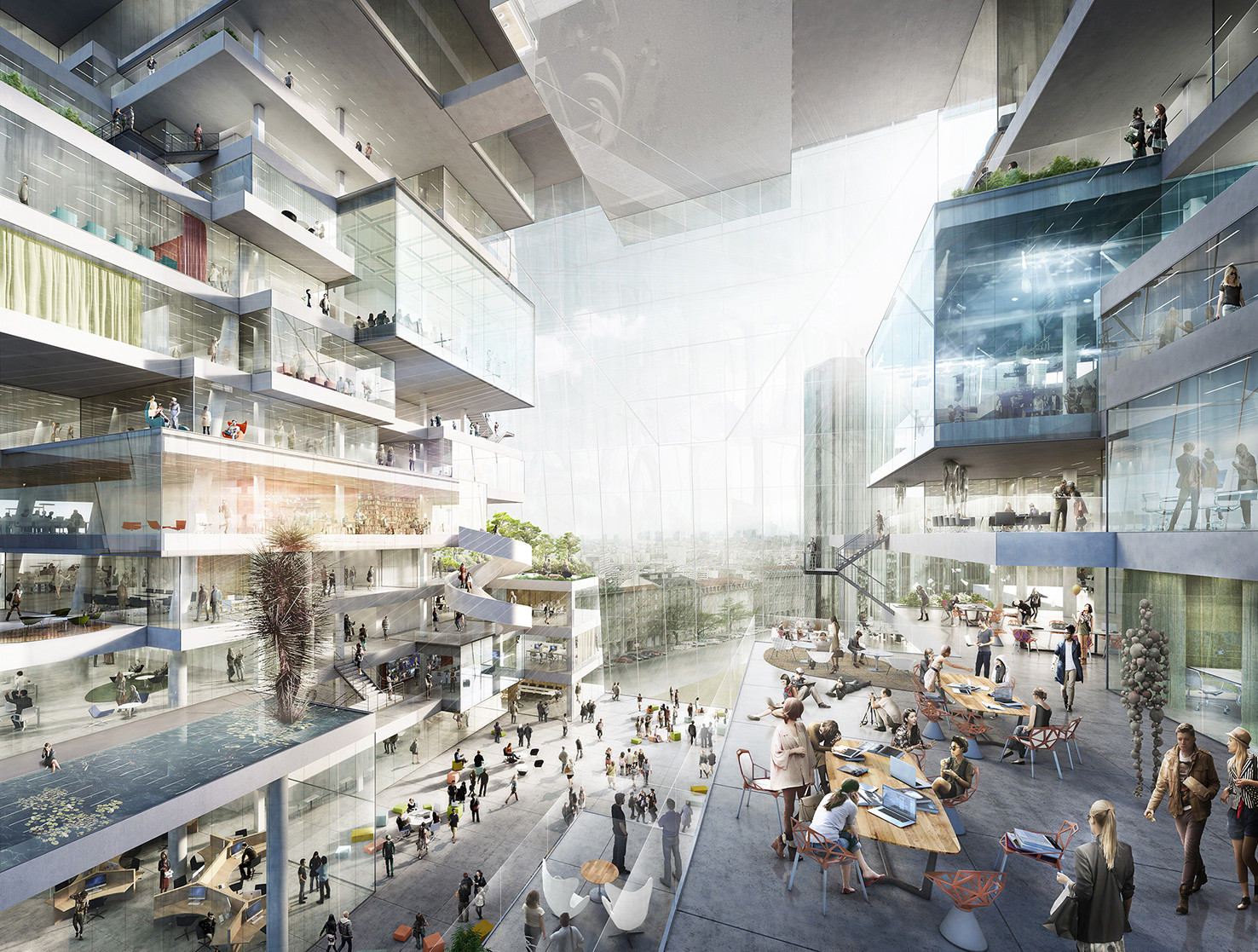
The task of the competition was to create additional space for the media company, particularly its digital offers, and thus design a workplace fit for the future of online media. Koolhaas' design, which features a large 30-meter high atrium or "open valley" with interconnected terraces and public workspaces for both individual, collaborative, and mobile work, won favor with the jury for its forward-thinking concept. As Dr. Mathias Döpfner, Chief Executive Officer of Axel Springer SE, commented: “[Koolhaas] presented the conceptually and esthetically most radical model. The fundamental innovation of working environments will support the cultural transformation towards a digital publishing house."
For his part, Koolhaas had this to say: “It is a wonderful occasion to build in Berlin again, on this historical site of all places, for a client who has mobilized architecture to help perform a radical change…a workplace in all its dimensions.”
See more of OMA's winning proposal, after the break...
Proposal from Büro-OS. Image Courtesy of Axel Springer SE
UPDATE: OMA has provided more information and images of their proposal, see them after the break.
BIG, Büro Ole Scheeren, and OMA have been announced as the three finalists in the competition to design the new Media Campus for AXEL SPRINGER SE in Berlin, Germany, beating out Kuehn Malvezzi and SANAA. The final ranking will be released in January.
The new campus will be located on the historic site of the former Berlin Wall, what was once a no-man’s land. All three proposals address this contentious history as well as the demands of a 21st century workplace. President of the jury, Prof. Dr. Friedrich von Borries, proclaimed that: "All three projects show how fascinating architecture can be today. No matter which of the three proposals will be realised: The competition is already an enrichment of Berlin's building culture." See all three proposals, after the break...
Buro Ole Scheeren, the architect behind one of the most iconic buildings of the 21st century, the CCTV headquarters in Beijing, recently revealed his design for a new landmark tower in the heart of Kuala Lumpur. The 268 meter tall tower, Angkasa Raya, was unveiled today at an official ceremony in the capital of Malaysia. Now, the country will once again appear on the world stage with a stunning new piece of architecture that alters the perception of what a skyscraper can be and how it connects to the city by inviting life into its balancing heights and visually projecting it back into the urban landscape as a symbol of the multi-cultural society. More images and architects’ description after the break.