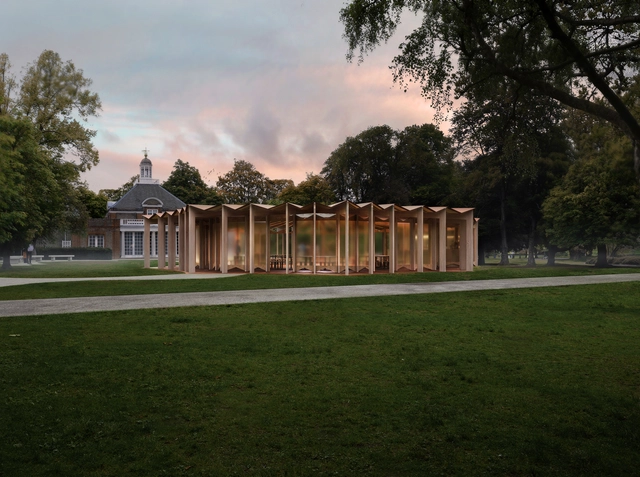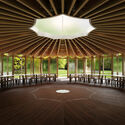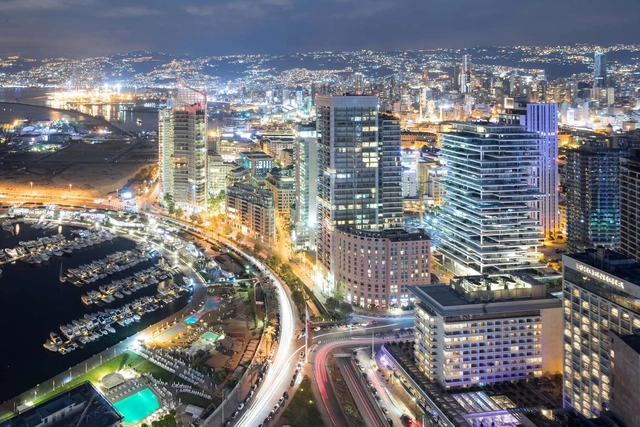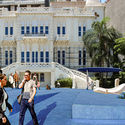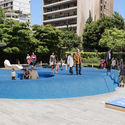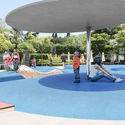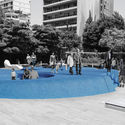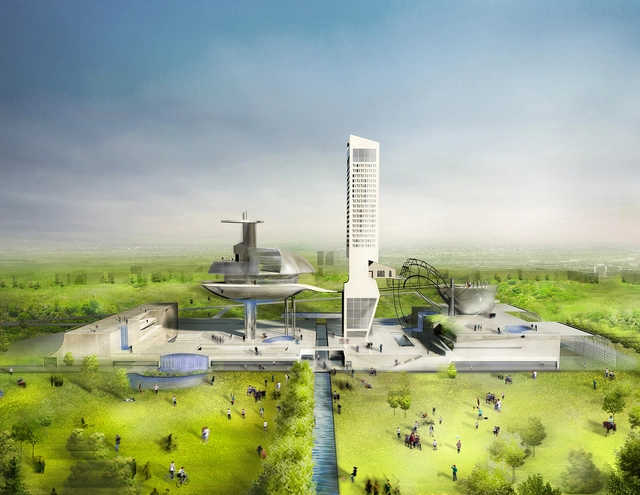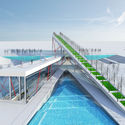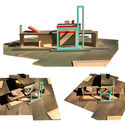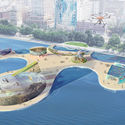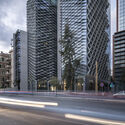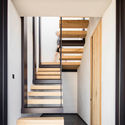
Following the devastating explosion that took place on August 4th, 2020, Studio Etienne Bastormagi, along with Nada Borgi and Sandra Richani of Hatch Architects and Planners have designed a modular public installation for the historic Sursock Museum in Beirut, Lebanon, a structure that was heavily impacted by the explosion and is currently undergoing renovations. Titled "Diving Board", the installation creates a new link between the museum and visitors by opening up the structure’s gated esplanade, creating a new interchangeable public space within the culturally-rich district.
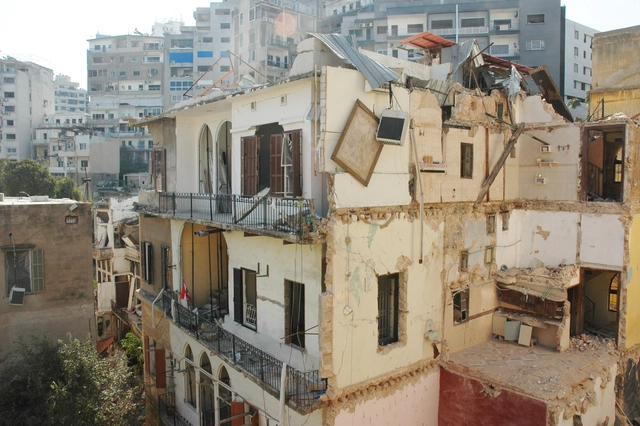
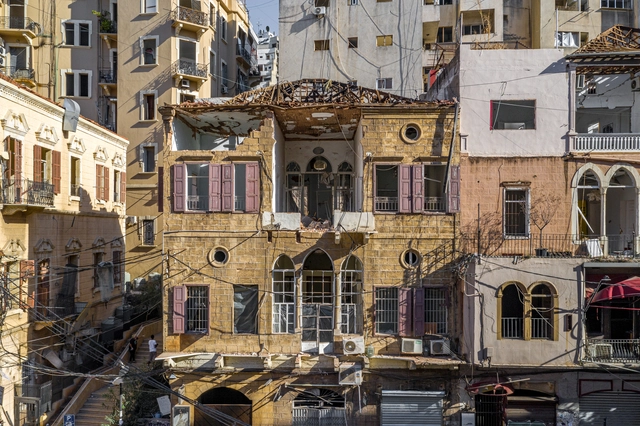
Heritage Buildings of Beirut, Lebanon. Image Courtesy of World Monuments Fund
The World Monuments Fund has released its 2022 World Monuments Watch list, a selection of 25 sites from across the globe that hold great cultural and heritage significance but are being faced with economic, political or natural threats. This year's selection highlights themes of global issues such as climate change, imbalanced tourism, underrepresentation, and recovery from crisis, urging for prompt preservation plans.
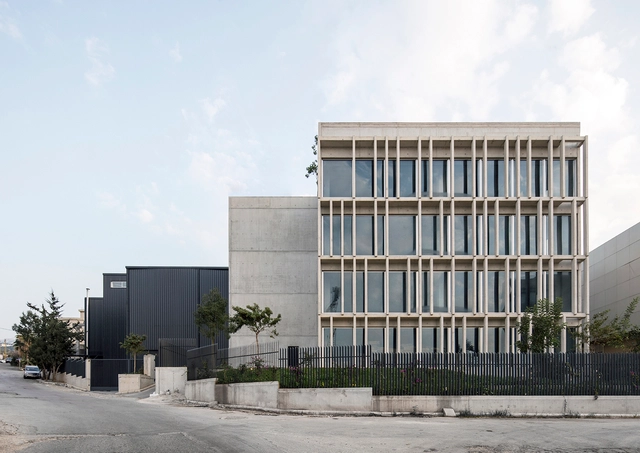
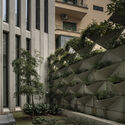
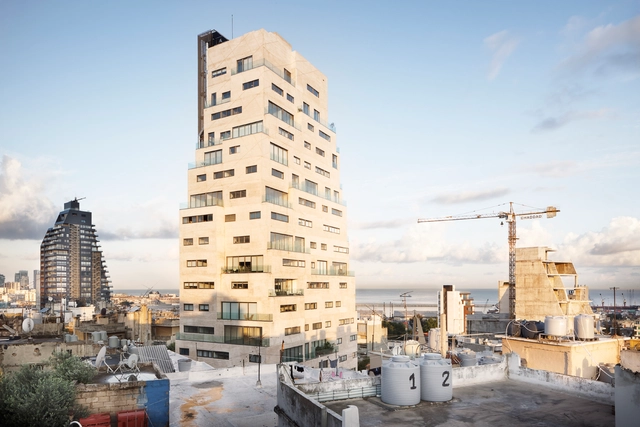
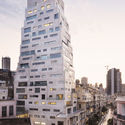
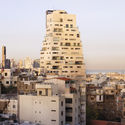
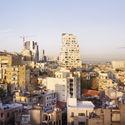
‘’We’re in a seismic area. Beirut has been buried seven times, so it has to resist any earthquake, and that’s why it also resisted the explosion in the port,’’ expresses Lina Ghotmeh in conversation with Louisiana Channel, in regards to the Stone Garden. A building constructed with resilience in mind, in a city that has been buried within rubble and rebuilt multiple times.
Lina Ghotmeh was interviewed by Marc-Christoph Wagner at her studio in Paris in November 2021. Renowned for her Humanist approach to Architecture, the Stone Garden offers a very personal relationship as the first building to be constructed in Ghotmeh’s hometown of Beirut. Positioned on the edge of the city center, it is very much a form of vernacular architecture echoing the lives of the people who reside here.
Hydro Healing Center, Yerevan, Armenia, 2015. Image Courtesy of Nishan Kazanian
What follows this short introduction is my unusually personal interview with a Lebanese-American architect and artist Nishan Kazazian. His work is inspired by numerous sources that come from many directions such as Kintsugi, the Japanese art of putting broken pottery pieces back together, primary color geometric abstractions evocative of Russian Constructivism, as well as paintings by Piet Mondrian and Paul Klee. Yet, a stronger inspiration comes from his memories of home and family history. Layering and superimposition of cultures and languages were constantly present in his life since childhood and remain guiding forces to Kazazian, who is both a licensed architect and a professional artist.
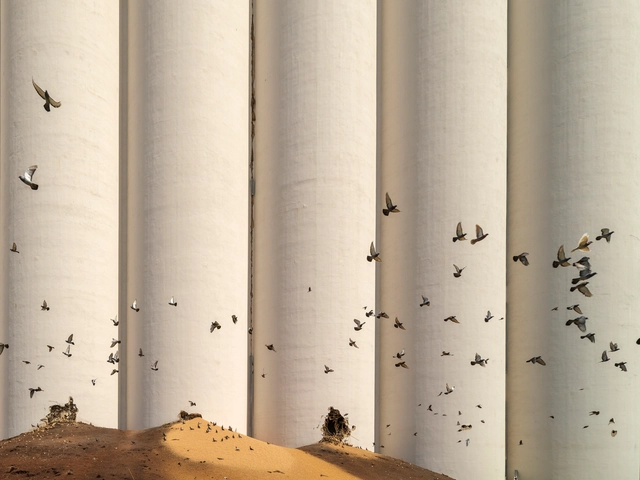
Exactly a year ago, on August 4, 2020, the third-largest non-nuclear explosion ever-recorded destroyed almost half the city of Beirut, ripping through the port and the eastern part of the capital. One of the biggest urban tragedies of modern times, killed more than 200 people, wounded thousands, and left an estimated 300,000 people homeless, damaging over 80,000 commercial, residential and public spaces. Felt across neighboring countries, the blast stripped the city’s constructions of their cladding, framing, and glass elements, while completely tearing down other buildings, leaving around US$15 billion in property damage, in times of Covid, political and social unrest, and economic collapse.
One year later, so little has changed. One year later, it only became harder for the people of Beirut. One year later, everything in the city still reminds them of that day. Major questions remained unanswered, no rescue or action plans have been taken by governmental institutions, instead, civil society rose to take into their own hands, reconstruction efforts, in the total absence of the state.
For Design and the City's sixth episode - a podcast by reSITE on how to make cities more liveable, the team interviewed Christele Harrouk, Archdaily's Managing Editor and Salim Rouhana, Senior Urban Governance and Resilience Task Team Leader at the World Bank Group. The two Beirut natives talk about the devastating explosion in August last year and share their perspectives on what rebuilding the city could look like.
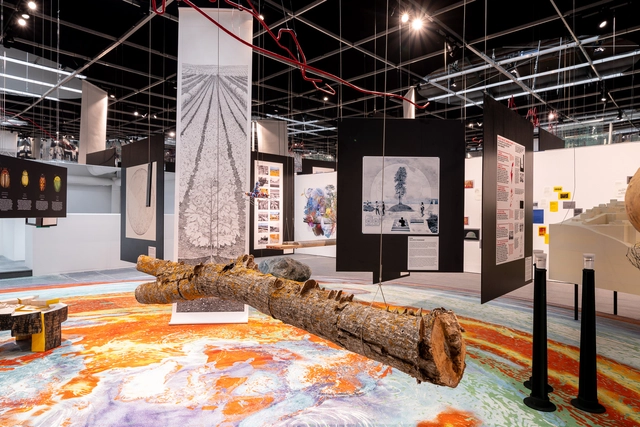
The 17th Venice Architecture Biennale invited architects to ponder the question “How will we live together”, eliciting various answers and interpretations. The International Exhibition unfolding in Giardini, the Arsenale and Forte Maghera presents 113 participants in the competition, coming from 46 countries, whose contributions are organized into five scales: Among Diverse Beings, As New Households, As Emerging Communities, Across Borders, and As One Planet. The following participants explore a variety of subjects, prompting a holistic re-evaluation of the collective in relationship with issues ranging from the urban and natural environment to climate action or the relationship with other species.
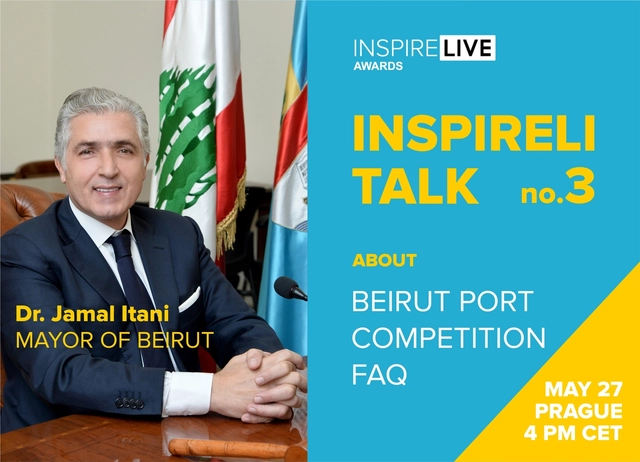
Inspireli Awards will be holding its 3rd live stream this Thursday May 27th at 4 PM CET with special guest MAYOR of BEIRUT Jamal Itani. The topic of this talk will be the Port of Beirut renewal student competition (registration already opened) announced by the Municipality of Beirut and Order of Engineers & Architects and organized by Inspireli Awards. Please join us at this one-of-a-kind event in 72 hrs at Inspireli Awards News website - https://www.inspireli.com/en/awards/news
https://www.archdaily.com/962395/port-of-beirut-renewal-student-competition-live-stream-with-the-mayor-of-beirutArchDaily Team
Almost 6 months ago, on August 4th, 2020, the city of Beirut was shaken by one of the biggest non-nuclear blasts in history. Leaving the northern side of the capital in ruins, the explosion damaged around 40,000 buildings. New contemporary structures completed recently by local international architects are now facing reconstruction dilemmas, raising existential questions such as: How should reconstruction efforts of “new” damaged buildings look like? Should architects rebuild them as they were before the blast, erasing what has happened or should they leave scars and portray new realities?
In order to explore ideas and highlight different perspectives, ArchDaily had the chance to sit with three architects whose buildings were impacted by the blast. Bernard Khoury, Paul Kaloustian, and Lina Ghotmeh talked about their projects and their vision of the reconstruction of Beirut with ArchDaily's Managing Editor, Christele Harrouk, alongside Architectural Photographer Laurian Ghinitoiu, who documented in a featured photo series the extent of the destruction.
In cities across the United States, an address is more than just a street name or a building number- but a brand that translates directly into a symbol of wealth and prestige. Take the tallest residential tower in the country, 432 Park Avenue in New York City, which doesn't actually sit quite on park avenue. Instead, it’s neighboring lot to the east sits on Park Avenue, and this mega structure actually faces 56th avenue- a significantly less iconic street. However, this inflated valuation doesn’t happen everywhere. Cities in other countries don't place the same weight on an address and refer to buildings or locations as landmarks or by their appearances, which doesn't force a high monetary value based on an address or a marketing scheme alone. How do places in the world differ in how they brand buildings and streets in cities, and what does that tell us about their urban culture?
Sir David Adjaye Studio. Image Courtesy of Design Miami/Architects for Beirut
Design Miami’s latest initiative in partnership with Architects for Beirut, has gathered a collection of 100+ original architectural drawings and artworks donated by 90+ renowned architects from around the world. With proceeds going to aid on-the-ground restoration efforts in Beirut, works offered include exclusive pieces from Zaha Hadid, David Chipperfield, Toyo Ito, Steven Holl, Tatiana Bilbao, Adjaye Associates, and Renzo Piano, to name a few.
In the second part of his interview with Archdaily, Hashim Sarkis reflects on the future of architecture as he tackles the timeless question of the 2021 Venice Biennale. The curator of the Biennale, which proposes the question of “How Will We Live Together?”, discusses the role of the profession in the midst of all these new paradigms, stating that “Architects do change the world […] by creating […] wish images for what the world could be”.
In this feature, the curator of the anticipated biennale and dean of MIT School of Architecture and Planning presents his views on the evolution of Architecture, and the new directions the academic world should take, to reflect “the complexity of the urban problems of today”. Sarkis also brings up Beirut, discussing reconstruction approaches, civil society, and the exasperating notion of resilience.