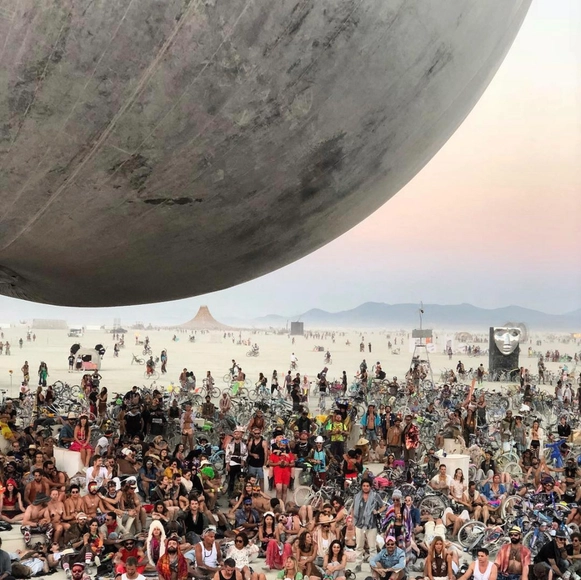
As Burning Man 2018 comes to a close, snapshots and glimpses of the event have begun to emerge in the mediasphere. The most recognizable among these is, perhaps, BIG's Orb, a hovering sphere representing a scaled version of the earth itself.
https://www.archdaily.com/901298/the-best-structures-of-burning-man-2018AD Editorial Team
What do dance and architecture have in common? It's difficult to explain how our experiences of dance are stored in our bodily memory, but central to our recollection of a performance is the architectural space that it inhabited. Although dance may have been the central focus, the site is integral to its experience. Both disciplines are fundamental when exploring the ways we navigate and create cities and urban spaces.
It's no surprise that many choreographers explore both disciplines: dance and architecture. These pieces question how our bodies navigate through built environments. However, it is important to note that this experimentation is not merely contemplative but speaks to the way specific groups of peoples and cultures operate in their surroundings. In the words of the philosopher Marina Garcés: "The body is no longer what is and binds us to a place, but it is the condition for every place. It is the zero point of all the spatialities that we can experience, and at the same time, all the links that constitute us, materially and psychically."
Working life as an architect is notoriously difficult. Unreasonable demands from clients, be they about budget, deadlines, or design (not to mention uncompromising personal standards) make the job tough, particularly as architecture continues to be seen as a product. And while it's no reason to accept low (or unequal) pay, troubling mental health, or any of the myriad issues architecture seems beset with, architects anywhere will tell you: you do it because you love it.
https://www.archdaily.com/901160/this-week-in-architecture-labors-of-love-from-the-hedonistic-to-the-homegrownKatherine Allen
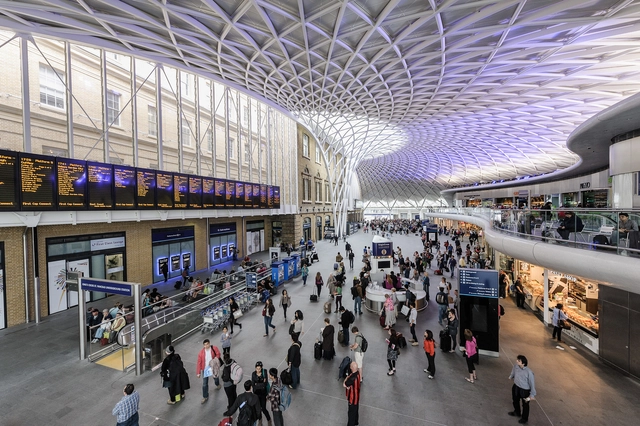
Courtesy of Flickr user Andrew Stawarz. ImageKing's Cross Station Concourse / John McAslan + Partners
In Europe, Asia and much of the developed world, high speed rail is convenient and accessible. Whether for business or pleasure, travelers are served by an efficient and extensive rail network that connects passengers to the desired destination on time and with relatively little effort. Although these train systems can travel as fast as 350 kilometers per hour, speed is not the only important factor. Rail stations in Europe, for example, are an integral part of the historic urban fabric. These facilities are often perceived as civic destinations that play a fundamental role in the mobility system, providing a wide range of services for the larger collective; shopping,entertainment, commercial and civic uses are often paired with transit services as new stations are built and historic stations are retrofitted.
While cemeteries have long served as a place in which we can honor and remember our loved ones, they are also often places that showcase architecture, and landscape design. In the late 19th century, cemeteries evolved from overcrowded and unsanitary urban spaces into rural, park-like social centers. In cities that lacked public parks, cemeteries became popular destinations for picnics, holidays, and other family gatherings.
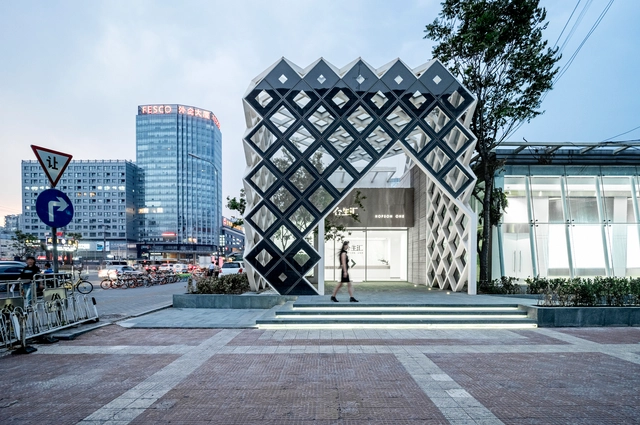
Manuel N. Zornoza grew up in Alicante, Spain and, following studies in Madrid (UAX) and London (the AA), relocated to China in 2010 to avoid the economic crisis stifling architectural work in his home country. Over the last eight years, the young architect’s small but thriving studio has built more than a dozen projects, from shops, to factory space conversions, to a traditional Chinese hutong - all in China. But that’s not to say Zornoza’s left his roots behind. He now also maintains a small practice in Madrid, which handles projects in both China and Spain.
This interview was conducted on a bullet train ride from Beijing to Tianjin, where we ventured in search of the recent architecture that has brought so much media attention to this emerging metropolis.
At a new corporate headquarters in Chicago’s West Loop neighborhood, there’s a double-height lobby filled with green walls and massive art installations. Travel to its top floor roof deck and you’ll find a cozy fire pit next to a fitness center and bar (happy hours are on Thursday). Elsewhere, stair-seating terraces face floor-to-ceiling windows with views of the Chicago skyline. This vertical campus settles in peaceably among its tony Randolph Street neighbors—Michelin stars, tech giants, and boutique hotels. At first glance, it’s refined and tasteful enough to be any one of these.
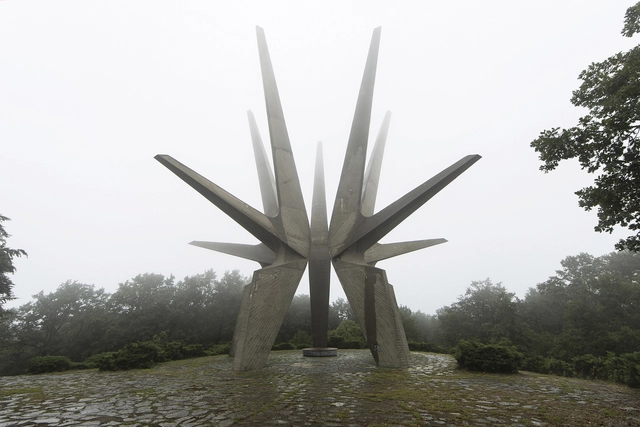
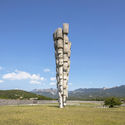
Thirty years after the breakup of the former Yugoslavia, the traces of the regime seem increasingly few and far between. Among the still existing monuments, conditions are mixed: some remain pristine, others are worn away after years of exposure to the elements.
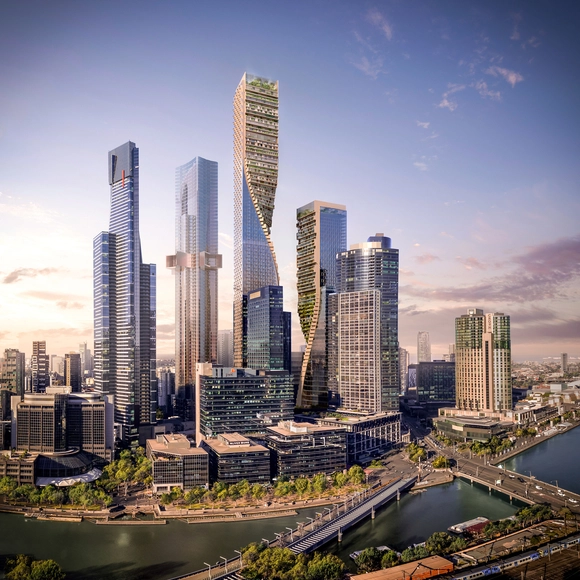
Green Spine / UNStudio + Cox Architecture . Image Courtesy of UNStudio / Cox Architecture
Australia loomed large in the news this week following the announcement for the continent's tallest tower in Melbourne. The competition, which was won by a joint bid from UNStudio and Cox Architecture, boasted designs from some of the world's best-known firms including MVRDV, OMA, MAD, and BIG.
https://www.archdaily.com/900424/this-week-in-architecture-australias-tallest-tower-and-questions-about-infrastructureKatherine Allen
In the last global survey undertaken by the United Nations in 2005, there were an estimated 100 million people who were homeless around the world and 1.6 billion who lived without adequate housing. This number has escalated in recent years; unaffordable housing has become a global norm, making it increasingly difficult for the disadvantaged to seek out permanent, or even temporary shelter.
As housing becomes a means of accumulating wealth rather than fulfilling its fundamental goal of shelter, well-intentioned architects have attempted to solve the homelessness crisis through creative ideas and innovative design. But is architecture really the solution?
James Stirling (1926-1992) was a British architect who is considered by many as the premier architect of his generation and an innovator in postwar architecture. Some of his most famous projects include the Sackler Museum, No 1 Poultry, and the Neue Staatsgalerie. Through the influence of his teacher Colin Rowe, Stirling had a deep understanding of architectural history, yet never adopted a singular doctrine. His career began with designs that were more aligned with what would later be labeled as the high-tech style, but evolved into buildings that were a series of dynamic and often colorful arrangements. Stirling’s aesthetic tropes ultimately gave the final push that broke architecture free from the clutch of post-war European Modernism as he turned the Modernist canon of “form follows function” into a hyperbole by celebrating the expression of a building’s program with his over-the-top details. Stirling’s work is still largely influential, and the recursive wave of history has shown that the underlying implications of his oeuvre remains somewhere in all architectural practice of the present day.
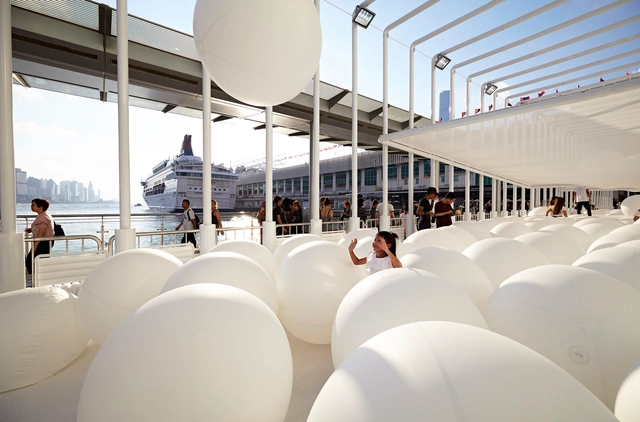
New York-based collaborative and design studio Snarkitecture have unveiled their newest interactive installation, bringing a surreal sense of play to Hong Kong’s waterfront. Titled “BOUNCE,” the installation features hundreds of 300% sized bouncing balls contained in a cage-like stadium, inviting the public to “create their own unique playing experiences.”
The program is spread across three locations, with the feature installation along the Harbour City waterfront, an indoor installation at the Ocean Center titled “Gallery by the Harbour,” and a children’s “Eyeball Maze” at the Ocean Terminal.
Upon its completion in 1966, Sewoon Sangga, designed by prominent South Korean architect Kim Swoo-geun, was a groundbreaking residential and commercial megastructure consisting of eight multistory buildings covering a full kilometer in the heart of Seoul. Like other futuristic projects of the decade, it was conceived as a self-contained city, complete with amenities that included a park, an atrium, and a pedestrian deck. But construction realities crippled Kim’s utopian vision, compromising those features. By the late 1970s, Sewoon Sangga had shed residents and anchor retail outlets to newer, shinier developments in the wealthy Gangnam district across the river. Between Sewoon’s central location and plunging rents, the building became a hub for light industry—as well as illicit activity.
This article was originally published by Jude Fulton on Medium under the title "Why Architects are Super Well-Suited for Startups". You can see the original post here.
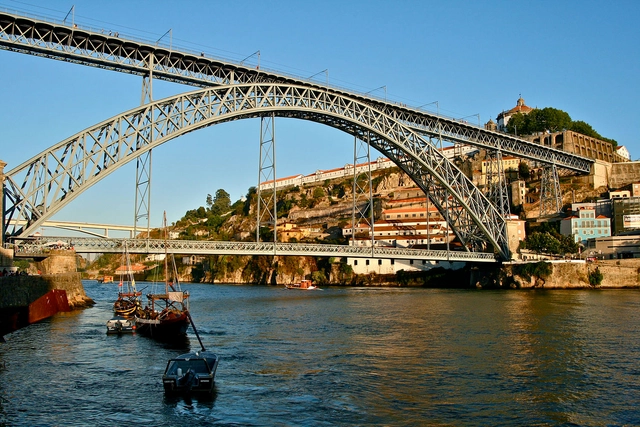
via Wikimedia. ImageDom Luis Bridge / Porto, Portugal
An unfortunate fact of the AEC (architecture, engineering, and construction) industry is that, between every stage of the process—from planning and design to construction and operations—critical data is lost.
The reality is, when you move data between phases of, say, the usable lifecycle of a bridge, you end up shuttling that data back and forth between software systems that recognize only their own data sets. The minute you translate that data, you reduce its richness and value. When a project stakeholder needs data from an earlier phase of the process, planners, designers, and engineers often have to manually re-create that information, resulting in unnecessary rework.



.jpg?1532465132&format=webp&width=640&height=580)