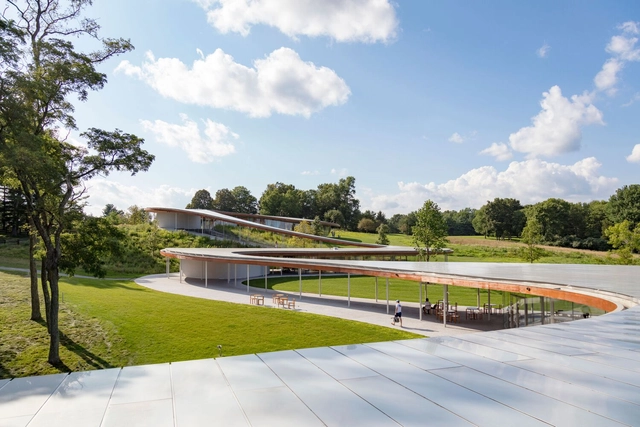
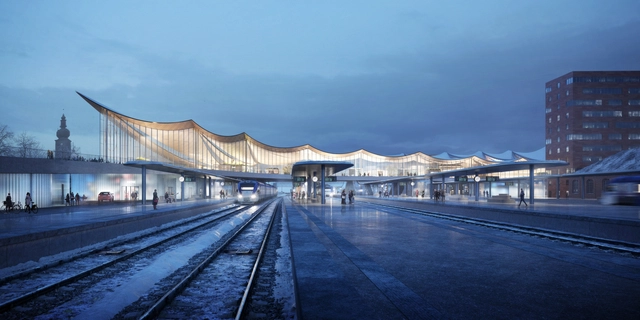
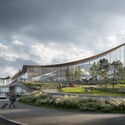
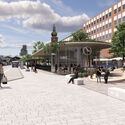
Bjarke Ingels Group has unveiled the final design for Västerås Travel Center, a transport infrastructure hub bringing together multiple travel modes within one cohesive architectural object. The project's defining feature is a light, undulating roofscape unfolding across the various complex elements of the program that make up the urban node, creating a new landmark for one of Sweden's largest cities.
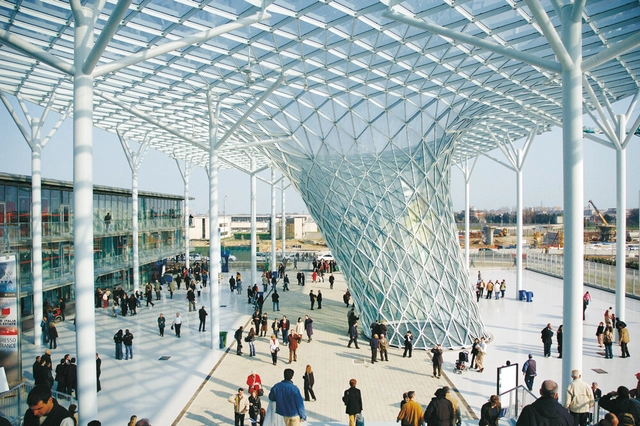
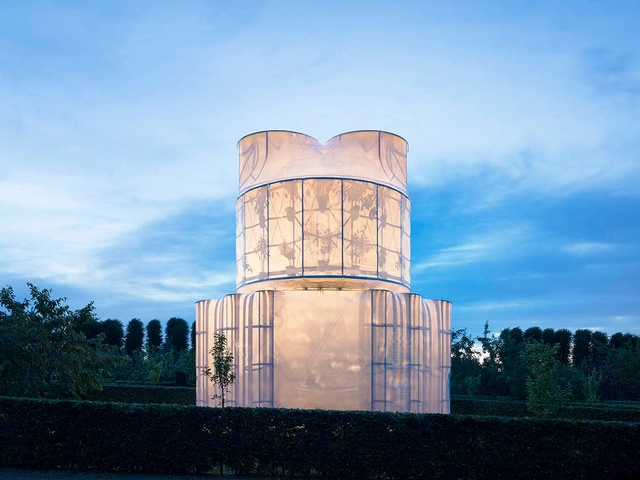
Whether made from natural or synthetic fibers, textiles have played a part in architectural design since time immemorial; however, it wasn't until the era of industrialization and advancements in technology that high-quality textiles could be made and utilized en masse. Most often, they have been used to enclose temporary structures like medical tents and emergency housing thanks to their mobility and ease of assembly.
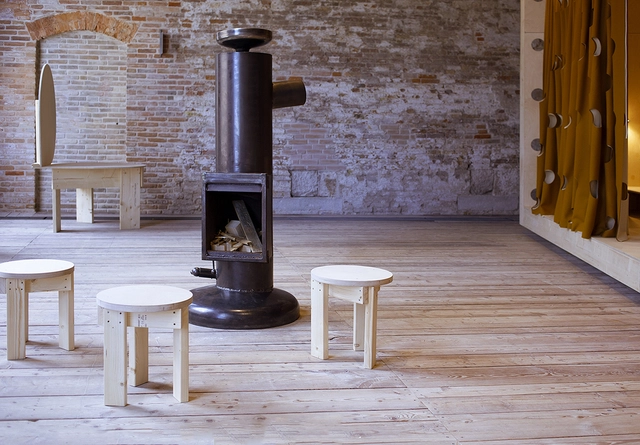
The 2021 Venice Architecture Biennale finally opened its doors to the public, on May 22nd, despite all odds and after two postponements. Presenting 115 different responses to “How will we live together”, the architectural exhibition gathered innovative answers from across the globe, all arising from a common determination to change the status quo. Bringing people who face the same issues together to partake in a vital exchange of ideas, the 17th edition has amplified the role and status of the Biennale as the biggest platform for architecture.
Onsite, in Venice, ArchDaily had the chance to meet with curator Hashim Sarkis, to discuss once more the ever-growing relevance of the biennale, different overlapping scales and fields, recurring qualities, and the international language of architecture. Hoping that “people will walk out of the biennale with a stronger belief in architecture as being a medium that can make a difference”, Sarkis in his third interview talks of a collective imaginary that can inspire new spatial contracts.
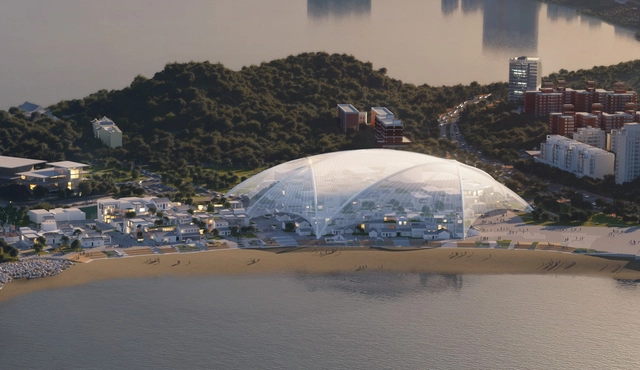
Following China's rapid urbanization and emergence of new districts and public buildings, MAD Architects, led by Ma Yansong, has won an international competition to design the new Zhuhai Cultural Arts Center. Their proposal, titled "Village Under the Dome", will be situated within China’s Pearl River Delta in the Yinkeng Village, a historic town that has recently been demolished and relocated by the municipality to make room for new projects. Instead of rebuilding over the demolition, their design offered a conservation and renewal of the village, creating a new function of the original site.
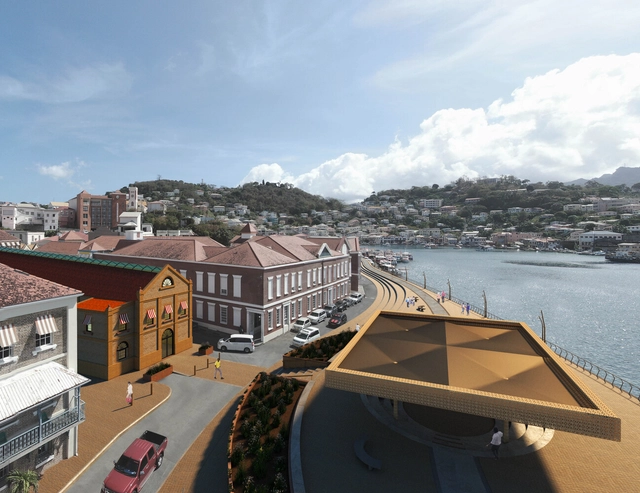
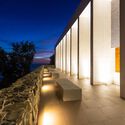
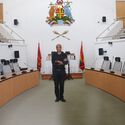
For the first time in the Venice Architecture Biennale, the island nation of Grenada presents the exhibition COethos, featuring its newest architectural landmark, Grenada's House of Parliament, together with a number of ideas for regenerating the city of St. George's. Curated by the Babau Bureau collective, the pavilion showcases the design and building process of the Parliament building, as well as explorations of the various possibilities of re-activating public spaces along the town's harbour.
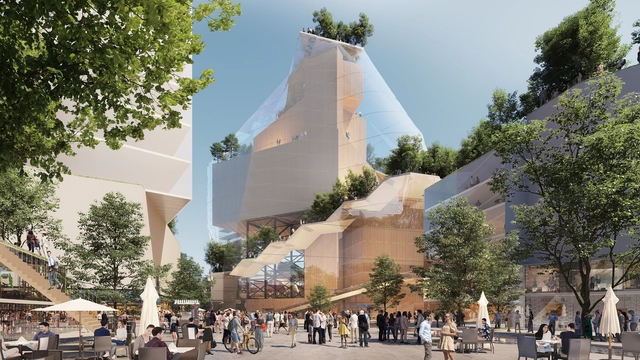
Reflecting on the future of shopping centres and addressing their decline in visitors, MVRDV's Heuvelkwartier design proposes converting Eindhoven's Heuvel shopping venue into a green cultural quarter. The project brings together retail, culture and recreation, expanding the existing buildings while transforming the roofs into a park. The proposal also expands the Muziekgebouw with a stacked cultural building encased in a "glass mountain", creating a new landmark for Heuvel.
Recent years have seen an increased acknowledgement of the collective endeavour that is architecture and a better valuing of the different professions that participate in the design process. Within every extraordinary building, structural engineering plays an essential role in delivering the architectural vision. The article highlights the past and present contributions of engineering to the built environment, personalities that have stood in the shadow of architects delivering their design intent, and the collaboration between engineers and architects today.
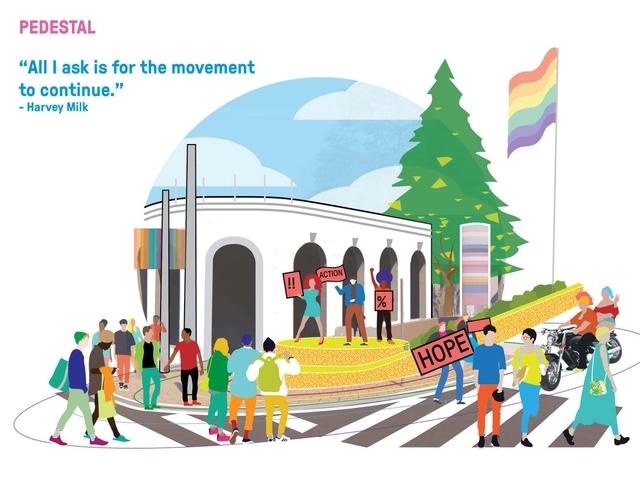
Courtesy of Friends of Harvey Milk Plaza & SWA Group
Matt Hickman reports on San Francisco's latest inclusive memorial, for the Architect's Newspaper, designed by SWA, a firm that operates two Bay Area studios (San Francisco and Sausalito) as well as offices in Texas, Southern California, New York City, and Shanghai. Selected by FHMP from a shortlist of four firms that submitted proposals, out of 17 invited offices, SWA shared their winning conceptual design for the memorial at Harvey Milk Plaza.
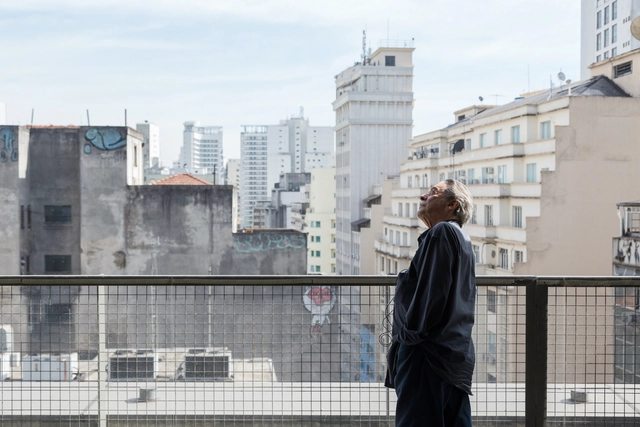
One of the biggest names in Brazilian and worldwide architecture, Paulo Mendes da Rocha, passed away at the age of 92. As his son Pedro Mendes da Rocha reported to ArchDaily, the architect was hospitalized in São Paulo due to lung cancer and passed away at dawn on Sunday, May 23, 2021.
Paulo Mendes da Rocha will be remembered for the great formative role he had. His architectural creation debated life above all, raising questions and challenging ready ideas and conformity. He consolidated an influence short of language or aesthetics, formed mainly by the way of acting and thinking, in which each project was an opportunity for transformation. His ideas and designs overflowed the limits of the program, place and materiality, always bringing a new point of view to achieve revolutionary simplicity.
https://www.archdaily.com/962174/paulo-mendes-da-rocha-passes-away-at-92Equipe ArchDaily Brasil
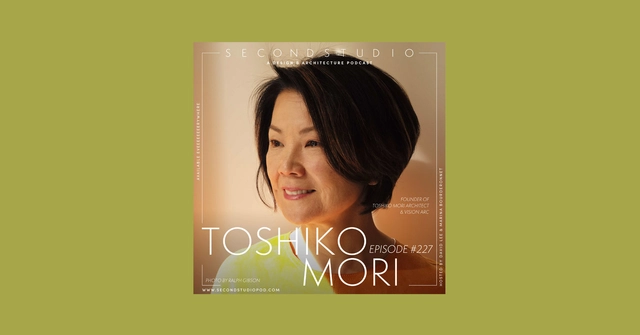
The Second Studio (formerly The Midnight Charette) is an explicit podcast about design, architecture, and the everyday. Hosted by Architects David Lee and Marina Bourderonnet, it features different creative professionals in unscripted conversations that allow for thoughtful takes and personal discussions.
A variety of subjects are covered with honesty and humor: some episodes are interviews, while others are tips for fellow designers, reviews of buildings and other projects, or casual explorations of everyday life and design. The Second Studio is also available on iTunes, Spotify, and YouTube.
This week David and Marina are joined by Architect Toshiko Mori to discuss her moving from Japan to New York City at a young age, attending The Cooper Union for Art and Architecture, starting her own practice and VisionArc, witnessing the 9/11 attack, her design process, creating a temporary concert hall, and more.
https://www.archdaily.com/962165/the-second-studio-podcast-interview-with-toshiko-moriThe Second Studio Podcast
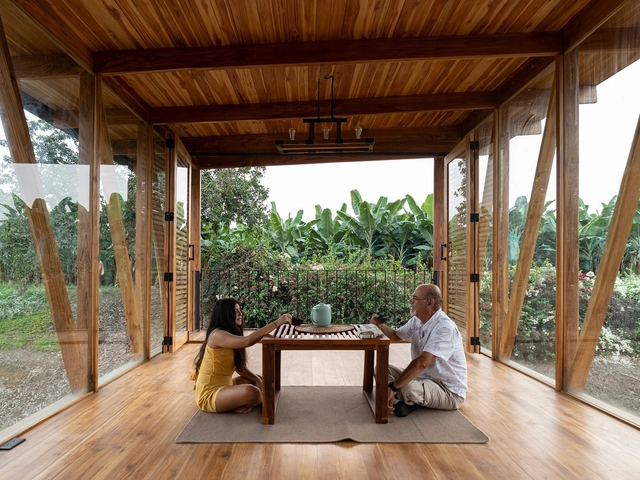
Chashitsu, which is the Japanese term for a teahouse or tea room is a construction specifically designed for holding the Tea Ceremony, a traditional Japanese ritual in which the host prepares and serves tea for guests. Teahouses are usually small, intimate wooden buildings, where every detail is intended to help withdraw the individual from the material disturbances of the world.
https://www.archdaily.com/962113/teahouses-reinterpretation-of-traditional-spacesClara Ott
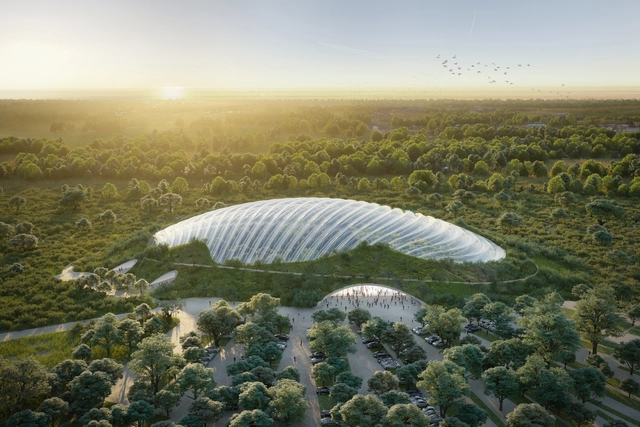
Not-for-profit Zuecca Projects and Coldefy have shared new research for Tropicalia, the largest single-dome greenhouse on the planet, for the 17th International Architecture Exhibition – La Biennale di Venezia. Presenting tropical fauna and flora, the team is also sharing the architectural and engineering specificities of the Tropicalia greenhouse with its unique sustainable air treatment engineering.
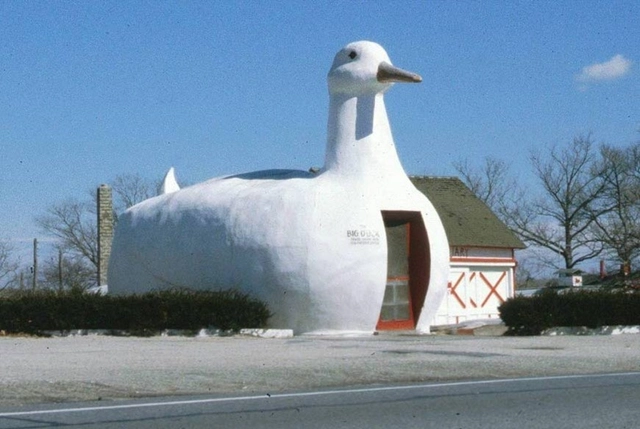
Design can sometimes be mundane- except when it’s novelty architecture. These buildings uniquely and identifiably break away from the abstract, metaphorical, and often monotonous buildings that have classified modern-day design. Instead of favoring the steel and glass skyscrapers that serve as landmarks in cities around the world, they aim to poke fun at architecture in a way that’s jovial, commercial, and perhaps slightly more functional and expressive. Unlike other buildings, they are the literal embodiment of a thing itself, putting its function widely on display instead of hiding it within four austere walls.
The Luxembourg Pavilion at the 17th Architecture Biennale reflects on how the pandemic has brought a series of dualities to the spotlight, challenging the understanding of the relationships established between architecture and land, interior and exterior, home and work or the built environment and nature. In light of these issues, the exhibition titled Homes for Luxembourg, designed by Sara Noel Costa de Araujo (Studio SNCDA) and featuring contributions to the architecture publication Accattone explores ideas of modular, reversible living while also illustrating a model of repurposing land to build new forms of togetherness.
Developed by architect Gerardo Caballero, in collaboration with Paola Gallino, Sebastian Flosi, Franco Brachetta, Ana Babaya, Leonardo Rota, Emmanuel Leggeri, Sofia Rothman, Gerardo Bordi, Edgardo Torres, and Alessandro De Paoli, "The Infinite House", a project inspired by traditional Argentine houses, will represent Argentina in the upcoming 2021 VeniceArchitecture Biennale. The project reflects on the identity of Argentine public housing and the role collective housing, both public and private, has played in the country's history and society. The Infinite House aims to push the limits of the domestic and to highlight the importance of the collective rather than the individual by illustrating that a home extends beyond one's own living space: "it is the city, the country, and even the world."
Exploring the question of slavery in Architecture, the building materials and the construction industry, Michael J. Crosbie interviews Sharon Prince, the women behind Design for Freedom, discussing the initiative's report "on the pervasive use of slavery in the design and construction industry, and how design professionals can respond".
https://www.archdaily.com/962116/architecture-and-the-stain-of-modern-day-slaveryMichael J. Crosbie
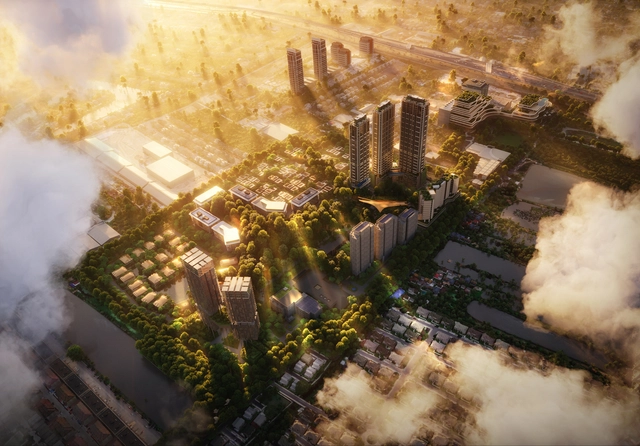
Foster + Partners have shared the design for a residential-led masterplan on the outskirts of Bangkok. Dubbed The Forestias, the project includes a large forest at its heart. The design was made to address the growing disconnect between contemporary city life and family traditions. The Forestias proposal focuses on promoting multi-generational family co-living and new models of urban life in Thailand.








.jpg?1621852703&format=webp&width=640&height=580)
.jpg?1621852449 "© Frederico Vespignani")
.jpg?1621852443 "© Andrea D_Altoe")
.jpg?1621852519 "© Frederico Vespignani")
.jpg?1621852318 "© Frederico Vespignani")
.jpg?1621852703)