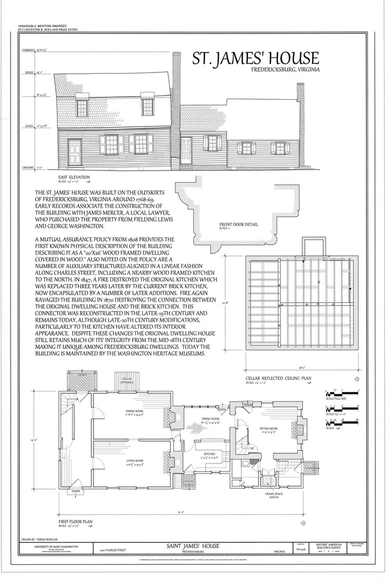
The St. James’ House in Fredericksburg, Virginia, by Teresa Boegler. Image via The Library of Congress
The Library of Congress has announced the winners of the 2015 Holland Prize, which recognizes the best single-sheet, measured drawing of a historic building, site, or structure, completed to the standards of the Historic American Building Survey (HABS), Historic American Engineering Record (HAER), or the Historic American Landscapes Survey (HALS).
Brooklyn-based artist and designer Ekene Ijeoma has created Wage Islands, an interactive art piece that “expands New York City’s ‘tale of two cities’ by revealing the geographies of access to housing based on wages.”
In the project, a 3D map of the city is submerged in a box filled with black water, showing only the parts of the city that have affordable housing based on a wage of $8.75 and median monthly housing costs from $271 to $4001. Viewers press a button, which increases the wage on the display up to $77, concurrently raising the map out of the water to highlight the severity of the wage gap in relation to housing.
Render by Luxigon. Image Courtesy of Stewart Hollenstein
Sydney-based firm Stewart Hollenstein has been awarded an Honorable Mention in the international design competition for a new 17,000 square-meter library in Varna, Bulgaria. Their design scheme focuses on Varna's rich history as a city known for its public gardens, and seeks to make the library a cultural center of the city.
Despite often designing homes larger than 15,000 square feet for their clients, Houston-based design team Mark Schatz and Anne Eamon have designed and built a 980 square-foot house for their family of four. The couple designed and built the home largely on their own, out of leftover materials collected from projects their firm has worked on over the past few years.
MOBO Architects has won the Colombian Society of Architects’ (SCA) public competition to design an institutional building for the department for social integration in the city of Bogotá.
Skyline. Image Courtesy of Pelli Clarke Pelli/CBT Architects
Following years of extensive planning, the Boston Redevelopment Authority Board of Directors has approved the construction of two towers on the site of the Government Center Garage -- a 486-unit luxury apartment building designed by CBT Architects, and a one-million square foot, 43-story office tower designed by Pelli Clarke Pelli. These towers are the first phase of a six building, $1.5 billion redevelopment plan to replace the dated brutalist era garage.
Following the recent completion of 432 Park Avenue in New York City, The Council on Tall Buildings and Urban Habitat (CTBUH) has announced that there are now 100 supertall (300-plus-meter) skyscrapers in the world. The majority of these skyscrapers are in Asia and the Middle East, mirroring construction trends that have emerged over the past decade. Dubai leads the rankings with 18 supertall buildings, while New York City now falls in second place with a total of seven, including 432 Park Avenue.
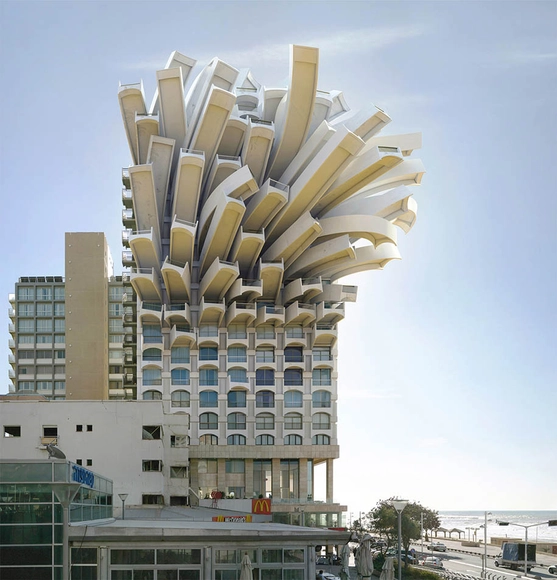
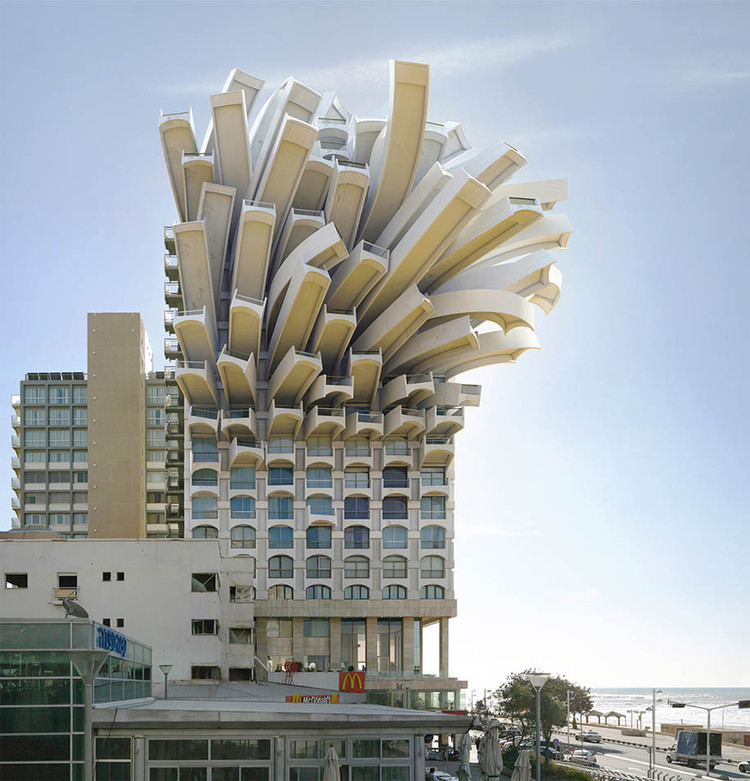
Since 2006, artist Victor Enrich has been working on his project, City Portraits, a series of digitally manipulated images that transform photos into architectural illusions.
2015 Winning Entry by Jacques Gaffigan. Image Courtesy of The Knight Foundation
The John S. and James L. Knight Foundation has announced the names of the 158 finalists in the Knight Cities Challenge. The nation wide call was for innovative ideas to make the 26 communities where the Knight Foundation invests more social and vibrant places to live. More than 4,500 entries were submitted proposing a range of ideas from opening the world’s largest African American history museum in Detroit to a card game that encourages residents of Charlotte to visit new neighborhoods. The winners, who will split a prize of $5 million, will be announced in the spring of 2016.
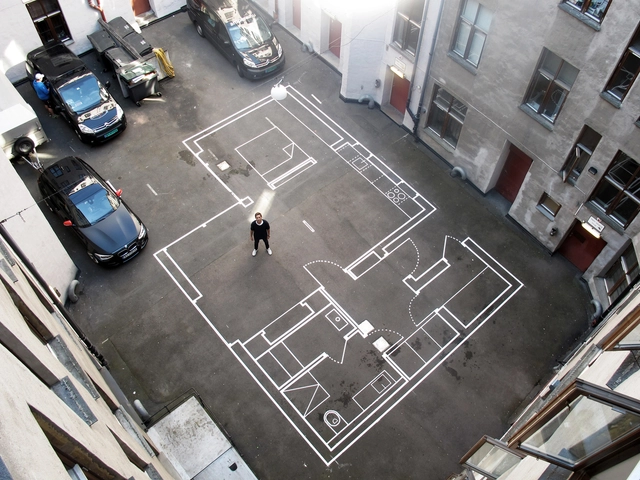
Norway based architecture studio Vardehaugen has created a series of life-sized project drawings in its own backyard. Inspired by the idea that the "bodily sensation of scale, or the notion of simply walking through a room, cannot be experienced through traditional 3D visualizations or scaled models," the 1:1 models allow for better understandings of dimensions and spatial sequences, even before the projects are built.
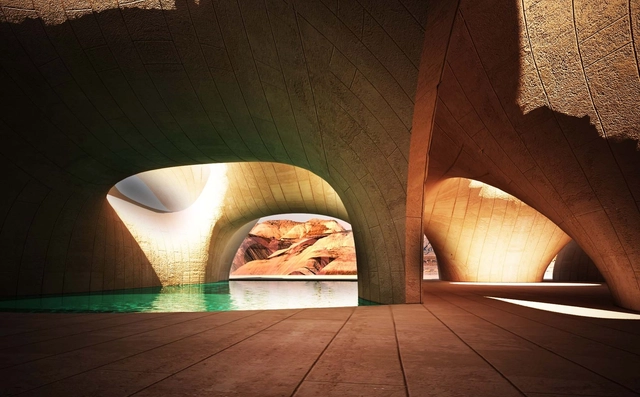
Aysu Aysoy and Roman Hajtmanek have been announced as the winners of the ArchDaily + IIDEXCanada Virtual Spaces Competition, which sought proposals for un-built, fantastical spaces. The designs were then developed into virtual spaces by Invent Dev as a part of a virtual reality exhibition at IIDEXCanada.
Learn more about both of the winners, after the break.
Based on the concept of listening to the sounds of the ocean inside a shell, STUDIOKCA, commissioned by NASA, has created the NASA Orbit Pavilion to immerse visitors in the sounds of satellites orbiting in outer space.
The traveling, nautilus-shaped pavilion provides a space in which to experience the trajectories of 19 satellites orbiting Earth. Made with 3,500 square feet of water-jet cut aluminum panels, the pavilion is "scribed with over 100 'orbital paths' fitted together and bolted to a curved framework of aluminum tubes."
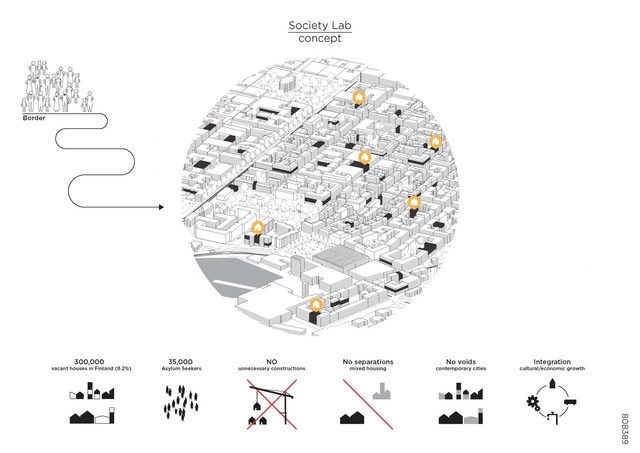
The Museum of Finnish Architecture, in collaboration with the Finnish Association of Architects (SAFA), has announced the winners of its “From Border to Home” competition, which sought solutions for temporary housing seekers who are awaiting a decision on their refugee status, prior to finding more permanent housing in Finland. Ninety-three entries were submitted from countries around the world including Finland, Sweden, Norway, China, Belarus, the United States, and Brazil, among others. Submitted proposals included solutions that would provide a positive social impact, and also support future ideas about long-term living arrangements.
The jury, comprised of architects, members from the Ministry of the Interior, the Finnish Red Cross, and the Finnish Refugee Council, shortlisted seven entries in the first round of judging. They praised the overall quality of the submissions, stating that they ranged in strategies from tackling national issues to creating new buildings, repurposing old sites, and even transforming housing solutions to digital platforms.
From those, three winners tied for first place, chosen due do their “logical coherence and compelling social impact,” according to the jurors. These entries will be showcased in the Finnish Pavilion at the Venice Architecture Biennale this upcoming summer.
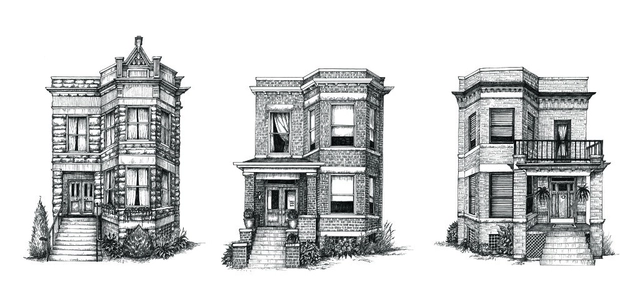
For the past two years, artist Phil Thompson of Cape Horn Illustration has been creating pen and ink drawings of Chicago's homes and residential buildings.
Inspired by the patterns and themes of the streets and neighborhoods and a love for art and architecture, Thompson began drawing two-flat styled homes, which are "long and narrow to fit on standard city lots, able to accommodate two-generation immigrant families, and have distinctive large bay windows, elements of Arts and Crafts style, exteriors heavy on masonry, and terracotta, but wood-framed interiors with built-ins," Thompson told us. "I love them."
Australian architect Rick Chen has been announced as the joint winner of the ReTHINKing Architecture competition, "Viewpoint in Pulpit Rock." Chen's design, called "Fragile," was awarded first prize out of 195 proposals in the competition, which sought a creative take on Preikstolen, a popular natural viewpoint and rest area 600 meters above the Lysefjorden in southwest Norway.
Egypt's minister of antiquities, Mamdouh al-Damaty, has announced plans to move forward with an underwater museum project in the Eastern Harbor area of Alexandria's Abu Qir Bay, according to a report by The Smithsonian Magazine. In the works since 1996, the project not only seeks to bring historic sunken artifacts and structures into public view, but also to preserve the site, which is at risk of damage from pollution, fishing boat anchors, and poaching by divers.
In 2008, French architect Jacques Rougerie learned of the project and reached out to the Egyptian Ministry to create conceptual renderings of what the space could become.
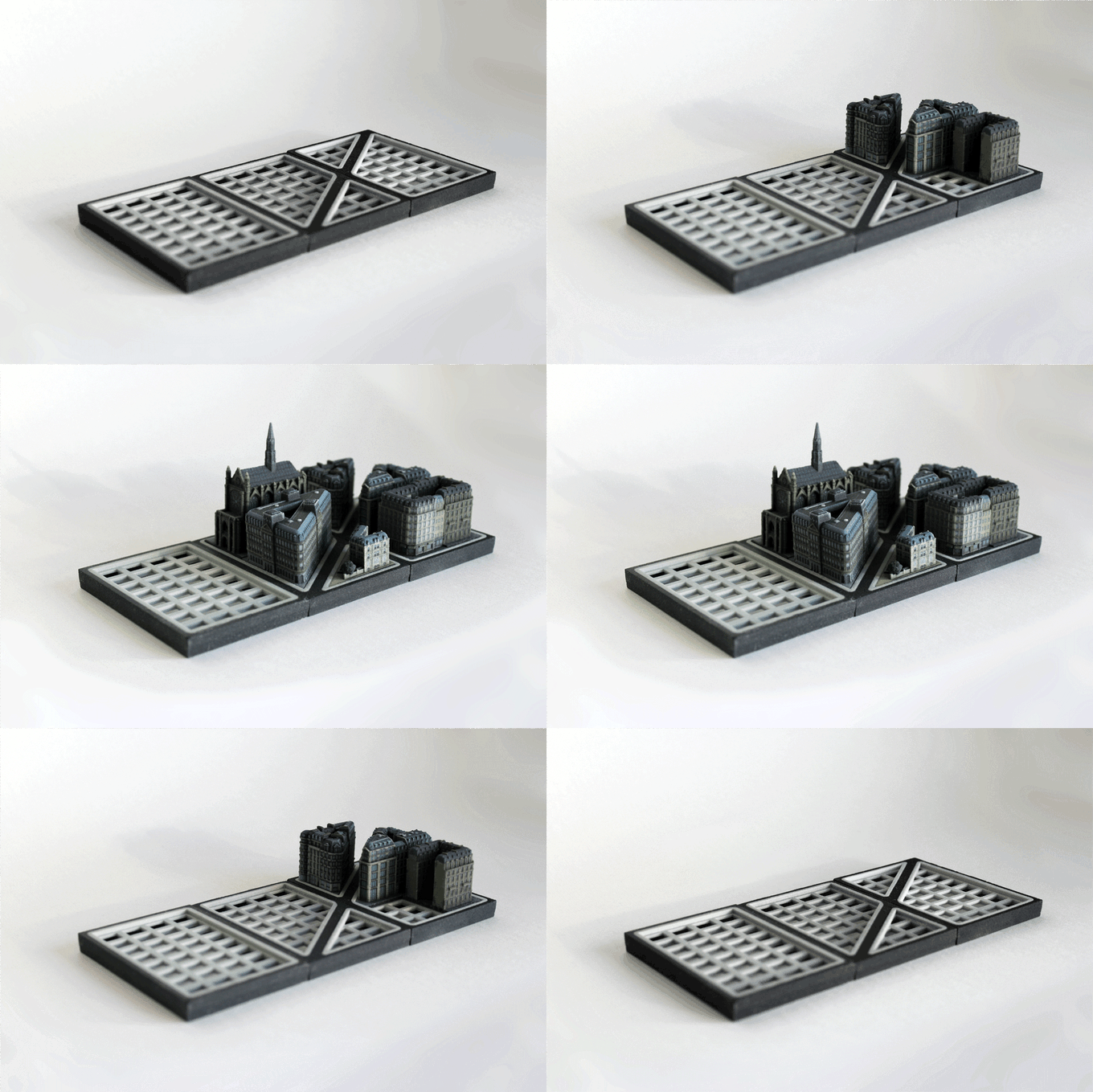
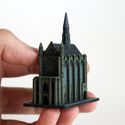
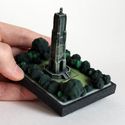
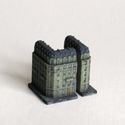
Netherlands-based Ittyblox has created yet another series of miniature 3D-printed buildings, this time featuring typical and iconic buildings and sites in Paris. Adding to their series of New York, London, and Chicago, among others, the new Parisian series follows suit as a 1:1000 scale model of customizable city blocks.
In light of recent refugee crises, Belgium-based architecture and engineering firm DMOA has become involved with The Maggie Program, an initiative to improve refugee shelter, education, and health through a new building concept.
Because most countries only allow for temporary settlements for refugees, the project centers around the Maggie Shelter, a temporary tent-like structure, that functions as a more substantial, fixed building.

.jpg?1453056335&format=webp&width=640&height=580)
_Macklowe_Properties.jpg?1452745763&format=webp&width=640&height=580)