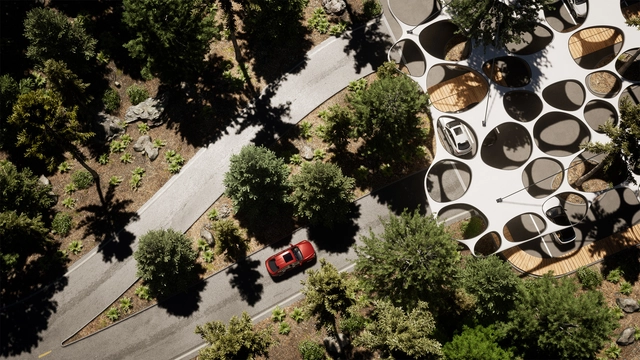
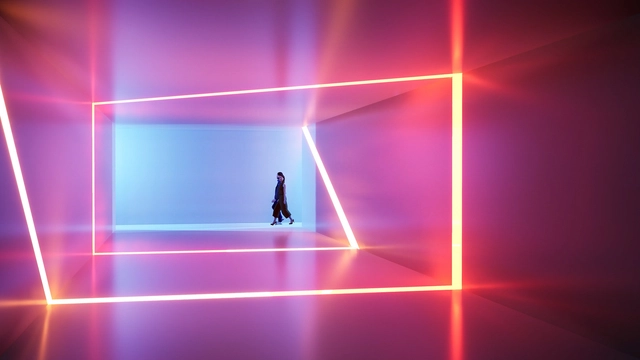
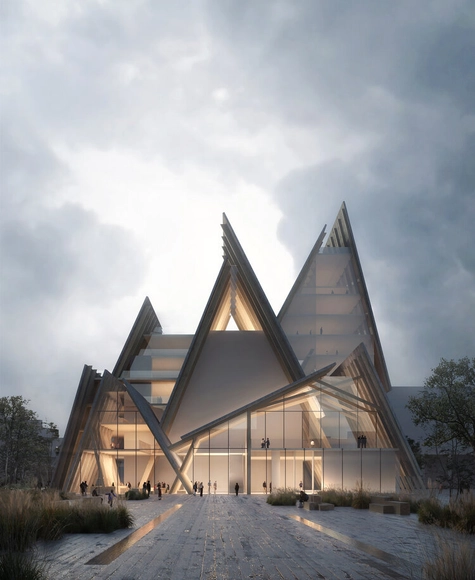
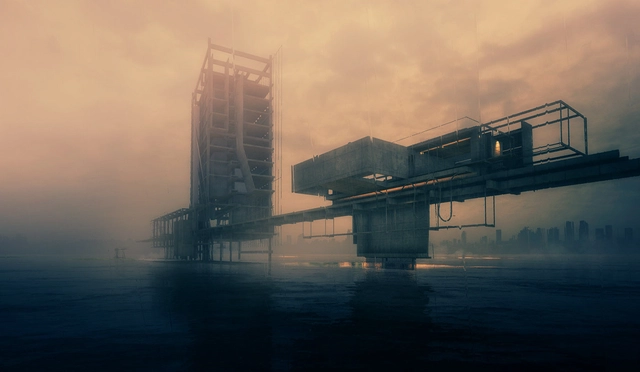
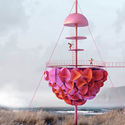
Lost in Melbourne. Conceptual Category Jury Winner.
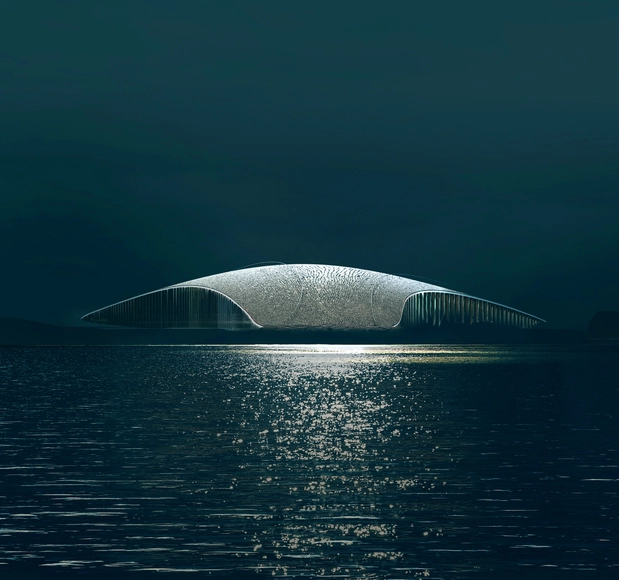
After 3 weeks of voting, the results are finally in. The ArchDaily Architectural Visualization Awards has just selected the winners of its first edition. Out of 750 visualizations submitted from all over the world, 6 winning images were chosen, two for each of the following categories: Exterior, Interior, and Conceptual.
Gathering more than 10 000 votes, This awards has come to an end. Presented by IPEVO, Cove.tool, and Concepts, the contest aimed to find the most talented individuals, who inspire us and help us visualize the future of our cities and buildings.
The 1st stage of the Architectural Visualization Awards has come to an end. 30 finalists, 10 from each category: Exterior, Interior, and Conceptual were selected by the official ArchDaily jury. Launched thanks to IPEVO, Cove.tool, and Concepts, this 1st edition of the award gathered a whopping number of proposals, with 750 visualizations submitted from all over the world.
Architectural visualizations have recently reached unthinkable levels, being a great source of inspiration and a fundamental part of the design process in architecture. This is why we are proud to announce the first edition of the ArchDaily Architecture Visualization Awards, where we will award the best of the year.
For us, visualizations have become a powerful tool that has helped us to think without limits about the design of our future cities, buildings, and structures. This is why we are proud to launch thanks to IPEVO, Cove.tool and Concepts the 1st edition of the Architectural Visualization Awards: to find the best talent from around the world and discover who is setting trends with their work and aesthetics, helping us to visualize the future of architecture.
Architectural visualizations are only as good as the scene they’re placed into. No matter how fantastic your building model, if it's placed in an environment constructed of low-quality, low-poly assets, it’s not going to shine. That’s one of the reasons architects and designers have long turned to Quixel Megascans to give context to their archviz scenes.
Architectural visualizations have recently reached unthinkable levels, being a great source of inspiration and a fundamental part of the design process in architecture. This is why we are proud to announce the first edition of the ArchDaily Architecture Visualization Awards, where we will award the best of the year.
https://www.archdaily.com/949032/archdailys-2020-architectural-visualization-awards-are-now-open-for-submissionsArchDaily Team
Juanito Olavarria. Image Courtesy of The Midnight Charette
The Midnight Charette is an explicit podcast about design, architecture, and the everyday. Hosted by architectural designers David Lee and Marina Bourderonnet, it features a variety of creative professionals in unscripted conversations that allow for thoughtful takes and personal discussions. A wide array of subjects are covered with honesty and humor: some episodes provide useful tips for designers, while others are project reviews, interviews, or explorations of everyday life and design. The Midnight Charette is also available on iTunes, Spotify, and YouTube.
This week David and Marina are joined by Architectural Renderer & Partner of Luxigon's Los Angeles office, Juanito Olivarria to discuss his process of creating renderings, collaborating with architects, beauty, video gaming, taking risks, ugly trees, rendering styles, and much more!
https://www.archdaily.com/949714/have-you-ever-seen-a-render-with-a-dent-in-a-car-juanito-olivarria-on-his-process-creating-renderingsThe Second Studio Podcast
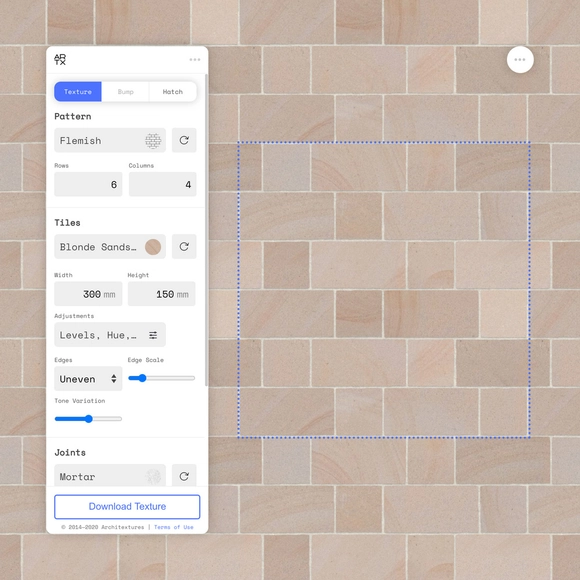
All too often, architects and designers spend hours searching for textures and materials to represent their visions. This struggle takes many forms: from scrolling through Google, Pinterest, and databases in search of the perfect texture, to manually creating one over the course of several hours, or even days. In either case, the result is frequently painful, and rarely perfect. A database organized, reliable, free and easy to use is not always a simple thing to find.
Architextures began in 2014 as a library of high-quality image files, with textures submitted by users or created by the platform itself. Over time, the platform’s creator Ryan Canning noticed that, in his professional work as an architect, the array of static image files available online did not meet the specific textures he was looking for in his design projects. Frustrated with the endless process of searching, editing and overlaying textures in Photoshop, Ryan reinvented Architextures in 2019 as an interactive tool where designers like himself could create specified, high-quality textures in seconds. And importantly, being free to use for personal and educational use, with professional accounts available for a small fee to support the tool’s development.
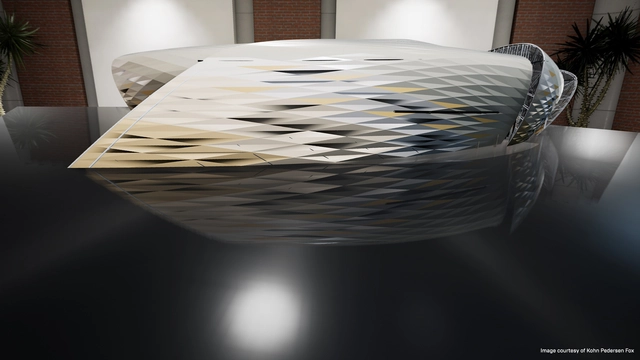
International architectural practice Kohn Pedersen Fox (KPF) is constantly striving to improve efficiencies and enable greater creative exploration through the application of the latest technologies. With nine offices worldwide and projects based anywhere from Europe to the US and China, the company takes a global approach to its design process by fostering collaboration; it’s not uncommon for a single project to involve team members based in London, New York, and Singapore, for example, who come together virtually in what Cobus Bothma, Director of Applied Research, calls their “tenth office”.
Architectural visualization company Brick Visual has been loading its most complex scenes into Chaos Group’s real-time 3D ray-traced engine, Project Lavina, since the private beta first launched. With the first public beta now available, Attila Cselovszki, CDO at Brick Visual, shares how adding Project Lavina to the architectural visualization (arch-viz) pipeline has revolutionized the way they work.
The images that some visualizers have been presenting have allowed people to be fully immersed in virtually-built environments; exploring the space, observing how the sun rays create a dialogue between light and shadow, experiencing what they might hear or feel as they walk by one room to another, all before excavation work begins and the first block is laid.
In an exclusive interview with ArchDaily, Luxigon's Eric de Broche des Combes talks about his career, creating amplified visualizations and how they influence a project, and what the future holds for the industry.
Architecture is defined by stories. Told through diverse mediums, these narratives shape how we understand our built environment. At the same time, drawings and visualizations can be architecture in their own right, a way of discovering what we see or what could be. For Vienna-based urbanist, architect and illustrator Alexander Daxböck, drawings are a way to imagine new futures together.
When we hear the term visualization, it’s likely that we picture a flashy render full of lights, people, dazzling finishes, and a sense of energy about the place that we are viewing. Aside from rendering a three-dimensional space, architects also need to develop their skills in the representation of intangible ideas that help drive the narrative behind their arguments. Instead of creating one-off concepts that are presented in a traditionally linear sequence, designers need to craft a story, structure their designs like a thesis, and consider how our presentations have the power to reveal the priorities of a project.
As architects rely heavily on imagery to convey abstract information to a broad audience, there is a recurrent conversation on the role of visualizations in architecture and how they impact the general perception of the built environment.
Many times I have not been able to decipher whether the video or the image I was looking at was real. In the same way, I had to convince friends or relatives —namely, people unfamiliar to the idea of the architectural render— several times that a building featured in a storefront advertisement or in a printed magazine was not real. There is no longer a gap —or limits— between hyper-realistic, computer generated visualization and reality itself. Are we reaching the limits of visualization of our spaces? Do our architectural visualizations meet our architectural expectations?
As architecture is increasingly reliant on renderings to convey its message and depict the unbuilt, many practices turn to seasoned 3D artists to help them portray their designs in the most favourable light; thus they externalize visualizations to a handful of firms.
In a visually over-stimulating environment, architecture projects compete for attention through eye-catching visuals and intriguing graphical representations of their concepts. Visualization skills rank high in the architectural profession, but they also demand significant time and effort to develop. Arch-Vizz is a website dedicated to both students and professionals who aim to improve their visualization skills and broaden their perspective on architectural representation.
With the recent release of Twinmotion 2020, you can now create even more convincing visualizations and immersive experiences from your CAD and BIM models. In addition to a huge boost in realism, one of the most significant areas of improvement in the new release is project review, with a range of features for fast BIM design review and presentation.
With Twinmotion 2020.1 now available, the software is fast becoming the go-to visualization tool for professionals working in architecture, interior design, urban planning, and landscaping, for everything from designing residential properties to providing VR walkthroughs of large-scale infrastructure projects. The latest release raises the bar for realism and includes new features for project presentation and review.


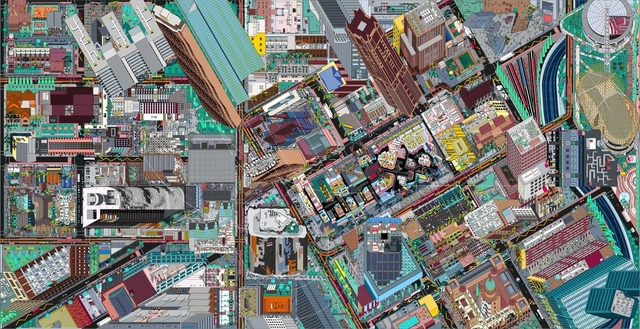


























.jpg?1587461860 "Courtesy of Alexis Christodoulou")
.jpg?1587461837 "Courtesy of Alexis Christodoulou")
.jpg?1587461848)