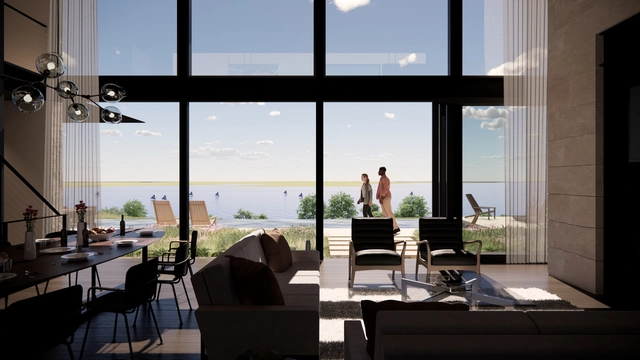
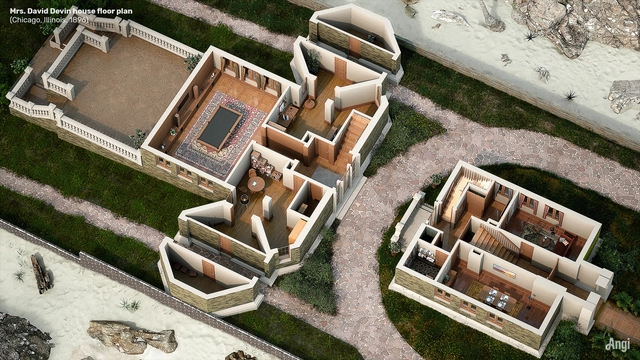
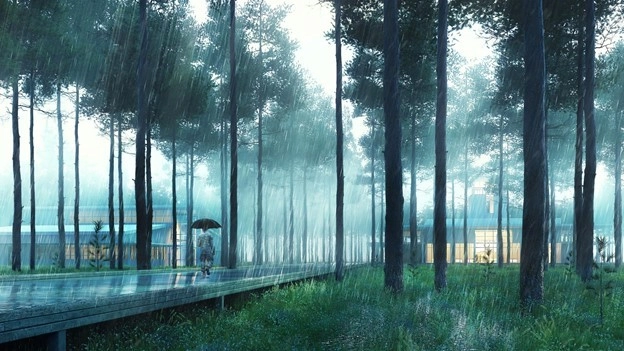
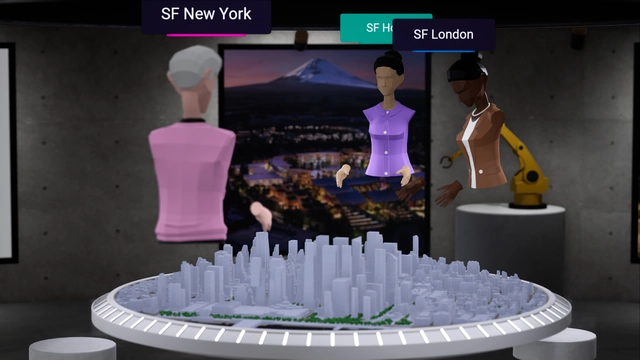
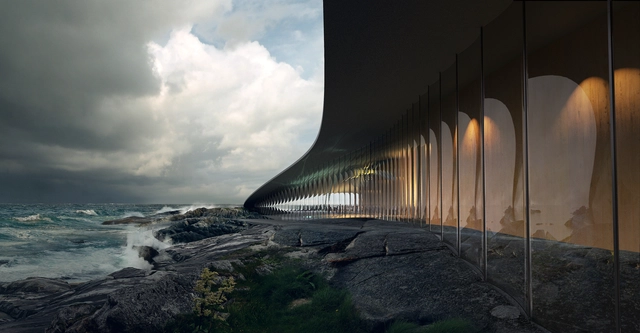
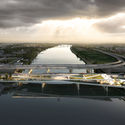
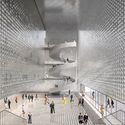
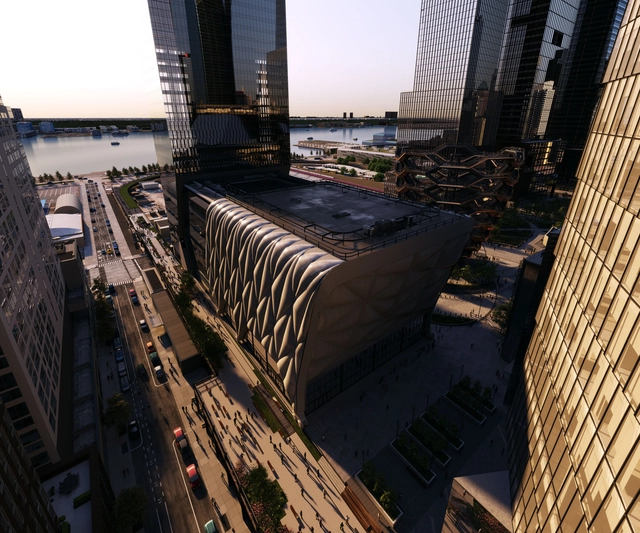
Until this Tuesday, May 3rd at 23:59 EST you can submit your work for the second edition of the ArchDaily Architectural Visualization Awards. For us, visualizations have become a powerful tool that has helped us to think without limits about the design of our future cities, buildings, and structures. This is one of the reasons why we decided to launch this competition: to find the best talent from around the world and discover who is setting trends with their work and aesthetics, helping us to visualize the future of architecture.
Until this Friday, April 29th at 23:59 EST you can submit your work for the second edition of the ArchDaily Architectural Visualization Awards. For us, visualizations have become a powerful tool that has helped us to think without limits about the design of our future cities, buildings, and structures. This is one of the reasons why we decided to launch this competition: to find the best talent from around the world and discover who is setting trends with their work and aesthetics, helping us to visualize the future of architecture.
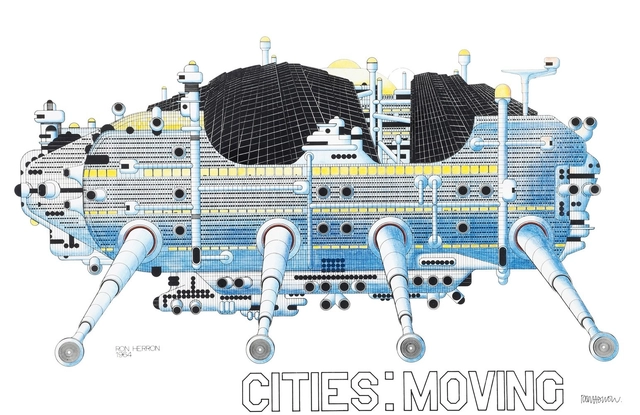
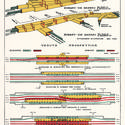
There’s the iconic Cenotaph for Newton drawing, the evocative monochrome illustration by Etienne-Louis Boullée. There are the experimental drawings of Lebbeus Woods, evocative urban visions of a distant future. There are also the well-known drawings of Le Corbusier’s utopian Ville Radieuse. Drawing, and in turn architectural visualizations, have always been a useful medium with which to contemplate architectural concepts of the future. It is fascinating to look back at the architectural visualizations of the future done in the past.
Architectural visualizations have reached unthinkable levels, being a great source of inspiration and a fundamental part of the design process in architecture. This is why we are proud to announce the second edition of the ArchDaily Architecture Visualization Awards, where we will award the best of the year.
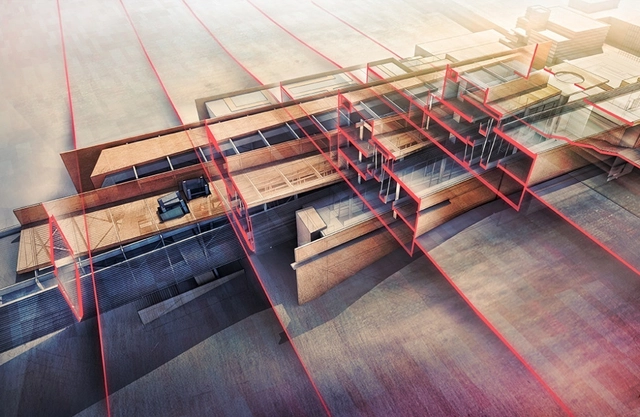
Drawings and visualizations are architecture in their own right. As means to reconsider what we see or what could be, drawing styles are as diverse as the mediums through which they are produced. For transparent drawings, observation and imagination go hand in hand. Not only does this unique style require critical examination, but also an ability to conceptualize new possibilities.
It is nearly impossible nowadays not to present accompanying renders when proposing a new project. No matter the method, software or style that is used, it is a valuable reference that bares more practical weight than one might think. Not only can it be one of the closest possible representations of the architect's vision, if approved, it can also become a promise to clients, investors, and the general public.
When it comes to works from renowned architects, the render becomes a critical reference to the project participants and to the expectant community. A lot of details can be developed and considered when creating the images. In most cases, special attention is brought to the lighting, materials, and context in order to make the most accurate representation possible.
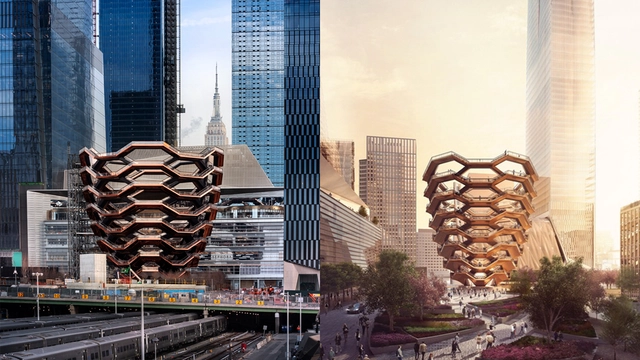
Real-time visualization is used to generate renderings with excellent visual quality from a BIM or CAD model. When integrated into your design workflow, it can also facilitate collaboration and allows all parties within an architectural project to engage throughout the design process.
Here are five ways in which integrating real-time visualization can provide a complete understanding of design at various project stages.
More than 60 years after his death, Frank Lloyd Wright's story remains relevant and arduously studied because of the great legacy he left to architecture. Considered the first truly American architect and the first superstar of his craft, Frank Lloyd Wright lives on through his buildings, his influence and his collective imagination. Surprisingly, more than half of Wright's 1171 architectural works were never erected.
Like any other art form, architectural visualization has the power to move your audience, whether it be the design client, potential customers or future tenants. When they can actually experience the design, they’re more likely to interact, collaborate, and comment long before the final version, giving them a sense of contribution to the whole—all while providing you with confidence that the design is really what they want.
Award-winning imagery from ASAI. Project: Tyndall Air Force Base. Date: 2020. Image Courtesy of SketchUp
Creating a compelling visualization that communicates your design intent and gets stakeholders on board is no easy feat. While designers have plenty of visualization tools to deploy— from powerful rendering engines to the simplicity of pen and paper — there’s no one-size-fits-all approach to visualization. As your design evolves, you may need multiple renderings at various levels of detail.
According to Jim Kessler, Director of the Visual Media Group at Jacobs, "When a design is in flux and conversations with the clients are taking place, a photorealistic rendering signals completion of the project and that design changes are no longer possible. Whereas, a non-photorealistic rendering visual suggests a sense of flux and has a huge artistic element to it, which architects gravitate towards."
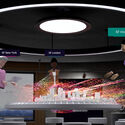
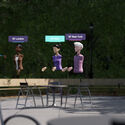
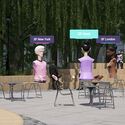
UNStudio and Bjarke Ingels Group have partnered up with Squint/Opera to develop SpaceForm, a virtual, cloud-based platform that facilitates design, review and collaboration processes for architects and developers. The new virtual workspace explicitly developed for the architecture and construction industry aims to fill a gap by creating a viable and sustainable way of collaborating and designing remotely across global teams, thus reducing the need for travel.
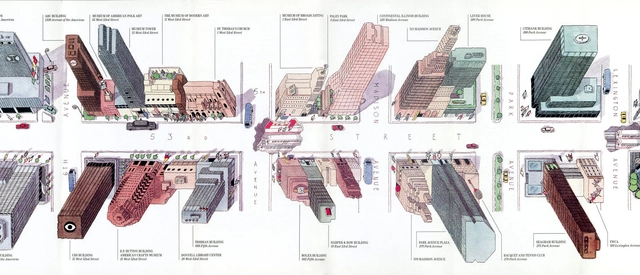
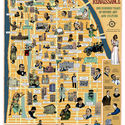
Martin Pederson interviewed this week Antonis Antoniou and Steven Heller, author of Decoding Manhattan, a new book that compiles over 250 architectural maps, diagrams, and graphics of the island of Manhattan in New York City, talking about the origin story of the book, the process of research, and the collaboration.
Digital literacy is not a topic architects usually consider. For Aliza Leventhal, Head of the Technical Services Section, Prints & Photographs Division at the Library of Congress, the processes of literacy and design go hand-in-hand. Previously the corporate librarian and archivist for Sasaki, Aliza is leading national conversations on everything from born-digital design files and archiving to institutional memory and knowledge sharing. Today, she's working with architects and designers to reimagine digital workflows for future access and ideation.
With increasingly better renderings becoming ubiquitous, students and architects alike feel the pressure of mastering an additional set of skills to get their ideas across. To what extent do renderings make or break a portfolio or a project? How important are they in the design process, and do renderings inform of a particular set of skills besides the software ones? This article explores different perspectives on the role of renderings within the profession.
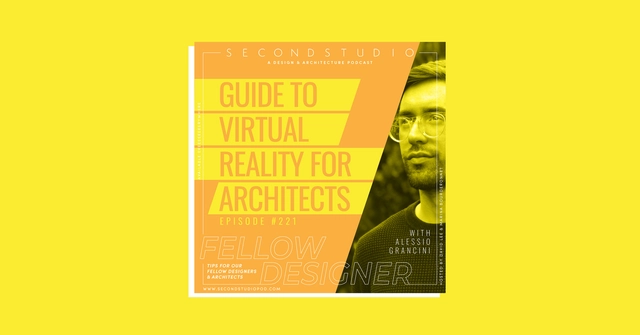
The Second Studio (formerly The Midnight Charette) is an explicit podcast about design, architecture, and the everyday. Hosted by Architects David Lee and Marina Bourderonnet, it features different creative professionals in unscripted conversations that allow for thoughtful takes and personal discussions.
A variety of subjects are covered with honesty and humor: some episodes are interviews, while others are tips for fellow designers, reviews of buildings and other projects, or casual explorations of everyday life and design. The Second Studio is also available on iTunes, Spotify, and YouTube.
This week David and Marina are joined by Alessio Grancini, Prototype Engineer at Magic Leap and former Head of XR at Morphosis to discuss how VR can be used in architecture offices. The three cover basic terminology, software, workflows, costs, learning curves, using VR in the design process and for client presentations, the pros and cons of different headsets, controls, different types of rendering, the social implications of VR, and how he transitioned from architecture to the technology space. Enjoy!
https://www.archdaily.com/957761/alessio-grancini-on-how-vr-can-be-used-in-architecture-officesThe Second Studio Podcast
Videos
Neoscape NYC / Chaos Vantage. Image Courtesy of Chaos Group
This year, real-time became really important. For architects and arch-viz artists, the ability to explore and design interactively is nothing short of game-changing, drastically shortening project life cycles and making it easier to present and discuss ideas with co-workers and clients. With remote collaboration becoming a normal part of day-to-day life, real-time views of projects have become invaluable.
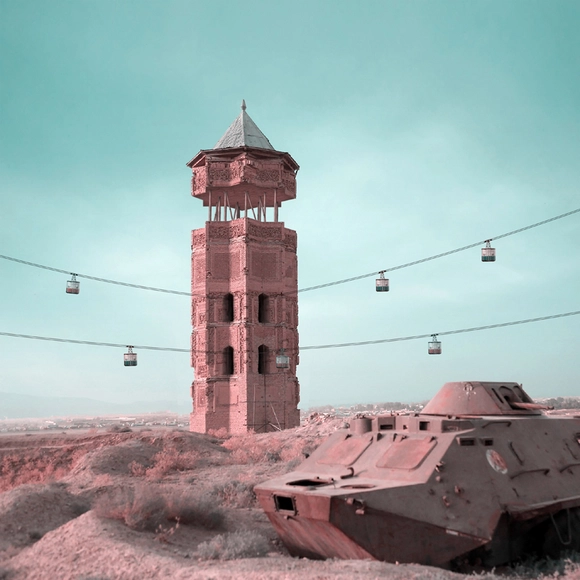
In the past, minarets were considered an important architectural element serving several purposes. They were built adjacent to mosques for the call to prayer, as well as at the entrances of cities as a main focal point to guide travelers. Today, however, the need for minarets has decreased as they have become tokens of historic times.
In the latest collection of his photo-series "Retrofuturism", Iranian architect and visual artist Mohammad Hassan Forouzanfar introduced a new function to historic Persian minarets through imaginary illustrations that compliment the aged brick structures with contemporary industrial archeology.
Videos
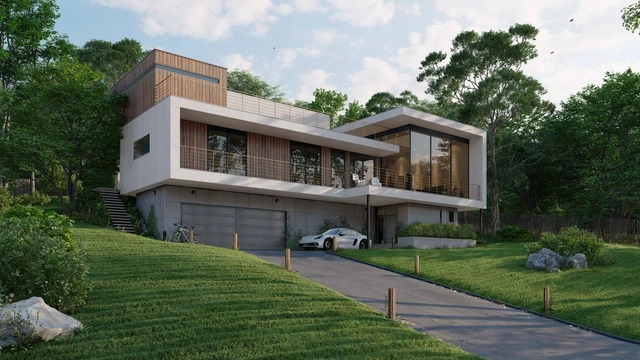
Residential exterior, rendered in Lumion 11
When it comes to architectural rendering software, Lumion makes the process of rendering an integral part of the architect's craft; it emboldens design and rendering workflows and inspires creativity. With the release of Lumion 11, realizing your design vision has never been easier. Using the new orthographic view feature, you can reduce the effort needed to create visually interesting plan and section views with your own unique twist. With animated phasing, you can show how the parts of your building connect and interact, choreographing a dialogue with the viewer.