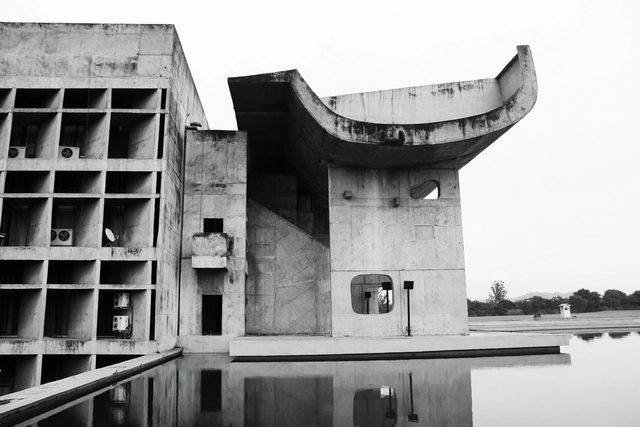
Le Corbusier and Pierre Jeanneret built sublime works amidst the unique landscape of Chandigarh, at the foothills of the Himalayas. They gave the city a new order, creating new axises, new perspectives and new landmarks. Built in the 1950s and early 1960s, the buildings form one of the most significant architectural complexes of the 20th century, offering a unique experience for visitors.
Architect and photographer Fernanda Antonio has shared photos with us from her journey throughout the city, capturing eight buildings and monuments, with special attention given to Le Corbusier’s Capital Complex. View all of the images after the break.
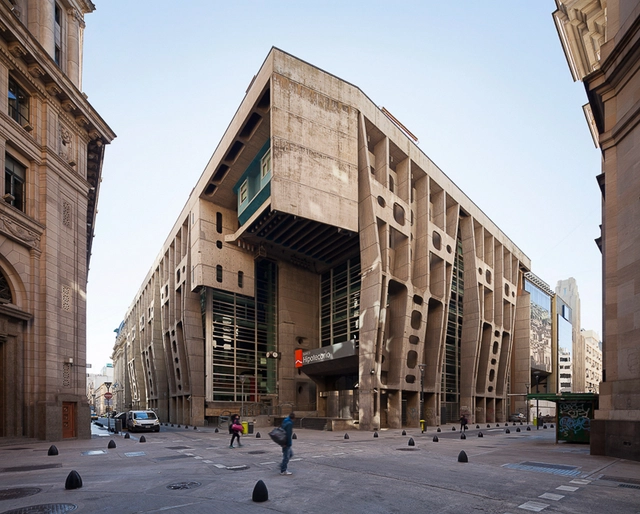
Argentine photographer and architect Federico Cairoli has shared photos with us of Clorindo Testa’s Banco de Londres (Bank of London) in Buenos Aires. Testa and his firm SEPRA won a competition in 1959 to design the bank and the Brutalist building was completed in 1966.
View Cairoli’s photos after the break and check out more of his work on his webpage and Facebook page.
Explore how architectural photographers see the cityscape in this dynamic session suitable for beginner and intermediate photographers alike. During this intimate exploration of Boston’s Fort Point and Financial District neighborhoods, you will learn to produce memorable images that convey a sense of place, an expression of the architect’s ideas, and a connection to landscape and surroundings. Professional photographer Emily O’Brien will help you and other enthusiastic photographers see Boston in a whole new way. Take your photography to new heights!
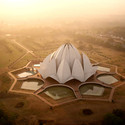
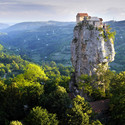
Photographer Amos Chapple has traveled the world, capturing well-known landmarks and cities from the perspective of a drone. From the Katshi Pillar in Georgia to New Delhi’s Lotus Temple and the star fort in Bourtange, the Netherlands, Chapple carried out “as much aerial work as weather and local laws allow.”
See 12 of his most impressive photos after the break.
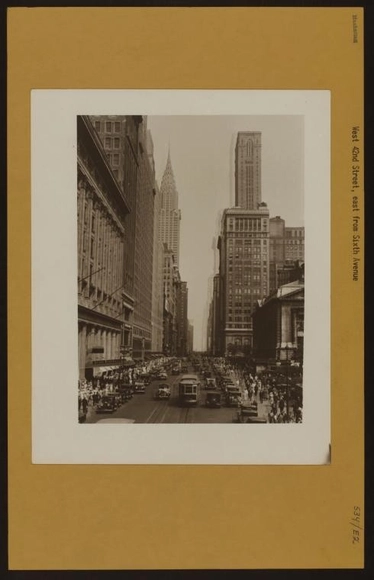
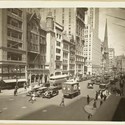
"Manhattan: 42nd Street (West) - 6th Avenue", Harold Kaye (1931). Image Courtesy of The New York Public Library http://www.oldnyc.org/
Discover historic New York with "OldNYC," a digital archive of the New York Public Library's "Photographic Views of New York City, 1870s-1970s" Collection. Bringing together an extensive catalogue of images from the library's Milstein Collection, OldNYC organizes photographs geographically, allowing users to view images specific to individual blocks and streets.
The project is also collaborative, asking visitors on the site to comment on photographs with "what's there now, what's changed, and what's stayed the same." Users can edit or add to captions on the back of each of the photos, creating a personal element in the latest retelling of New York's vibrant history.
Learn more about the project and view selected images after the break.
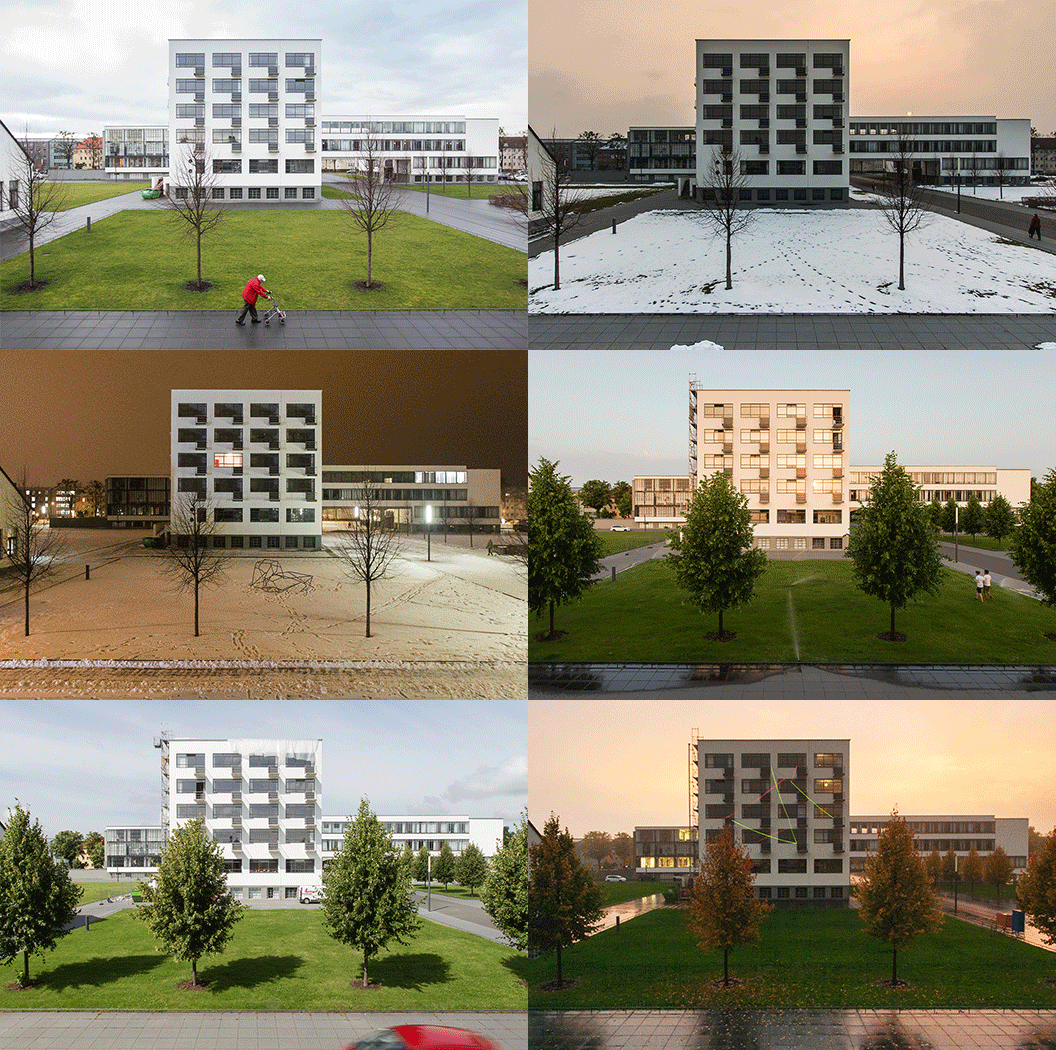
While studying for his Masters in Architecture at DIA (Dessau International Architecture), Romanian photographer Laurian Ghinitoiu was inspired to capture Walter Gropius’ Dessau Bauhaus at different times of the day and throughout the four seasons. Taken from the same vantage point over the course of two years (September 2012-July 2014), Ghinitoiu’s photos show the school as snow covers its perfectly-manicured lawn and skateboarders and construction workers come and go.
“The building has been framed in direct relation with the dynamic process of daily life. Lights and shadows, changing during the day and during the year, underline the always-different elements of the silent, but potent building. It almost protrudes out of the scene, imposing its strict lines, its regular rhythm and the functionalism of its geometries. The surroundings play the most important role of the entire photo project: they create the atmosphere, establishing an intimate connection between the architecture and its context." - Francesca Lantieri
View the full photo series after the break.
https://www.archdaily.com/633532/a-bauhaus-facade-study-by-laurian-ghinitoiuAD Editorial Team
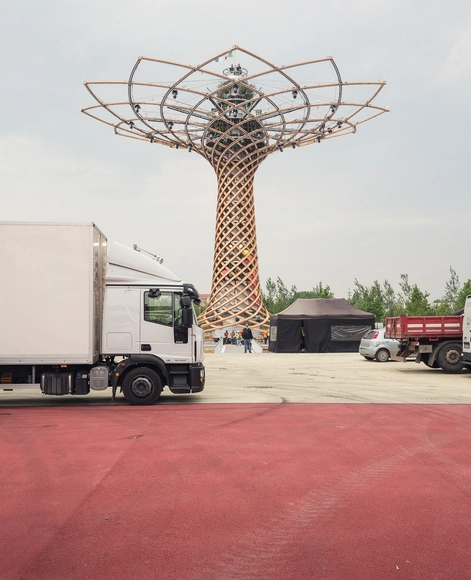
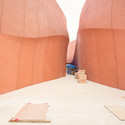
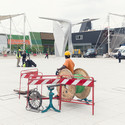
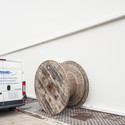
Milan-based photographer Delfino Sisto Legnani recently spent time in the compound of the 2015 Milan Expo twenty four hours prior to the inauguration of the event, which officially opened at the start of this month. This unique insight, captured through his lens and preserved for posterity, shows the state of the site and pavilions just before the Italian military began their final safety and security checks. Cables, garbage and hazard tape is strewn across the pavilion entrances and public spaces, while lorries and white vans unload the last of the interiors.
For almost a century, one of the largest buildings in the Southeastern United States has maintained a dominating street presence in Atlanta, Georgia. Now the Ponce City Market, the building was originally designed by Nimmons, Carr and Wright Architects and built in 1925 as a Sears, Roebuck & Co. distribution and retail center, operating until 1989. In 1991, the City of Atlanta purchased the building, renamed it City Hall East and housed several public works departments, storing countless items among its 2.1 million square feet of space. As the city’s utilization of the building dwindled, Jamestown Properties stepped in and acquired the building in 2010. Five years later, Ponce City Market is poised to become one of the greatest historic rehabilitation projects in the country.
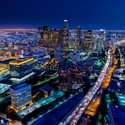
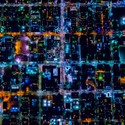
The latest in his high-altitude "AIR" series, Pulitzer Prize-winning photographer Vincent Laforet has captured the sprawling city of Los Angeles at night from a dizzying 10,000 feet. First starting this "dream project" in his hometown of New York then Las Vegas and San Francisco, AIR is taking Laforet worldwide with upcoming visits planned for London, Paris, Tokyo and more.
Preview a stunning selection of Laforet's Los Angeles series, after the break.
Surface Magazine has launched its 2015 Avant Guardian photography contest, now in its 15th year. Calling for submissions now through June 1, the competition provides emerging photographers the chance to be featured in Surface's October issue and their upcoming New York exhibition.
25 photographs will be shortlisted by Surface editors; ultimately 10 winners will be selected by a well-respected judging panel that includes architectural photographers Ingmar Kurth and Hélène Binet, as well as Stephen Hilger (Pratt Institute), Roy Schwalbach (Jack Studios), and photographers Youssef Nabil and Delfino Sisto Legnani. For more information or to submit your work, visit surfacemag.com.
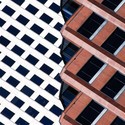
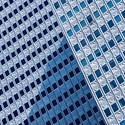
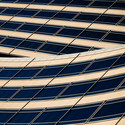
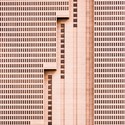
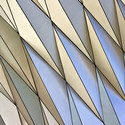
Nikola Olic is an architectural photographer based in Dallas, Texas, with a focus on capturing and reimagining buildings and sculptural objects in "dimensionless and disorienting ways." His photographs, which often isolate views of building façades, frame architectural surfaces in order for them to appear to collapse into two dimensions. According to Olic, "this transience can be suspended by a camera shutter for a fraction of a second." As part of his process, each photograph is named before being given a short textual accompaniment.
See a selection of Olic's photographs after the break.
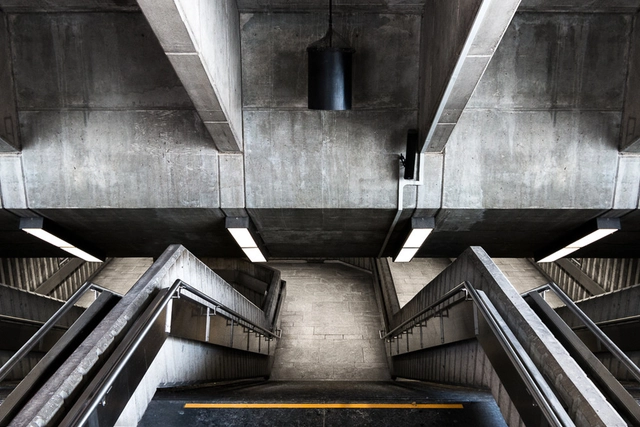
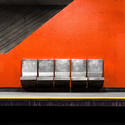
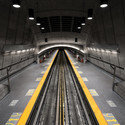
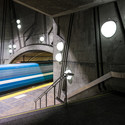
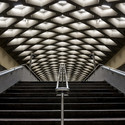
Montreal-based photographerChris Forsyth doesn't see his city the way others do -- that much is evident from his body of work, which includes rooftop photos of the Montreal skyline, nocturnal shots taken from the arm of a crane and now, images from the underground. The Montreal Metro Project is Forsyth's latest series, documenting the often overlooked architecture of the urban subway since October 2014.
Composed of 68 stations, each designed by a different architect between the 60s and 70s, the Montreal Metro system is as diverse and idiosyncratic as the city it underpins. Forsyth captures the stations empty of passengers, highlighting their architecture and reframing them in a manner rarely experienced. ArchDaily spoke to Forsyth about the series and the creative process behind it. Read his responses and view selected images from The Montreal Metro project after the break.
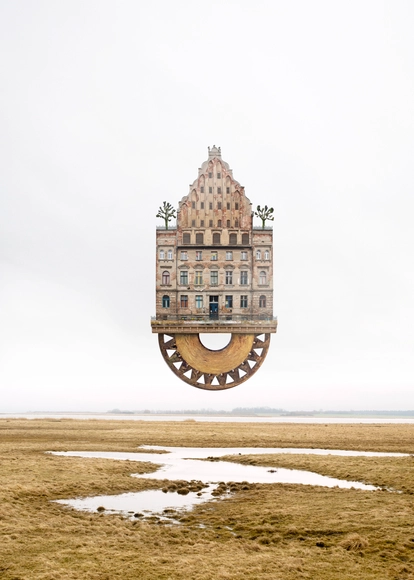
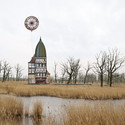
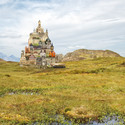
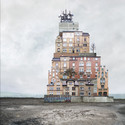
Matthias Jung's fascination for the medium of collage began in his father's photolab. And so, "with scissors and glue, the first fantastic buildings were made." In early 2015 Jung, a German artist and graphic designer, created seven images as part of a series which he entitled 'Houses', of which many of this selection originate. Uniquely, every piece of each collage originates from one of Jung's original photographs which are collected and then reassembled. The majority of these photographs were taken during trips in northeastern Germany.
See a selection of Jung's fantastical architectural collages after the break.
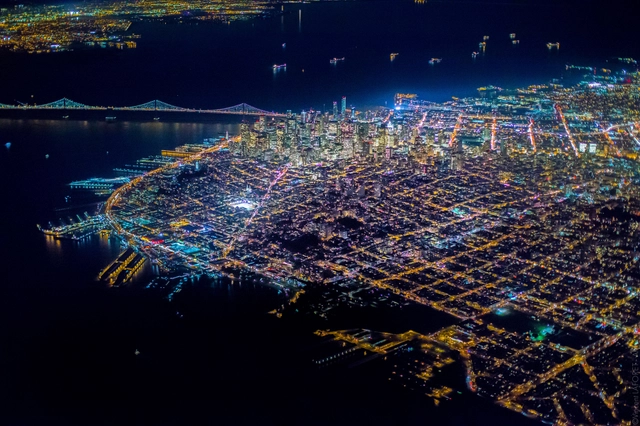
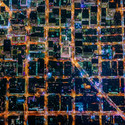
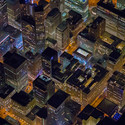
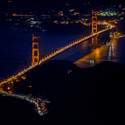
Pulitzer Prize-winning photographer Vincent Laforet has made his way to San Francisco as part three of his dizzying series of city aerials. Capturing the tightly packed metropolis from 7,200-feet, Laforet became mesmerized by the city’s “clashing grids,” stunning bridges and overwhelming feeling of “peace and order.”
“There’s just something about this city’s vibe - a perfect balance between the hectic go-getter pace of New York and the more relaxed, laissez-faire rhythm of Los Angeles,” says Laforet. “It feels like every little piece of the puzzle has somehow found its place in what is an absolutely chaotic topography.”
See a selection of Laforet’s San Francisco series, after the break.
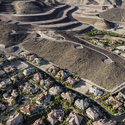
“Nestled into the desert landscape that defines Nevada’s visage, Ascaya feels as if it were shaped by the elements. [...] Where stone rises up to meet the sky, there is a place called Ascaya.” - The Ascaya promotional website
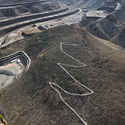
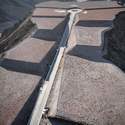
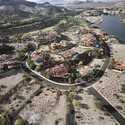
Not quite, according to Michael Light’s soon-to-be released book, Lake Las Vegas/Black Mountain. Covering the advance of suburban Nevada into the desert, this two-part book looks at Lake Las Vegas, a then-abandoned victim of the 2008 real estate crash which has since emerged from the other side of bankruptcy, and nearby Ascaya, a high end housing estate that is still in the process of being carved into Black Mountain. Light’s photography doesn’t so much question the developers’ summary as it does, say, blast it, scar it, terrace it and then build a large housing development on the remains. Featuring beautifully composed aerial shots of the construction sites and golf courses covering the desert, the book is a clear condemnation of the destructive and unsustainable development in Nevada. Much more than that, though, Light is highlighting a wider philosophy behind developments like Ascaya and Lake Las Vegas that fundamentally fail to connect American society with the American landscape in a non-destructive way.
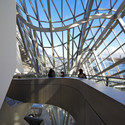
Edmund Sumner has shared with us images from his recent visit to Lyon, France, where he photographed Coop Himmelb(l)au’s newly completed Musée des Confluences. Perched on a century-old artificial peninsula at the confluence of the Rhône and Saône rivers, the “museum of knowledge,” as Coop Himmelb(l)au affectionately refers to it, is distinct for its “iconic gateway” - an openly traversable “Crystal” that provides multi-level access to the museum’s exhibition spaces and views of the building's unique context. Step inside, after the break.
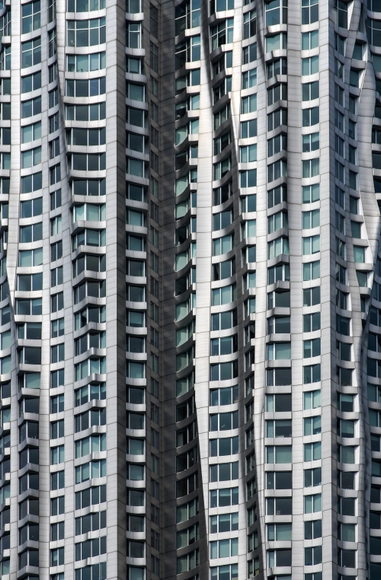
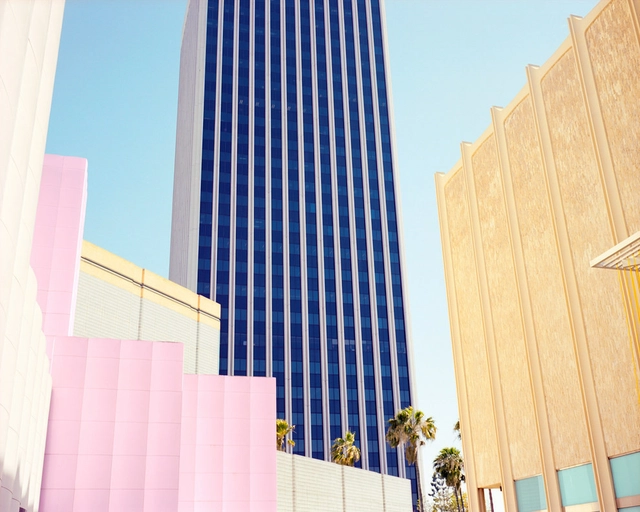
The World Photography Organization has revealed 35 images that are being considered to be the “world’s best contemporary photograph.” Of the shortlisted selection, beauty found within our built world takes center stage in four of the images. All entries were submitted freely by professionals and amateurs alike. See all four stunning images, after the break.