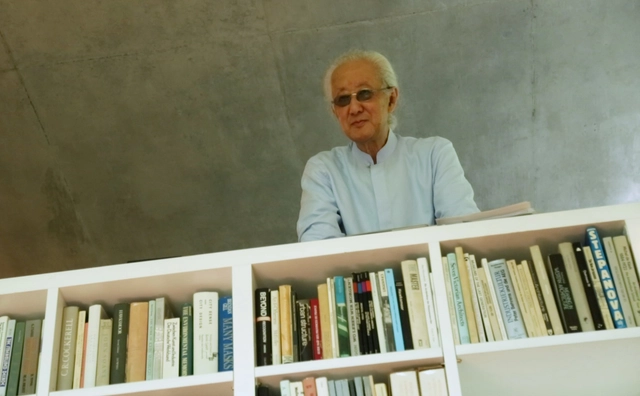
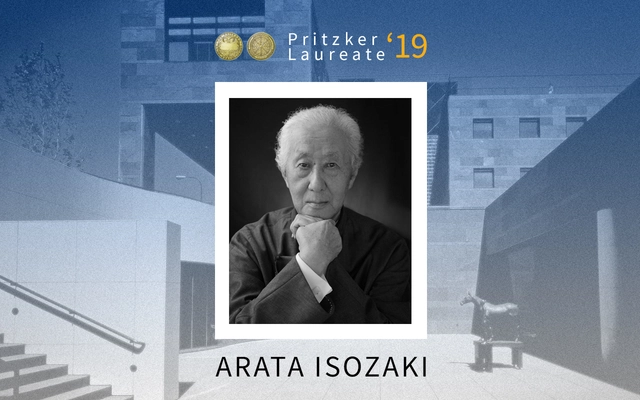
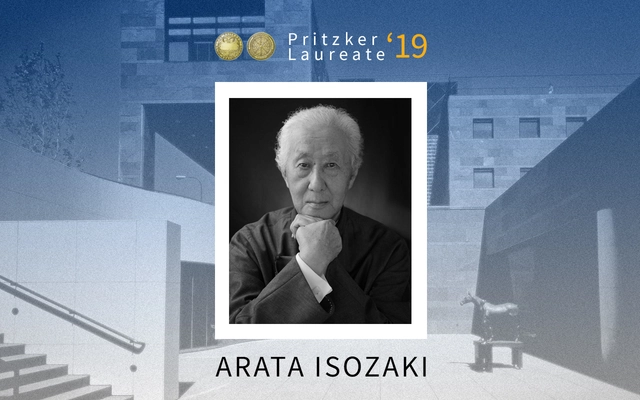
Arata Isozaki has officially received the 2019 Pritzker Architecture Prize, in a ceremony at the Château de Versailles in France. Isozaki, who has been practicing architecture since the 1960s, has long been considered an architectural visionary for his transnational and fearlessly futurist approach to design. With well over 100 built works to his name, Isozaki is also incredibly prolific and influential among his contemporaries. Isozaki is the 49th architect and eighth Japanese architect to receive the honor.
https://www.archdaily.com/917974/arata-isozaki-accepts-the-2019-pritzker-prizeNiall Patrick Walsh
Arata Isozaki, the Japanese architect and winner of the Pitzker Prize 2019, is not only renowned for his fruitful portfolio of works built all over the world (more than a hundred) but also for his continuous input to the theory of urbanism, including texts and proposals.
It is precisely in the field of urbanism, that he developed one of his most interesting non-built projects: the futurist master plan, known as City in the Air, in the Shinjuku neighborhood in Tokyo, Japan.
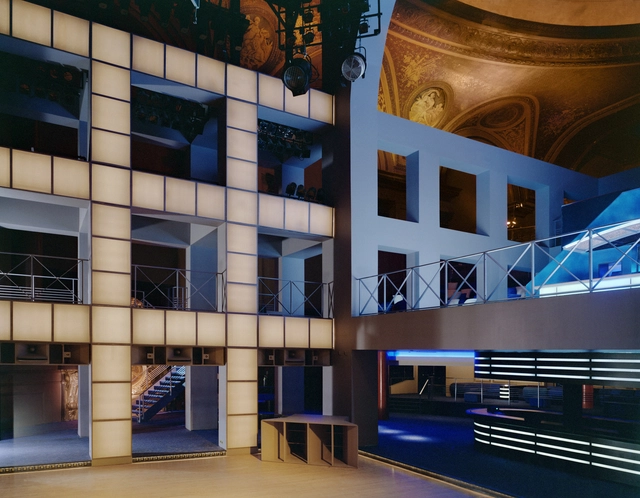
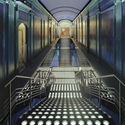
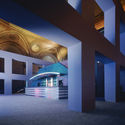
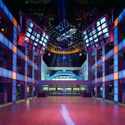
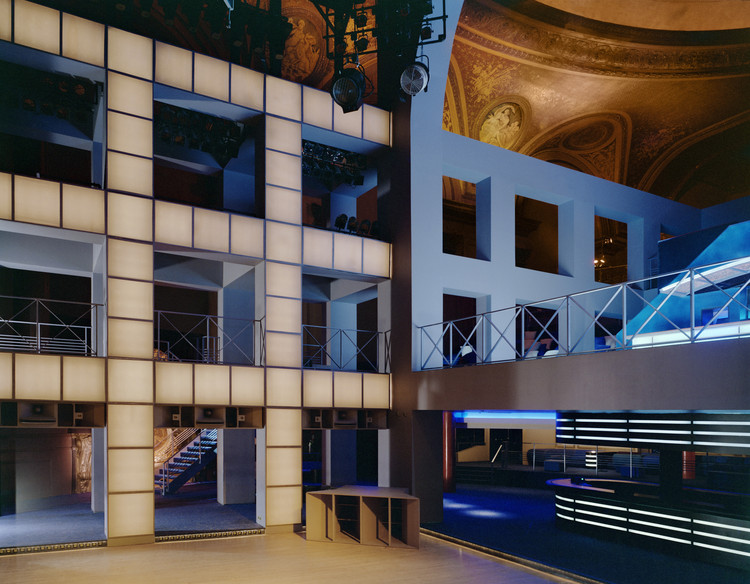
In May 1985, an old theater and concert hall opened its doors to the public for the opening of a brand new nightclub in New York City. Located on 126 East 14th Street, the project was commissioned by entrepreneurs Steve Rubell and Ian Schrager, owners of the also famous club Studio 54, and was conceived as a vibrant and luminous independent structure arranged inside a rather classic shell, which appears as a beautiful backdrop behind the clean geometry of Isozaki.
As The New York Times pointed out in its May 20, 1985 edition: 'Arata Isozaki is at once a great eminence of Japanese architecture and a source of some of its freshest thinking. And all sides of Mr. Isozaki are visible in the Palladium'.
Named 2019 Pritzker Prize Laureate, Japanese architect Arata Isozaki is incredibly prolific and influential among his contemporaries. Deeply aligned with the period of change and reinvention that Japan experimented after Second World War and Allied Occupation, Isozaki has developed a solid career on a truly global scale, avoiding being labeled in a specific style throughout his life.
Take a peek into Japanese architect and theorist Arata Isozaki’s studio in the first of PLANE—SITE’s new video series, Time-Space-Existence. In this inaugural film, Isozaki discusses the Japanese concept of the space and time that exists in-between things, called "ma." Especially inspiring is Isozaki’s refusal to be stuck in one architectural style, as he describes how each of his designs is a specific solution born out of the project’s context.
Videos
Courtesy of Image: Pritzker. Collage: ArchDaily by Danae Santibáñez
Arata Isozaki has been named the 2019 laureate of the Pritzker Prize for Architecture. Isozaki, who has been practicing architecture since the 1960s, has long been considered an architectural visionary for his transnational and fearlessly futurist approach to design. With well over 100 built works to his name, Isozaki is also incredibly prolific and influential among his contemporaries. Isozaki is the 49th architect and eighth Japanese architect to receive the honor.
Said the jury of Isozaki in the award citation: “...in his search for meaningful architecture, he created buildings of great quality that to this day defy categorizations, reflect his constant evolution, and are always fresh in their approach.”
2019 Pritzker LaureateArata Isozaki has been designing for more than half a century; several of his works are considered architectural classics due to their influence and impact on international design.
His work combines a number of styles, from vernacular to high tech and organic to brutalist, giving his projects a sculptural and undeniably photogenic appearance. With such richness in design, it is perhaps no wonder that people around the world are excited to photograph his work.
We've selected 23 of the most beautiful photos of Isozaki's work posted to Instagram by users across the globe. Our selection, after the break:
https://www.archdaily.com/912600/a-selection-of-the-best-instagram-photos-from-arata-isozakis-workAD Editorial Team
The prolific and varied career of 2019 Pritzker Laureate Arata Isozaki, which includes more than 100 works built on virtually every continent, gives us a huge amount of facts that are relevant to understanding his life and architecture. Considered the first Japanese architect to develop his work on a truly global scale, Isozaki took special care to respond to the context and the specific requirements of each project, expanding the heterogeneity of his work and resulting in a variety of styles from vernacular to high tech.
See below 20 fascinating facts that illuminate his particular genius:
https://www.archdaily.com/912602/who-is-arata-isozaki-20-things-to-know-about-the-2019-pritzker-laureateAD Editorial Team
Gensler's Shanghai Tower has won the 2015 Emporis Skyscraper Award. Selected from over 300 buildings of over 100 meters in height completed in 2015, the Emporis jury was impressed by the Shanghai Tower's "elegant spiraling cylindrical shape," and the "extraordinary energy efficiency" provided, in part, by the building's double-skin facade.
This article originally appeared on guggenheim.org/blogs under the title "Nine Guggenheim Exhibitions Designed by Architects," and is used with permission.
Exhibition design is never straightforward, but that is especially true within the highly unconventional architecture of Frank Lloyd Wright’s Guggenheim Museum. Hanging a painting in a traditional “box” gallery can be literally straightforward, whereas every exhibition at the Guggenheim is the reinvention of one of the world’s most distinctive and iconic buildings. The building mandates site-specific exhibition design—partition walls, pedestals, vitrines, and benches are custom-fabricated for every show. At the same time, these qualities of the building present an opportunity for truly memorable, unique installations. Design happens simultaneously on a micro and macro scale—creating display solutions for individual works of art while producing an overall context and flow that engages the curatorial vision for the exhibition. This is why the museum’s stellar in-house exhibition designers all have an architecture background. They have developed intimate relationships with every angle and curve of the quarter-mile ramp and sloping walls.
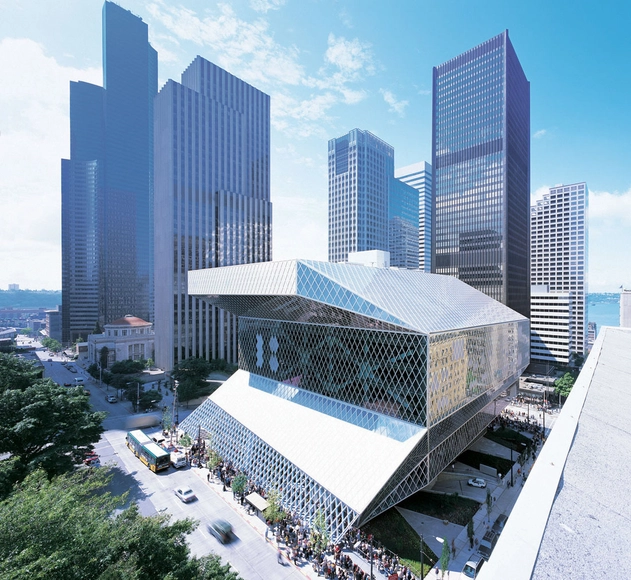
Bjarke Ingels worked on the Seattle Central Library during his time at OMA. Image Courtesy OMA
The world of architecture is small. So small in fact, that Rem Koolhaas has been credited with the creation of over forty practices worldwide, led by the likes of Zaha Hadid and Bjarke Ingels. Dubbed “Baby Rems” by Metropolis Magazine, this Koolhaas effect is hardly an isolated pattern, with manifestations far beyond the walls of OMA. The phenomenon has dominated the world of architecture, assisted by the prevalence and increasing necessity of internships for burgeoning architects.
In a recent article for Curbed, Patrick Sisson dug into the storied history of internships to uncover some unexpected connections between the world's most prolific architects. With the help of Sisson's list, we've compiled a record of the humble beginnings of the household names of architecture. Where did Frank Gehry get his start? Find out after the break.
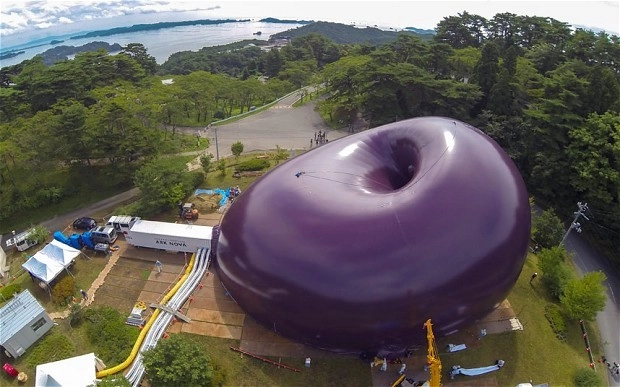
Lucerne Festival Ark Nova 2013. Image Courtesy of The Telegraph
The Telegraph reports that a new inflatable concert hall dubbed “Ark Nova," created by the British sculptor Anish Kapoor and Japanese architect Arata Isozaki, is to tour the region of northern Japan that was most affected by the 2011 Tsunami. The hall, which will host world-class concerts, events and workshops, has a single skin membrane that can be easily inflated or deflated as well as seating constructed from local, tsunami-damaged cedar. The opening will take place this week in the coastal town of Matsushima. Learn more about the hall here.
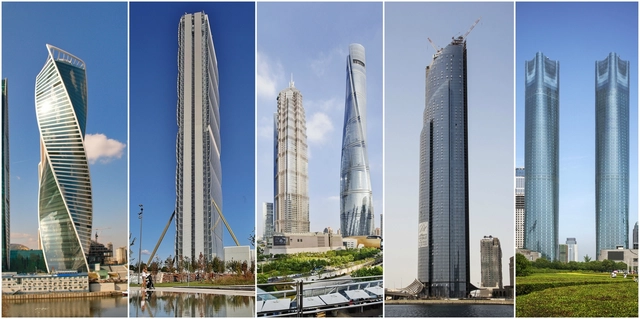
Designed by Arata Isozaki and Andrea Maffei, the Citylife Tower represents the future business and shopping district of CityLife in Milan (a subsidiary company of the Generali Group and in which Allianz has a shareholding), which is progressing quickly. By 2015 it will reach a height of 207 meters, with 50 floors of offices, and will be the tallest skyscraper in Italy. The foundation bed, which has just been built, is formed of a continuous block of concrete covering a total of 4,260 cubic meters and required 42 hours of continuous work. More images and architects’ description after the break.
Arata Isozaki and Anish Kapoor have joined forces to create a mobile concert hall that will travel across the devastated region of Higashi Nihon, brining a promise of hope to those still suffering from the earthquake of March 2011. Using music as the means to bring an uplifting message, Ark Nova will provide seating for approximately 700 spectators to watch interdisciplinary artistic projects, musical ensembles and multimedia exhibitions. The hall will serve not only as a platform for performances but also as a place to meet and find creative inspiration; thus, make a lasting contribution toward returning normalcy to the region.
More about the project, including a video clip, after the break.
Today, the design for the Broad Museum has been released. Situated adjacent to Frank Gehry’s Walt Disney Concert Hall and Arata Isozaki’s Museum of Contemporary Art, the museum has become a key part of the Grand Avenue redevelopment project that has been losing steam.


._Imagen_cortesi%CC%81a_de_The_Pritzker_Architecture_Prize.jpg?1551827265&format=webp&width=640&height=580)


_Qatar_convention_center_Hisao_SUZUKI.jpg?1551731947 "© Hisao Suzuki")

_Hisao_SUZUKI04.jpg?1551731968 "© Hisao Suzuki")

_17.28.10.jpg?1551731331&format=webp&width=640&height=580)