Beginning a multi-division examination with pass rates in the 50-60% range is a seriously daunting task. That’s without even mentioning the overwhelming amount of study materials and opinions floating around in cyberspace. Never fear, ArchDaily is here to help you navigate the tools and techniques available to you when cracking open the books and (hopefully) passing your first exam.
The American Institute of Architects (AIA) has announced the names of the 152 member-architects who have been elevated to its prestigious College of Fellows for 2018. Limited to members who have made “a significant contribution to architecture and society and who have achieved a standard of excellence in the profession,” approximately 3 percent of the AIA’s total membership of 90,000 are recognized as fellows.
AIA New York and the Center for Architecture have announced five practices as winners of the 2018 New Practices New York awards, founded to identify and promote the city’s emerging young architects. Established in 2006, the awards are given biennially to practices headquartered in New York and in operation for 10 or fewer years.
Under this year’s theme of Consequences, firms were asked to submit portfolios containing design ideas that promoted “the capacity of architectural practice to offer transformative value within the broader context of the city.”
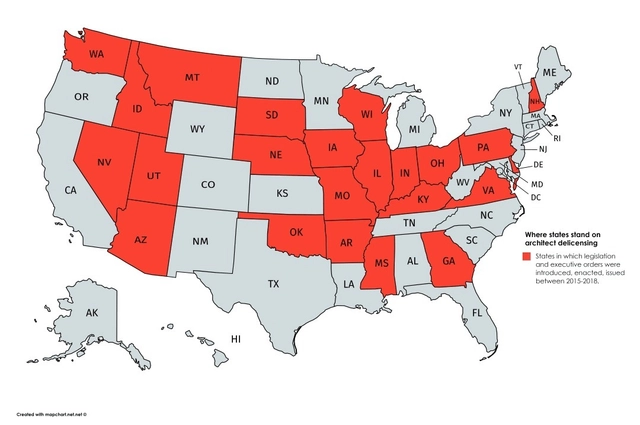
With a growing number of states choosing to rollback professional architectural licensure requirements, the American Institute of Architects (AIA) has issued a “Where We Stand” statement calling for the reinforcement of the practice, which they believe stand to “protect the health, safety and welfare of the public and shield consumers from unqualified practitioners.”
According to the AIA, over the past 5 years, legislative or executive actions have been taken in at least 25 states to impose the “least restrictive regulations” for professional licensure, with several states recommending the elimination of all licenses in the state.
https://www.archdaily.com/887865/aia-responds-to-actions-taken-by-25-states-to-reduce-architectural-licensure-requirementsAD Editorial Team
The architecture profession is in a perpetual debate concerning the myriad issues that impact how we practice and how that work can and should impact the world around us. As the chair of the AIA’s Young Architects Forum, I am keenly aware of the problems facing the next generation of practice leaders: inefficient practice models that lead to overworked, underpaid, and highly unsatisfied staff. We hear repeatedly that a seismic shift in the way firms operate is necessary to successfully move the profession forward and retain talent.
In October, the AIA held their first ever Practice Innovation Lab, looking to develop new practice models to raise the value of architects and the services that they provide to their clients with the goal of sparking a new debate that could challenge the status quo in firm management.Ten teams of six were formed with the intent of creating 10 new innovative practice models which would be pitched, “Shark Tank” style, after a daylong hackathon. Attendees then voted on the best practice model for the People’s Choice Award. Among the 10 pitches, there were five major themes to come out of the Practice Innovation Lab, which are discussed in more detail below:
https://www.archdaily.com/887308/5-innovative-business-models-for-young-architectural-practicesEvelyn Lee
2018 AIA National Photography Competition was founded to highlight the photographic skills of architects and AIA members, while also focusing on the beauty of architecture around the world.
People perceive architecture in different ways. “Style” is often an easy classification, traditional or modern. Popular residential work is often categorized dismissively by architects as “vernacular.” The branding of the product of the profession, an oeuvre of work embodied in buildings and their meaning in our culture as celebrated by the American Institute of Architects, has many levels of recognition, from local AIA Chapter Awards, to national Awards.
No AIA Award has more meaning or lustre inside the profession than the “Twenty-five Year Award” for buildings that have “stood the test of time.” The award has been given continuously for the last 56 years. This year, the Design Jury chosen to select a seminal building has opted not to give an award to anything, any building 25-35 years old.
We are starting the new year with an announcement from the American Institute of Architects that there will be no winner for their Twenty-five Year Award in 2018. This will be the first time this has occurred since the award was officially established in 1971. The AIA award recognises buildings that have “stood the test of time for 25-35 years and continues to set the standards of excellence for its architectural design and significance.”
The American Institute of Architects (AIA) has selected Minneapolis-based practice Snow Kreilich Architects as the winners of the 2018 AIA Architecture Firm Award. Working predominantly in the cold climate of the northern United States, the firm utilizes warm materials and light-filled interiors to create bold designs focused on transforming the human experience.
The American Institute of Architects (AIA) has named James Stewart Polshek, FAIA, as the recipient of the 2018 AIA Gold Medal. Lauded by the AIA for his “unparalleled vision and leadership,” Polshek has enjoyed fruitful professional and academic careers as a founding partner of James Stewart Polshek Architect (later Polshek Partnership and currently Ennead Architects) and a former dean of Columbia University’s Graduate School of Architecture, Planning and Preservation.
Honoring “an individual or pair of architects whose significant body of work has had a lasting influence on the theory and practice of architecture,” the AIA Gold Medal is often considered the highest honor awarded in the United States for architecture.
Next LA - Honor: West Hollywood Belltower / Tom Wiscombe Architecture, Inc. courtesy of AIA LA
The American Institute of Architects Los Angeles (AIA|LA) just announced the winners of their 2017 Design Awards honoring Los Angeles based architects and architecture. The ceremony took place Monday, October 30th, at the Broad Stage in Santa Monica, recognizing each of the winners.
Ten projects have been selected as winners of 2017 AIA International Region Design Awards, honoring exemplary projects undertaken by architect members of the American Institute of Architects’ International Region, encompassing six of the seven chapters located outside of the United States: AIA United Kingdom, AIA Continental Europe, AIA Hong Kong, AIA Japan, AIA Middle East, and AIA Shanghai (not including the recently formed AIA Canada).
Projects were selected by an international jury led by Helene Combs Dreiling, FAIA, AIA Past President 2014, AIA IR Zone 1 (USA) and were presented AIA International Region Conference in Prague on October 7th.
“How do you bring architectural stories to life?”—this is the question the AIA asks annually in their I Look Up Film Challenge. This year’s theme, Blueprint for the Better, challenges architects and filmmakers to collaborate and tell the stories of architects making a positive impact on the community.
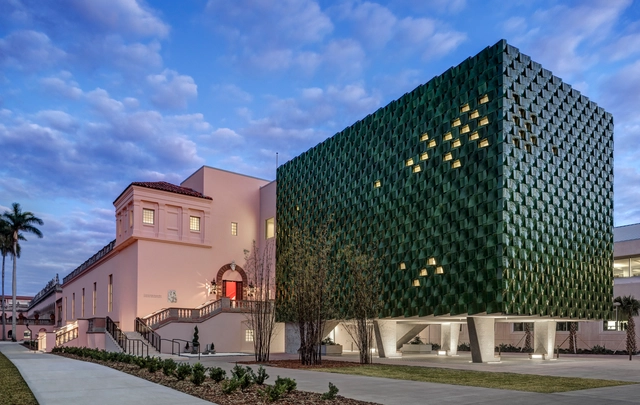
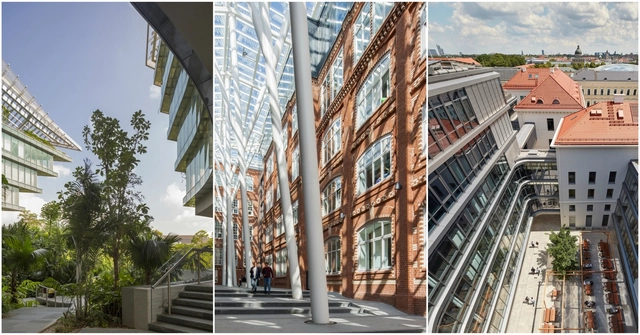
“Education continues to evolve, and the projects from this year’s Education Facility Design Awards program—presented by the AIA and the Committee on Architecture for Education—represent the state-of-the-art learning environments being developed in today's learning spaces,” explain the AIA. “These projects showcase innovation across the entire learning continuum, displaying how today's architects are creating cutting-edge spaces that enhance modern pedagogy.”
For a discipline that thinks of itself as learned, scholarly research eludes the architectural profession. This is a long standing problem. “Failure,” John Ruskin wrote in his 1848 introduction to The Seven Lamps of Architecture, “is less frequently attributable to either insufficiency of means or impatience of labor, than to a confused understanding of the thing actually to be done.”
Roughly 150 years later, Harry Nilsson—surely singing to architects—opined in his song, Joy that if you’re unable to find the answer to a question, you may not have a question worth asking (and probably don’t have a problem worth solving). In between Ruskin and rock and roll, is William Peña, the author of the architectural programming guide, Problem Seeking, who nearly a half-century ago wrote that “you can’t solve a problem unless you know what it is.”
The award is given in four categories: Category A: Built, Less than $25 million in construction cost; Category B: Built, More than $25 million in construction cost; Category C: Unbuilt, Must be commissioned for compensation by a client with the authority and intention to build (No projects were selected in this category this year); and Category D: Innovations in Planning and Design Research, Built and Unbuilt.


_(1).jpg?1521456027)











-Corey_Gaffer.jpg?1512665374 "Lofts at Mayo Park, Rochester, Minnesota. Image © Corey Gaffer")













.jpg?1500915765&format=webp&width=640&height=580)