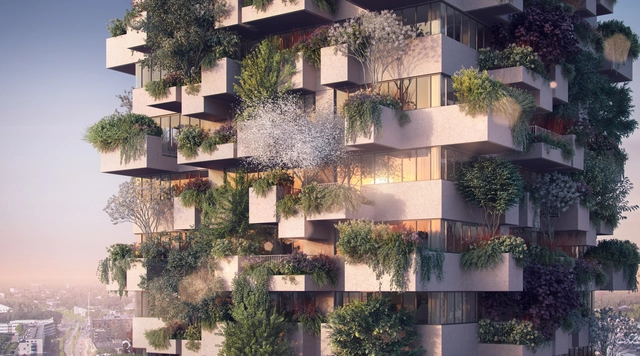
The new social housing project by Stefano Boeri Architetti is the first to integrate a vertical forest into an affordable residential skyscraper, improving the living conditions often incurred within such developments. 5,200 shrubs and 125 trees will be planted up the 75m tall structure in Eindhoven.
French photographer Laurent Kronental’s latest photo series, “Les Yeux des Tours” views of Paris, are framed by the quirky windows of the Tours Aillaud, and by the subtle differences in which the spaces around them are inhabited. Kronental considers the towers as some of the most spectacular of the Grands Ensembles built in the post-war economic boom in France. For him, photographing these buildings was a form of nostalgia, a way of satisfying a deep sense of childhood wonder and curiosity that fostered in him as a young boy perceiving them from the nearby business and shopping center "La Défense," questioning the lives of the people who live there.
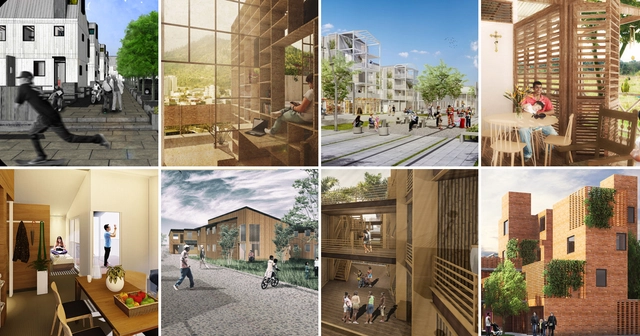
At the end of September, we invited our Spanish-speaking readers to send us their social housing proposals completed at a university level. Social housing is still a challenge for much of Latin America and although every year hundreds of architecture students work on projects that reflect their concerns in the social housing field, its visibility is very low and its materialization is null. At a time when the Global South has pursued its own responses to its own problems, the university response on social housing should be taken into account by the State, both of whom are interested in the common good.
https://www.archdaily.com/883952/the-best-university-proposals-for-social-housing-in-latin-america-and-spain-in-2017ArchDaily Team
OOPEAA and Lujatalo worked together to design the winning proposal for a new multi-functional church and social housing project for Tikkurila, Helsinki entitled Church in the City. The project is unique in the way that the architect, builder, and client participated in a highly collaborative design process.
The exercise, “from territory to inhabitant”, organized by the Centre of Investigation for Sustainable Development (CIDS) of Infonavit, seeks to respond to the diverse cultural, social, environmental, spatial and functional needs of different localities and bioclimates in finding assisted self-build housing solutions. The main objective of this investigation is to establish the legal, conceptual and architectonic processes that can be used to create these types of houses.
India’s renowned architect Anupama Kundoo has experimented with locally sourced materials to develop Wall House and others for non-profit organizations to minimise impact in the construction process whilst maintaining the connection to the community. She tells us how she integrates hybrid technologies into the building, a response to the growing segregation in India and developing countries.
Earlier today, the UK Prime Minister Theresa May made her closing speech at the Conservative Party Conference in Manchester. In a speech which focused on the fallout of Brexit and the economy, May devoted considerable attention to the issue of the UK housing market, announcing a plan to add £2 billion to the government's existing £7 billion affordable housing fund—a fund which local governments, private housebuilders, and housing associations can apply to for grants to subsidize construction of affordable housing.
“Fortress Besieged,” a metaphor when We talked about traditional Chinese residential architecture. Before modernist architecture has spread all over the world. Chinese traditional residential architecture is almost like fortress besieged, although they might be different in material selection, form and so on because of regionalism. Fortress Besieged, is the so-called courtyard. In China, We have a long tradition of courtyard gardening. To encircle a world of our own and entrust our sentiment to the flower and plants in the garden, is an idea dwelling state deep into our bone. However this dwelling state in today’s China, has almost disappeared in urban living and only reveals itself in historical building.
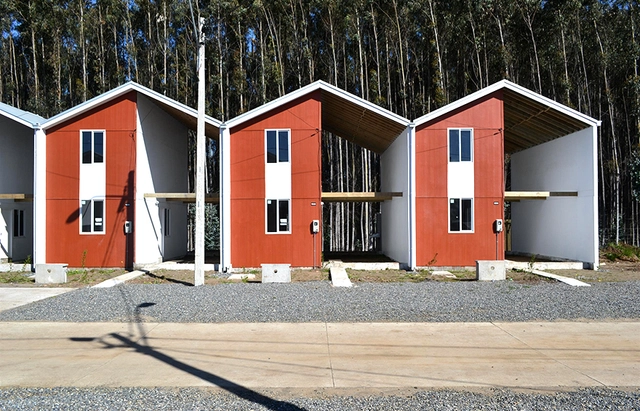
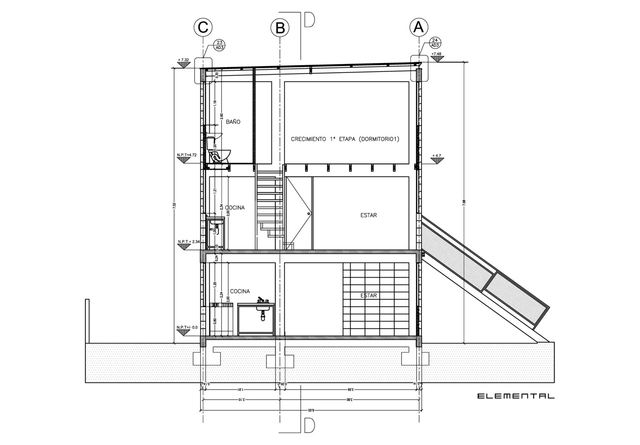
Good location, harmonious growth over time, concern for urban design, and the delivery of a structure that has "middle-class DNA" are the key points of the ABC of incremental housing, developed in detail by the Chilean architects ELEMENTAL. It's a question of ensuring a balance between "low-rise high-density, without overcrowding, with the possibility of expansion (from social housing to middle-class dwelling)."
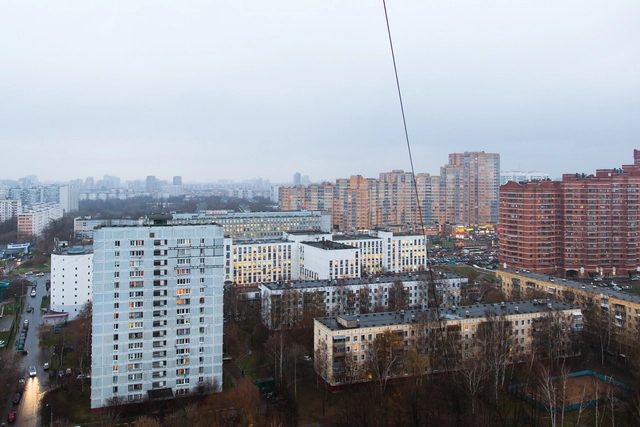
The Moscow government has just launched the biggest demolition program in the city’s history. Its goal is to get rid of 8,000 5-story residential buildings constructed in the Soviet era—it is probably the biggest program of erasure of modernist architectural heritage in world history. The main assumptions of the plan, as well as the press comments following it, show that we have forgotten what modernism was about, and what the real values of this architecture are.
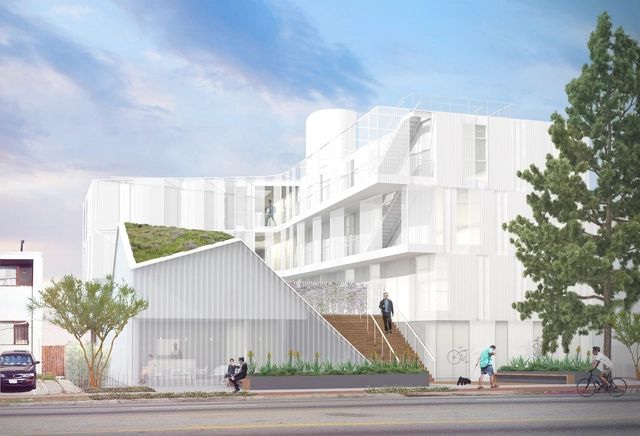
With ever-increasing rates of chronic and veteran homelessness amongst low-income households, Los Angeles’ pressing demand for affordable social housing is being addressed by Lorcan O’Herlihy Architects, with their design of MLK1101 Supportive Housing, which has just begun construction.
https://www.archdaily.com/805070/lohas-latest-supportive-housing-complex-curbs-las-increasing-homelessnessOsman Bari
In honour of its 10th anniversary, the Curry Stone Design Prize will recognize a large group of the world’s most socially conscious and active design practices, in what the Foundation has coined as the Social Design Circle.
https://www.archdaily.com/804554/curry-stone-design-prize-recognizes-7-practices-for-strides-in-social-housingOsman Bari
The largest of the Caribbean islands, Cuba is a cultural melting pot of over 11 million people, combining native Taíno and Ciboney people with descendants of Spanish colonists and African slaves. Since the 1959 revolution led by Fidel Castro, the country has been the only stable communist regime in the Western hemisphere, with close ties to the Soviet Union during the Cold War and frosty relationship with its nearby neighbor, the United States, that has only recently begun to thaw. While the architecture in the capital city of Havana reflects the dynamic and rich history of the area, after the revolution Havana lost its priority status and government focus shifted to rural areas, and the buildings of Havana have been left to ruin ever since. Iwo Borkowicz, one of three winners of the 2016 Young Talent Architecture Award, has developed a plan that could bring some vibrancy, and most importantly some sustainability, back to Havana, the historic core of the city.
Videos
Villa Verde in Constitución, Chile by Elemental. Image via 99 Percent Invisible
In Chile, a middle-class family may inhabit a house of around 80 square meters, whereas a low-income family might be lucky enough to inhabit 40 square meters. They can’t afford a large “good” house, and are henceforth often left with smaller homes or building blocks; but why not give them half a “good” house, instead of a finished small house? In the 1970s a professor by the name John F.C. Turner, teaching at a new masters program at MIT called “Urban Settlement Design In Developing Countries”, developed an idea surrounding the concept that people can build for themselves. 99% Invisible has covered a story, produced by Sam Greenspan, on how this idea has evolved, and what it has turned into: Half A House.
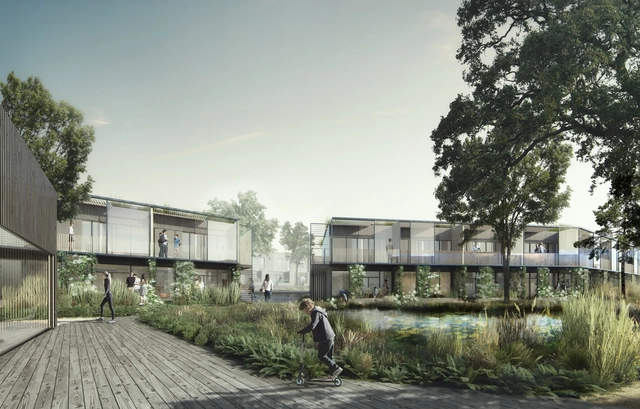
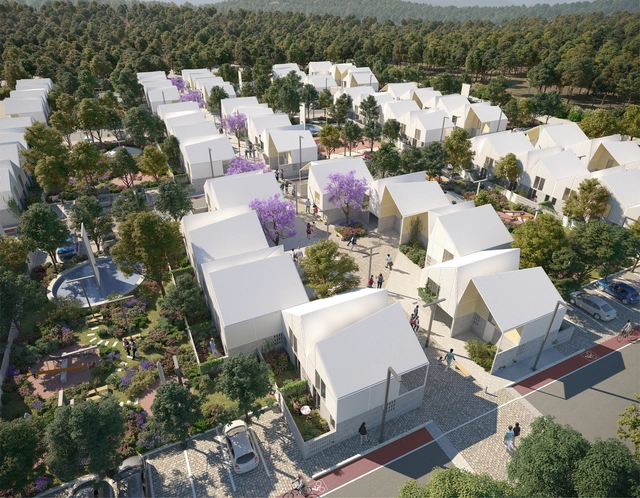
White Arkitekter’s Copenhagen studio has been selected as winners of a competition to design 115 individual homes as part of a social housing project in Denmark’s Allerød Municipality. Located north of the capital city of Copenhagen, the new neighborhood will be bordered by forest and a lake, inviting the nature in to complement and screen individual buildings. The project, titled “By the Woods,” will attempt to subvert typical preconceptions about social housing through the blurring of public and private space.
In the past eight years the world has seen important changes – stemming from natural catastrophes, global warming, war, diseases, political and economic crisis among other things – all of which have a direct impact on the way we inhabit our planet and therefore how architects and planners are managing context-related designs for community living.
https://www.archdaily.com/783459/a-look-back-8-years-of-social-and-urban-projectsAD Editorial Team
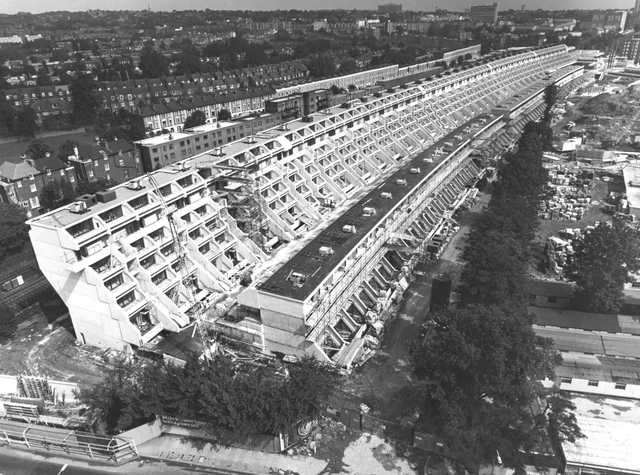
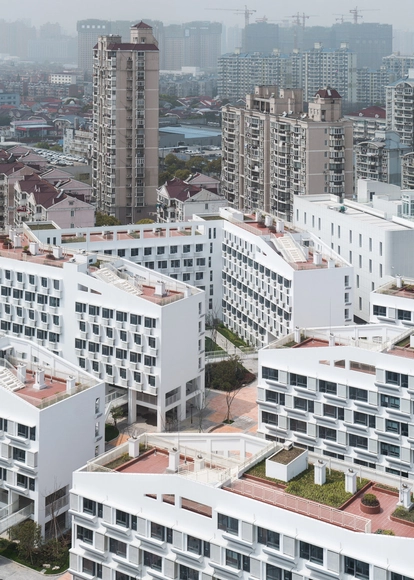
Architecture serves many essential functions in the fabric of the built environment, but it is the perpetual deficit of housing that some might argue is the field’s ultimate clarion call. In virtually every global city, growing populations and limited supplies of affordable dwellings are the major issues of twenty-first century life—and therefore are indications of the continued relevance of architecture in solving vexing urban predicaments. The last century offered early promise in addressing such issues with proposals to house the masses in immense slabs and box buildings, structures almost as large as their social ambition. But what became an asset of scale overlooked, or more probably misunderstood, the social degradation that such largeness elicited.




.jpg?1506638347&format=webp&width=640&height=580)
.jpg?1487638854&format=webp&width=640&height=580)