

-
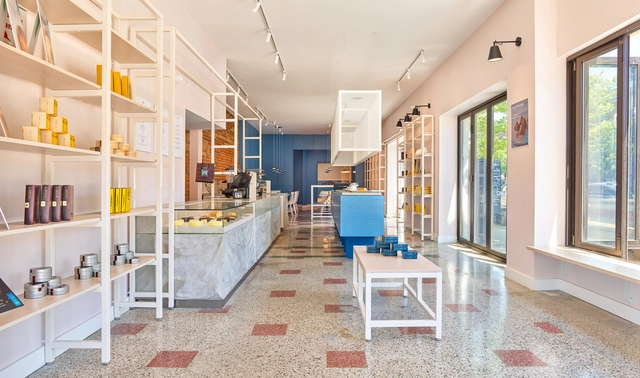
Architects: Kilogram Studio
- Area: 396 m²
- Year: 2019
-
Manufacturers: AutoDesk, Louis Poulsen, Signify, Adobe Systems Incorporated, Anewall, +6


.jpg?1446591053&format=webp&width=640&height=580)


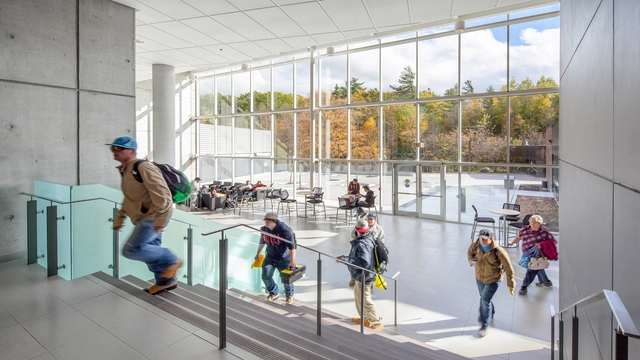
The American Institute of Architects Committee on Architecture for Education has announced the winners of this year’s Education Facility Design Awards. The eight winners and two merit honors were awarded this year’s best educational facilities that not only demonstrate excellence in contemporary architectural design but also further education in innovative ways and serve as an inspirational learning space. This year’s projects are designed for students of all ages, from childhood facilities to higher education buildings.
“Education continues to evolve, and the projects from this year’s Education Facility Design Awards program—presented by the AIA and the Committee on Architecture for Education—represent the state-of-the-art learning environments being developed in today's learning spaces. These projects showcase innovation across the entire learning continuum, displaying how architects are creating cutting-edge spaces that enhance modern pedagogy.”
Read more about the winners below.

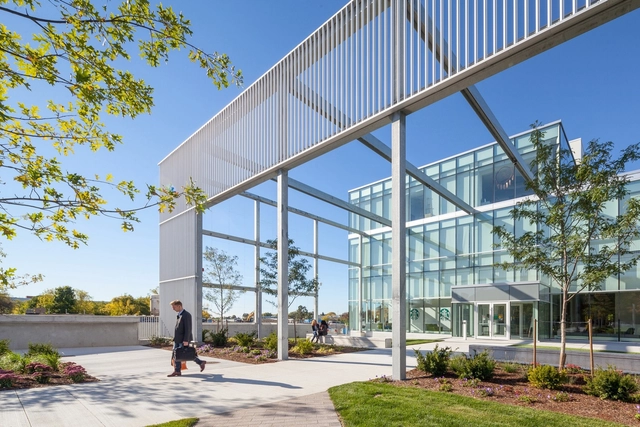
_02.jpg?1480068211&format=webp&width=640&height=580)

_-_Scott_Norsworthy.jpg?1428973077&format=webp&width=640&height=580)
_-_Shai_Gil.jpg?1428971420&format=webp&width=640&height=580)
.jpg?1414007503&format=webp&width=640&height=580)
_-_Scott_Norsworthy.jpg?1414005698&format=webp&width=640&height=580)
_-_Scott_Norsworthy.jpg?1413935661&format=webp&width=640&height=580)

By its very nature, architecture has an obvious, and powerful, public presence. No matter who commissions buildings, they form the material backdrop of public life; the design of every building impacts towns and cities and the experience of those living and working in them. Architecture, though, is more than a stage-set. While, all too often, designed “iconic” buildings are indeed objects, and often vanity projects designed to show off the aspirations and egos of certain clients and architects, the space both inside and around these buildings, like most others, is public space: shared space, space used by communities of people, and space that often has psychological and emotional effects on very many of us. Think of shops, department stores, banks, offices and the many other buildings that, privately owned, play important roles in everyday public life.
It’s this internal aspect of public buildings that has been increasingly marginalized as architects and clients work together to maximize the external impact and character of buildings. After all, the public life of a public building, be it a court house or shopping-mall, does not cease once you are inside.


.jpg?1446591053)


-03.jpg?1524108231&format=webp&width=230&height=230&crop=true)


.jpg?1480068342&format=webp&width=230&height=230&crop=true)

.jpg?1480068148&format=webp&width=230&height=230&crop=true)
_02.jpg?1480068211)


_-_Tom_Arban.jpg?1428973208&format=webp&width=230&height=230&crop=true)
_-_Tom_Arban.jpg?1428973155&format=webp&width=230&height=230&crop=true)
_-_Tom_Arban.jpg?1428973188&format=webp&width=230&height=230&crop=true)
_-_Tom_Arban.jpg?1428973299&format=webp&width=230&height=230&crop=true)
_-_Scott_Norsworthy.jpg?1428973077)
_-_Scott_Norsworthy.jpg?1428971177&format=webp&width=230&height=230&crop=true)
_-_Scott_Norsworthy.jpg?1428971737&format=webp&width=230&height=230&crop=true)
_-_Scott_Norsworthy.jpg?1428971203&format=webp&width=230&height=230&crop=true)
_-_Scott_Norsworthy.jpg?1428971716&format=webp&width=230&height=230&crop=true)
_-_Shai_Gil.jpg?1428971420)


.jpg?1414007503)
_-_Scott_Norsworthy.jpg?1414005766&format=webp&width=230&height=230&crop=true)
_-_Scott_Norsworthy.jpg?1414005812&format=webp&width=230&height=230&crop=true)
_-_Evan_Dion.jpg?1414005554&format=webp&width=230&height=230&crop=true)
_-_Scott_Norsworthy.jpg?1414005529&format=webp&width=230&height=230&crop=true)
_-_Scott_Norsworthy.jpg?1414005698)
_-_Scott_Norsworthy.jpg?1413936125&format=webp&width=230&height=230&crop=true)
_-_Scott_Norsworthy.jpg?1413935950&format=webp&width=230&height=230&crop=true)
_-_Scott_Norsworthy.jpg?1413935894&format=webp&width=230&height=230&crop=true)
_-_Scott_Norsworthy.jpg?1413935985&format=webp&width=230&height=230&crop=true)
_-_Scott_Norsworthy.jpg?1413935661)