Samuel Ludwig

BROWSE ALL FROM THIS PHOTOGRAPHER HERE

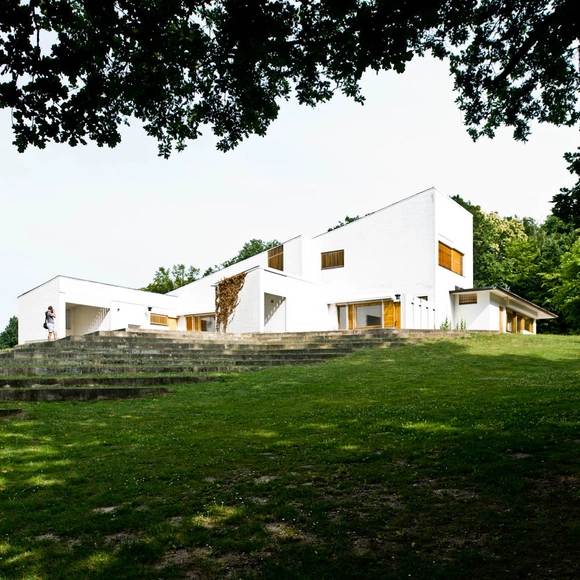
AD Classics: Heilig Geist Kirche / Alvar Aalto

Aalvar Aalto is arguably one of the most important architects of the 20th century. He is known for his all-around care for the design of buildings, and often not only designs the exterior but individual interior features as well. He designed a total of six buildings in Germany, one of them being Heilig Geist Kirche, an Evangelistic Luthern church in Wolfsburg, Germany.  Aalto was asked to design this church on November 5, 1958, and it was completed four years later in 1962.
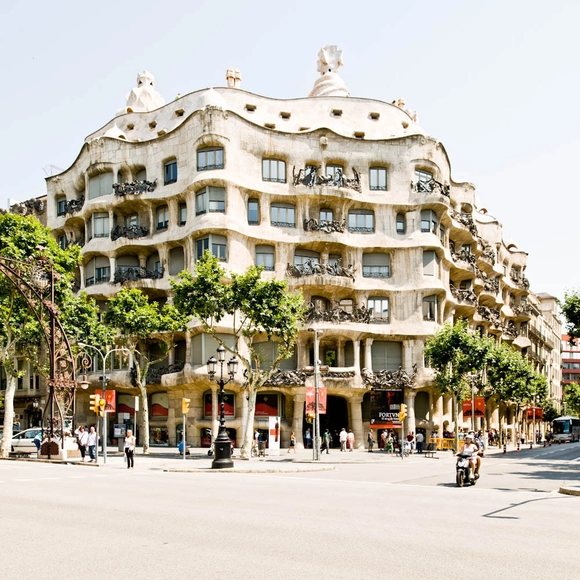
AD Classics: Casa Milà / Antoni Gaudí

With its undulating façade and surrealist sculptural roof, Antoni Gaudi’s Casa Milà appears more organic than artificial, as if it were carved straight from the ground. Known as La Pedera, the quarry, the building was inspired by the Modernista movement, Spain’s version of Art Nouveau..

AD Classics: Maison Louis Carré / Alvar Aalto

In the commune of Bazoches-sur-Guyonnes, about 40 kilometers southwest of Paris, sits one of the most important private houses designed by Alvar Aalto: Maison Louis Carré. The client, Louis Carré, was a prominent French art dealer who was also very interested in architecture. He desired a house that would be able to accommodate many guests for art viewings, but also incorporated a private component. He commissioned Aalto to design his house in 1956, and Louis Carré and his wife, Olga, were able to move into their new home three years later.

AD Classics: Maison Louis Carré  / Alvar Aalto - More Images+ 11

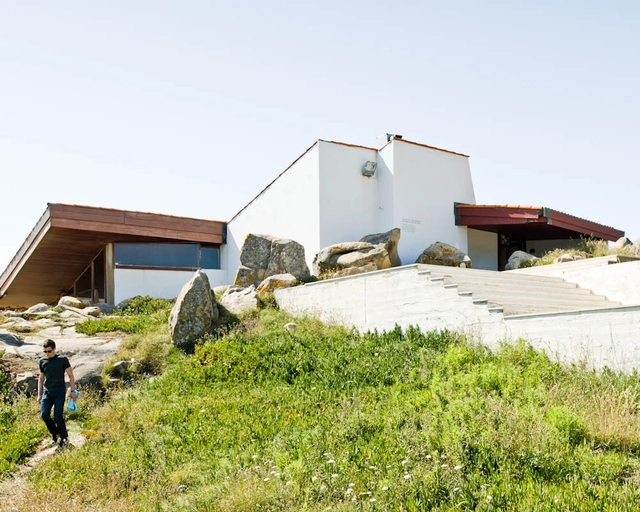
AD Classics: Boa Nova Tea House / Álvaro Siza Vieira

The Boa Nova Tea House, one of Siza's earliest commissions, was awarded to him in 1956. His collaborator, Fernando Tavora, had won the competition for the project and passed it onto Alvaro Siza. Its location close to Siza's home town had its significance, especially due to the architect's intimate familiarity with the landscape. This is noticed in his incorporation of the rock formation, the ocean, and the greenery within the project, revealing a vivid understanding of the qualities of the local landscape. Alongside the Leça Swimming Pools, this project represents the foundation of Siza's architecture with a compelling regard for nature.

AD Classics: Boa Nova Tea House / Álvaro Siza Vieira - More Images+ 10

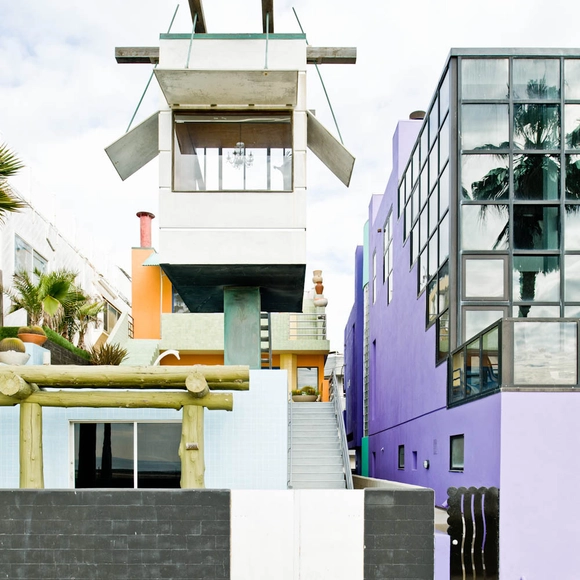
AD Classics: Norton House / Gehry Partners

Designed in 1984 for artist Lynn Norton and writer William Norton, Frank Gehry’s Norton House is known for its eccentric form and eclectic materiality. Much like his own house in Santa Monica, the Norton House is a sculptural assemblage of everyday materials. The Nortons had in fact seen Gehry’s house in 1983 and obviously approved of his experiment. So, a year later, they commissioned him to design their house on a narrow, ocean-facing plot of land on Venice Boardwalk. With the commission, Gehry continued his exploration of creating architecture with everyday materials, low costs, and sculptural forms.

AD Classics: Norton House / Gehry Partners - More Images+ 1

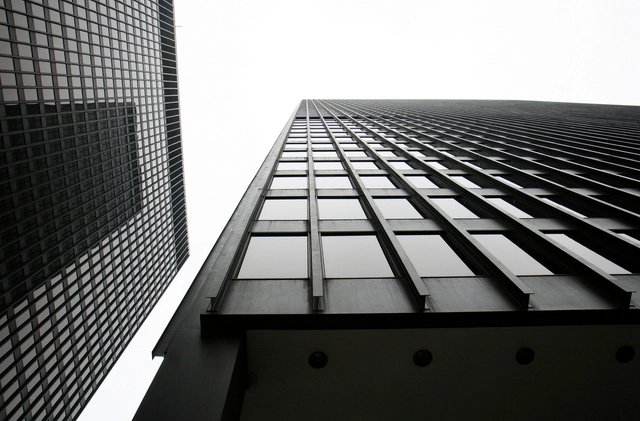
AD Classics: Chicago Federal Center / Mies van der Rohe

The Chicago Federal Center, designed by Ludwig Mies van der Rohe and completed in 1974, actually consists of three buildings which are arranged around and define the Chicago Federal Plaza. On the eastern side of South Dearborn Street sits the 30-story Everett M. Dirksen U.S. Courthouse. On the western side, the 42-story John C. Kluczynski Federal Building and the single story Post Office define the plaza.

AD Classics: Chicago Federal Center / Mies van der Rohe - More Images+ 6

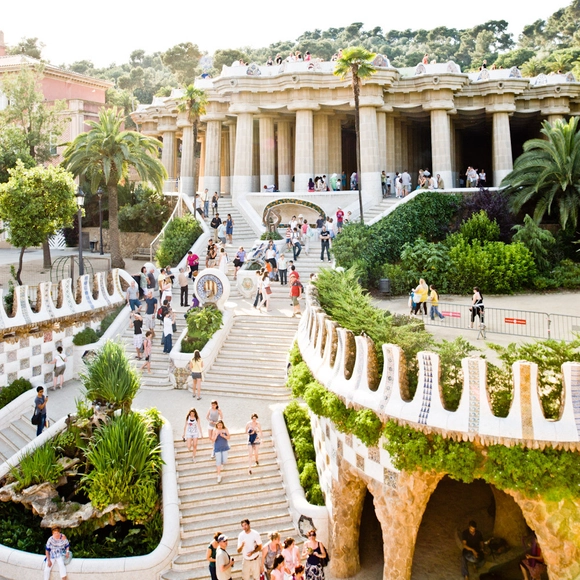
AD Classics: Parc Güell / Antoni Gaudí

Parc Güell is a park designed by Antoni Gaudí upon the request of Count Eusebi Güell, who wanted to build a stylish park for the aristocrats of Barcelona. The Count had planned to build a housing development that would take advantage of the area's views and fresh air; however, only two show houses were completed. Gaudí himself inhabited one of them, designed by architect Francesc Berenguer in 1904. The house is now a museum showcasing some of Gaudí's work. The park is a common tourist attraction in Barcelona, and is known for its famous terrace and iconic entrance, flanked by two Gaudí buildings.

AD Classics: Parc Güell / Antoni Gaudí - More Images+ 1

AD Classics: Maison du Bresil / Le Corbusier

AD Classics: Maison du Bresil / Le Corbusier - Institute, Facade
© Samuel Ludwig

Created as a microcosm of Brazilian life and culture, Maison du Bresil is a significant example of Le Corbusier’s high-density residential design. Inaugurated in 1959, it is one of twenty-three international residences at the Cité Internationale Universitaire de Paris, located in the heart of Paris. As the “House of Brazil”, the building acts as both a residence hall for Brazilian academics, students, teachers, and artists, and as a hub for Brazilian culture, by providing exhibition spaces and archival resources. Notably, the building has provided residence to famous Brazilians, such as the renowned journalist Barroso Zózimo do Amaral.

AD Classics: Maison du Bresil / Le Corbusier - More Images+ 3

AD Classics: Wolfsburg Cultural Center / Alvar Aalto

Wolfsburg Cultural Center, located approximately 230 kilometers west of Berlin in Wolfsburg, Germany, was constructed from 1959 to 1962. It was designed by Finnish architect and designer Alvar Aalto. Aalto was born in Kuortane, Finland and studied architecture at the Helsinki University of Technology, graduating in 1921.

AD Classics: Wolfsburg Cultural Center / Alvar Aalto - More Images+ 1

AD Classics: Colònia Güell / Antoni Gaudí

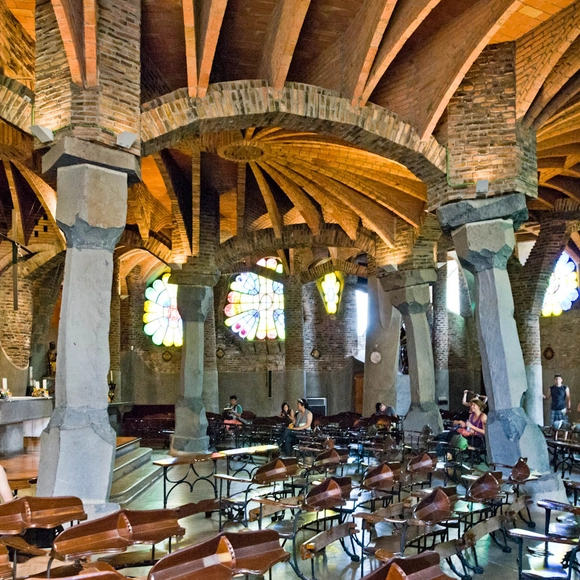
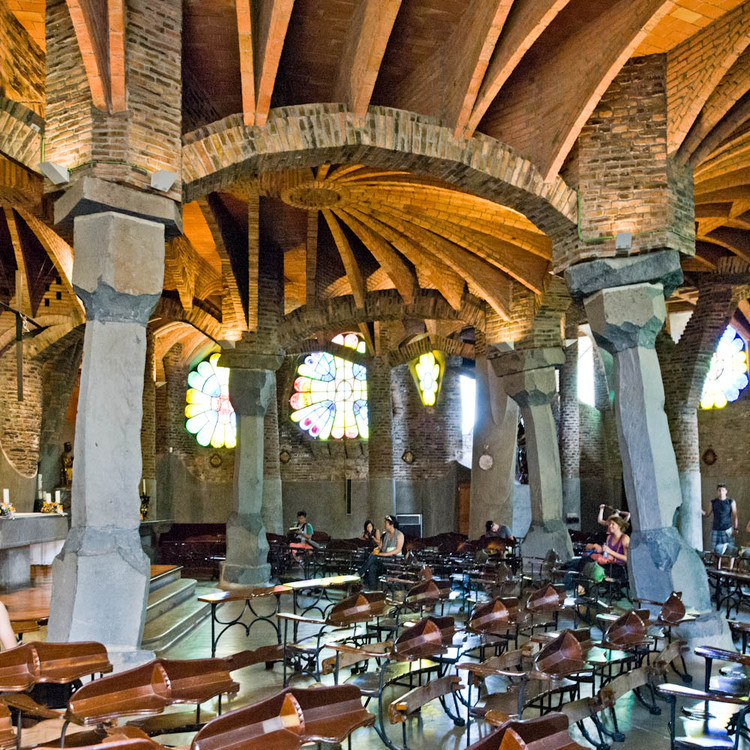
Colònia Güell was a workers’ colony located in Santa Coloma de Cervelló, presently a town of around 7,000 inhabitants 20km outside Barcelona. The area was a manufacturing suburb that grew rapidly around the turn of the 20th century. In 1898, Antoni Gaudi was commissioned by Count Eusebi de Güell, who wanted to provide a place of worship for the booming suburb, to build a Church. It was never actually completed because the money ran out as a result of economic hardships. When work stopped in 1915, only the crypt was completed, though it is nevertheless listed by UNESCO as a world heritage site. In 2002, a restoration was carried out by architect Antonio González Moreno who was widely criticized for allegedly mistreating Gaudi’s work.

AD Classics: Colònia Güell / Antoni Gaudí - More Images+ 8

AD Classics: Centre Le Corbusier (Heidi Weber Museum) / Le Corbusier

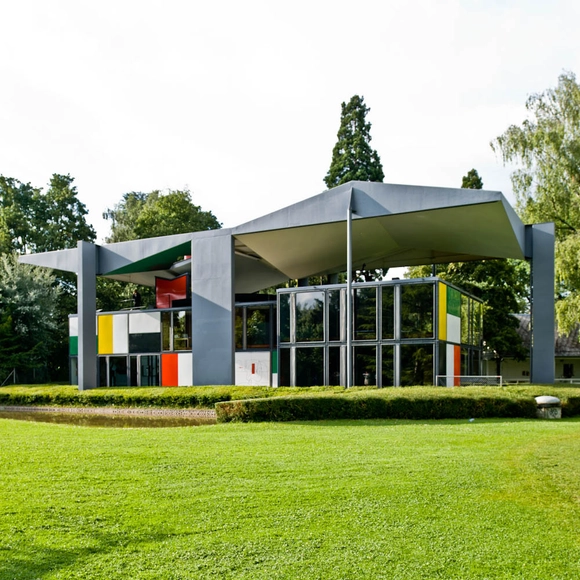
Iconic for its floating steel roof and brightly colored panels, the Pavillon Le Corbusier is the last building Le Corbusier designed before his death in 1965. Completed in 1967, the building stands as a testament to Corbusier’s renaissance genius as an architect, painter, and sculptor. It does so both intentionally, as it is an exhibition space for his life’s work, and naturally, as it is a building masterfully designed. Interestingly, the building diverges in some ways from the style responsible for his renown – concrete, stone, uniform repetition, etc. It celebrates the use of steel, with which he explored prefabrication and assembly, and a freedom through modularity, in which the plan is completely open but infinitely adaptable.

AD Classics: Centre Le Corbusier (Heidi Weber Museum) / Le Corbusier - More Images+ 7

AD Classics: WoZoCo / MVRDV

AD Classics: WoZoCo / MVRDV - More Images+ 11

  • Architects: MVRDV
  • Year Completion year of this architecture project Year:  1997

Bruder Klaus Field Chapel / Peter Zumthor

Subscriber Access | 
Bruder Klaus Field Chapel / Peter Zumthor - Image 6 of 4
© Samuel Ludwig www.samueltludwig.com

“In order to design buildings with a sensuous connection to life, one must think in a way that goes far beyond form and construction.” This quote from Peter Zumthor rings true in his design of Bruder Klaus Field Chapel, where a mystical and thought-proving interior is masked by a very rigid rectangular exterior.

More on Bruder Klaus Field Chapel and Peter Zumthor after the break.

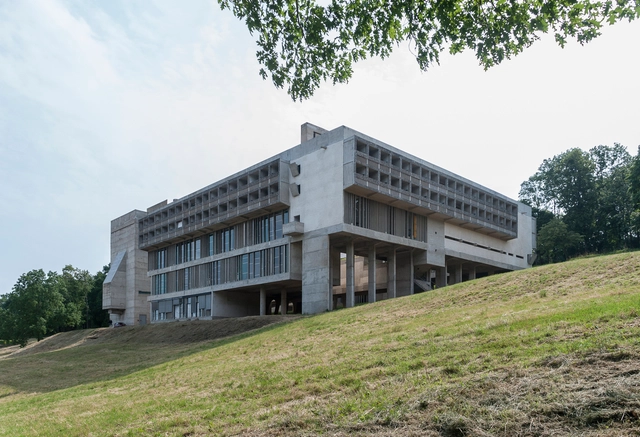
AD Classics: Convent of La Tourette / Le Corbuiser

AD Classics: Convent of La Tourette / Le Corbuiser - More Images+ 47

L'Arbresle, France