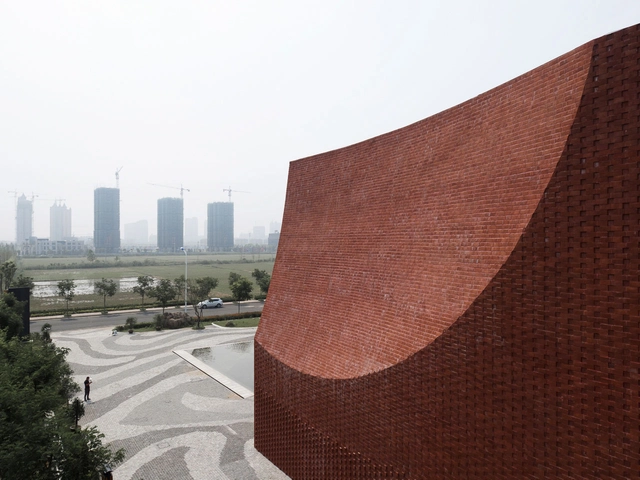
The global pause of the COVID pandemic has provided an opportunity to assess present-day globalism and the architecture that has emerged alongside it. Stemming back to the broad expansion of free trade in the 90s at the end of the Cold War, globalism’s cultural promise was simple and aspirational: integrating markets globally would increase the interaction between and learning of different cultures. By normalizing such experiences in our daily lives, we would become global citizens liberated from our previous prejudices–all well-intentioned objectives.
On the occasion of UNESCO’s International Day of Light, The Daylight Awardhas announced the 2022 Laureates; Yvonne Farrell and Shelley McNamara of Grafton Architects for their architecture, and Anna Wirz-Justice for her research. The winners were commended for their continuous exploration and prominent humanistic spirit regarding the celebration of daylight in their respective practices, allowing it to celebrate and enhance the quality of life.
By definition, architecture and urban planning operate within a certain degree of indeterminacy, using present context to find viable answers for an unknown future. As a result, design is a constant search for a balance between prescribing and taking a step back to make room for alternate yet unforeseeable scenarios. Uncertainty is an inherent condition in present-day society, and recent rapid social, economic, and even environmental changes prompt a closer look at how architecture can incorporate indeterminacy. The following reviews some precedents and contemporary examples that programmatically operate with indeterminacy, highlighting several strategies for designing for uncertainty and change.
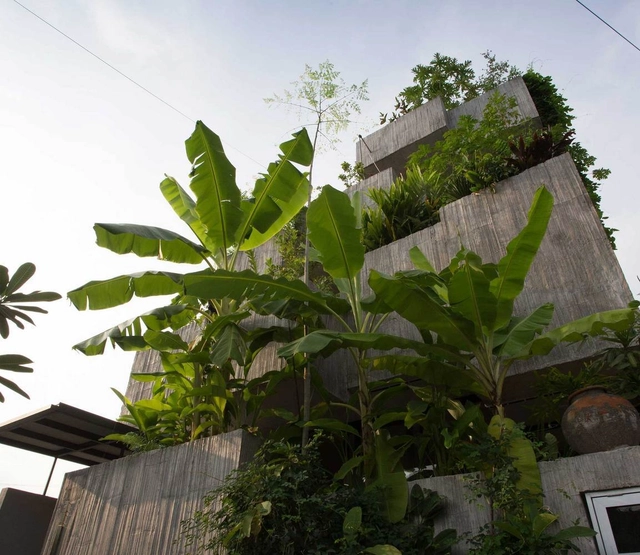
As urban dwellers become more aware of the environmental impacts of food production and transportation, as well as the origin and security of what they consume, urban agriculture is bound to grow and attract public and political eyes. Bringing food production closer, in addition to being sustainable, is pedagogical. However, generally with small size and other restrictions, the concerns of growing food in cities differ somewhat from traditional farming.
Urban gardens can occupy a multitude of places and have varied scales - window sills and balconies, slabs and vacant lots, courtyards of schools, public parks and even unlikely places, such as subway tunnels. They can also be communitarian or private. Whatever the case, it is important to consider some variables:
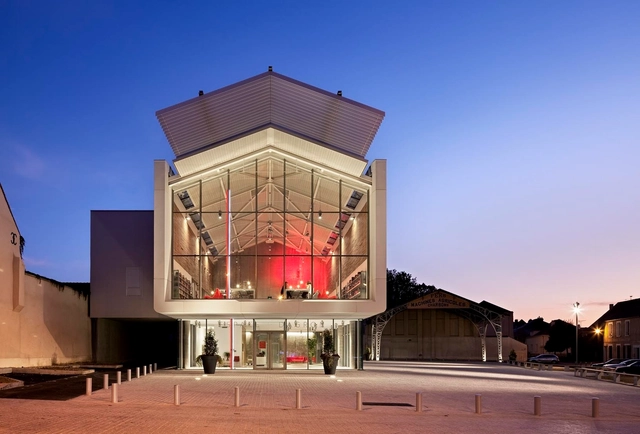
Designers have created civic institutions, governmental centers, public plazas, and many other spaces as testaments to individual and shared values. As spaces for gathering and exchange are necessary elements to urban life, architecture can also act as a vehicle to encourage understanding. Advocating knowledge while empowering the public, libraries celebrate ideas, curiosity and empathy.
Last September, the EU launched the New European Bauhaus, an initiative designed to transform the built environment into a more sustainable one with higher social value. The project, shaped through an unprecedented co-design process, is now calling for architects, students, specialists, and citizens to share ideas, examples and challenges to help define the movement's concrete steps.
Anne Lacaton and Jean-Philippe Vassal founded their architectural studio Lacaton & Vassal in 1987, years after studying and working together at the École Nationale Supérieure d’Architecture et de Paysage de Bordeaux. The practice established in Paris has been awarded this year’s prestigious 2021 Pritzker Prize. Their built work leaves strong evidence of what they believe is relevant: sustainability, wellbeing, social responsibility, and the readaptation and the respect of the existing built environment.
https://www.archdaily.com/958569/lacaton-and-vassal-get-to-know-2021-pritzker-winners-built-workPaula Pintos & Clara Ott
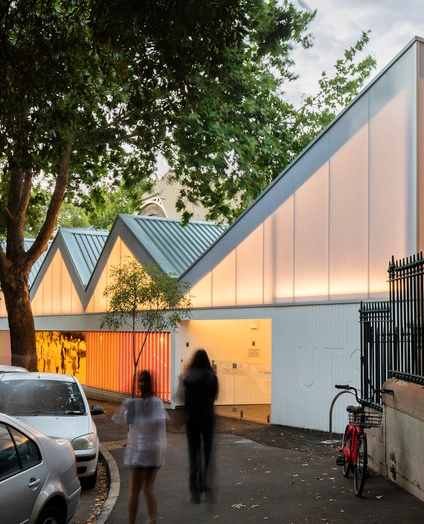
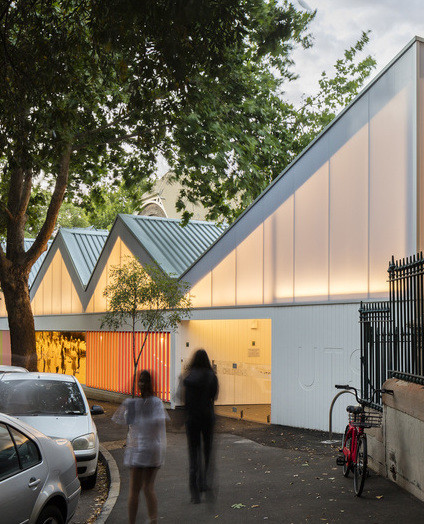
Composed of microcell panels, polycarbonate offers various solutions for the use of natural lighting in architectural enclosures. Whether applied to facades, interior spaces or roofs, the benefits of polycarbonate, such as lightness, clean lines, colored panels, and light effects, offer a wide range of design freedom. Microcell panel technology reduces the need for artificial light and favors uniformity in the diffusion of natural light, achieving energy efficient facades and the illusion of spaciousness in interior spaces. Below, we've selected 10 projects that have used polycarbonate as a wrapping material.
In their newly released architectural film, photographer Laurian Ghinitoiu and filmmaker Arata Mori take viewers on a visually compelling tour of OMA’s MEETT Exhibition and Convention Centre, Toulouse’s new mega-scale parc des expositions. Exploring the design’s multiple facets, from the monumental to the mundane, the film constructs a detailed vision of the project sitting at the intersection of architecture, infrastructure, masterplan and public space.
OMA's new MEETT Exhibition and Convention Centre in Toulouse has officially opened. OMA Partner Chris van Duijn led the development, the third largest parc des expositions in France outside of Paris. The masterplan of MEETT was conceived as an active strip - ‘une bande active’ - forming a physical border between urban development and countryside. The project was made to help organize an integrated development approach for the city.
Brick is one of the most popular materials for architects designing with a vintage or rustic aesthetic: exposed brick walls are often touted as highly desirable for apartments, restaurants, and stores, and exterior brick facades can make a building or home feel warmer and more inviting. However, the color and cut of the brick can greatly influence the atmosphere it emanates, with white brick lending itself to more minimalist design and tan brick tending to feel more rustic and earthy. In this article, we will explore some of the most popular brick colors, ways to artificially color brick, and recent projects that use brick facades or interior brick elements effectively.
https://www.archdaily.com/944493/the-colors-of-brickLilly Cao
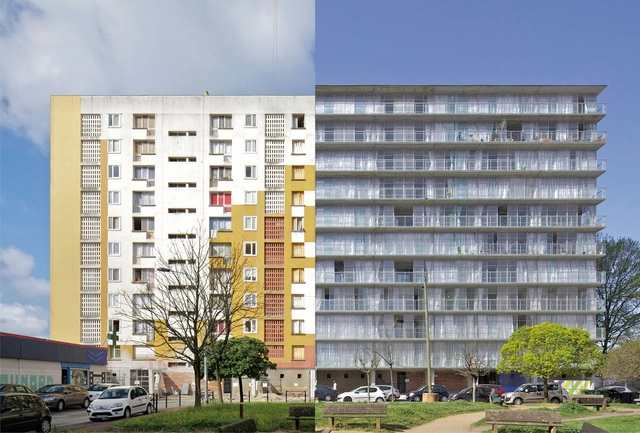
Last year’s granting of the Mies van der Rohe Award to a social housing refurbishment project brought into the spotlight a topic of interest for many European cities: the moral and physical rehabilitation of post-war housing blocks.




















.jpg?1615841061&format=webp&width=640&height=580)


.jpg?1615841061)




.jpg?1602174447&format=webp&width=640&height=580)
.jpg?1602174471&format=webp&width=230&height=230&crop=true)
.jpg?1602174397&format=webp&width=230&height=230&crop=true)
.jpg?1602174433&format=webp&width=230&height=230&crop=true)
.jpg?1602174457&format=webp&width=230&height=230&crop=true)
.jpg?1602174447)
.jpg?1601298649&format=webp&width=640&height=580)
.jpg?1601298893&format=webp&width=230&height=230&crop=true)
.jpg?1601298025&format=webp&width=230&height=230&crop=true)
.jpg?1601298123&format=webp&width=230&height=230&crop=true)
.jpg?1601298172&format=webp&width=230&height=230&crop=true)
.jpg?1601298649)
.jpg?1601311239&format=webp&width=640&height=580)
.jpg?1601311432&format=webp&width=230&height=230&crop=true)
.jpg?1601311642&format=webp&width=230&height=230&crop=true)
.jpg?1601311316&format=webp&width=230&height=230&crop=true)
.jpg?1601311542&format=webp&width=230&height=230&crop=true)
.jpg?1601311239)