

-
Architects: Taller de Arquitectura Miguel Montor
- Year: 2022
.jpg?1658430879&format=webp&width=640&height=580)
Over the years, interior design has evolved according to the needs that arise, but above all according to the experiences it seeks to evoke in the user. In the last two years we have witnessed a radical change and a special interest in this subject because the pandemic forced us to pay specific attention to the configuration of the places we inhabit. This brought about much more holistic designs that seek to address the wellbeing of the user, combining colours, sensory experiences, technology and natural elements that promote health.

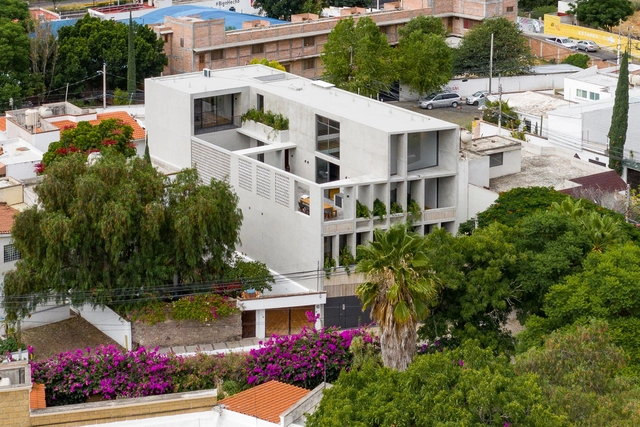
Is there only one way to inhabit the coast? The Pacific coast, the largest ocean on earth, is a vast territory with a great diversity of temperature, winds, and topography, among others. Consequently, it has a great variety of ecosystems, ranging from the freezing point near the poles, vast deserts and forests, to the hot tropical rainforest. Such majestic diversity is no stranger to architecture, responding to the different contexts in which it is placed. As a result, there is a great variety of architectural works, all of which share in framing the views of the sea.
The following list shows 30 residential projects along the Latin American Pacific coastline, revealing the diverse architectural approaches that exist along the coast.
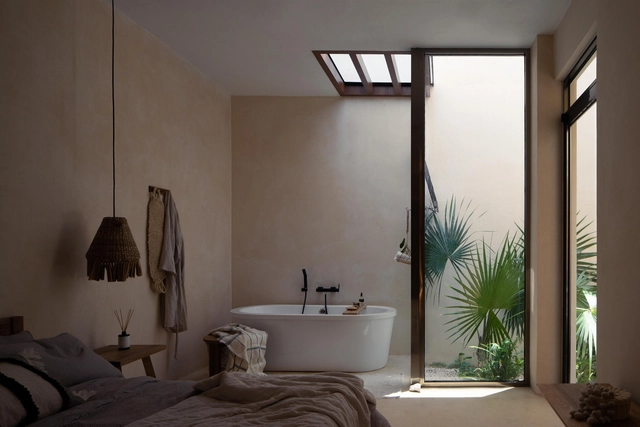
Over the years, interior design has evolved according to the needs that arise, but above all according to the experiences it seeks to evoke in the user. In the last two years we have witnessed a radical change and a special interest in this subject because the pandemic forced us to pay specific attention to the configuration of the places we inhabit. This brought about much more holistic designs that seek to address the wellbeing of the user, combining colours, sensory experiences, technology and natural elements that promote health.
![[DON'T TRANSLATE] The PILARES Program Seeks to Bring Beautiful Design to Mexico City’s Neglected Neighborhoods - Featured Image](https://snoopy.archdaily.com/images/archdaily/media/images/62b4/21c2/3e4b/31ac/f100/0004/slideshow/8D5A7030-1024x682.jpg?1655972285&format=webp&width=640&height=580)
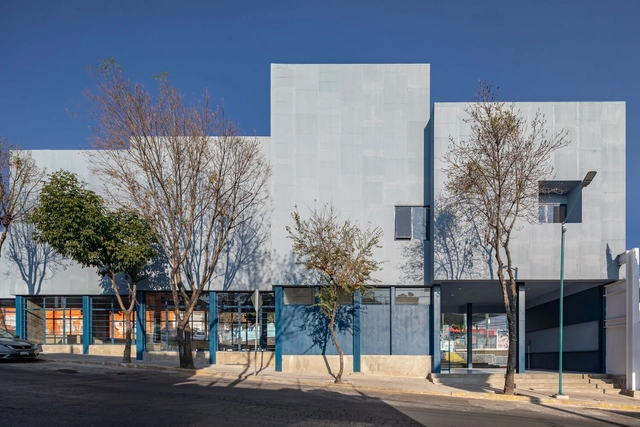
Most visitors to Mexico City spend their time exploring tranquil, idyllic neighborhoods like Roma and Condesa, filled with quaint buildings, bustling pedestrian promenades, and cosmopolitan attractions. But life in the Mexican capital finds most of the population on the disadvantaged side of a vertiginous inequality, defined by meager wages, the looming threat of violence, and a glaring lack of public infrastructure. The government’s attempts to address the latter have often stumbled; it is common practice for projects that require architectural expertise to be assigned to building contractors, who produce layouts lacking in any design sensibility. This even though Mexico City now boasts one of the world’s most fertile design scenes and has a strong legacy of renowned architects working in tandem with the government to produce exceptional public works—from the urban housing projects of Mario Pani to the monumental buildings of Pedro Ramírez Vázquez.

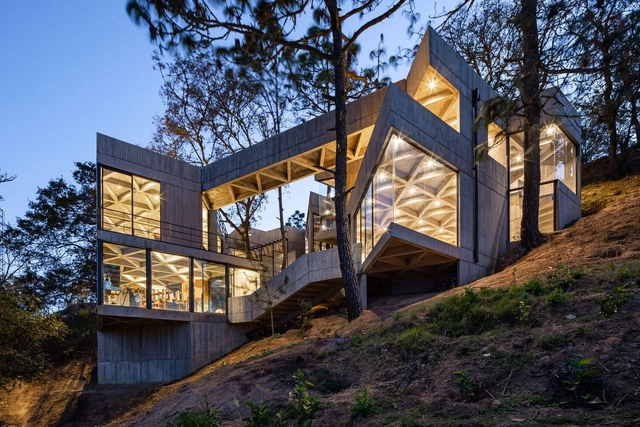

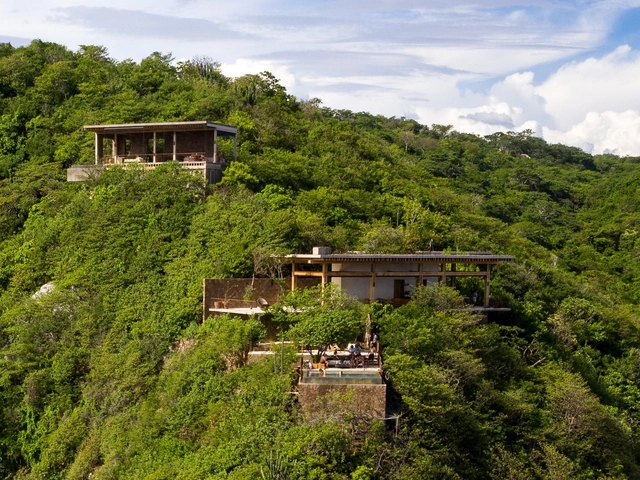
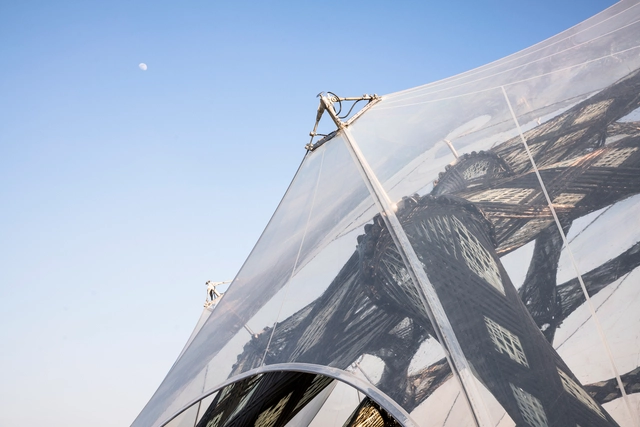
Let us return to the first architecture class on structures and the classification of structural efforts. In most structures, whether natural or man-made, compression forces are the primary actors. These are efforts undertaken with equal and opposing loads, applied in the interior of the structure, which tend towards the shortening of the piece in one direction - or compressing it, as the name indicates. It is not difficult to find examples of this: for example, a stone wall or a wooden log can resist the weight of a covering through internal compression efforts that are inherent to each material. Tension efforts, on the other hand, tend to lengthen components in the direction of the applied force of action. Steel, for example, is a material with good tensile strength. It is used in reinforced concrete precisely in the parts where the piece is in traction. But it is also possible for a structure to only have tensile parts, as is the case of membrane, tensioned, or tension structures, which consist of surfaces pulled by the action of cables or ropes in which the masts absorb compression efforts.
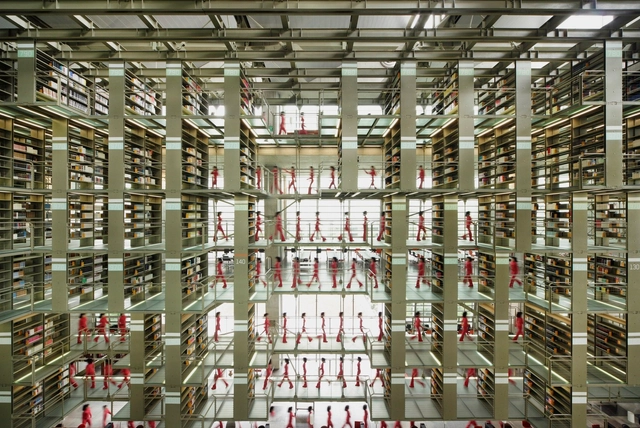
Over the years, interior design has evolved according to the needs that arise, but above all according to the experiences we seek to provoke in the user. In the last two years, we witnessed a radical change and a particular interest in this subject because the pandemic forced us to pay specific attention to the configuration of the places we inhabit. This brought about much more holistic designs that cater to the wellbeing of the user, combining colours, sensory experiences, technology and natural elements that promote health.
.jpg?1613586759&format=webp&width=640&height=580)
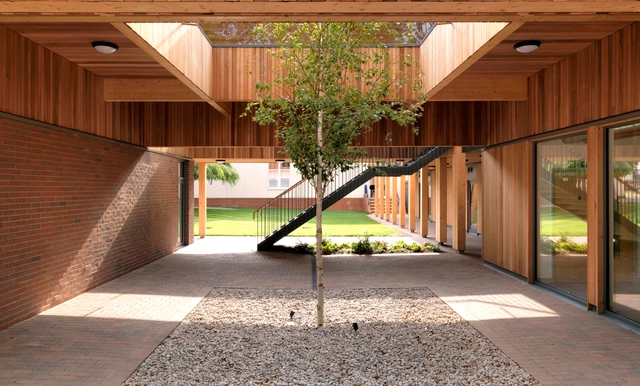
As revolutionary as the construction sector may seem nowadays, it currently accounts for nearly 40% of the world’s carbon dioxide emissions, 11% of which are a result of manufacturing building materials such as steel, cement, and glass. Fast forward a couple of years later, after a life-changing global pandemic and indisputable evidences of climate change, CO2 emissions are still on a rise, reaching a historical maximum in 2020 according to the 2020 Global Status Report for Buildings and Construction. Although a lot of progress has been made through technological advancements, design strategies and concepts, and construction processes, there is still a long way to go to reduce carbon emissions to a minimum or almost zero in the development of built environments.




![[DON'T TRANSLATE] The PILARES Program Seeks to Bring Beautiful Design to Mexico City’s Neglected Neighborhoods - More Images](https://images.adsttc.com/media/images/62b4/21c2/3e4b/31ac/f100/0004/newsletter/8D5A7030-1024x682.jpg?1655972285)




.jpg?1613586984&format=webp&width=230&height=230&crop=true)
.jpg?1613586973&format=webp&width=230&height=230&crop=true)
.jpg?1613586878&format=webp&width=230&height=230&crop=true)
.jpg?1613586789&format=webp&width=230&height=230&crop=true)
.jpg?1613586759)