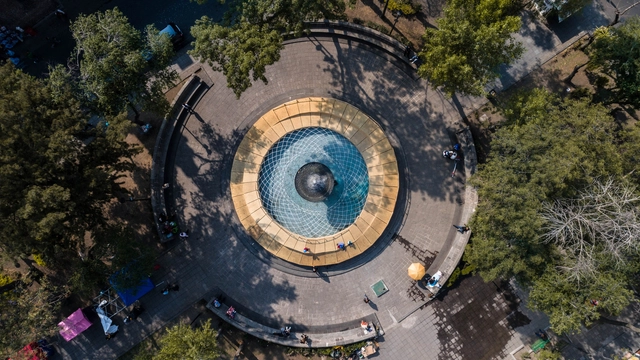
Aros is the winning project of the "Juguetes Urbanos" (Urban Toys) competition, organized by the Laboratory for the City and the Mexico City Government. The competition called for a play-based proposal within Plaza Loreto, located in the historic core of Mexico City's Centro Histórico.
Mexico City's fountains have long been gathering places where children play while waiting for their families to finish the workday. These spots are crucial, perhaps because water carries significant cultural weight in the city; during spring and summer, they regularly draw crowds who engage with public space in this active way.
CEMEX has announced the Mexican winners of the 2018 CEMEX Building Award across its various categories, including Affordable Housing, Residential Housing, Building, Collective Space, and Infrastructure. This year's winners include projects from across Mexico, with each entry evaluated on comprehensive sustainability, architectural solution, structural solution, and construction process. Read on to discover the winning projects of this edition.
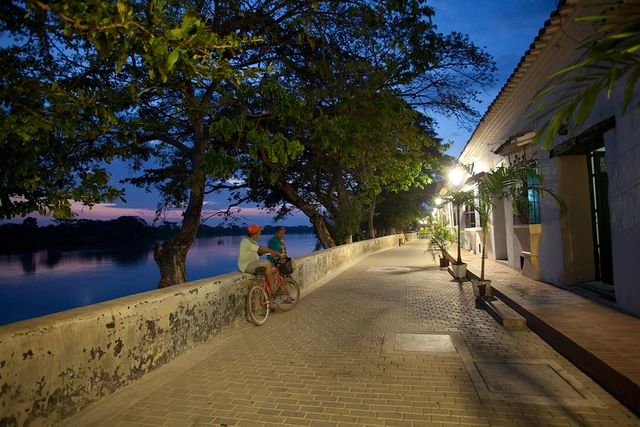
The landscape master plan to revitalize the western bank of the Magdalena River in Mompox—a Colombian city declared a UNESCO World Heritage Site—is the winner of the III Latin American Biennial of Landscape Architecture (BLAP).
Designed by the Colombian firm OPUS, the Revitalization of the Albarrada de Mompox is the grand prize winner of the competition organized by the Mexican Society of Landscape Architects (SAPM). The biennial also recognized works, proposals, and publications in Mexico, Colombia, Argentina, and Chile across its six categories. Established in 2014, the BLAP seeks to highlight the role of landscape architecture in building habitats in Latin America, with a particular emphasis on the region's environmental and social challenges.
Eleven years ago, ArchDaily was born with a mission in mind: to democratize architectural information around the world and empower our readers to foster inclusive discussions that positively transform our cities. By providing inspiration, knowledge, and tools to the architects currently facing the challenge of designing the future, we hope to help improve the quality of life of those who inhabit our world's urban centers.
At the ArchDaily Mexico offices, August 3rd is a special day:
The Federation of Associations of Architects of the Mexican Republic, A.C., invited all Mexican architects to participate in the XIV National and International Biennial of Mexican Architecture 2018. This event aimed to identify the country's best architectural works, as well as publications, research projects, and theses, while recognizing their authors and disseminating the most relevant works. Through analysis and criticism, the goal was to foster reflection on responsible contemporary architecture and sustainable solutions. A single Gold Medal was awarded in this biennial, and the projects were classified into 23 categories, which featured various Honorable Mentions and Silver Medals. Read on to discover the winners.
Exactly one year ago, a 7.1 magnitude earthquake shook at least nine Mexican states, leaving several areas severely damaged across Mexico City, Puebla, Morelos, Oaxaca, Veracruz, Tlaxcala, Guerrero, and the State of Mexico. Twelve months have passed in a constant struggle to rebuild from the remnants of that nightmare. Yet in those flooded streets, hope was reborn day by day through a social phenomenon that catalyzed vibrant, self-organizing communities rising to rebuild the structures that define us.
Undeniably, 19S represented a pivotal moment, reminding us of our fragility but also of how strong we can be when we work together. It underscored the importance of being physically present on the ground and engaging in dialogue to find appropriate solutions for local communities. It forced us to rethink the mechanics of cities and their peripheries, but above all, it forced us to rethink our practice as architects. We gained a stark understanding of how national politics and power operate; a genuine critique emerged, exposing the fractures left by corruption and our lack of preparation for natural disasters. 19S was, among many other things, a reminder of where we stand and our duty as inhabitants of this territory.
The Architectural League of New York is an independent architecture forum that aims to "stimulate thinking and debate about the critical design and architectural issues of our time." Each year, through the 'Emerging Voices' competition, they recognize the work of various North American architectural practices with the potential to positively influence how architecture is conceptualized and built across the continent.
This year's jury is composed of Spanish architect Ángela García de Paredes of Paredes Pedrosa (1999 AR Emerging Architecture Award winner), Indian architect Gurjit Singh Matharoo (2010 AR House Award winner), and Ronald Rietveld of RAAAF (2013 AR Emerging Architecture Award winner).
It is well known that Frederick Law Olmsted, designer of Central Park in New York; André Le Nôtre, responsible for the gardens of the Palace of Versailles; and Alan Titchmarsh, among others, were pioneers of landscape architecture for their ability to break the mold of traditional design. However, Latin America has produced outstanding work that deserves recognition. Such is the case in Mexico, where Pritzker laureate Luis Barragán showed the world the richness of the country's green spaces and his mastery in designing them.
“Earthquakes are a naturally destructive effect of our earth's constantly changing surface” -National Geographic, “Latest Earthquakes–and How Earthquakes Work”, February 2018.
ReConstructo is a group exhibition curated by Mexican architects Luis Carbonell and Andres Souto, presented at Zuecca Project Space in parallel with the International Architecture Exhibition of the Venice Biennale 2018. The exhibition offers a multifaceted look at simultaneous and overlapping readings of the actions and agents of destruction that subsequently paved the way for a latent reconstruction following the 2017 earthquakes in Mexico.
Throughout 2018, we selected thousands of projects for publication on our site, occasionally highlighting a few for their innovative techniques and materials, their integration with their context, or their community engagement. Working daily with editors in Brazil, the United States, Mexico, Chile, China, and Northern Ireland, and thanks to the extensive network we have forged with institutions worldwide, we have the tools to gain a much broader perspective on current architectural production—not only in Mexico, but globally.
The eternal task of architecture is to create embodied and lived existential metaphors that concrete and structure our being-in-the-world. Architecture reflects, materializes, and eternalizes ideas and images of real life. Buildings and cities allow us to structure, understand, and remember who we are. 1 —J. Pallasmaa
We understand architecture as a series of processes directly linked to two phases. The first involves the birth of ideas, and the constant emergence and creation of questions, affirmations, and negations. It is a back-and-forth between affirmation and self-questioning, between narrative and utopia, arising from our architectural proposals. However, we chose to dedicate this documentary to the second phase: the materialization of that flow of ideas.
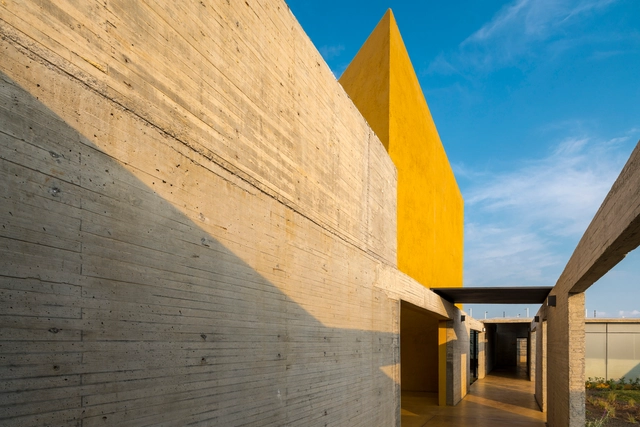
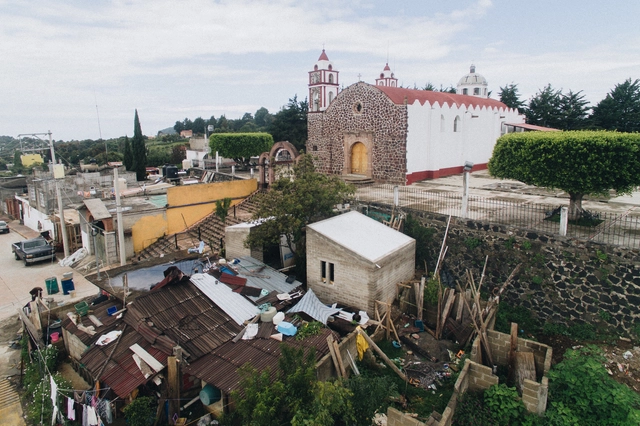
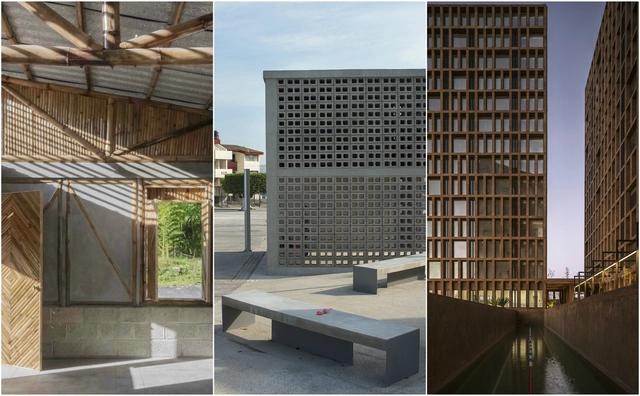
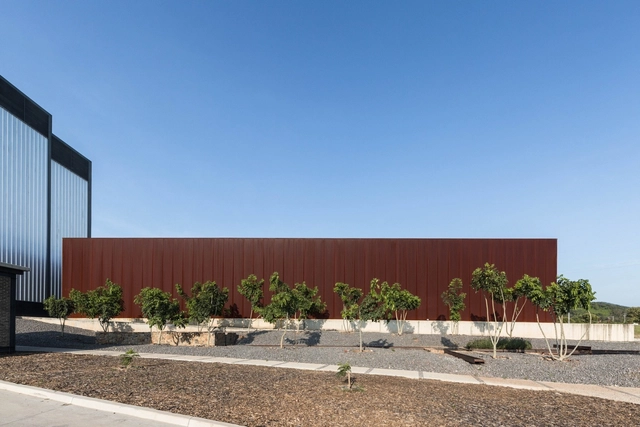
The 21 projects making up the Official Selection of the Mexican Pavilion at the 16th International Architecture Exhibition of the Venice Biennale converge across latitudes, geographical regions, and echoes of the territory, responding to the curatorial theme “Freespace.” In four installments, we will share the work and philosophy of each of the participants representing Mexico in Venice. Read on to discover the second part of these projects.