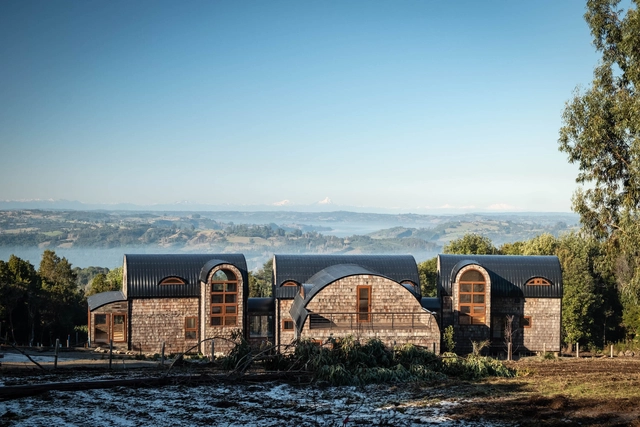
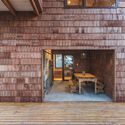
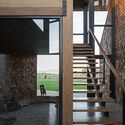
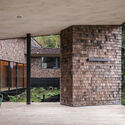
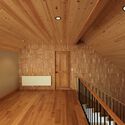
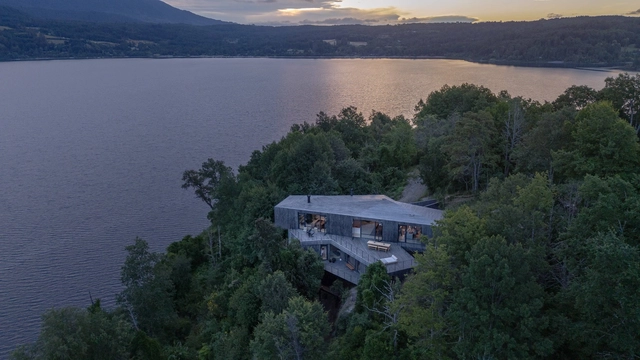
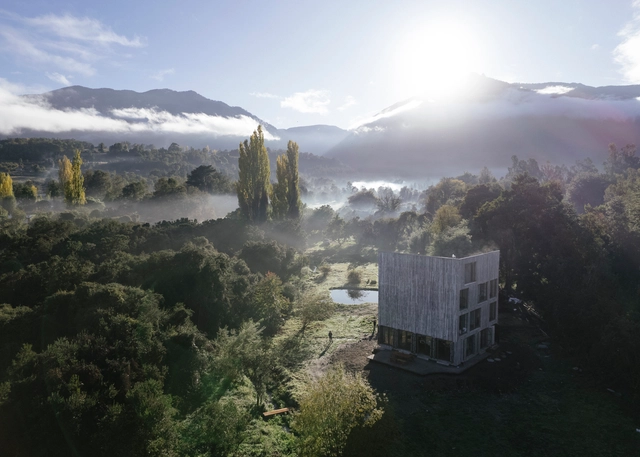
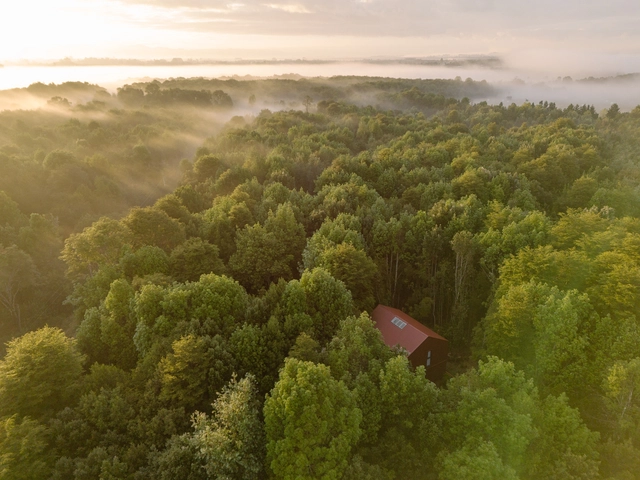
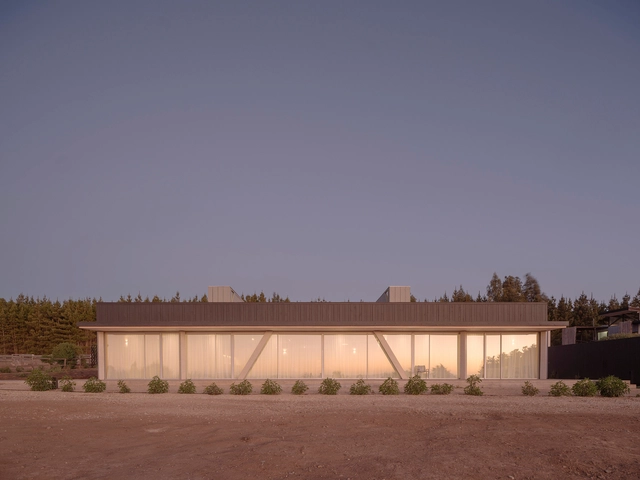
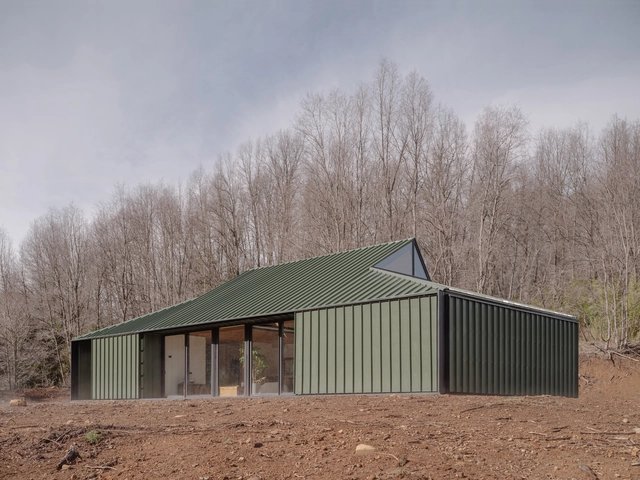
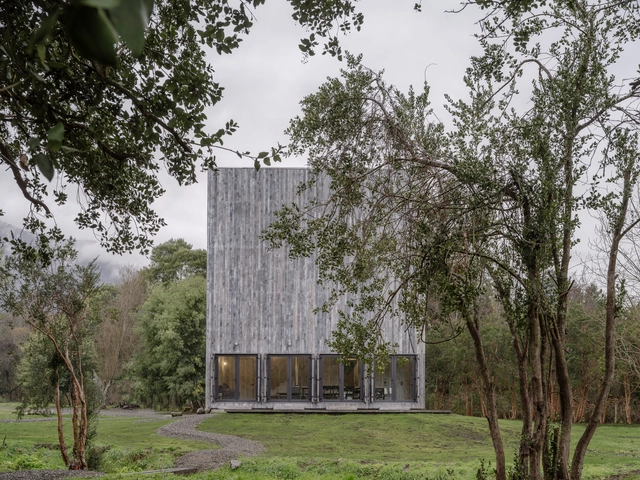
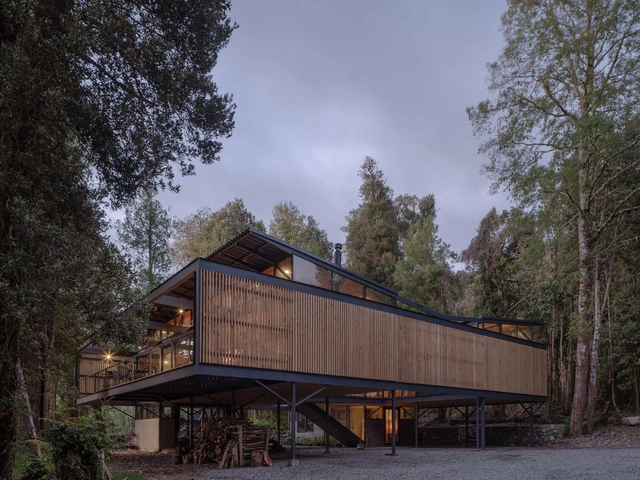
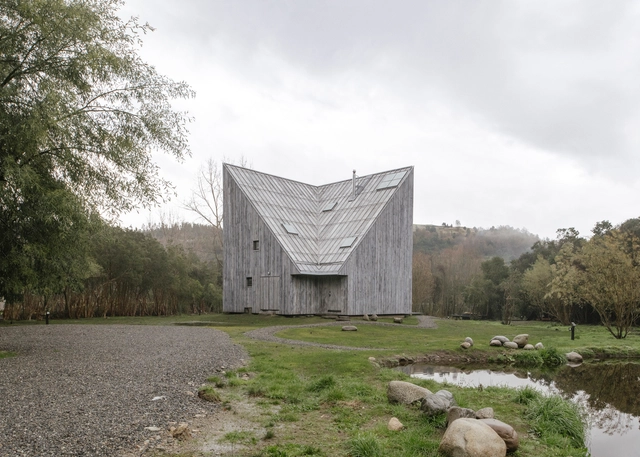
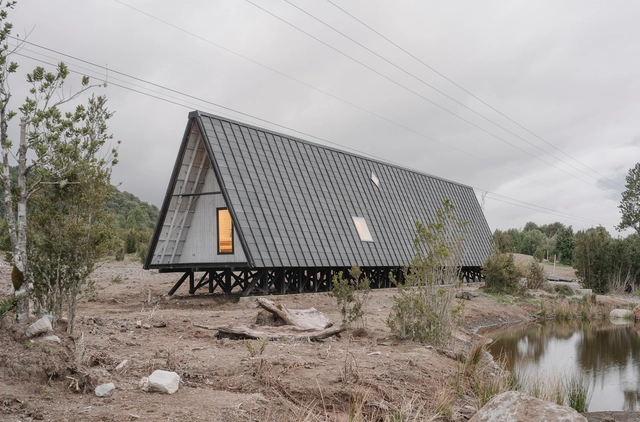
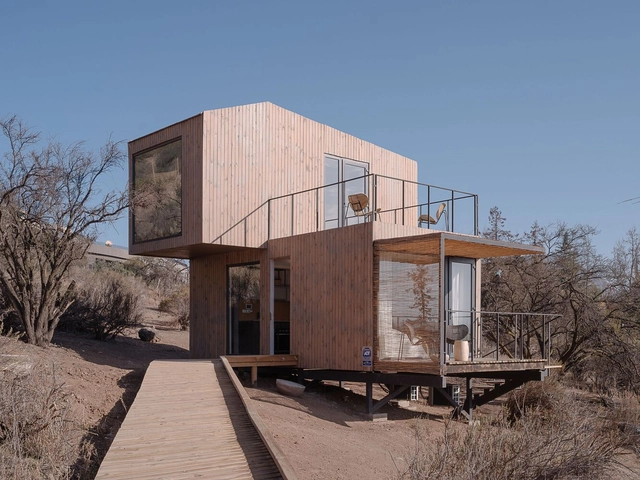
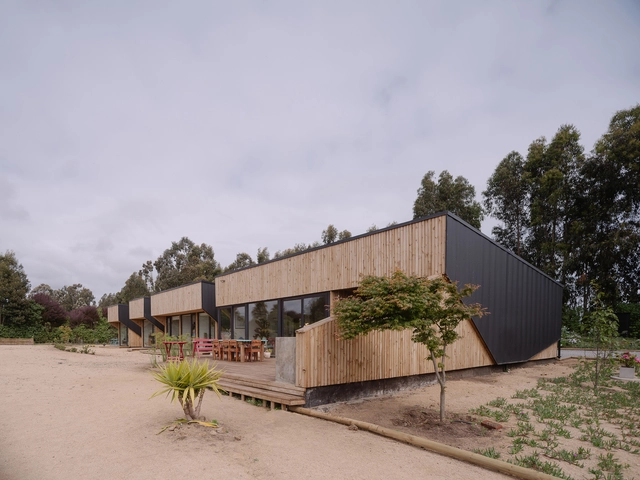
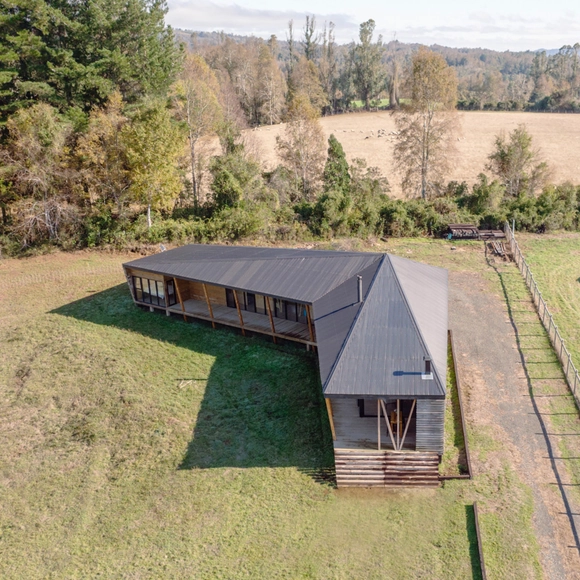
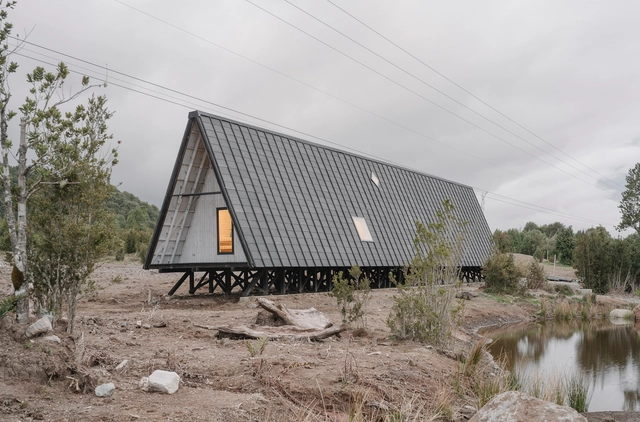
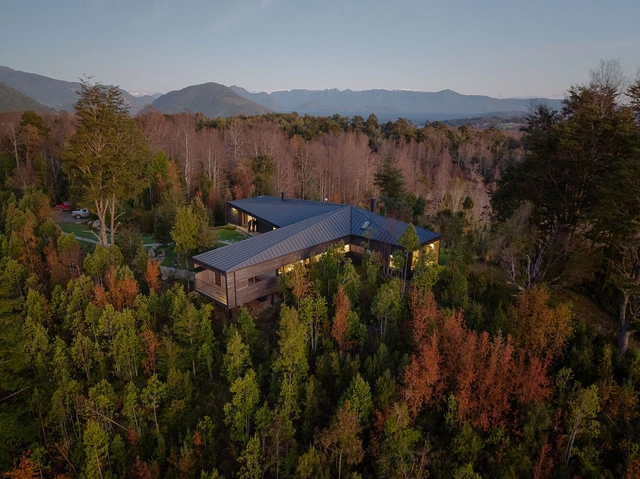
On a slope, along the banks of a river, among trees, or on an expansive hillside, each territory serves as a living testament to its local traditions. Through its architecture, the experimentation, appreciation, and use of certain materials, construction techniques, local crafts, and site-specific tools aim to preserve stories and pass on the discoveries and learnings that have shaped many of the practices still used in construction today. In Chile, the language of wooden shingles evokes a reflection rooted in history and an understanding of relationships, timelines, and life networks.
Annually, ArchDaily's curatorial team undertakes a rigorous selection process to identify exemplary projects in Latin American residential architecture. The goal is to share these works of architecture with our audience and highlight and promote good practices within contemporary architecture. This meticulous effort focuses on identifying projects that stand out for their design and their positive impact on the environment, innovative use of materials and techniques, and ability to address current needs.
The use of wood in Chilean house construction reflects the utilization of a renewable resource available in the country. Moreover, it can be an extremely sustainable material when produced and processed under certain conditions, as it can have a very low carbon footprint. It is characterized by its warmth, resistance, and durability as a construction system.
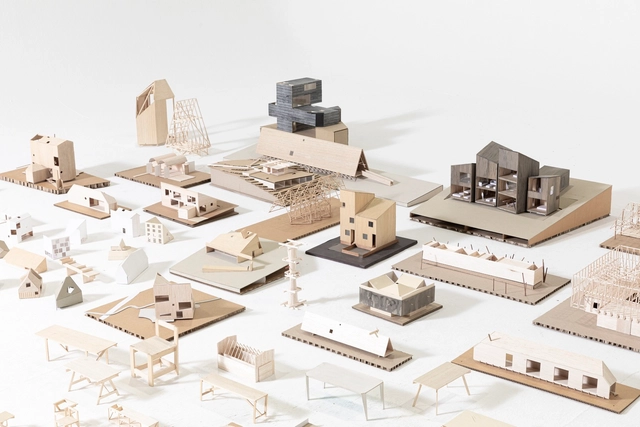
It is fascinating to delve into the practice of Iván Bravo, firstly because the path taken towards his architectural work immerses us in a vast creative universe through the architect's interest and curiosity in various tangential disciplines directly reflected in his built work. A constant reflection on the methodology of the making, the processes, the pieces, the design, and the materiality converges into a noble and honest architecture.
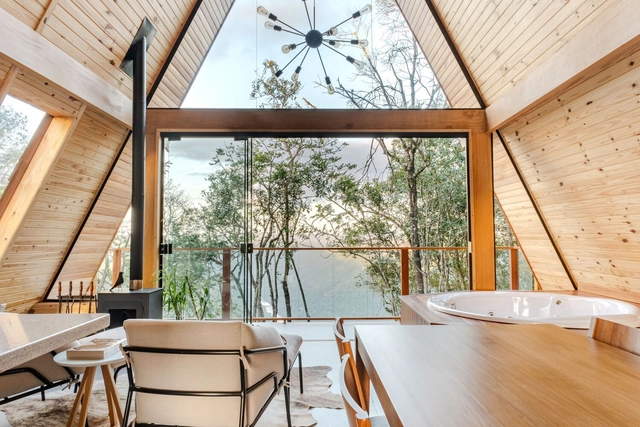
Acquiring diverse expressive possibilities within interior design, the use of wood in regions with a wide range of climates and temperatures such as Mexico, Brazil, Argentina, Uruguay, Chile, Colombia, or Ecuador enables the creation of attractive and captivating spaces that capture the attention of their users by contrasting, blending, or integrating with their surrounding environment. Being a natural element and presenting a negative carbon footprint at the end of its life cycle, wood offers multiple finishes, textures, and tones that can be associated with being outdoors and providing, on some occasions, spaciousness, warmth, and relaxation at the same time.
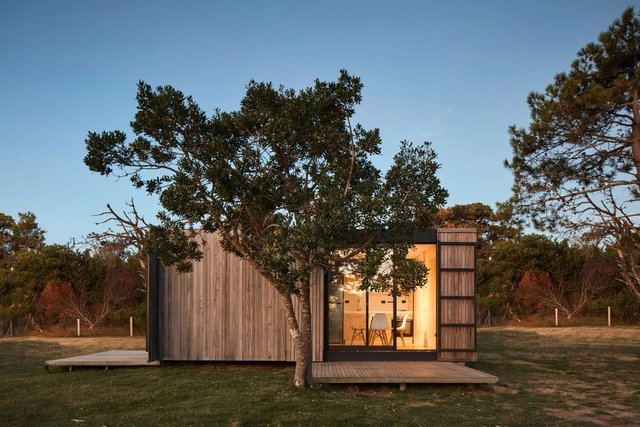
In a constant search to find new ways to reduce costs and construction times, modular architecture emerges as an opportunity to implement various methods, technologies, and techniques to design livable spaces using separate repetitive elements such as modules. As Tom Hardiman, executive director of the Modular Building Institute (MBI), maintains, "Modular" is not about a construction product but rather a construction process.
ArchDaily's curatorial team strives every day to present our readers with the most significant, inspiring, and innovative projects, while also ensuring a diverse representation of global architecture.
As part of our 2023 Year in Review retrospective on ArchDaily, we look back and reflect on what was published over the past year. Residential architecture remains one of our most visited categories of built projects, generating immense interest among our users worldwide. With this in mind, we have selected the 50 best houses published this year on ArchDaily en Español, offering a brief showcase of the form and character of residential architecture across the Spanish-speaking world.