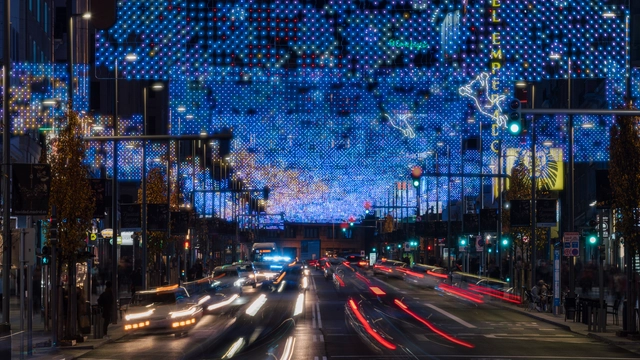
Madrid's Gran Vía is illuminated with LED bulbs along 1,300 meters thanks to a light installation by Brut Deluxe. Commissioned by the city council, the installation is inspired by nebulae and galaxies. Set up for this year's holiday season, the display was captured by Imagen Subliminal.
Under the title “More Living, More Humanizing,” the 14th Spanish Biennial of Architecture and Urbanism (BEAU) presented the winning projects of its latest edition today, Thursday the 19th, in Santander. This exhibition, housed in a temporary pavilion in Santander's Pereda Gardens, showcases the works selected in the categories of Panorama of Works, 2nd Research Exhibition, and 7th Thesis Projects Exhibition.
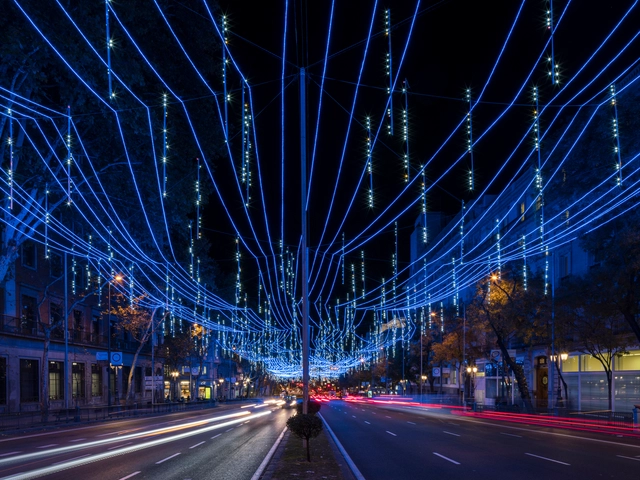
Alcalá Street was filled with light last Christmas thanks to the installation designed by the architecture studio Brut Deluxe and led by Ben Busche, commissioned by the City of Madrid.
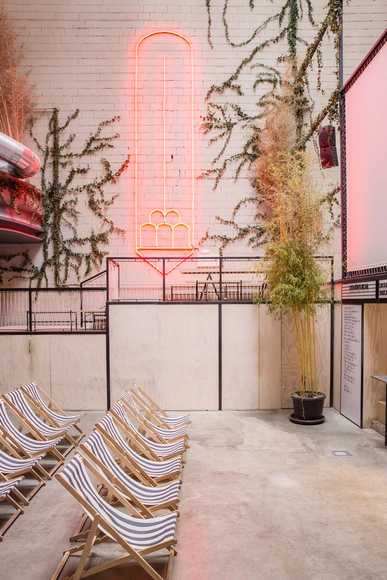
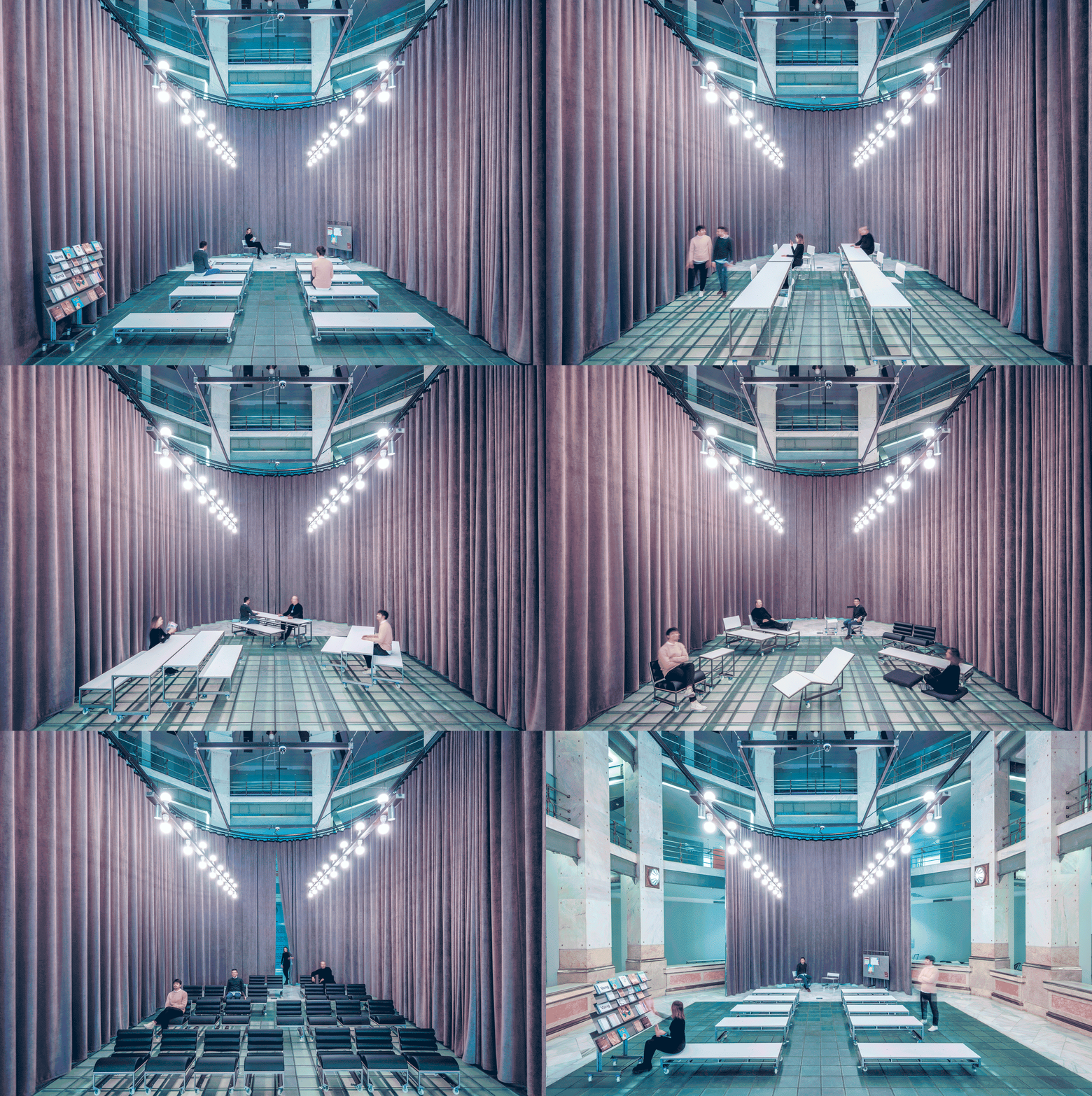
The Official Association of Architects of Madrid has awarded the 2018 COAM First Prize ‘ex aequo’ to the renovation of Sala Equis, designed by architects Lorenzo and Luis Gil (Plantea Estudio), to Espacio SOLO by Juan Herreros and Jens Richter, and to the book Oiza by Javier Vellés.
Regarding Sala Equis, the jury highlighted that the renovation of the former Duque de Alba cinema “equips the available space with contemporary uses, materials, and furniture, balanced with the memory of the existing structure,” and emphasized that it “encompasses the traditional movie theater alongside other activities surrounding this main function.”
In this edition of International Women's Day, we have joined forces with the Colombian print publication de-Arq (Universidad de Los Andes) to showcase the work of five contemporary Colombian women architects, who represent different complementary approaches within our discipline: design, research, teaching, and experimentation.
Today we talk with Lina Toro, a Colombian architect, co-founder of dosmasunoarquitectos, current director of linatoro.arch, and professor at IE University in Spain. "I believe the problem lies in the system's inability to recognize excellence," says Toro.
Generative AI (Gemini / Google DeepMind). Concept: Eduardo Souza / ArchDaily
Once synonymous with monotony, “prefabricated” buildings often bring to mind the gray, repetitive housing blocks of the postwar era. But that image no longer fits today’s reality. Powered by digital design, robotics, and advanced materials, prefabrication has evolved into a language of innovation and precision. Far from uniform, it now enables flexible, efficient, and sustainable spaces that reflect the individuality of contemporary architecture.
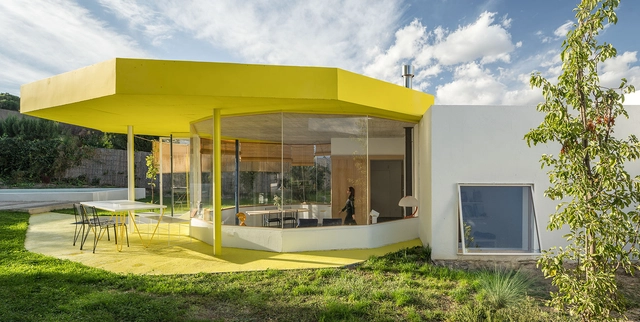
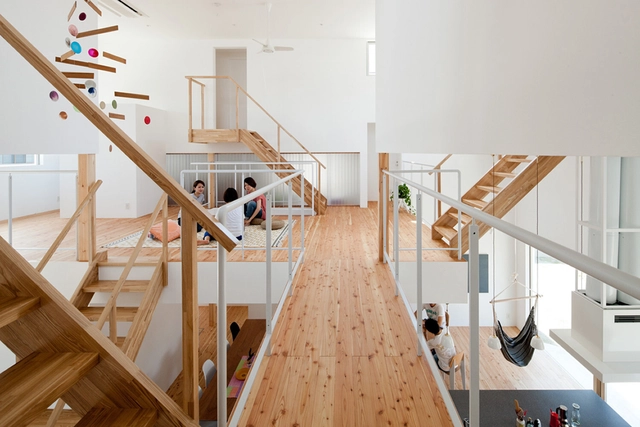
Innovation is at the core of architecture, expressed through new approaches to design, material experimentation, and, of course, ways of living. As a result, the conception of buildings and indoor spaces is constantly evolving. This evolution is especially evident in regions with a rich cultural heritage, such as Spain, where innovation reinterprets traditional ways of relating to space. This attentiveness to memory and daily life extends into interiors, where each intervention has the potential to actively reshape how people experience a space and open new possibilities for living and interaction.
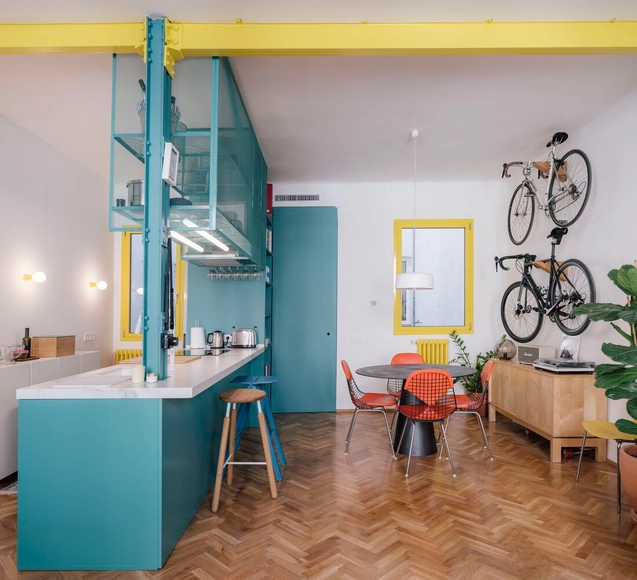
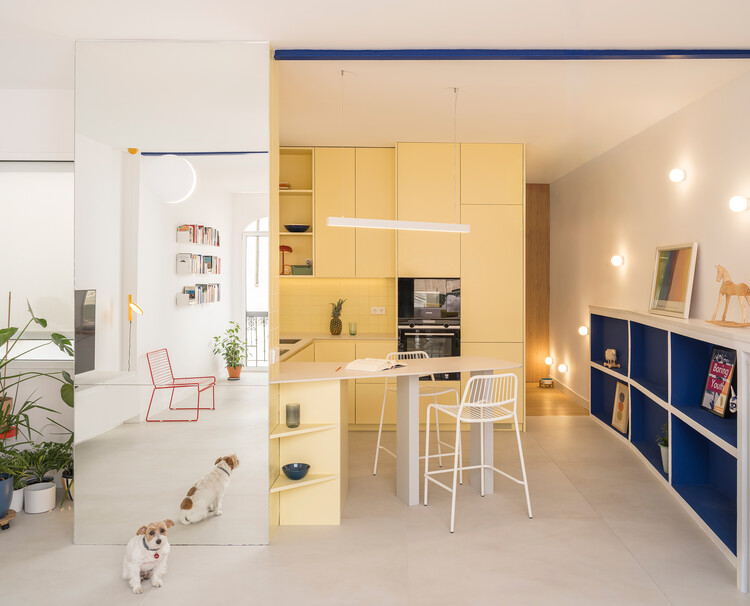
Space has become a luxury in many of the world's most densely populated cities—a growing reality that's hard to ignore. Megacities like Tokyo, Shanghai, Mumbai, Mexico City, and São Paulo already have populations exceeding 20 million, while other urban centers across Asia and Africa continue to expand rapidly. Among these, Delhi stands out: if current trends continue, it is projected to become the most populous city by 2028. As these cities expand, housing—especially new developments—follows a new logic: as square meters shrink, furniture adapts, and daily life learns to fit and thrive in high-density environments. This change isn't just about size; it reflects a new way of living. Where spaciousness once dominated, density now rules. Every corner gains spatial and commercial value, with the kitchen emerging as one of the biggest challenges in housing design today.
As cities continue to grow and daily realities shift rapidly, people are turning to new and evolving ways to maintain their well-being. While promoting active lifestyles has long been a focus for many planners and architects, through pedestrian- and bike-friendly cities, parks, and fitness or sports centers, recent times have shown that these publicly valued facilities are not always accessible. A clear solution has emerged in recent years, accelerated by the global pandemic in 2020. Both homes and workplaces have begun to adapt their interior spaces, incorporating designated areas and equipment to support physical activity and provide opportunities for movement during the day.
Rising populations and soaring real estate prices pose significant challenged to urban housing. In a desperate hunt for affordable living options, communal co-living spaces have emerged as a creative solution, offering quality living conditions through clever space optimization strategies. By implementing innovative design techniques, these shared living communities maximize every square foot to create functional spaces within compact footprints.
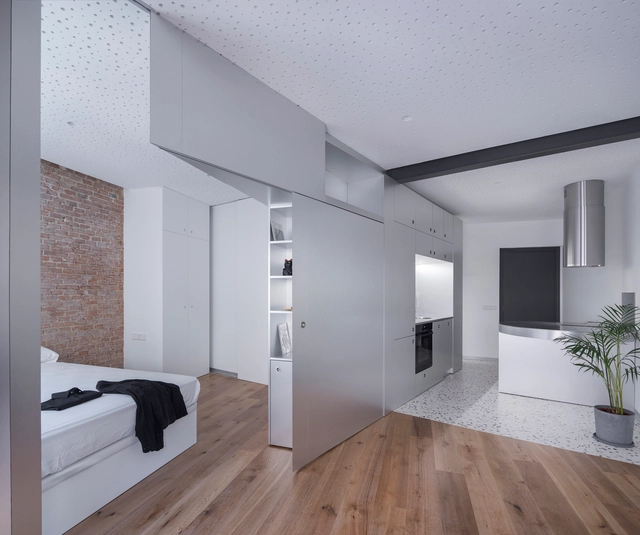
The domestic space reflects individuals' activities, behaviors, and actions, where various dynamics and processes coexist as part of daily life. Although each home has its distribution logic according to the time of its design, the needs of its inhabitants, the technologies of the era, and other factors, residential interior renovations often express an interest in recovering old structures and façades, recycling unused furniture, restoring high-quality elements present in coverings and flooring, or directly integrating new features to achieve greater spatial fluidity, lighting, and optimization of surfaces.
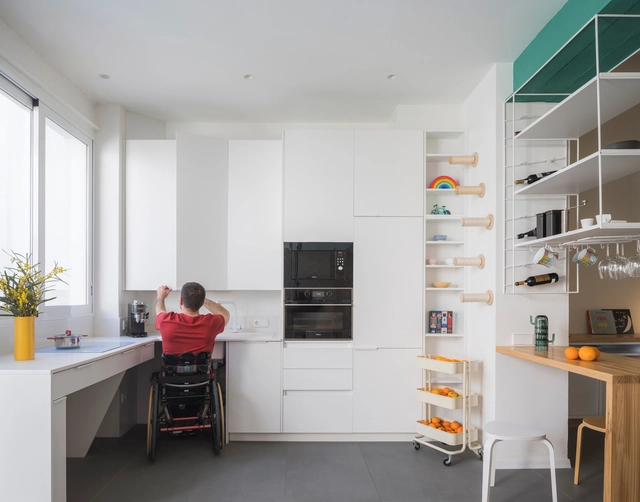
When addressing accessibility in architecture, codes set the baseline, while design defines the ceiling. Although numerous guidelines exist, creating spaces for everyone goes beyond mere adherence to standards. It requires a deep understanding of the environment and a broad perspective, recognizing that what we design will be used by people with diverse bodies, abilities, and conditions far beyond those traditionally considered typical users.
Furthermore, designing environments poses the challenge of inclusivity, ensuring that individuals who do not fit the standard profile—such as people with disabilities, pregnant women, those using assistive devices, and individuals of varying ages, body types, etc—are not excluded. The principles of Universal Design, established in 1997 by the NC State University College of Design and led by Ronald L. Mace, offer a transformative perspective in this context. This approach influences various design fields, including the built environment, products, and communications. When applied to architecture, it fosters the creation of spaces that work for everyone, minimizing the need for adaptations or specialized design.
https://www.archdaily.com/1019661/how-do-the-7-principles-of-universal-design-help-us-create-better-architectureEnrique Tovar




.jpg?1520271044&format=webp&width=640&height=580)


.jpg?1520271044)











_Yohei_Sasakura.jpg?1584733407&format=webp&width=640&height=580)
_Toshiyuki_Yano.jpg?1584733248&format=webp&width=230&height=230&crop=true)
_Fernando_Guerra___FG_SG.jpg?1584733499&format=webp&width=230&height=230&crop=true)
_Toshiyuki_Yano.jpg?1584733288&format=webp&width=230&height=230&crop=true)
_Adrien_Williams.jpg?1584733422&format=webp&width=230&height=230&crop=true)
_Yohei_Sasakura.jpg?1584733407)