Red is everywhere. From stop signs to bricks and lipstick to wine, our constant use of the color in everyday objects has slowly taken over our subconscious. Red is a color that always blends with the context, telling us how to feel or what to think, but why are we attracted to it? Why did cavemen choose ochre-based paint to draw on their walls? Why do revolutions always seem to use red to stir support? Why do we parade celebrities down red carpets, when green or blue would surely do the same job? While the answers to these questions may be vague and indefinite, red’s use in architecture is almost always meticulously calculated.
In a recent interview with Metropolis Magazine, Kenneth Frampton answered questions about his existing architectural influence and his opinion as it relates to the direction of architectural theory and criticism. Frampton has long been a prominent voice in the world of architectural theory and writing. He has taught at Columbia University's Graduate School of Architecture, Planning and Preservation (GSAPP) since 1972, all the while publishing a large collection of critical essays and books on the topic of 20th-century architecture—the most notable of those being his 1983 essay “Towards a Critical Regionalism: Six Points for an Architecture of Resistance.”
Even today, Frampton's evaluation of critical regionalism is still widely appreciated. In the interview, Frampton admits that he now sees the influence of critical regionalism primarily outside of "the Anglo-American world," but he believes that the implied importance of a "direct democracy" is what he sees as most beneficial.
The 2018 DAM Preis for the best building in Germany has been been awarded to bogevischs buero and SHAG Schindler Hable Architekten for their visionary residential housing project wagnisART in Munich. Selected from a list of 4 finalists, the project was lauded by the jury for setting new “social, architectural, and urban planning standards” in becoming a model for future residential housing projects in Germany.
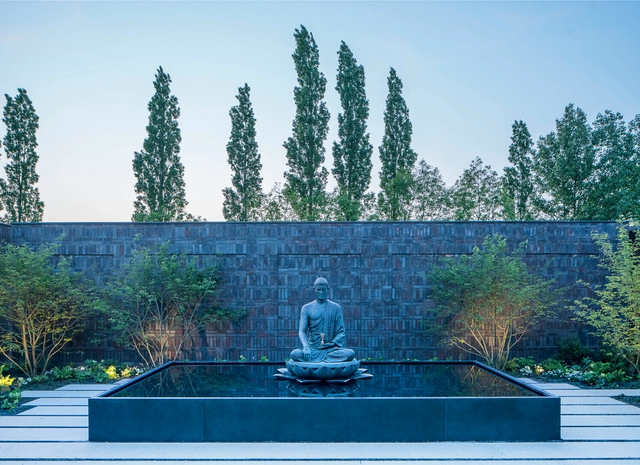
The Royal Institute of British Architects (RIBA) has announced 17 winning projects in the 2017 RIBA East Awards. Topped by Walters & Cohen Architects' Vajrasana Buddhist Retreat Centre in Suffolk which won the RIBA East Building of the Year Award, these 17 regional winners will go on to compete in RIBA's national awards, with the best in the national awards ultimately going forward to compete for the Stirling Prize.
"It was just fabulous to see the diversity and exceptional quality of buildings around the region," said RIBA East Regional Director Louise Todd. "The jury had a really difficult task in selecting the winners, which says a lot for the strength of the shortlist and the creativity of the architects involved."
Zaha Hadid's projects are remarkable not only for her innovative way of handling tangible materials but also for her imagination regarding the medium of light. Her theories of fragmentation and fluidity are now well-known design techniques which enabled her form-finding. However, her advances in using light to render her architecture have often been neglected—even though they became an essential element in revealing and interpreting her architecture. The three-decade transition from minimal light lines at her early Vitra Fire Station to the world's tallest atrium at the Leeza SOHO skyscraper, which collects an abundance of daylight, shows the remarkable development of Zaha Hadid’s luminous legacy.
Our modern day, image-obsessed culture has got us consuming a large quantity of architecture through photographs, as opposed to physical, spatial experiences. The advantages of architectural photography are great; it allows people to obtain a visual understanding of buildings they may never get the opportunity to visit in their lifetime, creating a valuable resource that allows us to expand our architectural vocabulary. However, one must stay critical towards the disadvantages of photography when it comes to architecture. Jeremy Till, author of “Architecture Depends,” summarizes this in his chapter “Out Of Time”: “The photograph allows us to forget what has come before (the pain of extended labor to achieve the delivery of the fully formed building) and what is to come after (the affront of time as dirt, users, change, and weather move in). It freezes time or, rather, freezes out time. Architectural photography ‘lifts the building out of time, out of breath,’ and in this provides solace for architects who can dream for a moment that architecture is a stable power existing over and above the tides of time.”
The following tips aim to not only improve the visual strength of your architectural photography, but also the stories that they can tell—going beyond the individual images in order to communicate buildings’ relationships with their contexts, space and time.
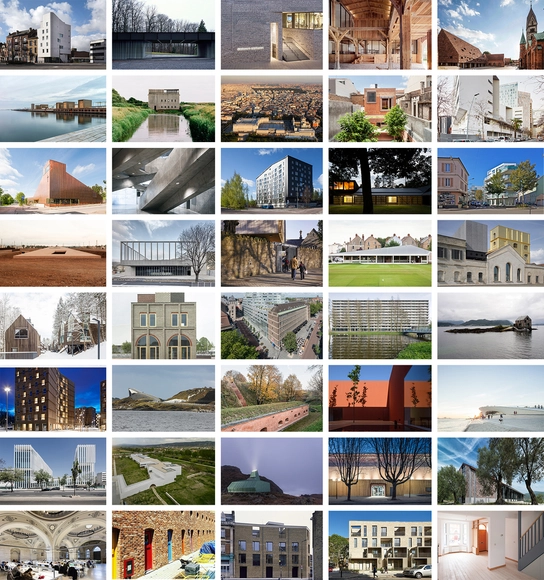
The European Commission and the Mies van der Rohe Foundation have announced the 40shortlisted works that will compete for the 2017 European Union Prize for Contemporary Architecture – Mies van der Rohe Award. The jury has chosen from 355 nominated works and the shortlist highlights the opportunities and the trends of today’s European territory: cities, housing, heritage, and memory. The five finalists will be announced in mid-February and the winner and the Emerging Architect in mid-May.
A third of the works tackle the challenge of contemporary architecture in relation with built heritage and a third of the work tackles the contemporary challenges of housing. The management of the historic urban landscape will be among the priorities highlighted by the ‘European Year of Cultural Heritage' in 2018.
"I would want the shortlisted schemes to demonstrate an interest in making places, in exploring convention and known typologies, in celebrating the pleasures of everyday use by a consideration of detail and an unspoken resistance to the current global tendency towards a self-referential architecture, one that belies context and the act of inhabitation." - Stephen Bates, Chairman of the Jury.
Observing the architectural landscape today it’s clear that the type of work which is currently ascendant, particularly among young practices, is very different to what came before the financial crisis of 2008. But what, exactly, does that architectural landscape look like? In an essay titled “Well into the 21st Century” in the latest issue of El Croquis, Alejandro Zaera-Polo outlined a 21st-century taxonomy of architecture, attempting to define and categorize the various new forms of practice that have grown in popularity in the years since—and as a political response to—the economic crisis.
The categories defined by Zaera-Polo encompass seven broad political positions: The “Activists,” who reject architecture’s dependence on market forces by operating largely outside the market, with a focus on community building projects, direct engagement with construction, and non-conventional funding strategies; then there are the “Populists,” whose work is calibrated to reconnect with the populace thanks to a media-friendly, diagrammatic approach to architectural form; next are the “New Historicists,” whose riposte to the “end of history” hailed by neoliberalism is an embrace of historically-informed design; the “Skeptics,” whose existential response to the collapse of the system is in part a return to postmodern critical discourse and in part an exploration of contingency and playfulness through an architecture of artificial materials and bright colors; the “Material Fundamentalists,” who returned to a tactile and virtuoso use of materials in response to the visual spectacle of pre-crash architecture; practitioners of “Austerity Chic,” a kind of architectural “normcore” (to borrow a term from fashion) which focuses primarily on the production process, and resulting performance, of architecture; and finally the “Techno-Critical,” a group of practices largely producing speculative architecture, whose work builds upon but also remains critical of the data-driven parametricism of their predecessors.
As a follow-up to that essay, Zaera-Polo and Guillermo Fernandez-Abascal set out to apply the newly-defined categories to the emerging practices of today with a nuanced “political compass” diagram. They invited practices to respond to their categorization in order to unveil the complex interdependencies and self-image of these political stances. For the first time, here ArchDaily publishes the results of that exercise.
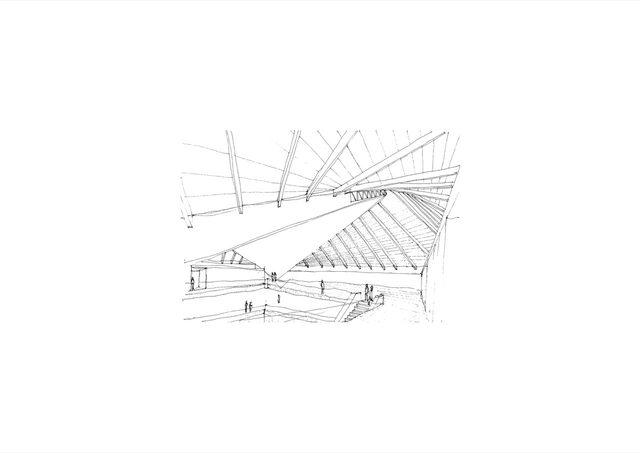
This month London's Design Museum will officially open its new home on Kensington High Street. The project, which has been redeveloped and designed in collaboration with Rotterdam-based practice OMA and London-based studio Allies & Morrison, has seen a Grade II* Listed Modernist monument sensitively restored into contemporary galleries. For John Pawson—who has been commissioned to create "a series of calm, atmospheric spaces" ordered around a large, oak-lined atrium—this scheme marks his first major public work.


.jpg?1528724681)


.jpg?1516986032&format=webp&width=640&height=580)
.jpg?1516986056&format=webp&width=230&height=230&crop=true)
.jpg?1516986009&format=webp&width=230&height=230&crop=true)
.jpg?1516986022&format=webp&width=230&height=230&crop=true)
.jpg?1516986070&format=webp&width=230&height=230&crop=true)
.jpg?1516986032)




.jpg?1490812427&format=webp&width=230&height=230&crop=true)






.jpg?1484600230&format=webp&width=230&height=230&crop=true)
.jpg?1484600241&format=webp&width=230&height=230&crop=true)





.jpg?1482097113&format=webp&width=230&height=230&crop=true)




.jpg?1478766358&format=webp&width=640&height=580)