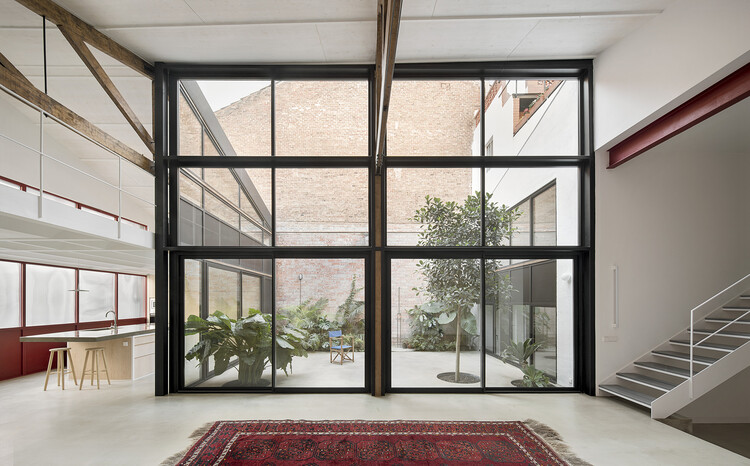
Del Rio Bani

BROWSE ALL FROM THIS PHOTOGRAPHER HERE

Open question: what makes a building beautiful?

Subscriber Access | 

Architects and designers, as well as psychologists and sociologists, recognize that aesthetics and its underlying philosophy have the power to change how we perceive the world around us. Consequently, a deeper understanding of what is beautiful holds the powerful potential to alter how people respond to their environment.

Exploring the different meanings of aesthetics in architecture, from 'form follows function' to the aesthetics of the metaverse, can help us understand the potential of our physical and virtual environments on the path toward a better world.

Much has been written on the subject, from Alberto Pérez-Gómez's "The Beautiful and the Just in Architecture" to Pablo Caldera's "The Failure of Beauty." Now, however, we want to open up the debate and invite you, our readers, to share your perspectives on what makes a building or a city beautiful.

Share your thoughts in the form below. Selected responses will be published in an upcoming article.

What makes a building beautiful?

Subscriber Access | 

Architects and designers, as well as psychologists and sociologists, recognize that aesthetics and its underlying philosophy have the power to change how we perceive the world around us. Consequently, a deeper understanding of what is beautiful has the power to reshape how people respond to their environment.

Exploring the different meanings of aesthetics in architecture—from "form follows function" to the aesthetics of the metaverse—can help us understand the potential of our physical and virtual environments on the path toward a better world.

Much has already been written on the subject, but we now want to open the debate to you, our readers. Share your thoughts on what makes a building or a city beautiful.

Leave your comments in the form below. These will be selected and published in an upcoming article.

The 50 Best Houses of 2022

Subscriber Access | 

The 50 Best Houses of 2022 - More Images+ 50

As another year comes to a close, the ArchDaily team looks back at the year's architectural highlights, compiling a selection of projects to review the content featured in 2022. As part of this retrospective, our curation team presents one of our readers' favorite categories—residential architecture—bringing together the projects that represent the very best of a vast year of architectural production, as chosen by our audience.

At a time marked by anticipation for the future of architecture, yet also by reflection on what has been accomplished over the past year, we present the 50 most-visited houses on ArchDaily in Spanish in 2022. In doing so, we continue our ongoing mission to provide tools, inspiration, and knowledge to everyone working toward a better built environment.

The 50 Best Houses of 2021

Subscriber Access | 

Every year, our curatorial team presents a retrospective of house projects that stood out over the period. This collection, a small selection of the more than two thousand projects published on ArchDaily Brasil this year alone, comprises a series of residences with specific design solutions that address, each in their own way, factors such as materials, construction techniques, structural systems, building processes, and programs.

The 50 Best Houses of 2021 - More Images+ 46

8-80 Cities: How to Design Cities for People of All Ages?

Subscriber Access | 

One of the greatest challenges of urban planning lies in managing city growth. Year after year, major cities see their populations increase, and it is estimated that by 2050, 70% of the world's population will live in urban areas. But how can we build sustainable, healthy, and equitable cities that foster urban diversity?

Barcelona Architecture City Guide: 30 Buildings and Places from Gaudí to Today

Barcelona is a city where architecture has long served as a laboratory of urban experimentation, each era leaving its mark on the city's fabric. From the dense streets of the Gothic Quarter to the ornate interiors of the Palau de la Música Catalana, the city expanded outward through Ildefons Cerdà's Eixample, a stage where Gaudí and his contemporaries challenged the rules of form, scale, and ornamentation. These experiments defined a local identity and culminated in the Sagrada Família, a vision that continues into the 21st century through the integration of advanced technology.

The city's twentieth-century transformation forged an architectural language with global influence. The principles of International Modernism are embodied in Mies van der Rohe's Barcelona Pavilion, while later developments—from Bofill's explorations in collective housing to the urban interventions of the 1992 Olympics—reshaped the skyline and the city's relationship to its waterfront. Subsequent contemporary projects continue to negotiate form, landscape, and urban scale, contributing to a layered and evolving city.

Barcelona Architecture City Guide: 30 Buildings and Places from Gaudí to Today - More Images+ 29

Casa 144º / Jaime Prous Architects

Casa 144º / Jaime Prous Architects - More Images+ 20

Maresme, Spain
  • Area Area of this architecture project Area:  150
  • Year Completion year of this architecture project Year:  2026
  • Manufacturers Brands with products used in this architecture project
    Manufacturers:  Guix Laminat Blanes, OtherStructures

Sport Facilities inside a Squash Court / Estudio Úbeda Valero + Roque Carlos Valero

Sport Facilities inside a Squash Court / Estudio Úbeda Valero + Roque Carlos Valero - More Images+ 24

Agrosemillas Offices / Impepinable Studio

Agrosemillas Offices / Impepinable Studio - More Images+ 26

  • Architects: Impepinable Studio
  • Area Area of this architecture project Area:  280
  • Year Completion year of this architecture project Year:  2025
  • Manufacturers Brands with products used in this architecture project
    Manufacturers:  Artemide, Muuto, VitrA

Nursery School in Muro / BOS Arquitectes

Nursery School in Muro / BOS Arquitectes - More Images+ 27

  • Architects: BOS Arquitectes
  • Area Area of this architecture project Area:  745
  • Year Completion year of this architecture project Year:  2025

From Diplomacy to Mobility: Six Legislative Responses Cities Are Using to Confront Climate Change

From building codes to mobility restrictions and new diplomatic roles within city governments, climate policy is increasingly being shaped at the local level through a widening range of legislative and institutional tools. Cities as varied as Sydney, Boston, New York, Paris, Miami, and dozens across Latin America are adopting targeted strategies that reflect their distinct environmental pressures and governance structures. These initiatives range from all-electric and net-zero construction requirements, to traffic-control measures designed to curb the social costs of private vehicle use, to emerging forms of urban diplomacy that coordinate responses to rising temperatures and biodiversity loss. Together, these approaches illustrate how territorial management is evolving in response to the accelerating climate crisis, and how local governments are experimenting with regulation and collaboration to confront challenges that are at once global and deeply place-specific.

From Diplomacy to Mobility: Six Legislative Responses Cities Are Using to Confront Climate Change - More Images+ 1

MDN House / Nook Architects + Amomicasa

MDN House / Nook Architects + Amomicasa - More Images+ 15

El Alto Panadés, Spain
  • Area Area of this architecture project Area:  445
  • Year Completion year of this architecture project Year:  2021
  • Manufacturers Brands with products used in this architecture project
    Manufacturers:  Egoin, Ceramicas Sampedro, LIVOS, Persiana Barcelona, Trimble, +1

Attic A.N.T. / Pineda Monedero

Attic A.N.T. / Pineda Monedero - More Images+ 12

  • Architects: Pineda Monedero
  • Area Area of this architecture project Area:  150
  • Year Completion year of this architecture project Year:  2024
  • Manufacturers Brands with products used in this architecture project
    Manufacturers:  Viabizzuno

Les Barraques House / Arc Studi Arquitectura

Les Barraques House / Arc Studi Arquitectura - More Images+ 17

Palafrugell, Spain

Ca na Baldu i en Diego / Atzur arquitectura

Ca na Baldu i en Diego / Atzur arquitectura - More Images+ 18

Barcelona, Spain
  • Architects: Atzur Arquitectura
  • Area Area of this architecture project Area:  180
  • Year Completion year of this architecture project Year:  2025

Designing Inclusive Cities: The Role of Universal Design in Creating Accessible Urban Atmospheres

Contemporary cities are vibrant, complex, and constantly evolving. Above all, they are ever-changing, mutable, and diverse. What transformative changes are occurring, and where are they leading us? Urbanization continues to gain momentum in many regions of the world, generating visible and structural transformations. As this unfolds, data on the evolution of its configuration and the challenges we encounter begin to emerge. According to the World Bank, the urban population will continue to trend upward, with 90% of new urban residents concentrated in Africa and Asia. This growth raises essential questions: How can we consolidate a design approach that ensures equitable access to spaces, resources, and services? How can we make emerging and consolidated metropolises more inclusive and accessible?

La Sal Pavilion / CHS+R arquitectos (José Rodríguez, Antonio Herrero y Juan Suárez) + Carlos Montes

La Sal Pavilion / CHS+R arquitectos (José Rodríguez, Antonio Herrero y Juan Suárez) + Carlos Montes - More Images+ 18

Interfaith Spaces: Architectural Responses to Religious Diversity

In an increasingly diverse world, the emergence of multi-faith spaces represents a significant shift in architectural design, reflecting the evolving religious landscape of contemporary society. These spaces, which began to be formally established in the 1950s in public buildings like airports and hospitals, serve as microcosms of social transformation and peaceful coexistence. They allow various traditions to harmoniously share environments, embodying principles of inclusivity, flexibility, and adaptability.

As communities grow more multicultural and increasingly diverse, these spaces serve as physical manifestations of religious inclusion, encouraging the acceptance of religious and ethnic minorities within multicultural landscapes. Their proliferation reflects a growing need for inclusive environments that cater to diverse spiritual needs while promoting interfaith understanding. However, designing and implementing these spaces presents complex challenges, often sparking debates about representation, neutrality, and the very nature of sacred space. These discussions underscore the delicate balance architects must strike in creating spaces that are both universally welcoming and spiritually meaningful.

Interfaith Spaces: Architectural Responses to Religious Diversity - More Images+ 24