

-
Architects: Craig Steely Architecture
- Area: 3000 ft²
- Year: 2016
-
Manufacturers: Hansgrohe, B&B Italia, Axor Urquiola, Emeco, Hafele, +1
-
Professionals: Forsythe General Contractors, Bonelli Windows and Doors


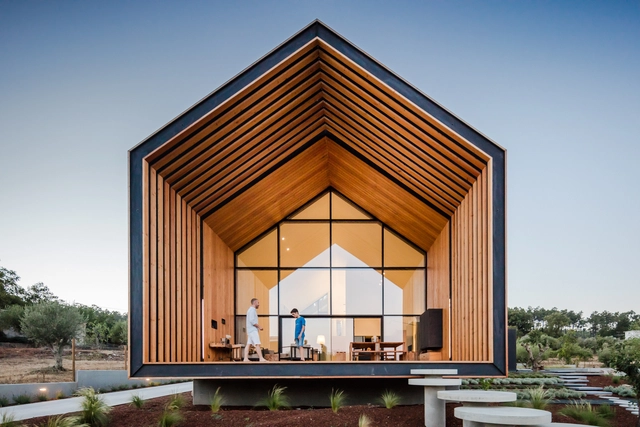
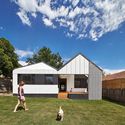
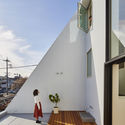
The appearance of people in architectural photography is rare. When they do show up, people are usually added to help the viewer better understand the size and design elements of a building. However, in recent times, several photographers have warmed to the idea of capturing houses with their inhabitants, showing the people who live there and how they inhabit the spaces. After the success of our previous round-up of people photographed with their houses, this week we bring you 10 more houses captured by renowned photographers such as Hiroyuki Oki, Peter Bennetts, and Ricardo Oliveira Alves.

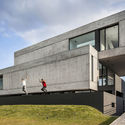
The inclusion of cars in photographs of architecture is an interesting tool that can help the viewer to understand the scale of a building. The addition of an automobile to a scene can not only help to transmit a notion of the size of the photographed elements, it can also be used to generate interesting compositional relationships to benefit the photograph as a whole. Below, we've highlighted a selection of 10 images from prominent photographers such as Rafael Gamo, Michael Sinclair and Bruno Candiotto which make effective use of this technique.

Designing a museum is always an exciting architectural challenge. Museums often come with their own unique needs and constraints--from the art museum that needs specialist spaces for preserving works, to the huge collection that requires extensive archive space, and even the respected institution whose existing heritage building presents a challenge for any new extension. In honor of International Museum Day, we’ve selected 23 stand-out museums from our database, with each ArchDaily editor explaining what makes these buildings some of the best examples of museum architecture out there.

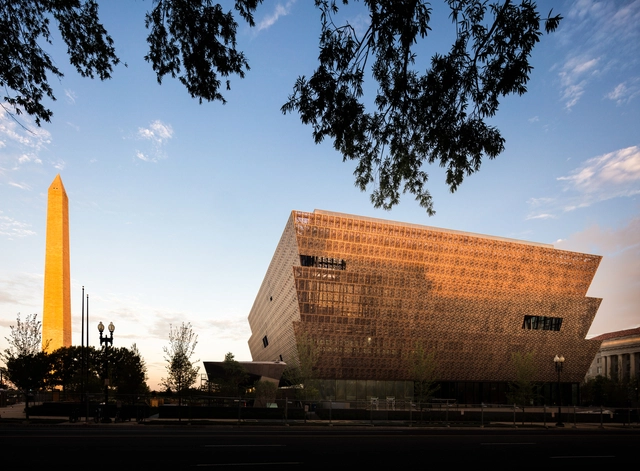
This article, originally titled "DC’s Museum Of African American History Is The City’s Greenest," was originally published on Lance Hosey's Huffington Post blog. It is part of a four-part series about the Smithsonian National Museum of African American History and Culture.
Fifteen years ago, when I worked on the design of a high-performance museum, the concept was considered so unusual that the media questioned the very idea. The US Green Building Council (USGBC) had only very recently introduced its Leadership in Energy and Environmental Design (LEED) rating system, so much of the public wasn’t familiar with the concept. Over the following decade, it became more and more popular in every building type, including museums. A watershed year was 2008. The Water + Life Museums in Hemet, CA, became the first LEED Platinum museum, quickly followed by the California Academy of Science, which has been called “the world’s greenest museum.” The same year, the Grand Rapids Art Museum became the first LEED-certified art museum. By 2016, International Museum Day could highlight ten LEED-certified museums in the US alone.
Now the Smithsonian has completed its first LEED Gold project, the National Museum of African American History and Culture (NMAAHC). (The Silver-rated National Museum of the American Indian [NMAI] was the first Smithsonian project to become a certified green building, although it wasn’t designed to this standard and didn’t achieve it until seven years after opening in 2004.) By many measures, the NMAAHC is easily the greenest museum in Washington.
David Adjaye OBE, principal of Adjaye Associates, will be Knighted by Her Majesty Queen Elizabeth II for his services to architecture at an investiture in 2017. The Central Chancery of the Orders of Knighthood at St. James's Palace, who administer the Knight Batchelor awards that will be bestowed upon the architect, described Adjaye as "one of the leading architects of his generation and a global cultural ambassador for the UK."
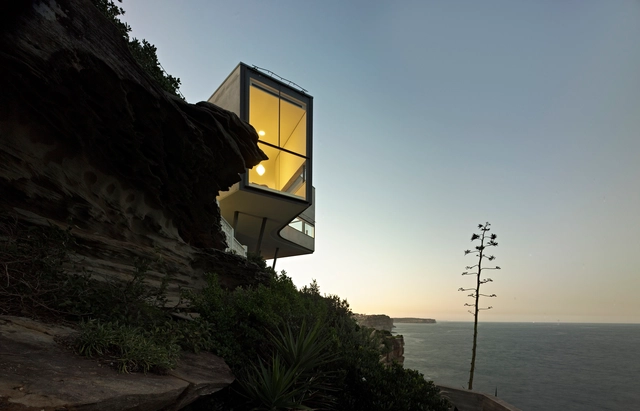
Alongside Camilla Block and David Jaggers, Neil Durbach of Durbach Block Jaggers has carved out a unique place in Australian architecture. Known primarily for their carefully sculpted modernist houses, the firm's architecture is simultaneously rich in architectural references and thoroughly original. In this interview, the latest in Vladimir Belogolovsky's “City of Ideas” series, Durbach explains the true inspirations behind their work, why these inspirations have little to do with the public descriptions of their projects, and why for him, the intention of all of his architecture “is to win Corb’s approval.”
Vladimir Belogolovsky: You came to Australia while the Sydney Opera House was still under construction. Does this mean you were here even before going to the US?
Neil Durbach: Yes, I first came to Australia as an exchange student while still in high school.
VB: So you have seen the Opera under construction then. How special was that? Did that building change anything in particular in you?
ND: Well, at that time I wanted to be an artist. A friend took me on a boat to see it. It was kind of staggering... And I thought – you know, this is much more interesting than art. And I felt – maybe architecture is what I should pursue.

“What we can see of this building, the towering glass, the artistry of the metalwork, is surely a sight to behold.”
These were the words spoken by President Barack Obama as he inaugurated the most recent addition to the National Mall in Washington D.C., the Smithsonian National Museum of African American History and Culture, this past weekend. The opening ceremonies featured musical performances and celebrations, as well as a look at the museum’s place in American history.
“This national museum helps to tell a richer and fuller story of who we are,” said Obama. “It helps us better understand the lives, yes, of the president but also the slave, the industrialist but also the porter, the keeper of the status quo but also the activist seeking to overthrow that status quo.”
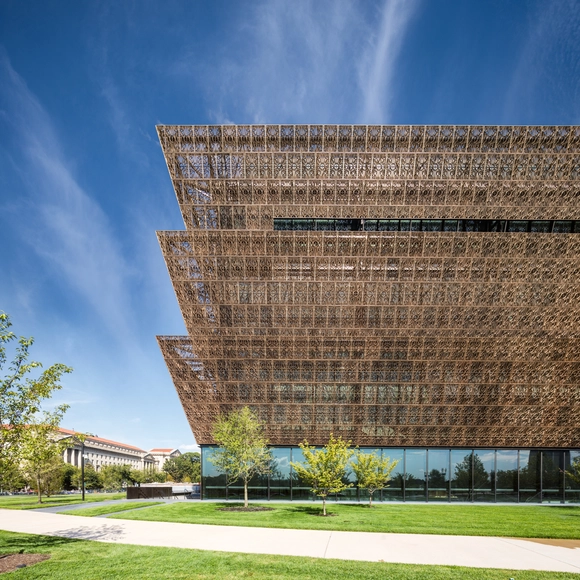
A century since the founding of the National Memorial Association and the start of a campaign by African-American war veterans for a monument of African American culture, the National Museum of African American History and Culture will finally be opened on September 24th. The Museum took $540 million and four years to build, resulting in a striking, and refreshingly unorthodox, architectural construction on Washington DC’s National Mall. The Freelon Adjaye Bond/SmithGroup JJR team, led by Ghanaian-British architect David Adjaye, defiantly broke the white-marble-Corinthian-column convention, opting instead for a bronze-coated aluminum façade bound to provoke a reaction from the critics.
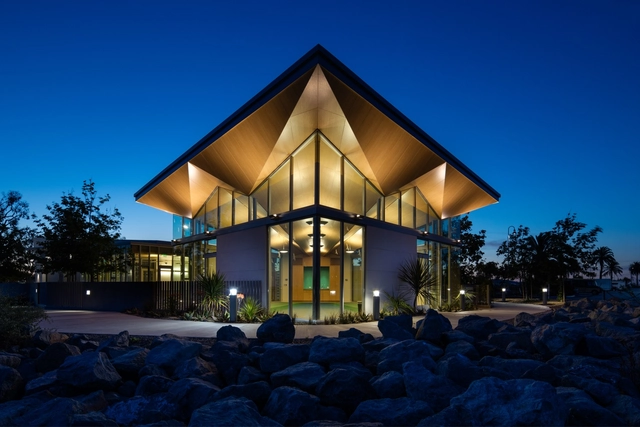
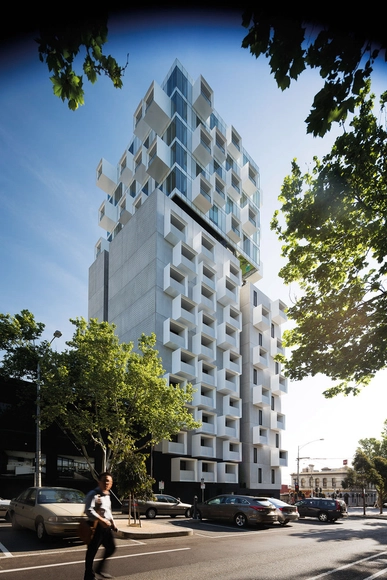
The 2015 winners of the Australian Institute of Architects’ National Architecture Awards have been announced at a ceremony in Brisbane.
Overall, 42 projects received 46 awards in 14 categories, including commercial, public, and interior architecture. Winners were selected by a jury from the Chapter Architecture Awards, held earlier this year.
Read on after the break for a list of the winners.
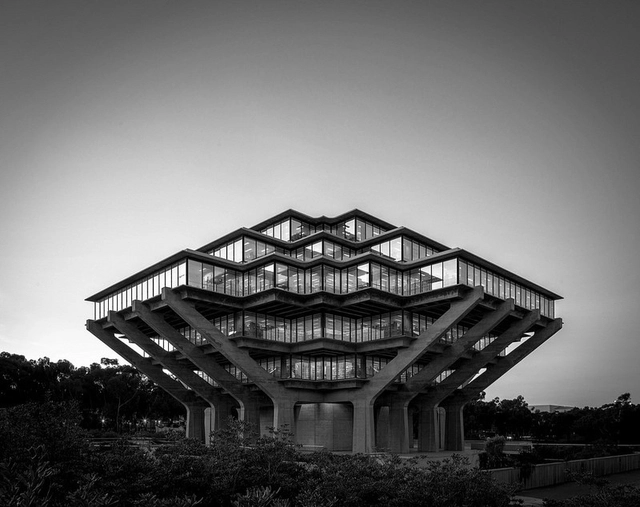
The alien form of the Geisel Library at the University of California, San Diego seems befitting of a backdrop from a science fiction movie. The building occupies a fascinating nexus between brutalism and futurism that its architect, William Pereira, intrepidly pursued throughout his career. With its strong concrete piers and hovering glassy enclosures, the library beautifully occupies an ambiguous state between massiveness and levitation, as if the upper stories have only just been set into their base and can be lifted back out at any moment. The tension between these two conditions gives the library an otherworldly appearance and provides a startling statement about the generative and imaginative power of the architect.
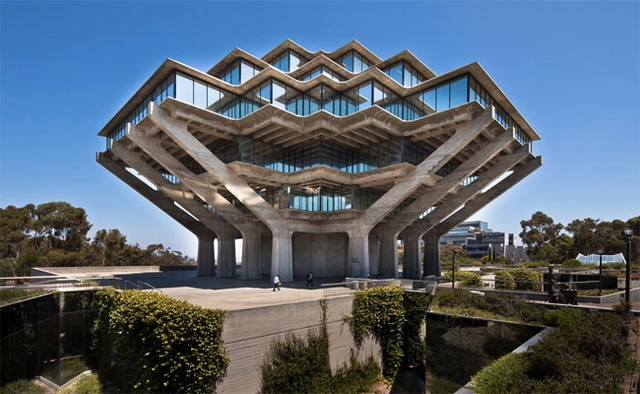
In this article, originally published in 2 parts on Metropolis Magazine as "Building a University: How 5 California Schools Approach Campus Design" (Part 1 & Part 2), Sherin Wing investigates how different Californian universities utilize the design of their campus to express and enable their differing missions.
A school is more than just the sum of its intellectual records. Its legacy is very much tied to a physical place: its campus. More than a mascot or a symbol, the design of a campus and the buildings that form it greatly contribute to a university's lasting identity.
The key, then, is how a school’s material identity advances its intellectual mission. For example, academic buildings often physically symbolize the type of scholarly exploration and research that takes place therein. Administrative centers, on the other hand, anchor the more idealistic work taking place in the lecture and science wings. At the same time, individual buildings can function collectively as didactic forums for the public, demonstrating such principles as energy and water-use efficiencies. Lastly, the circulation between the buildings themselves is important. Open green space, for instance, can accommodate crowds, lectures, and even protests, providing a counterpoint to the more stately, processional routes that crisscross a campus.
Clearly these are different, and at times conflicting, agendas. How are they ranked and pursued by individual universities? Five campus architects at different California universities reveal how similar factors work in concert to produce very different visions and results. For some the initial plan of a school continues to wield influence over future developments, while in other cases a commitment to architectural movements and types gives rise to an eclectic, flexible approach to campus design.
Find out how these 5 California Universities approach their architecture after the break
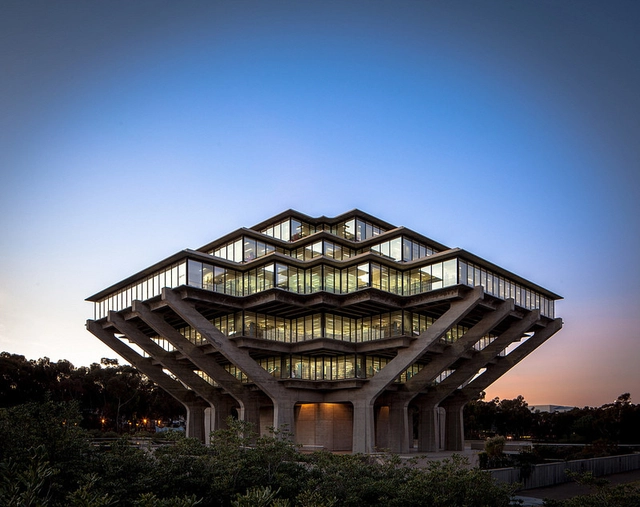
At just a little over 50 years old, the University of California San Diego is one of the younger college campuses in the United States, but despite this it is one of the most architecturally fascinating universities around. In the official UCSD campus guide, Dirk Sutro emphasizes that "UCSD does not have a single example of the historical-revival styles prevalent at other University of California campuses... and at San Diego's two other major universities". The history of UCSD architecture is one of ambition, which has made the campus a display case of modernism in all of its forms from the last half a century.
Thanks to photographer Darren Bradley, we can now share this history and a selection of the exciting structures it has produced.
Find out more about the UCSD campus after the break