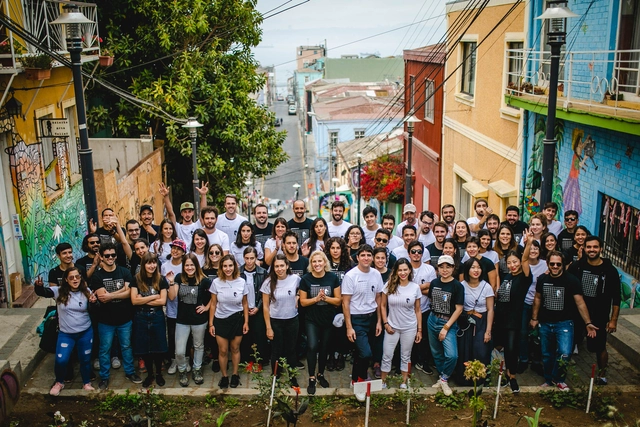
At our offices in Zurich, Berlin, Milan, Santiago de Chile, and Mexico City, DAAily platforms comprise a team of around 200 architects, designers, sales experts, communications specialists, and IT experts.
As inspiring and valuable curated platforms for the architecture and design community, Designboom, Architonic, and ArchDaily share combined online traffic of in excess of 270 million visits per year. Moreover, as one entity, DAAily platforms share a common mission: to empower everyone who makes architecture and design happen to create a better quality of life.
https://www.archdaily.com/1004566/join-our-team-as-social-media-specialist-for-archdaily-in-spanishArchDaily Team
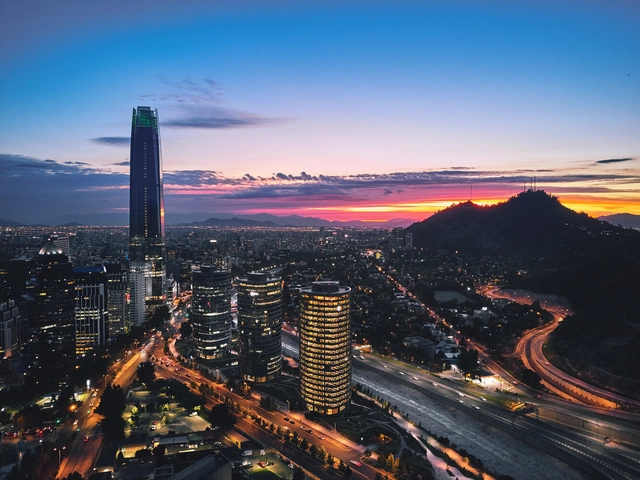
Founded in 1541 by the Spanish conquistador Pedro de Valdivia on indigenous settlements in the valley of the Mapocho River, Santiago is the capital and most populated city of Chile. This South American city is enframed by the Andes Mountains to the east and the Chilean Coast Range to the west, in addition to 26 island hills (cerros islas) scattered throughout the city. Some of these island hills have been converted into urban parks, such as Santa Lucía and San Cristóbal, while Chena, Calán, and Renca are in the process of expansion.
Graduating with an architecture degree is often met with the expectations of working a 9-5 job at an office. However, the reality is that many fresh graduates are venturing into diversified careers and exploring fields such as architectural photography, writing, rendering, set design, and project management. In this Editor's Talk, ArchDaily's Founder and Editor in Chief, Director of Software Product Development, Managing Editors, and Social Media Editor share their experiences of graduating with a Bachelor's Degree in Architecture then finding themselves exploring different, yet very complimentary career paths post graduation, proving that there is a lot more to the architecture practice beyond designing built spaces.
We are hiring! ArchDaily's Content Team is constantly working for our readers from all over the world in a platform that operates in four languages —Spanish, English, Portuguese and Chinese Mandarin. Our main goal is to ensure that the most important discussions about architecture and the city reach the maximum possible global audience.
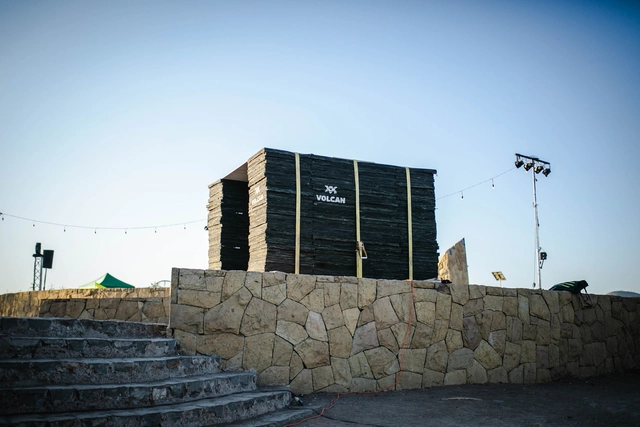
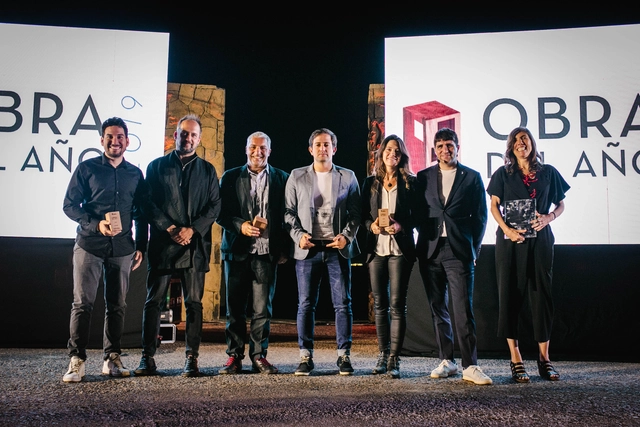
For the eleventh consecutive year, ArchDaily celebrated the best of Latin American architecture, presenting the Building of the Year award to architects Barclay & Crousse (Peru), Felipe Assadi (Chile), and Natura Futura + Frontera Sur Arquitectura (Ecuador). This year, the ceremony took place at the Pablo Neruda Lookout on San Cristóbal Hill, bringing together the architectural community and ArchDaily's main partners.
https://www.archdaily.com/1124207/the-2019-obra-del-ano-awards-were-presented-in-santiago-chilePola Mora
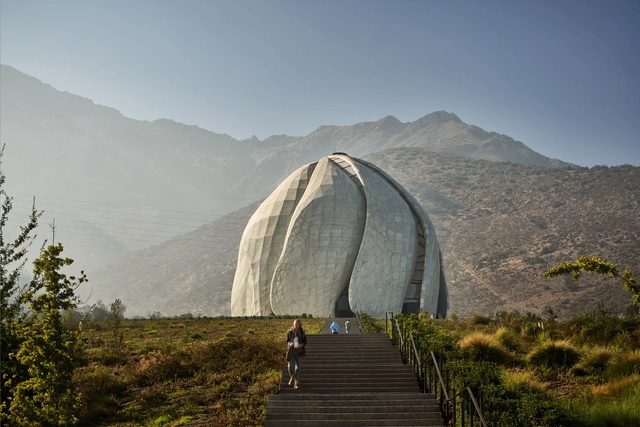
This year, the Bahá’í Temple of South America in Santiago, Chile, designed by Hariri Pontarini Architects of Toronto was selected as the winner of the 2019 RAIC International Prize, by the Royal Architectural Institute of Canada (RAIC). The prize celebrates a “single work of architecture that is judged to be transformative within its societal context and expressive of the humanistic values of justice, respect, equality, and inclusiveness”.
Videos
Terminal Nuevo Aeropuerto de Santiago. Image Cortesía de CHC
In 1979, CHC opened its doors as a toilet seat manufacturer in Chile. The company took its first steps manufacturing these under the Europa brand, later adding Delfin Coatings industrial paints, followed by bathroom fixtures from the Spanish brand Roca. During the 1980s, public restrooms in Chile used products designed for residential use, leading to frequent failures and a poor reputation. This unmet need opened the door to importing specialized products from the US and Italy to improve the country's public restrooms. Years later, CHC innovated by designing products specifically for the Chilean market. It developed the Wasser brand, introducing new fixtures to homes and buildings, such as whirlpool tubs, prefabricated furniture, bathroom partitions, shower trays, laminated glass screens, and cabins, among others.
During the 2000s, aiming to offer comprehensive solutions, the company added ceramic tiles, porcelain tiles, vinyl and laminate flooring, sports surfaces, and ventilated facades to its portfolio, incorporating more than 20 renowned brands based in Spain, Italy, and Brazil.
Officially debuting the partnership between ArchDaily and Arquicast, episode #68 Interview: ArchDaily Brasil is now live. In this episode, three of the editors from the Brazilian platform—Pedro Vada, Eduardo Souza, and Matheus Pereira—share a behind-the-scenes look at what it is like to work for the world's most visited architecture and urbanism website. The challenges of adapting to a new kind of career in architecture, the speed of industry transformations, and the role of technology and collaboration are among the topics discussed in this casual and informative conversation, which can be accessed here!
In the entryway of ArchDaily’s Headquarters, there is a framed, handwritten note from a student in Australia, Alice McLeod. This is something that we have cherished as a company with a very specific mission. She writes,
I grew up in a country town in Victoria, Australia. I lived 3 and half hours drive from a city. My closest library has 5 books in the “architecture & design” category. I had no access to the world and history of Architecture. Your website opened that world up to me. I found my passion and education through ArchDaily. In January I moved to Melbourne to begin my first year of my Architecture Degree. I have never been happier.
https://www.archdaily.com/880524/whats-your-archdaily-storyAD Editorial Team
In a recent TED Talk, architect Siamak Hariri takes the audience inside his design process for the Bahá'í Temple of South America. Responding to an open call in 2003 to design the last of the faith's continental temples in Santiago, Chile, Hariri recalls a moment as a student at Yale when he learned about the transcendent power of architecture, a moment he tried to recreate in the twelve-year project.
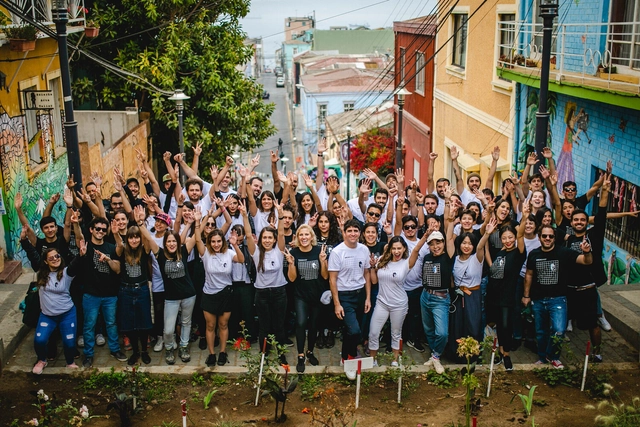
.jpg?1645602665 "ArchDaily Product Development Team. Image Courtesy of Soledad Sambiasi")