



-
Architects: genarchitects
- Area: 648 m²
- Year: 2020






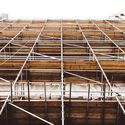
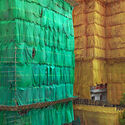
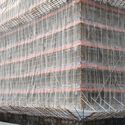
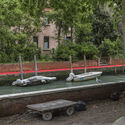
As one takes a visual tour through the city, one might spot structures that break the rhythm of finished architectural products. These are buildings encased in grids of metal or wooden sections, sometimes wrapped in colored nets, that communicate a moment of construction, repair, renovation, or demolition. They are called scaffolding systems, temporary structures built in the city to aid in the erection or maintenance of buildings. However, they have evolved to speak their own architectural language. As city-making is a continuous process, scaffolds serve as beacons, proposing silhouettes of the height, shape, or forms of new buildings. They step into the sidewalks, acting as shade or obstructions to the flow of human and vehicular traffic. In contrast to the permanence of architecture, they exhibit a sense of temporality that helps communicate time, the growth of neighborhoods, and the evolution of a city.

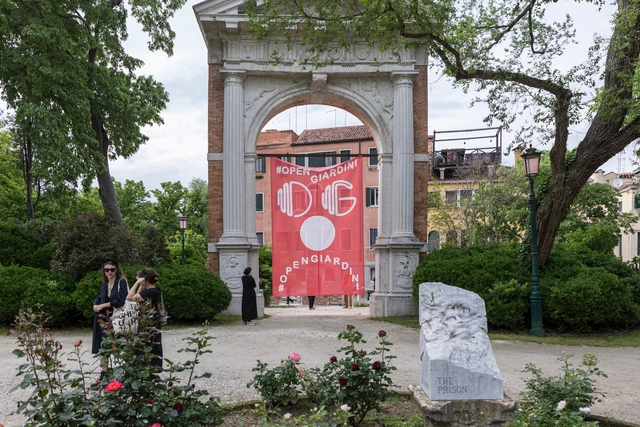
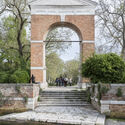
The Unfolding Pavilion is a recurring exhibition and editorial project by Daniel Tudor Munteanu and Davide Tommaso Ferrando that aims to highlight previously inaccessible but architecturally significant spaces. Now in its fourth edition, the exhibition is dedicated to the Giardini della Biennale, the Venetian garden that became the main location for one of the most important architecture exhibitions worldwide, the Venice Biennale. Through a series of site-specific interventions and photographs by Laurian Ghinițoiu, the Unfolding Pavilion #OPENGIARDINI set out to explore the paradoxical state of this public space that is not publicly accessible.
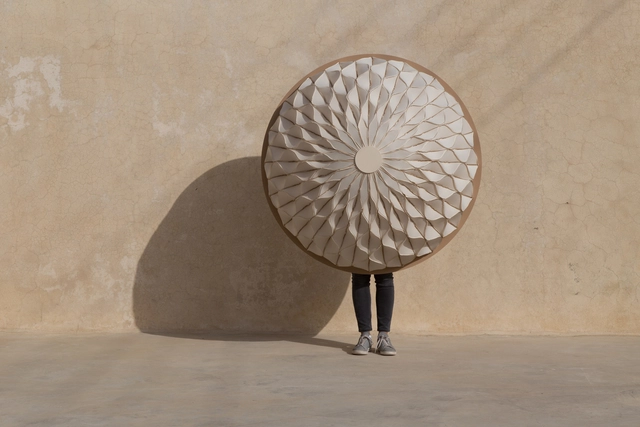
A group of 31 architects, studios, and designers have been invited to participate in the Sharjah Architecture Triennial from 11 November to 10 March 2024. For its second edition, the Triennial aims to explore innovative design solutions emerging from conditions of scarcity in the Global South. The participants, representing 27 countries, offer a diverse and international response to the theme, addressing its implications for the future of architecture. The Triennial is curated by Tosin Oshinowo and revolves around the theme "The Beauty of Impermanence: An Architecture of Adaptability."
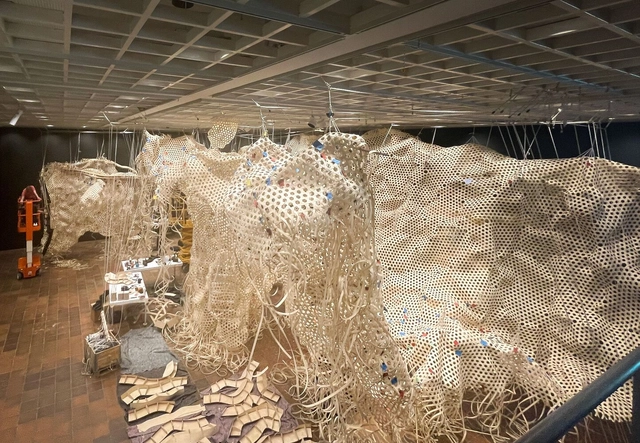
The final installment of The Architect's Studio series at the Louisiana Museum of Modern Art showcases the works of Cave_bureau, an architectural studio from Kenya. The exhibition explores the volcanic caves of Kenya, emphasizing the concept of "reversed futurism." Cave_bureau believes that by studying the past, they can develop sustainable solutions for the future.
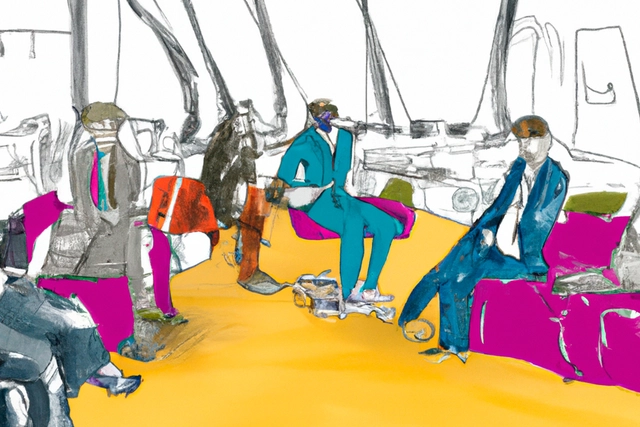
Space as a gender adjacency and sexuality's spatial dimension are recent themes in architecture. The case of the bathroom as a gender-regulating device is a constantly discussed topic at the intersections of queer theory in architecture. The discussion is even broader within LGBTQIA+ guidelines.
This article was originally published on Common Edge.
Recently, I resolved that I wasn’t going to be drawn into the silly posturing about how ChatGPT would take the jobs of every experienced architect on earth before 2030, but an intelligent post on this website by Geethanjali Raman and Mohik Acharya broke that resolve. What isn’t being stressed is that algorithms that sample internet-based information are only as good as the quality of that information. Architectural history suggests that all new things have a shelf life, quickly fading from view after being hyped. Only the best will persist after a lengthy period of evaluation and criticism. Any new architecture widely praised and available since the rise of the internet is likely to be untested by time and thus not worth using as a benchmark. And let’s face it: Some of the worst buildings ever designed by humans are out there in cyberspace, crowding out better ones that haven’t yet been digitized.


The UIA World Congress of Architects 2023 is an invitation for architects from around the world to meet in Copenhagen July 2 – 6 to explore and communicate how architecture influences all 17 UN Sustainable Development Goals (SDGs). For more than two years, the Science Track and its international Scientific Committee have been analyzing the various ways in which architecture responds to the SDGs. The work has resulted in the formulation of six science panels: design for Climate Adaptation, design for Rethinking Resources, design for Resilient Communities, design for Health, design for Inclusivity, and design for Partnerships for Change. An international call for papers was sent out in 2022 and 296 of more than 750 submissions from 77 countries have been invited to present at the UIA World Congress of Architects 2023 in Copenhagen. ArchDaily is collaborating with the UIA to share articles pertaining to the six themes to prepare for the opening of the Congress.
In this fifth feature, we met with co-chairs of design for Inclusivity architect Magda Mostafa, Professor of Design, Department of Architecture, the American University in Cairo and architect Ruth Baumeister, Associate Professor of Theory and History, Aarhus School of Architecture.