This guide explains how to structure multi-image prompts in the RunDifussion platform. Explore RunDifussion's product catalog.


This guide explains how to structure multi-image prompts in the RunDifussion platform. Explore RunDifussion's product catalog.


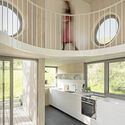
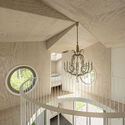
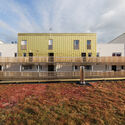
A few years ago, the architects at Studio Bark, in collaboration with Structure Workshop and Cut and Construct, began to develop the idea of a circular kit of parts designed so that anyone with reasonable DIY skills could build their own structure. This is U-Build, a modular system made of wood panels crafted with the precision of a computer-controlled cutting machine (CNC). The panels are delivered to the construction site in a compact box, ready to be assembled, stacked, and screwed to shape the walls, floors, and ceilings. Only a few tools are needed, such as a rubber mallet, a drill, a tape measure, and a level.
While this system allows the construction of various types of buildings, its high level of customization finds particular utility and effectiveness in housing projects of all scales. From a tiny house for a couple opting for simplicity to an off-grid cabin in the woods, a Georgian cottage extension, and a 3-bedroom efficiency home, U-Build has brought extraordinary prefabricated wooden homes to life.


Collaboration challenges happen in any construction project; with so many stakeholders and disciplines needing to be heard, agreeing on something and making it happen can be mired in delays, misalignment, and frustration. For architects, one of the greatest challenges involves dealing with inconsistent or lengthy inter-team workflow processes, overburdened staff and worries over litigation risks. It results in duplications, needless delays, and unclear communications, all of which risk the most important asset any architecture firm has: its reputation.

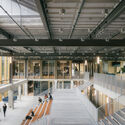
Diamond Schmitt and MVRDV have unveiled the design for a new building for the Scarborough Academy of Medicine and Integrated Health (SAMIH) at the University of Toronto’s Scarborough Campus. The new addition, featuring laboratory spaces, classrooms, and offices, aims to function as a communal and gathering space for the community. The functions are distributed around a five-story atrium that opens toward the exterior on both sides of the building and establishes a destination point within the pedestrian flows of the campus. Solar panels integrated into the façade help power the building, while the warm finishes of the interior contribute to creating a welcoming atmosphere.


Last week in Cairo, CulturVator – Art D’Egypte launched its third edition of the annual international exhibition “Forever is Now.” Set by the backdrop of the Great Pyramids of Giza, the display features the work of 14 international artists. In essence, the exhibition “underscores the significance of cultural exchange among artists at the core of history and ancient Egyptian civilization.”
The third installment "Forever Is Now," running from October 26th to November 18th, presents a diverse ensemble of artists hailing from various corners of the globe. Among them are Egyptian artist Mohamed Banawy and Saudi Arabian talent Rashed Al Shashai, as well as American visual artist Carol A. Feuerman and Belgian creative Arne Quinze. Collectively, these artists have come together to creatively interact with one of the world's most iconic historical sites, crafting immersive visual narratives that seamlessly fuse contemporary elements with the past, weaving tales of the land and its inhabitants.

The term "rede" in Portuguese traditionally conveys the idea of an interweaving of wires. In a contemporary context, it takes on a broader meaning related to connection, collaboration, and integration, whether among ideas, people, or processes. Not coincidentally, these are the core principles of Rede Arquitetos, a collaborative architecture studio founded in 2011 in Fortaleza, Ceará, by architects Bruno Perdigão, Epifanio Almeida, Igor Ribeiro, and Bruno Braga. Presently, the team is led by Braga, Luiz Cattony, and João Torquato, with their main approach emphasizing collective work and valuing encounters over the domination of ideas as a strategy for achieving the best solutions.

Ever since humans first looked up towards the heavens, we’ve wondered what is up there. From 1923 when Edwin Hubble first discovered galaxies beyond our own, our hunger and obsession for knowledge of the cosmos has grown almost as quickly as the universe itself.
As our technology advanced throughout the 20th century, we realized that ‘space’ is, in fact, filled with a huge array of ever more colorful galaxies, gasses, and stars. And the world’s leading product designers were taking note.


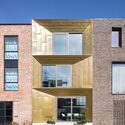
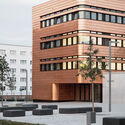
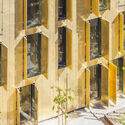
Few building materials stand the test of time as well as copper. Unlike other materials that have been replaced over the years –either due to lack of longevity, sustainability issues, or simple aesthetic preferences– copper can continue to be present in a huge variety of applications and its appeal has evolved over the years. Whether in façades and key building elements or in detailing and accessories, it continues to be a solid favorite for architects, designers and the public in general.