Contemporary cities and urban settlements manifest as intricate structures that demand deep reflection and a careful approach. The social models and spatial layouts within them are in constant evolution, transforming over time. In this context, a crucial question arises: What is the predominant model for cities today? Many contemporary cities result from a paradigm that reached its apogee in the 19th century, characterized by intensive densification and urbanization in response to needs that weren't always reflective of its inhabitants.
In some cases, due to the transformations experienced by large cities, certain urban sectors have fallen into disuse, becoming residual spaces or moving away from purposes oriented to community development. Recognizing that people are the driving force behind the dynamics of cities and human settlements, it is imperative to reclaim these spaces. To this end, theoretical approaches such as the one proposed by Henri Lefebvre's right to the city and the 15-minute city are presented as alternatives. In these cases, people regain the focus, becoming key elements in the design, and allowing for the re-establishment of a community-person-space bond.
https://www.archdaily.com/1012450/reactivating-residual-public-spaces-with-community-led-designEnrique Tovar
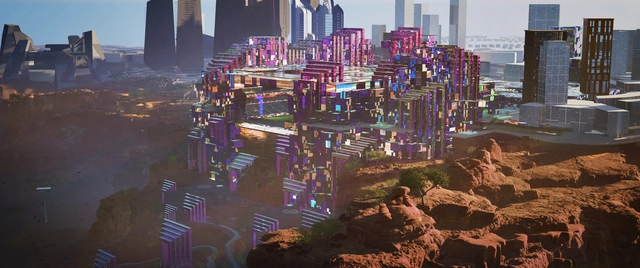
Populous, along with the Board of Directors of the Qiddiya Investment Company, has unveiled the design for the Prince Mohammed Bin Salman Stadium, a new multi-use venue to contribute to the offerings of Qiddiya City, a new district dedicated to sports and entertainment near Riyadh, Saudi Arabia. Located atop the 200m-high Tuwaiq cliff, the stadium, featuring a vast array of integrated technologies and innovative systems, is anticipated to host some of the country’s biggest sports, entertainment, and cultural events.
Where does the process of mythification of a work in architecture reside? What are the conditions inherently linked to the resource of memory? Firstly, the appearance of an intrinsic value within the architecture, such as highlighting the taste for the projected building. This would be accompanied by the historical factor—the echoes of the era in which it was built. If we add to all this a demolition loaded with theatricality and social drama, the building becomes something more, becoming part of the vast mythical territory of memory. Miguel Fisac's 'Pagoda,' which began construction in 1965, was demolished in just a few days in July 1999, being just over thirty years old at the time of its demolition.
Affectionately known as the 'Pagoda' by the people of Madrid, evidencing its similarity to Asian constructions, it was not held in the same esteem by the architects of the time. In the rise and fall of the JORBA Laboratories, the original name of the project, purely tragic elements converge: denunciations moved by religious conspiracies, neglect by the administrations, speculative businesses, professional jealousy, and rulers incapable of appreciating the quality of architecture that, today, becomes myth or martyr; the object of unjust destruction.
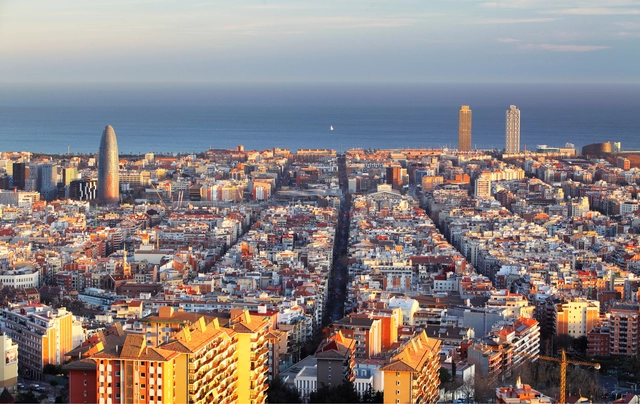
The city of Barcelona, along with its metropolitan area, will become a research laboratory as the main venue for the World Congress of Architecture of the International Union of Architects (UIA), scheduled to take place from June 28th to July 2nd, 2026. Its objective is not only for the Congress to be of maximum relevance and interest to the global community of architects but also for real-impact knowledge and practices to emerge in the everyday lives of people and the future of the planet.
Manufacturers: Fritz Hansen, Hansgrohe, Louis Poulsen, ETHNICRAFT, Tom Dixon, +14&Tradition, Forme, Granite Tile, Hay Design, Knoll International, Kohler, Luceplan, Phillip Lakeman, Prima Jaya Interior, Santai Furniture, Stone Gallery, TEKA Parquet, Toto, Venus Tiles-14