

-
Architects: Morphogenesis
- Area: 29800 ft²
- Year: 2015
-
Professionals: LDP International, Manish Consultants, MESH Partnership, Morphogenesis, Sanelac Consultants



The Royal Institute of British Architects (RIBA) Competitions has announced a shortlist of 5 teams in the competition for the Upper Orwell Crossings Project in Ipswich, England. The project brief consists of 3 new bridges spanning the Upper Orwell River that will enable the redevelopment and regeneration of several districts of Ipswich, as well as relieve congestion and improve connectivity for multiple forms of transportation.

“What we can see of this building, the towering glass, the artistry of the metalwork, is surely a sight to behold.”
These were the words spoken by President Barack Obama as he inaugurated the most recent addition to the National Mall in Washington D.C., the Smithsonian National Museum of African American History and Culture, this past weekend. The opening ceremonies featured musical performances and celebrations, as well as a look at the museum’s place in American history.
“This national museum helps to tell a richer and fuller story of who we are,” said Obama. “It helps us better understand the lives, yes, of the president but also the slave, the industrialist but also the porter, the keeper of the status quo but also the activist seeking to overthrow that status quo.”


The Nolli Map made history when it was created in 1748, largely because of its focus on public spaces. With it, Giambattista Nolli highlighted the fact that public places don’t exclusively exist in the forms of streets and parks, but also in enclosed spaces. Yet the importance of our communal areas is constantly being undermined. Our public areas exist to promote inclusion and equal opportunities, but despite that they are being forgotten and abandoned, debilitating their ability to bind communities together.
Given that the main goal of Studio Gang’s newly released, free, downloadable booklet, Reimagining The Civic Commons has been to “help communities everywhere activate their civic commons,” then, it is unsurprising that the booklet includes graphic maps reminiscent of Nolli’s visual aim. The booklet, which arose from work funded by the Kresge Foundation and Knight Foundation, focuses on the advancement of 7 types of “existing assets”: libraries, parks, recreation centers, police stations, schools, streets and transit. Since the start of Studio Gang's research, a larger, $40 million initiative has begun—funded by the JPB Foundation, The Knight Foundation, The Kresge Foundation and The Rockefeller Foundation along with a multitude of local donors—with plans taking shape in Philadelphia, Chicago, Detroit, Memphis and Akron. The graphic guide is designed to offer adaptable, cost-effective and flexible approaches to these spaces, so that it can be implemented over time and in a variety of different communities. Read on for our summary of the report’s 7 strategies for improvement.
During the IV International Congress in Pamplona, organized by the Architecture and Society Foundation, we had the opportunity to speak with Bjarke Ingels about his approach to theme "Architecture: Climate Change." The founder of BIG told us about the importance of clean technology and how these technologies must be integrated into architecture. He asserts that new industrial projects must also break from traditional paradigms and question established concepts in order to be reintegrated into communities as clean, attractive and multi-use spaces. Ingels suggests that clean technologies holds exciting possibilities for public spaces.

On Tuesday, September 6th, a groundbreaking ceremony was held for the newly planned “Berliner Block,” the Zalando Headquarters — a structure designed by HENN Architects for Europe’s largest online dealer in footwear and fashion. Along with David Schneider of Zalando Management Board and Berlin’s governing mayor Michael Muller, architect Gunter Henn spoke about the construction project currently underway.


The Lisbon Triennale Millennium bcp Début Award was created to celebrate the achievements, and promote the careers of, young architects and practices under the age of 35.
More than 140 applications were received, representing five continents and including 39 countries including Portugal, Germany, Brazil, and Mexico, as well as Iran, Jordan, Sudan, and Palestine. The jury have praised the very high level of the proposals across the board.
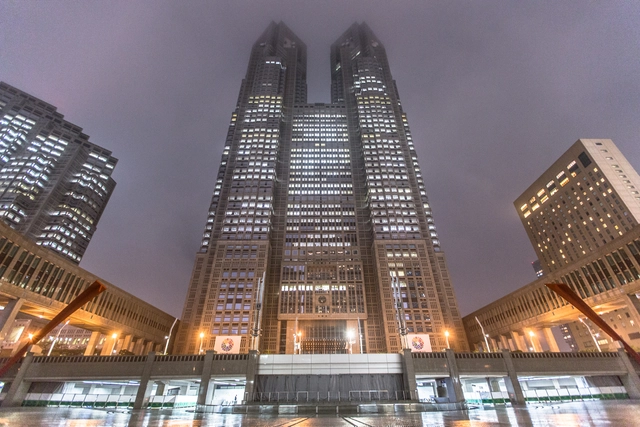
The career of Japanese architect Kenzō Tange features a curious anomaly: he received the same commission twice. In 1952, during the early stages of his career, Tange designed an administrative building in Yūrakuchō, Tokyo, for the city's metropolitan government. Over thirty years later, when the government relocated to Shinjuku, Tokyo, he again won the commission to design its administrative building. Completed in 1991, this would be one of his last, and most ambitious, projects. The second incarnation now dominates the city’s skyline, its highly distinctive design guaranteeing it landmark status. Nicknamed Tochō (an abbreviation of its Japanese name Tōkyō-to Chōsha), its architectural references to both tradition and modernity act as a visual metaphor for the eclectic city over which its inhabitants govern.