


-
Architects: Muñoz Arquitectos
- Area: 219 m²
- Year: 2015



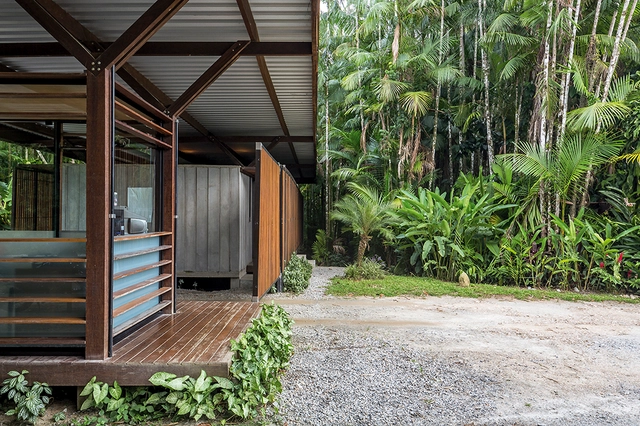
Costa Rican architect César Oreamuno has designed a modular capsule that accommodates to the basic needs of a community after a state of emergency or disaster. The units are adaptable and easily assembled in order to account for a variety of situations and respond to a series of unique functions, although the main theme of the project is focused on improving the quality of attention towards the basic needs of crisis victims, as well as encouraging the development of the community.

.jpg?1481804483&format=webp&width=640&height=580)
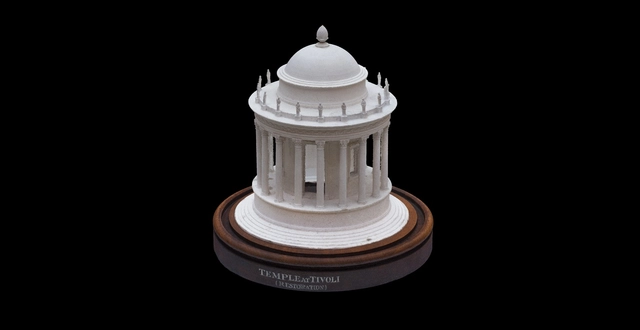
The Sir John Soane’s Museum is often cited as a seminal inspiration for architects of all generations. Located in London's Lincoln's Inn Fields, the house—designed by Soane (born in 1753), architect of the Bank of England—is a remarkable biographical bricolage of unique spaces, objects and ideas. Kept exactly as it was at the time of Soane's death in 1837, the museum is packed with paintings, sculpture, furniture and drawings – all curated and composed by the architect himself to "enhance their poetic qualities."

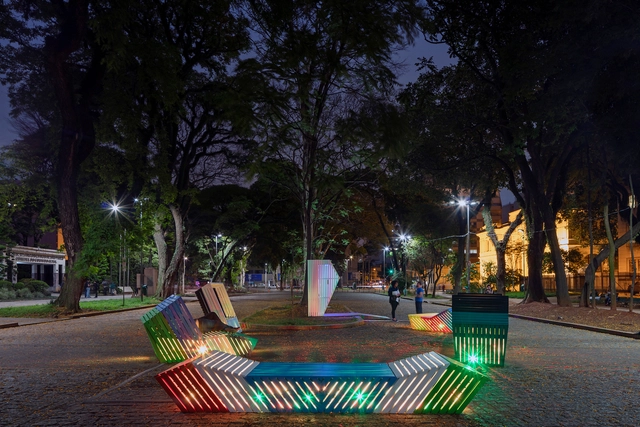
From the 4-6 of November, the Mediterranean Real Estate Fair, URBE 2016, featured an installation by São Paulo architect and urban planner Guto Requena. The public artwork, entitled “Can you tell me a secret?” is a collection of temporary street furniture: a phone booth that records visitors’ stories and plays them back randomly into five wooden benches.
This article is part of our new series "Material in Focus", where we ask architects to share with us their creative process through the choice of materials that define important parts of the construction of their buildings.
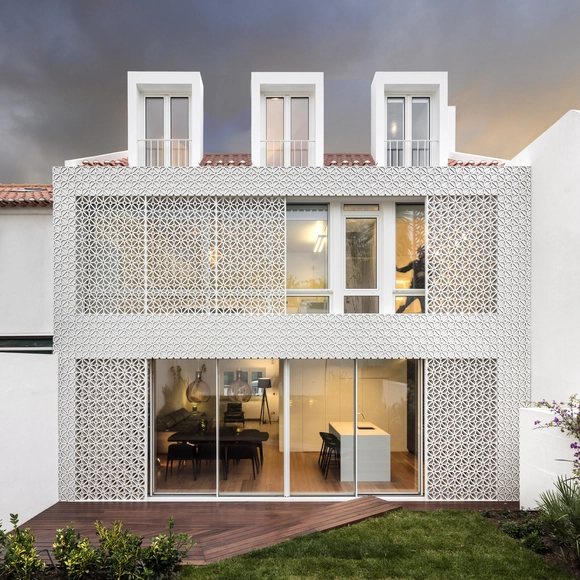
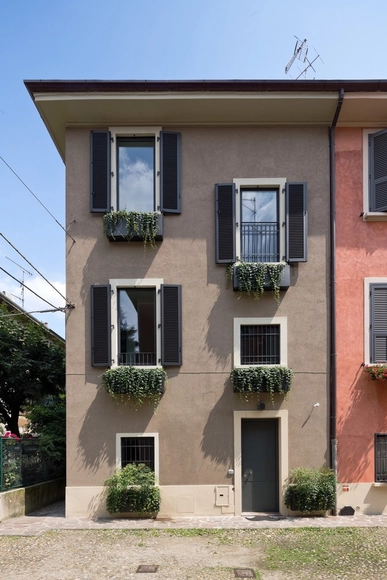
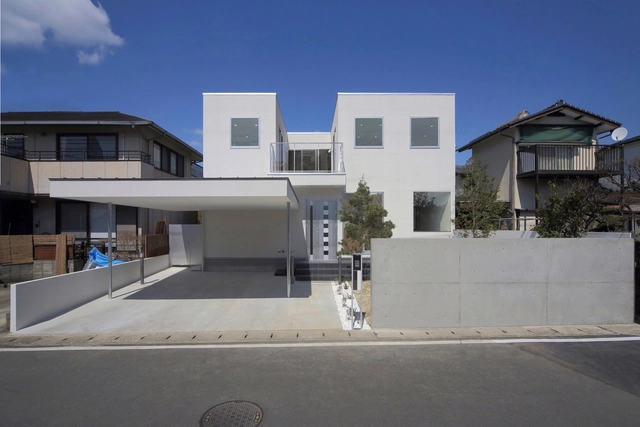
Casa Restelo was designed by Portuguese studio João Tiago Aguiar - architects. The 225 square meter project consists of the expansion of a 50's residence in the Restelo neighborhood, an area of semi-detached houses. For this project they also completely renovated the exterior facades, keeping the current look in mind while creating a new interpretation of the patterns inspired by traditional Portuguese tiles. We talked with the architect João Tiago Aguiar to know more about the material choices and the challenges of this project.
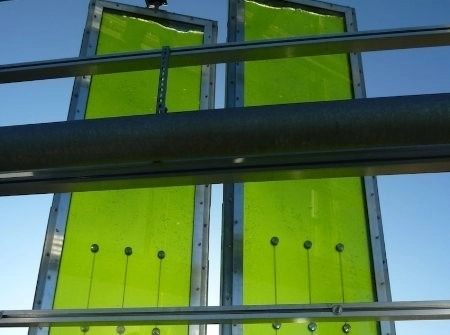
In a recent article for 99% Invisible, Kurt Kohlstedt explores how integrating microalgae into buildings can create a dualistic system of living and built, in order to perform services like create shade, generate power, and work with HVAC systems to modulate interior environments.
Projects that utilize such technology include bioreactors that produce oxygen and bio-fuel, a building with a bio-adaptive façade, and a street lamp that filters carbon dioxide from the urban environment.

This article was originally published on Autodesk's Redshift publication as "Architecture for Autism Could Be a Breakthrough for Kids With ASD."
Good architects have always designed with tactile sensations in mind, from the rich wood grain on a bannister, to the thick, shaggy carpet at a daycare center. It’s an effective way to engage all the senses, connecting the eye, hand, and mind in ways that create richer environments.
But one architecture professor at the University of Michigan in Ann Arbor is working on a tactile architecture-for-autism environment that does much more than offer visitors a pleasing and diverse haptic experience: It’s a form of therapy for kids like 7-year-old daughter Ara, who has autism spectrum disorder (ASD).


![Near My [B] / Le Sixieme - Cultural Center, Facade, Door, Column, Arch, Arcade](https://snoopy.archdaily.com/images/archdaily/media/images/5839/350b/e58e/ce3d/6d00/0083/slideshow/20.jpg?1480144133&format=webp&width=640&height=580)


.jpg?1481804429 "© Sergio Grazia")
.jpg?1481804518 "© Sergio Grazia")
.jpg?1481804390 "© Sergio Grazia")
.jpg?1481804607 "© Sergio Grazia")
.jpg?1481804483)






![Near My [B] / Le Sixieme - Cultural Center, Balcony, Table, Chair](https://images.adsttc.com/media/images/5839/34b0/e58e/cebc/9300/004f/thumb_jpg/05.jpg?1480144042 "© Kim Jaeyoon")
![Near My [B] / Le Sixieme - Cultural Center, Chair, Table](https://images.adsttc.com/media/images/5839/34bb/e58e/ce3d/6d00/0080/thumb_jpg/07.jpg?1480144053 "© Kim Jaeyoon")
![Near My [B] / Le Sixieme - Cultural Center, Arch, Table](https://images.adsttc.com/media/images/5839/3501/e58e/cebc/9300/0053/thumb_jpg/19.jpg?1480144122 "© Kim Jaeyoon")
![Near My [B] / Le Sixieme - Cultural Center, Door, Facade, Arch, Lighting](https://images.adsttc.com/media/images/5839/3538/e58e/ce3d/6d00/0085/thumb_jpg/32.jpg?1480144177 "© Kim Jaeyoon")
![Near My [B] / Le Sixieme - More Images](https://images.adsttc.com/media/images/5839/350b/e58e/ce3d/6d00/0083/newsletter/20.jpg?1480144133)


