




-
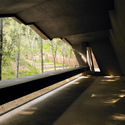
Architects: TIUM Architects
- Area: 83 m²
- Year: 2016
-
Manufacturers: AJU, DIY JUNGLE, KCC


In the upcoming years, Dubai may become home to one of the world’s newest radical architectures—the first ever, rotating skyscraper. Designed by Dynamic Architecture’s Davis Fisher, the 80-story, 1,273-foot tower proposal features independent floors that can rotate 360 degrees in both directions, in order to provide more comprehensive views.
A static central core will connect the rotating floors together, each of which will be prefabricated off-site and attached to the tower afterward.

Chicago-based SOM’s plans for the redevelopment of the East Riverfront in Detroit, Michigan have been unveiled. The Detroit RiverFront Conservancy, Detroit Economic Growth Corporation, and City of Detroit Planning and Development Department will work together to deliver SOM’s plan to revitalize the former blighted industrial area. The framework plan involves improving community access to the riverfront, the design of a new riverfront parkland, and the conversion of a historic riverfront structure into a mixed-use development.


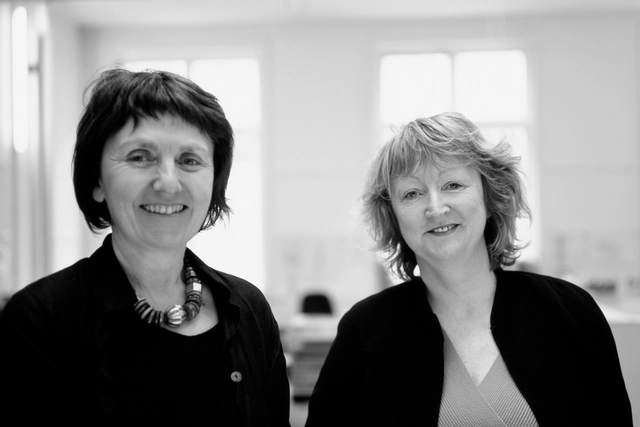
Yvonne Farrell and Shelly McNamara, directors of Grafton Architects, have been recognized along with three other individuals as winners of the 2017 Thomas Jefferson Foundation Medals. The award, presented by the University of Virginia and the Thomas Jefferson Foundation, recognizes “the exemplary contributions of recipients to the endeavors in which Jefferson excelled and held in high regard”, including Law, Citizen Leadership, Global Innovation, and Architecture.
“As founding partners of Grafton Architects, Yvonne Farrell and Shelley McNamara have built an international award-winning practice that has made substantial contributions to culture and education and have embodied their values in profound works of architecture,” said Ila Berman, dean of the University of Virginia School of Architecture.

.jpg?1488337672 "Courtesy of Shell Arquitectos")



This article by Kurt Nelson originally appeared on Medium.
After reading through ArchDaily’s article on the hours architecture students work outside of class, I was curious. I made it through a Bachelor of Science in Architecture degree and I’m currently enrolled in the Master of Architecture program at the University of Pennsylvania, so how does the time I spend on coursework stack up to the average of 22.2 hours per week? Granted, the data they presented only represented first-year students, but it could still be an interesting comparison. With that in mind I set out to log one week of my time, just like you would at a job. Here’s what I found.

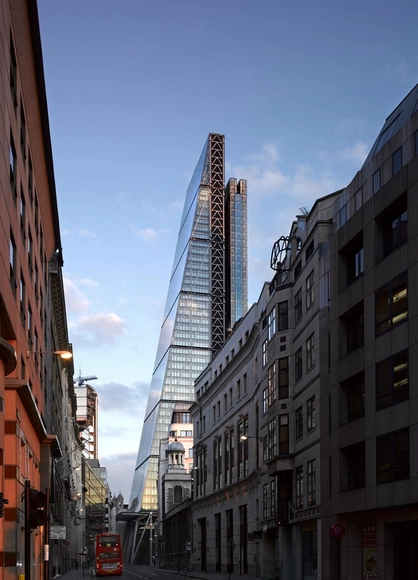
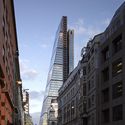
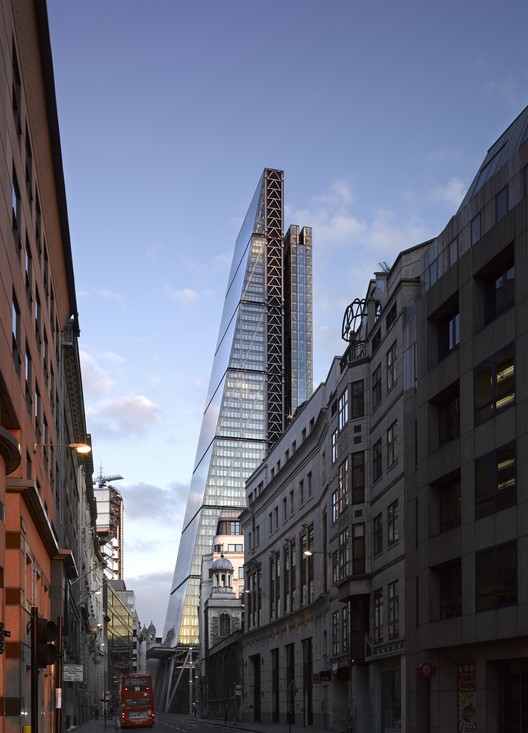
The Leadenhall Building, designed by Rogers Stirk Harbour + Partners, has been sold to a Chinese property magnate for a price of £1.15 billion, in what has become the second-biggest sale of a UK building in history, as well as one of China’s largest acquisitions of UK real estate. The transaction involved developer British Land and its partner Oxford Properties, who sold the tower to CC Land, a Hong Kong based company.
Tim Roberts, head of offices and residential at British Land, said: “British Land and Oxford Properties took a bold step at the early stages of the UK’s economic recovery to develop the Leadenhall Building to generate a high-quality, long-term income stream,” said Tim Roberts, head of offices and residential at British Land. “This sale shows continued investor appetite for best-in-class, well-located property in London.”


_LR.jpg?1488254837&format=webp&width=640&height=580)
Benoy has released its latest designs for the China International Travel Service (CITS) Sanya Enot development scheme, which will be located on the reclaimed Hexin Island in Hainan, and is the second phase of a large-scale plan. Connected to the first phase of development by a pedestrian bridge, the project will be surrounded by the area’s luxury international hotels and natural attractions.
The 32,000-square-meter mixed-use, retail-led space features a “porous and multi-layered environment,” with clusters of small-scale buildings that will create a series of indoor and outdoor spaces for entertainment and retail programming. Buildings will be connected by a succession of elevated walkways and bridges.

Perkins+Will and the Healthy Building Network (HBN) have released their latest material health and performance white paper, Healthy Environments: Understanding Antimicrobial Ingredients in Building Materials.
According to the paper, antimicrobial building products “marketed as healthy or beneficial to human health contain ingredients that may have adverse environmental or human health impacts, and alternative products should be considered whenever possible.” Citing a lack of evidence that antimicrobial products prevent the spread of communicable diseases, the report highlights potential impacts like “super bugs,” contamination of aquatic ecosystems, and carcinogens.
Ten top highlights from the paper, concerning antimicrobial products, are:

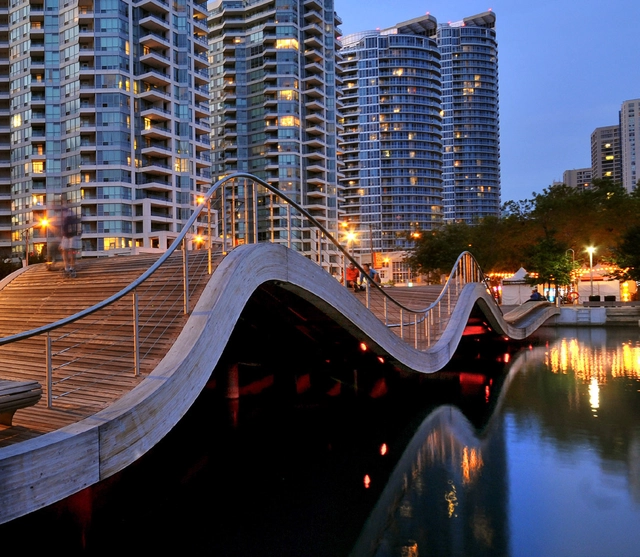
Canadian architect, landscape architect and urban designer Roger du Toit has been posthumously awarded the Royal Architectural Institute of Canada’s 2017 Gold Medal. The influential designer, who passed away in 2015, amassed a rich, diverse portfolio throughout his 45-year career, including Toronto’s CN Tower, Regina’s Wascana Centre, and 45 projects across 25 Canadian university campuses.
His RAIC Gold Medal, recognizing a significant and lasting contribution to Canadian Architecture, will be accepted by his widow Sheila du Toit and two sons at the RAIC/OAA Festival of Architecture in Ottawa in May.

The 2017 Pritzker Prize was a surprise to many, awarded to the three founders of RCR Arquitectes, a modest Spanish firm located in the small town of Olot in Catalonia. Many people and critics shared their astonishment at the prize being awarded to three individuals for the first time since the Pritzker Prize began in 1979, including the third female winner, and at the relatively low profile of RCR Arquitectes before March 1st.
Whether this surprise was pleasant or shocking differs from critic to critic, but there nevertheless seems to be a consensus on the jury’s decision to venture further into politics and away from their traditional interest in celebrity architects. As clearly stated in the jury’s citation: “In this day and age, there is an important question that people all over the world are asking, and it is not just about architecture; it is about law, politics, and government as well.” Are they steering the prize in the right, or wrong, direction?


Quebec-based practice Lemay has won the global bid to redesign Morocco’s Casablanca Coast, which will include the new seaside promenade of the Hassan II Mosque and the Ain Diab corniche.
With modernity, sustainability, and innovation in mind, the urban and landscape design will promote mobility along the length of the corniche (a coastal, cliffside road) and aims to reinforce the appeal of the coast.
Launched in December, the project will feature an urban park and corniche along the El Hank embankment that will include rest areas, walkways, outdoor sports, and more. As an extension of the Hassan II Mosque, the promenade is expected to become a new Moroccan landmark.
















_LR.jpg?1488254858 "Courtesy of Benoy")
_LR.jpg?1488254914 "Courtesy of Benoy")
_LR.jpg?1488254868 "Courtesy of Benoy")
_LR.jpg?1488254904 "Courtesy of Benoy")
_LR.jpg?1488254837)









.jpg?1488583403 "Courtesy of Pritzker Prize. Image © Hisao Suzuki")