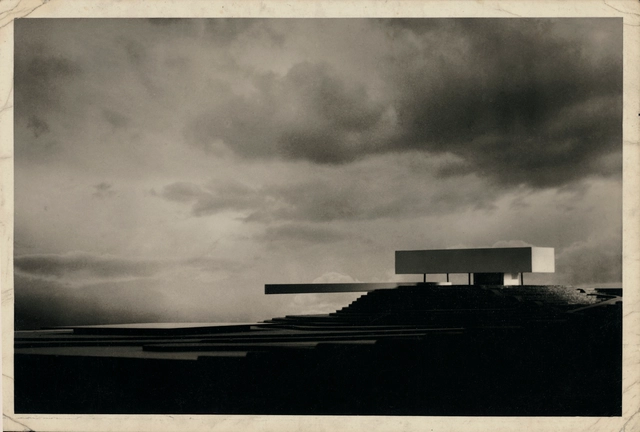
138 images, 14 albums, 20 magazines, 13 original models and one projection are part of Modeling for the Camera: Photography of architectural models in Spain, 1925-1970, the current exhibition of the ICO Museum in Madrid, curated by Iñaki Bergera, PhD of Architecture from the University of Navarra.
The exhibition is tied to the book of the same name that was published in 2016, edited by La Fábrica and the Ministry of Public Works (Spain). In times when 3D visualization software has popularized, accelerated and perfected the rendering industry, both materials choose to value the legacy of architectural model photography in the 20th century.
Mental wellbeing is a real topic of concern in architecture. A recent survey by The Architects’ Journal revealed that over 52% of architecture students expressed concern regarding their mental health.[1] When one considers the long hours, the competitive nature of the course, as well as the sheer duration of study, this perhaps isn’t that surprising. The “all-nighter” attitude of most architecture schools exacerbates the problem, as studies show a lack of sleep reduces the mind’s resilience to issues such as anxiety and depression.[2]
Yet this aspect of the architectural education system isn’t showing any sign of changing. What can architectural students (and their professional counterparts) do to minimize the impact that architecture has on their psychological wellbeing? I would argue that the answer, at least partly, can be found in the practice of mindfulness.
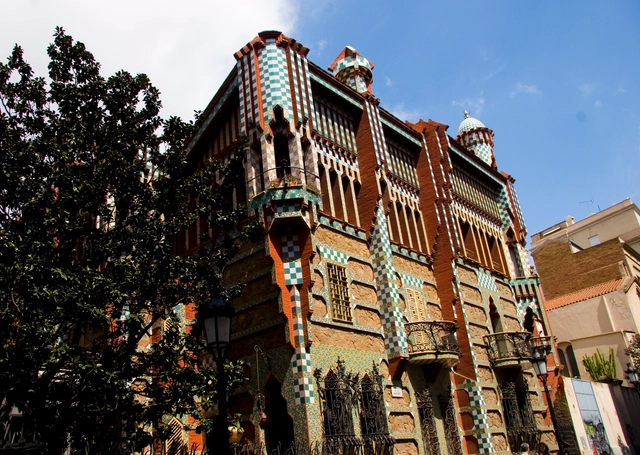
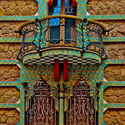
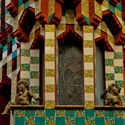
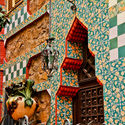
It has been confirmed that the museum opening date for the Casa Vicens in Barcelona has been rescheduled for the second half of 2017. Originally scheduled for the second half of 2016, the reopening of Gaudi's first house was not able to be completed due to the complicated and labor intensive renovations. This will be the first time the house, declared World Heritage site, will be open to the public without it being a residential or private space.
The Casa Vicens, located on 24 Carolines Street, was the first house ever designed by Antoni Gaudí. In 1883 Manel Vicens, promoter of the project, commissioned the architect to build what would be his summer home. At that time Gràcia, now a cosmopolitan neighborhood, was a separate town. Therefore, the project did not contemplate the possibility of other buildings being built around it, and so to this day, it remains a completely freestanding building in a neighborhood characterized by its compact character, narrow streets, and high density of population.
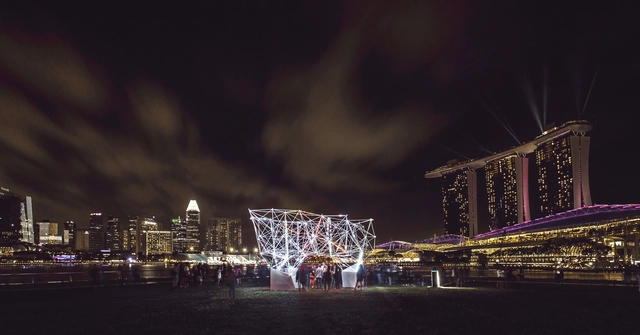
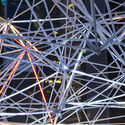
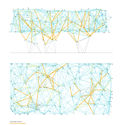
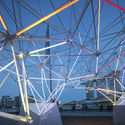
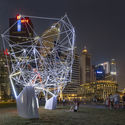
A luminous tetrahedral mesh spanning 10 meters, (Ultra) Light Network is the latest 3D printed innovation achieved by Singapore University of Technology and Design (SUTD) Professors Felix Raspall and Carlos Banon, who were also behind this mesh pavilion last year. Displayed at this year’s iLight Marina Bay in Singapore, the interactive light sculpture is an exploration of how full-scale 3D printed components can create a system to “address not only structural requirements but also power transmission, and information communication within a seamless and continuous aesthetic.”
Suspended over its visitors, the display engages the public through responses to their movements below, controlled by over 50,000 distinct LED pixels and their parent algorithm. This is made possible through five Teensy microcontrollers, working in conjunction with three ultrasonic sensors at the base of the structure, resulting in a lively and illuminating experience.
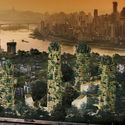
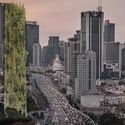
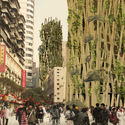
One of the great ironies of modern urban life is the underlying disconnect that exists amongst us global citizens, despite living and functioning within such dense and close proximities. In order to address this issue in the context of China’s urban landscape, New York firm NO ARCHITECTURE has proposed two alternatives to the typical high-rise – two vertical residential typologies that feature a combination of courtyards, terraces, and gardens, and could be located in a wide variety of cities.
“Conceived around a series of cascading shared walls, ventilated courtyards, stepped terraces, and wind towers, these new vertical organizations re-connect urban living to nature, suggesting how we can live in close proximity today and can continue to do so sustainably for generations to come,” explained the architects.
https://www.archdaily.com/869108/no-architecture-emphasizes-urban-sustainability-and-interaction-with-alternative-residential-towers-in-chinaOsman Bari
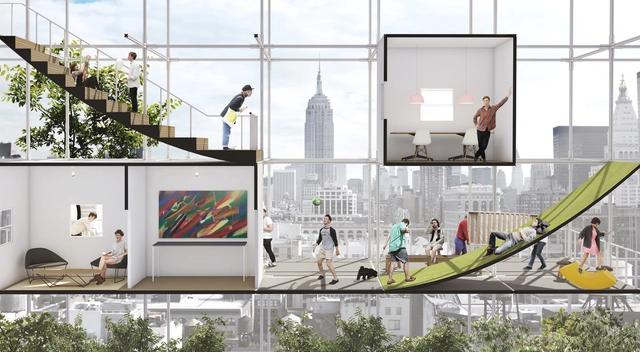
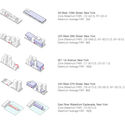
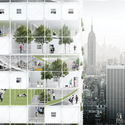
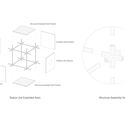
Beomki Lee and Chang Kyu Lee of Atelier L have unveiled their speculative project, Instant City: Living Air-Right, which proposes that affordable housing and public programs be built in the air rights of existing buildings in New York City.
As a response to the lack of home ownership in the city, the project aims to provide living space, as well as to foster community in an overlooked space.
One general trend in today's Information Age involves the absolute transmutation of downtime into productivity or engagement of any kind, however meaningless. We hear it all the time: we have lost our ability to be still. However, as a team at Ennead Lab has observed, some of the same technologies that are causing this shift in routine also have the potential to open new, empty pockets of time in our daily lives, and affect the built spaces with which we interact.
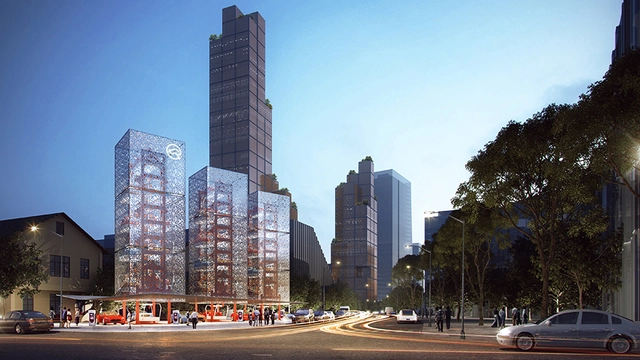
Tasked with designing an electric car charging station for a development in Shanghai, Ennead realized that the five hours required to fill up a single standard charge necessitate a place for customers to wait. In an article on Metropolis Magazine, they show that the promise of transportation-less people to stick around in one place for such a period of time opens up a host of possibilities for what could fill the latency period; the Shanghai project, however, focuses on the opportunity to create a civic space. The team has imagined the modern "gas station" as a vertical charging tower that calls upon the functionality of urban parking elevators in the 20th century, this time clad in reflective silver to serve as a beacon for customers in search of a charge. Rather than standalone charge-park towers, the projects are integrated into a system that encourages patrons to walk to neighboring zones to eat, shop, and socialize while they wait.
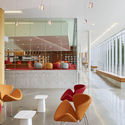
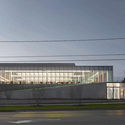
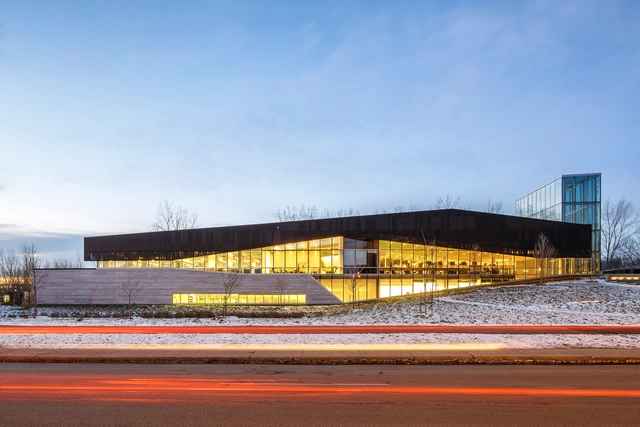
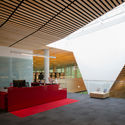
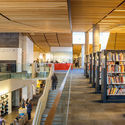
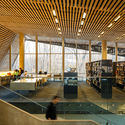
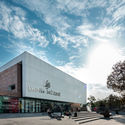
"The library offers a variety of beautifully lit and welcoming spaces throughout, maximizing daylight and views and the use of natural elements, such as wood, to create an environment that contributes to health and wellbeing,” said the jury. “Their approach to high-performance building through whole systems design and strategy has resulted in an impressive achievement.”





































.jpg?1490645887&format=webp&width=640&height=580)
.jpg?1490646438 "© Yong Kwan Kim")
.jpg?1490645967 "© Yong Kwan Kim")
.jpg?1490646175 "© Yong Kwan Kim")
.jpg?1490646165 "© Yong Kwan Kim")
.jpg?1490645887)


