
-
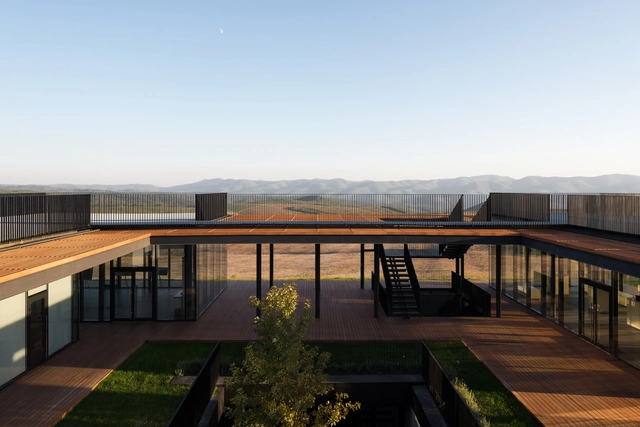
Architects: Piuarch, Stefano Sbarbati Architecte
- Area: 2700 m²
- Year: 2017
-
Manufacturers: Carl Stahl, Lamp Lighting, RGM, Serge Ferrari


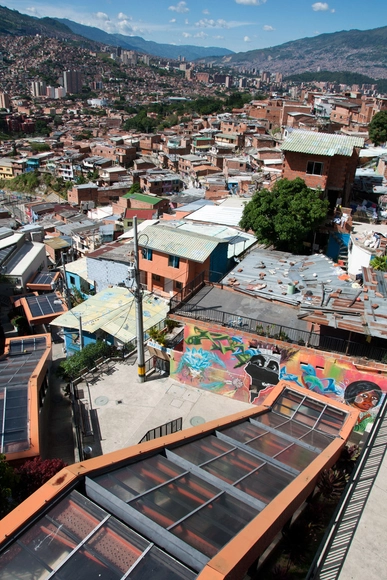

Jaime Lerner defines urban acupuncture as a series of small-scale, highly focused interventions that have the capacity to regenerate or to begin a regeneration process in dead or damaged spaces and their surroundings.
Rather than urban acupuncture, the intervention that took place in the rugged geography of Medellin’s Comuna 13 was like an open-heart surgery, a large-scale action aimed at bringing about physical and social change of what was once one of the most dangerous neighbourhoods in the world’s most dangerous city.
The bilingual guides take us through the neighbourhood, showing us the escalators that gave the intervention worldwide fame. At the same time, in one of the many refurbished squares, a CNN team records interviews with locals and foreigners who visit by the hundreds what was, until recently, an unlikely tourist destination. A drone flies over the scene, we do not know if it is operated by the omnipresent police, CNN or tourists.

If you were to identify, categorize and map the 21st century’s emergent architectural practices from the world over, all on one diagram, what would it look like? Considering how the current architectural landscape consists of several different approaches, attitudes and political stances, how would you map them without being too reductive? And how would you ensure that out of hundreds of emergent practices and firms across the globe, you don’t leave anyone out? Perhaps the Global Architectural Political Compass V 0.2 could offer a clue.
Created by Alejandro Zaera-Polo and Guillermo Fernandez-Abascal, the diagram is part of an ongoing inquiry into “the state of the art in (global) architectural practice” [1]. In 2016, Zaera-Polo explored the subject in a comprehensive essay for El Croquis titled “Well into the 21st Century” in which he set down the framework for 11 political categories that now form the compass diagram.


.jpg?1509708219&format=webp&width=640&height=580)
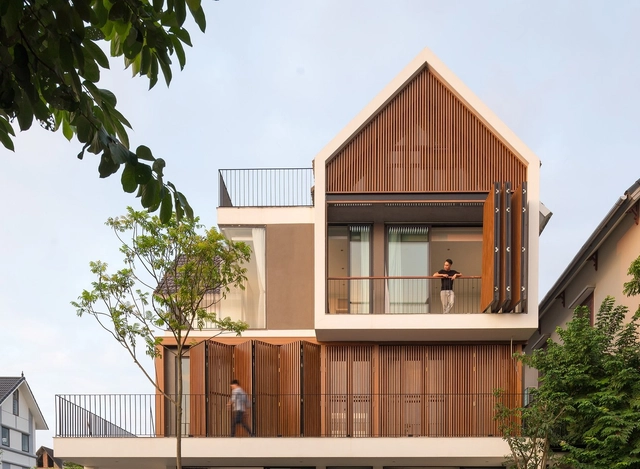

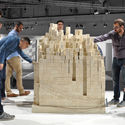
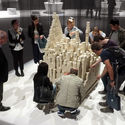
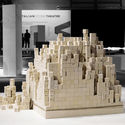
At international stone exhibition Marmomac 2017, Chinese firm OPEN Architecture has created a transient installation titled "The Eternal & The Ephemeral" that allows visitors to transform a cube of stone tiles into new, unplanned forms. The project responds directly to the theme of the event, "Soul of City," which asked designers from across the globe to collaborate with Italian stone manufacturers to create pieces built entirely from stone. OPEN's concept focused on the relationship between transience and heaviness in the material, prompting the installation to gradually "disappear" over the 4-day event.
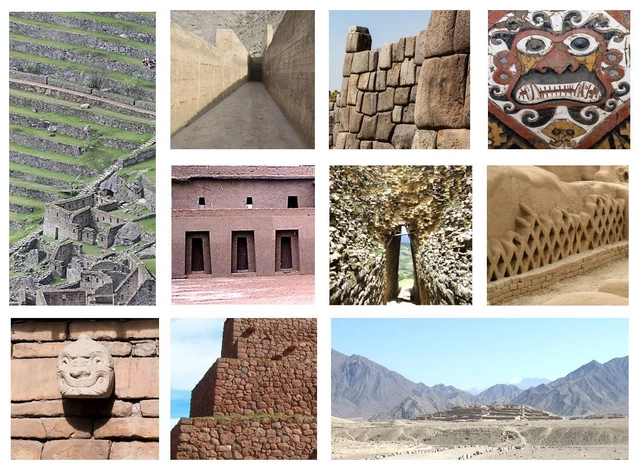
In Peru, you can not live without not knowing about or learning the lessons of the thousand-year-old architectural legacy of some of its many archaeological sites (19,903 to be exact). These places are full of inspiration, art, history, legends, and magic. Their stories are closely tied to their architecture and the ruins that hold mysteries that perhaps leave us with more questions than answers. But the sites' power to amaze us is something that every architect will appreciate.
This small list—rather than an invitation— is a provocation for the senses that lie within the architect-traveler’s soul.
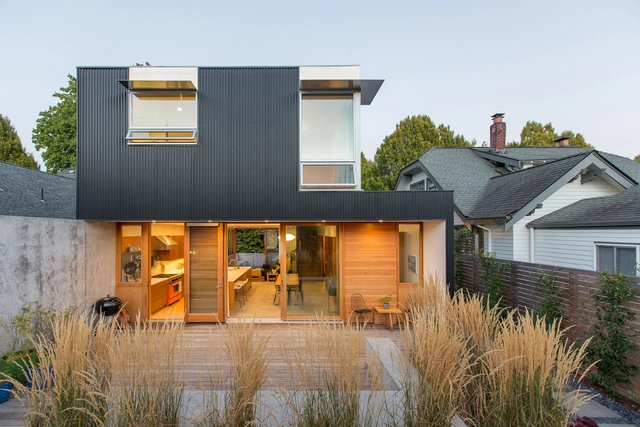

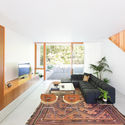
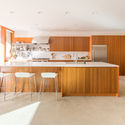
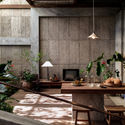
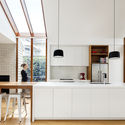
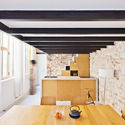
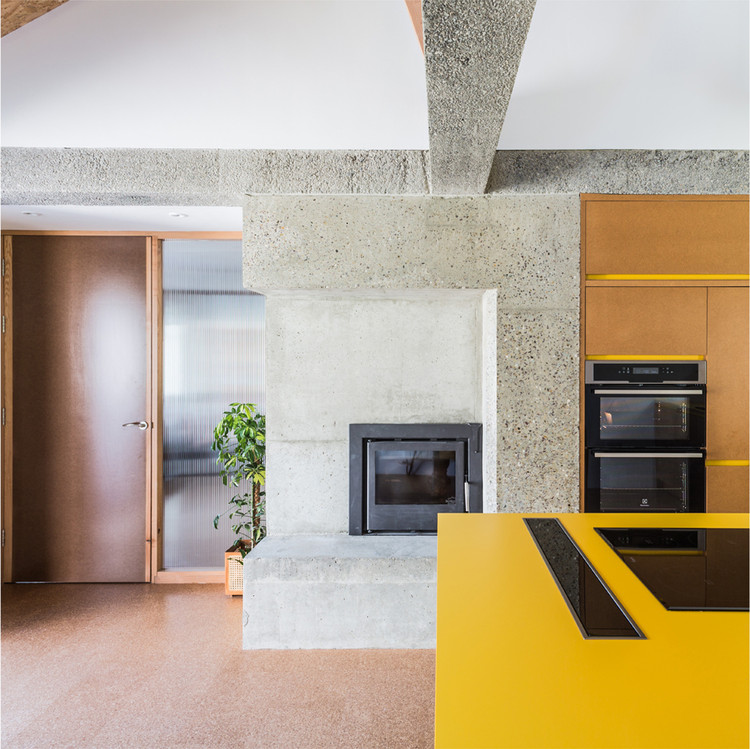
More and more, the kitchen is gaining importance in house design, in many cases serving as the center around which the rest of the spaces unfold. For this reason, this week we present a selection of 15 images of kitchens, from different parts of the world, which allow us to appreciate the variety of configurations, materials, and shapes now used in this important space. Read on to see the images of photographers including BoysPlayNice, Peter Bennetts, and Juane Sepulveda.
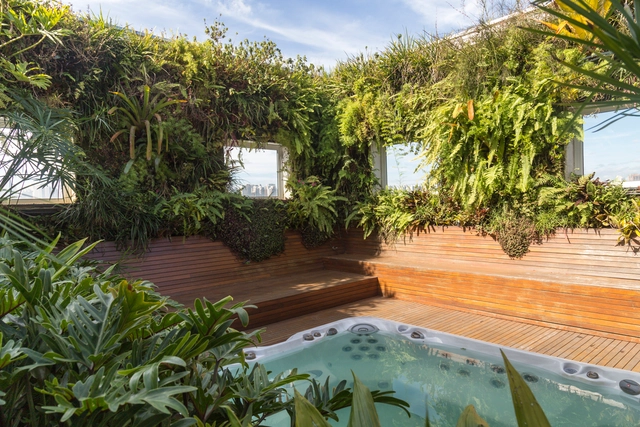

Google has launched 'Tilt Brush', a powerful tool for designers available for Oculus and HTC Vive that allows artists to create 3D objects while fully embedded in Virtual Reality (VR).
Tilt Brush turns any room into the perfect canvas to capture all your creativity, allowing you to paint in real size with 3D brushes.

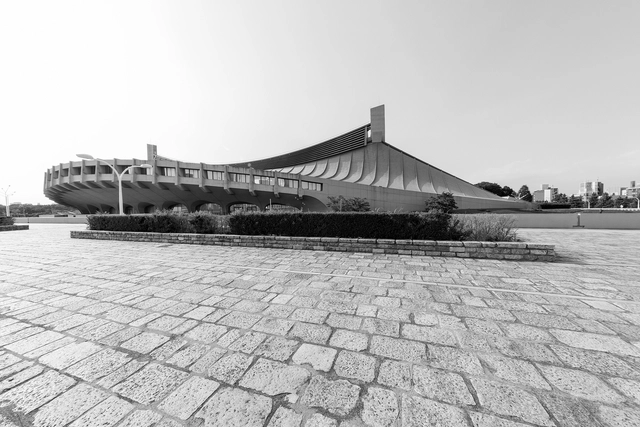
London-based publisher Blue Crow Media’s architectural guide series continues with Concrete Tokyo Map. A collaboration with design writer Naomi Pollock and photographer Jimmy Cohrssen, the map lays out 50 of Tokyo’s concrete wonders.

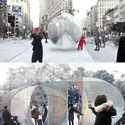
The fourth annual Flatiron Public Plaza Holiday Design Competition winner has been announced--Flatiron Reflection by Future Expansion. In June 2017 non-profit groups Flatiron/23rd Street Partnership and Van Alen Institute invited ten design and architecture firms to submit proposals. “The initiative has become a valuable platform for launching new practices, a visible celebration of inventive, temporary designs that enliven public space during a chillier season, and an opportunity to understand how these spaces impact our minds and bodies” states David van der Leer, Executive Director of Van Alen Institute.
Of the ten design and architecture firms invited to submit proposals, Future Expansion with their Flatiron Reflection won the competition. Other participating firms include Annie Barrett, The Principals, Kyle May, Hive Public Space, Schaum Shieh, FIRM a.d. and Practice.






.jpg?1509708231 "© ScagliolaBrakkee")
.jpg?1509708083 "© ScagliolaBrakkee")
.jpg?1509708196 "© ScagliolaBrakkee")
.jpg?1509708094 "© ScagliolaBrakkee")
.jpg?1509708219)