This guide explains how to structure multi-image prompts in the RunDifussion platform. Explore RunDifussion's product catalog.


This guide explains how to structure multi-image prompts in the RunDifussion platform. Explore RunDifussion's product catalog.


This summer, July 11-13, the annual Fab City Summit will take place in Paris at the Paris City Hall and Parc de La Villette. The yearly event will gather the core team behind the Fab City Global Initiative together with city officials, innovation ecosystems from civic society and industry. Get your tickets with 30% discount using code FABDAILY30.
The rapid urbanization of the 20th century was possible thanks to the Industrial Revolution and the assembly line, which allowed the rapid reproduction and replication of infrastructure, products and repetitive urban patterns in cities around the world. Urban morphology and dynamics produce standard patterns and forms of living. At the same time, and following the linear economy, cities consume most of the world’s resources and generate most of world’s waste (according to the United Nations). However, the exponential growth of digital technologies (computation, communication, fabrication) of the last decades offer the opportunity to enable a transition towards a spiral economy (an open circular economy approach), in which data (and knowledge) flow globally, and materials flow locally: from networks of logistics that move atoms, to networks of information that move bits.


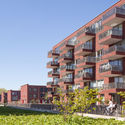
The story of the "Redondinhos" housing project in Heliópolis, São Paulo began with a misinterpreted quote by Ruy Ohtake. In 2003, a magazine published the following statement attributed to the prestigious architect and urban planner: "What I find most ugly in São Paulo is Heliopolis." After seeing the report, Ohtake clarified that his intention was to say that the ugliest in the city is the difference between rich and poor neighborhoods - "the difference between the Morumbi neighborhood and Heliopolis, the largest favela," he corrected.
Last month, we reported on the topping out of 53 West 53rd, a skyscraper designed by Pritzker Prize-winning architect Jean Nouvel. The impressive 1,050-foot tall building will serve as a luxury residential condominium and offer its residents views across Central Park and downtown Manhattan. The Real Deal recently sat down with the architect to talk about his new project, and how he predicts it will transform the city’s iconic skyline.


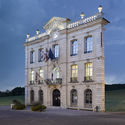
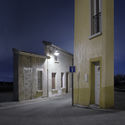
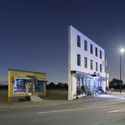
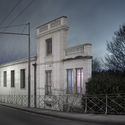
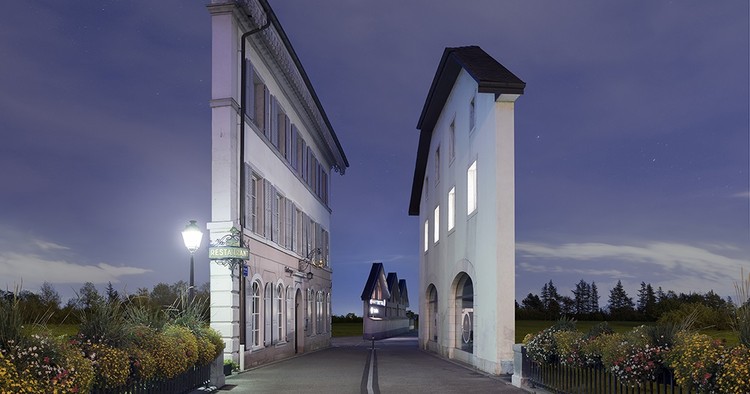
In his ongoing photo-series "Façades," French photographer Zacharie Gaudrillot-Roy a series of images in which he removes the mass and depth of buildings, and leaves behind the mere fragments of exterior skin. The photos, which resemble deserted Hollywood sets, illustrate roadways, towns, apartment complexes, and other environments without giving away the ideas of anything beyond the superficial image of the facade—leaving much to the imagination.


Architectural comprehension as a field deals with representation as a synthesis of varied efforts —constructive, compositional, spatial, and technical qualities— which are then articulated in the constructed building. For this purpose, it is essential to think about the graphic representation that presupposes all these efforts, since it is both a procedure and a product of architectural design.