Produce personalized presentation boards that distill complex concepts into simple visual representations with a few helpful tools and effects.


Produce personalized presentation boards that distill complex concepts into simple visual representations with a few helpful tools and effects.

.jpg?1562729212)

.jpg?1562775306)
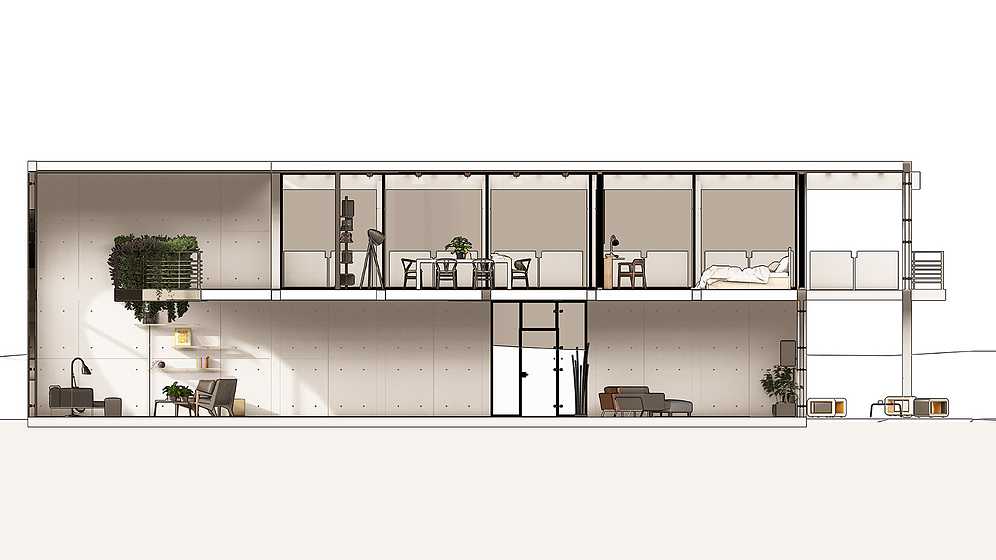
Architects CHYBIK + KRISTOF have broken ground on a new modular architecture research center in the Czech Republic. Partnering with Czech module manufacturer KOMA MODULAR, the project was made to introduce a new system of modular construction. The design celebrates architecture and organic shapes through the vacancies between each element in modular construction.
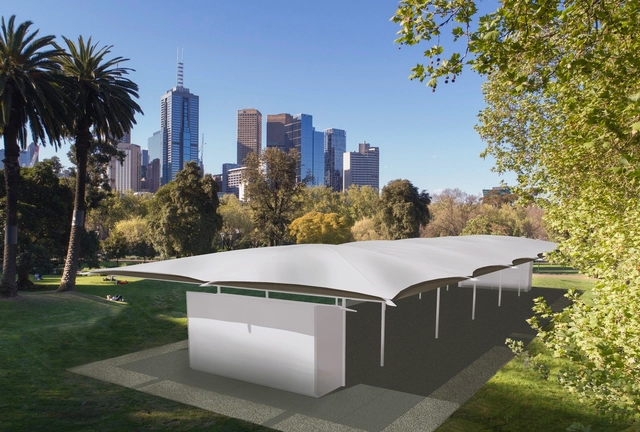
Glenn Murcutt’s design for the MPavilion 2019 has been revealed. The scheme relays Murcutt’s longstanding interest in buildings that make efficient use of the researched site and climatic conditions that relate to the Australian landscape. The scheme will strike a white, refined, minimalist design, and will be a milestone summer attraction for Melbourne’s Queen Victoria Gardens.


What happens when the sensor-imbued city acquires the ability to see – almost as if it had eyes? Ahead of the 2019 Shenzhen Biennale of Urbanism\Architecture (UABB), titled "Urban Interactions," ArchDaily is working with the curators of the "Eyes of the City" section at the Biennial to stimulate a discussion on how new technologies – and Artificial Intelligence in particular – might impact architecture and urban life. Here you can read the “Eyes of the City” curatorial statement by Carlo Ratti, the Politecnico di Torino and SCUT.
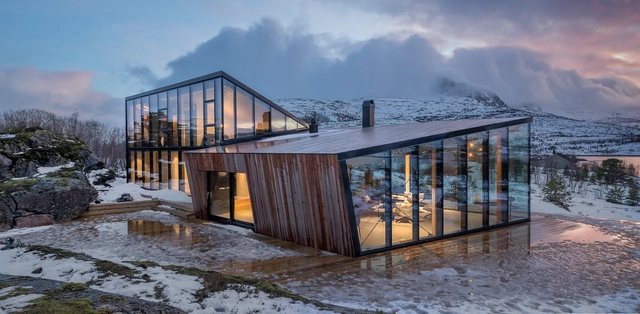
The acclaimed architect Phil Freelon has passed away. The founder of the Freelon Group, he was diagnosed with ALS in March 2016. Among is most celebrated works are the Harvey B Gantt Center for African American Arts + Culture, the Anacostia Library, and the National Museum of African American History and Culture, designed in collaboration with Adjaye Associates.

With no shortage of historical buildings in need of expansion or repurposing, alterations of older architecture via contemporary interventions have flourished in the past four decades – particularly in service of new or growing art museums. These spaces represent the resilience of our historical legacy through contemporary times, demonstrating that the combination even of two vastly different architectural styles can be both beautiful and impressive. Here are ten of the best examples of contemporary interventions on historical buildings in art museums around the world.
This article was originally published in Metropolismag.com.
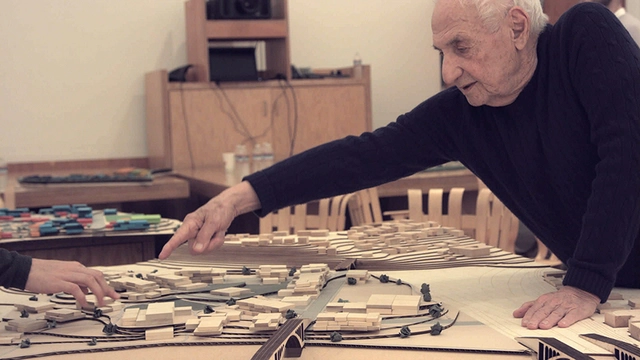
Set to screen at the ADFF:NOLA festival, Frank Gehry: Building Justice showcases how Gehry-led student architecture studios developed proposals for more humane prisons.

Thanks to initiatives like the Art for Justice Fund, Open Society Foundations, and a slew of insightful reporting, the American criminal justice system has been under great scrutiny and pressure to reform. Some of these changes have been quite prominent—such as the increasingly-widespread decriminalization of pot and pending major federal legislation—and have faced opposition from the powerful lobbying of the private prison corporations. However, despite the depth and breadth of criminal justice reform, one critically important element has remained mostly overlooked: the design of correctional facilities.
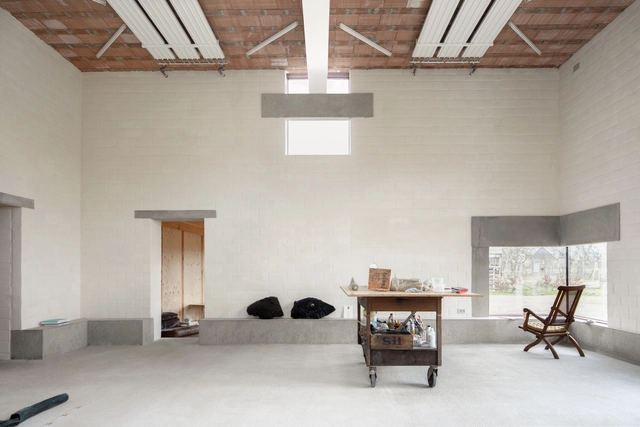

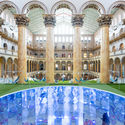
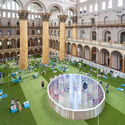
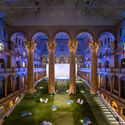
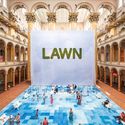
The LAB at Rockwell Group has partnered with The National Building Museum to present the 2019 Summer Block Party installation LAWN. Designed to be an immersive installation taking up the entirety of the Museum’s Great Hall, the project presents a series of interactive experiences for all ages. The lawn itself is programmed with summer entertainment and activities, including movie nights, yoga, and meditation. By creating custom software, the LAB also developed an Augmented Reality game alongside the installation.

Today, the overlap of the tools and software products utilized by filmmakers and architects reinforces the historical bond between the two disciplines more than ever. In one of their design studios, Master of Architecture students at the Melbourne School of Design try to master the techniques and methods of filmmaking and employ them in their architectural films and animations.

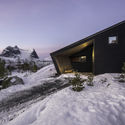
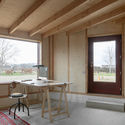
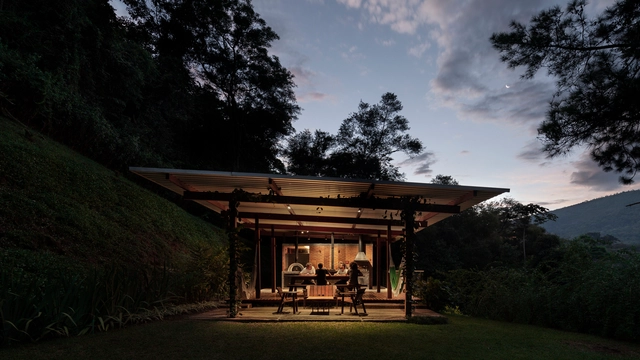
.jpg?1562728835 "© Christopher Frederick Jones")
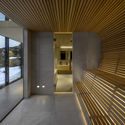
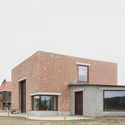
.jpg?1562727853 "© Christopher Frederick Jones")
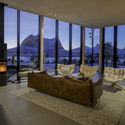
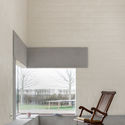
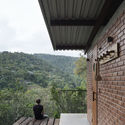
.jpg?1562727347 "© Christopher Frederick Jones")
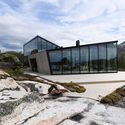
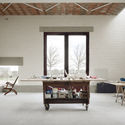
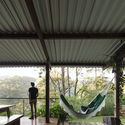
.jpg?1562727466 "© Christopher Frederick Jones")
.jpg?1562729212)