

-
Architects: AECOM, Allies and Morrison, Arup
- Area: 764000 m²
- Year: 2021
-
Manufacturers: Sto
-
Professionals: Harry Dobbs Design

.jpg?1627671030&format=webp&width=640&height=580)
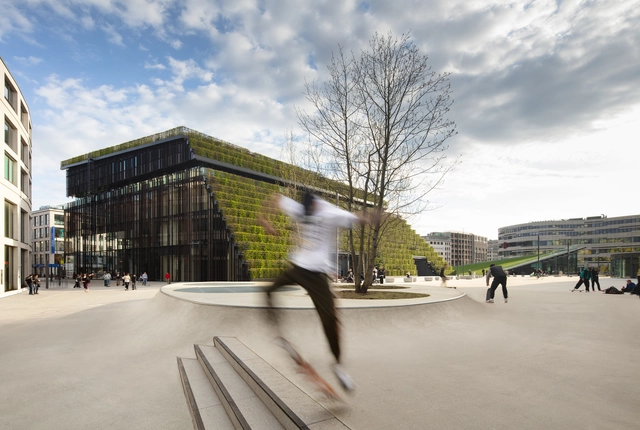


CRA-Carlo Ratti Associati and Italo Rota have designed the new MAE museum dedicated to carbon fiber. Made of the same material, the museum is designed to showcase its ecological potential. As a material that is central to the future of manufacturing, the project will be built largely out of carbon fiber, both new and recycled, pursuing a circular approach to design.
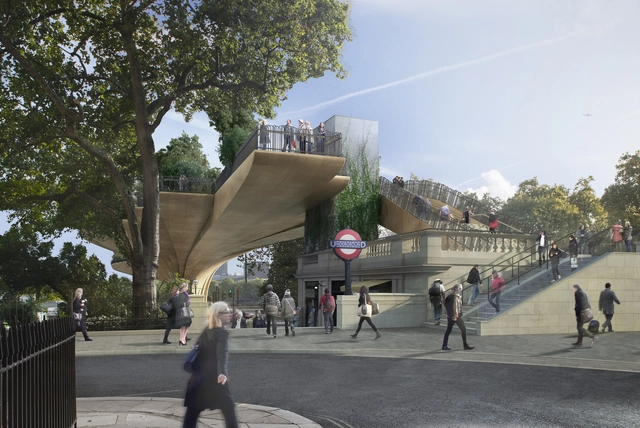
Although disability laws have been put in place decades ago, architects are still struggling with disability requirements. A recent article by CityLab explored how the rise of speed and efficiency-driven cities have overlooked accessibility, neglecting the needs of people who are physically unable to live or keep up with these dense neighborhoods. And while the "15-Minute City", one that allows people to walk or bike to most essential services within 15 minutes of their home, may seem as the future of built environments, it does not cater to disabled individuals or their movements.

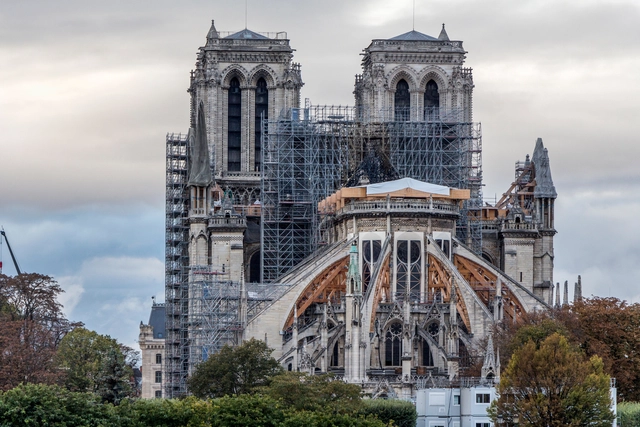
With three more years to go until the 2024 Paris Summer Olympics and the re-opening date announced by French President Emanuel Macron, Notre Dame's restoration work progresses. After a long safety phase and months of work interruption last year due to the pandemic, all burned timber from the roof has been removed, and scaffolding has been installed inside the cathedral. As a homage to the heritage structure and "the collective effort to rebuild Notre Dame", the Catholic University of America is building a replica of one of the cathedral's roof trusses in Washington D.C., using medieval techniques.



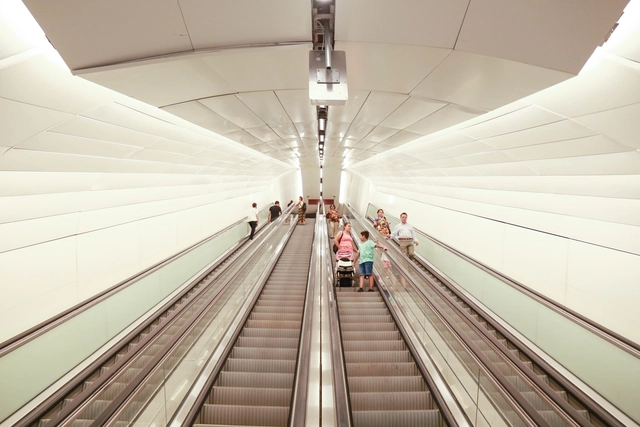
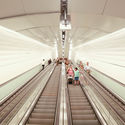
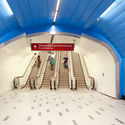
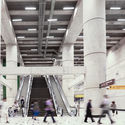
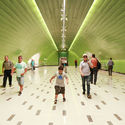
Rumor had it that behind the walls of historic subway station Cal y Canto in Santiago de Chile, a hidden ghost station would eventually link to Line 3—a planned route that was part of the original Metro master plan designed in the 60s. Its construction would have been shelved after the magnitude-7.8 1985 earthquake that forced public resources to be redirected for the reconstruction of the Chilean central valley.
34 years later, the Cal y Canto Metro station finally opened its connection with Line 3, the most recent addition to the rapid transit system, thus becoming the seventh line of Santiago after lines 1, 2, 4, 4A, 5, and 6.
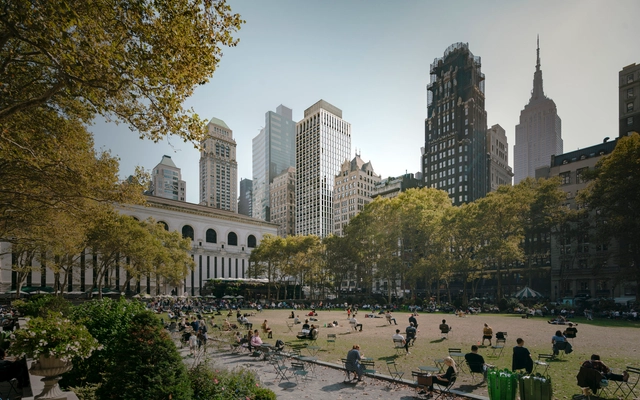
Recent extreme weather events and the acceleration of climate change, paired with decarbonization efforts that are not on track, make climate-related disruption unavoidable for urban environments, raising the issue of climate-risk adaptation. Moving past what can be done to prevent climate change, there is a strong imperative to develop strategies to prepare urban environments to cope with inevitable challenges such as sea-level rise, floods, water scarcity or extreme heat. The following discusses how cities can build resilience and adapt to undergoing and expected future climate threats.
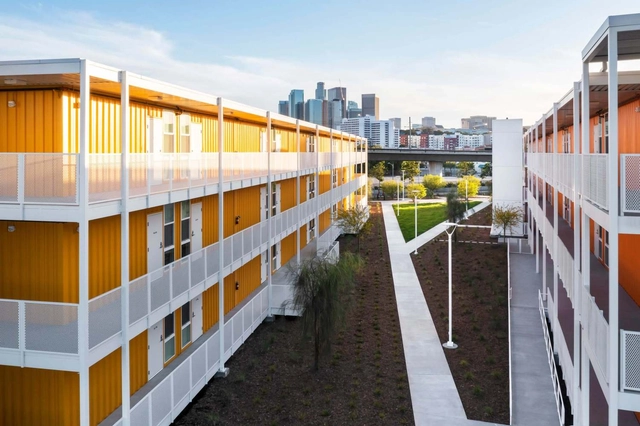
The Hilda L. Solis Care First Village (HSCFV), a large-scale interim housing project providing a wide range of amenities for both the unhoused and those in transition, recently opened in Downtown Los Angeles.

.jpg?1627401506&format=webp&width=640&height=580)















.jpg?1627671030)









.jpg?1627401506)