"in downtown New Delhi, huge curved structures sink in the ground, taking the form of a ramp. Amorphous voids mark the great twisted walls. The color red marks the structures and sets them apart from everything else."
This could describe a playground or even a skate park, but it is one of five astronomical observatories built in India between 1724 and 1738. These mazy volumes, which look more like a materialization of Escher's drawings, were conceived by the Indian prince Jai Singh as part of an ambitious project that sought to put architecture at the service of science. Their shapes make complex astronomical analysis possible, such as predicting eclipses, tracking the location of stars, and determining Earth's exact orbit around the Sun.
Design justice is grounded in personal experience and built through everyday actions. Wandile Mthiyane is an architectural designer that embodies this idea, an activist that grew up in Durban, South Africa during the Apartheid. From an early age he was drawn to building and design, a background directly tied to his childhood. He realized he wanted to build a better future by working to undo the architectural effects of institutionalized racial segregation. Today, Wandile has become recognized for creating social impact, including his work to transform his hometown of Durban.
When we consider something edible, we understand its capacity to be eaten, consumed, or ingested independently of its taste. If our contemporary relationship to the built environment reflected this process, what would cities and constructed environments become?
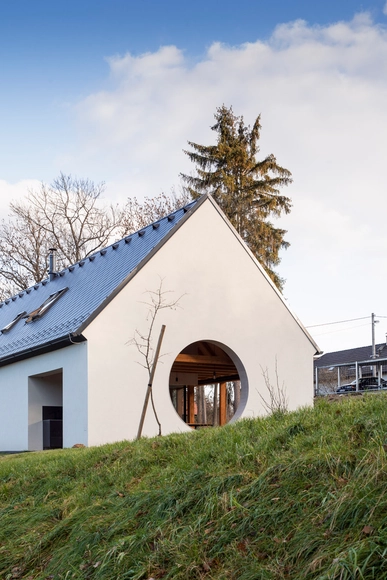
There are many myths and misunderstandings around sustainability in construction. First, the belief that what is sustainable must inherently be technological, complicated or out of reach. Or that the products will necessarily be more expensive, will be made of recycled materials or will not be so aesthetically pleasing. When it comes to material specification, there is often confusion. Is steel more sustainable than bamboo? Would it be better to use a material that is said to be sustainable, but which goes through numerous industrial processes, or one with a low level of processing? The answer is not so simple, and there are various comparison mechanisms to help guide us. But this is an important consideration to make, as one of the main ways the construction industry can help reduce its carbon footprint is to select materials with the lowest general contribution to emissions and environmental impact. Natural slate, which can be used for roofing and facades, is a great example of this.
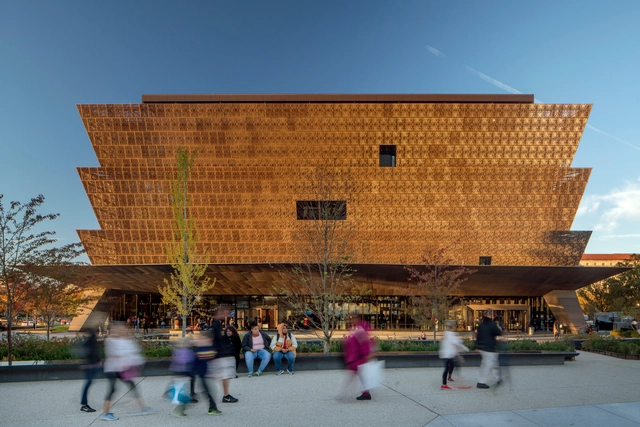
Designer Paul Wellington, based in Milwaukee, United States, is the author of Black Built: History and Architecture in the Black Community, a book that documents more than 40 works of architecture around the country by Black architects that have had a direct impact on communities of color. He’s now working on a new book that will focus on Black women architects in a field dominated by white males. I spoke with Wellington about the new book, what he learned through his research on Black architects and their work, and the future of increasing the ranks of Black architects in the U.S.
https://www.archdaily.com/949665/hidden-figures-the-historic-contributions-of-black-architects-in-the-united-statesMichael J. Crosbie