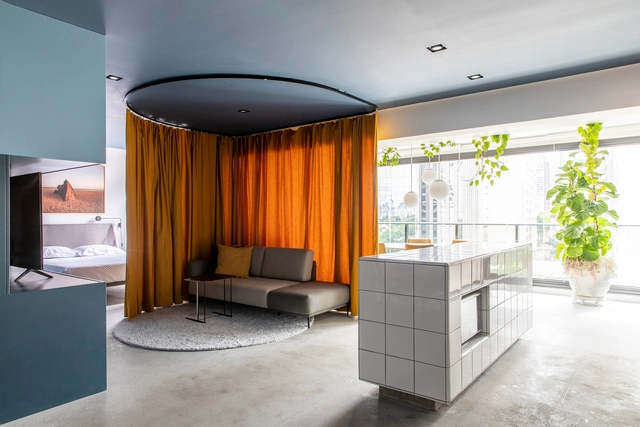


-
Architects: Metamoorfose Studio
- Area: 72 m²
- Year: 2021



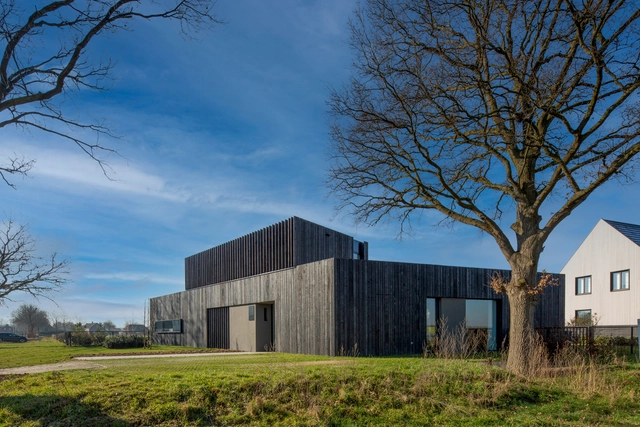

One of the elements of most affinity between architecture and cinema is the scenographic project. The set designer, like the architect, starts from a concept to create spaces with a purpose. The architect designs spaces for living and the set designer designs spaces for storytelling. Many architects work with scenography because of the affinity between the activities.

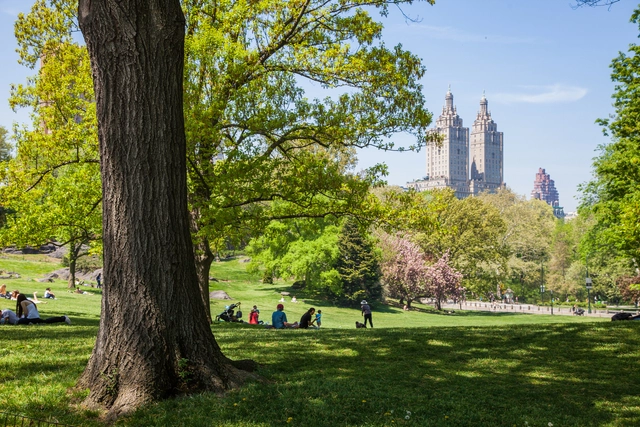
Celebrating the bicentennial of the birth of Frederick Law Olmsted, Sr., known as "the father of landscape architecture", the Cultural Landscape Foundation has created an ever-growing digital guide of Olmsted’s most notable works. The illustrated guide features more than 300 landscapes throughout North America, including Canada and 30 U.S. States, along with stories by practitioners who worked for, with, or were otherwise associated with Olmsted, Sr. and his successor firms.

Various cities have been experimenting with wavering fees for public transport in an effort to promote sustainable mobility, alleviate traffic congestion and decrease social inequality. This past February, Salt Lake City has paused fare collection for a month to reduce carbon emissions in the region. At the end of March, the Italian city of Genoa extended free access to some of its public transport networks, following a successful experiment which began at the end of 2021 and in an ambitious plan to become the first Italian city with free transportation. Meanwhile, the small duchy of Luxembourg became the world’s first country with free public transit in 2020.





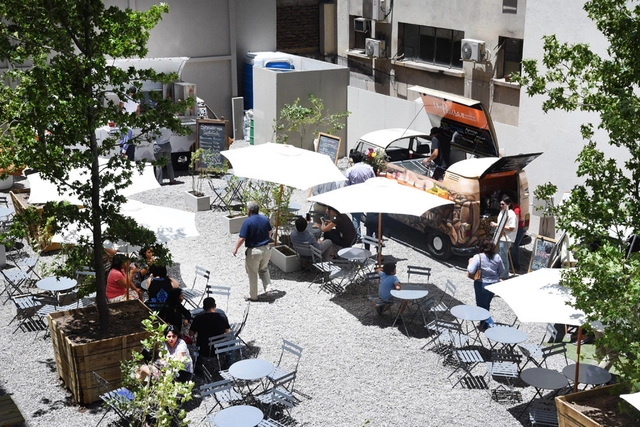
Today, one of the most popular initiatives regarding public space, participatory design and activism in the city is the so-called citizen urbanism or tactical urbanism. The approach proposes to trigger, through limited and low-cost interventions, long-term changes in public space, i.e. short-term action, long-term change (Street Plans, 2013).
The strategy used is to create temporary scenarios that make visible a specific problem and the formation of specific interventions to solve it, seeking to incorporate the community to give it relevance and promote its sustainability over time and, in this way, raise the discussion about the benefits of the projects for the quality of life in the context in which they are inserted.

Improving people's quality of life is one of the biggest goals of professionals in Architecture and Urbanism. When planning cities, creating housing or carrying out a simple refurbishment, we seek to improve the built space regardless of scale. The Urban Rehabilitation of Alto de Bomba, carried out in the city of Mindelo, Cape Verde, arose from the need to combat the precariousness found previously in the place. A project that required the immersion of the team in the daily life of the city and resulted in an inspiring proof of how much architecture can reveal better ways of living the city and acting directly in society. No wonder it received the Work of the Year Award in 2022, chosen by our readers as the winner among hundreds of competing projects.
This article was originally published on Common Edge.
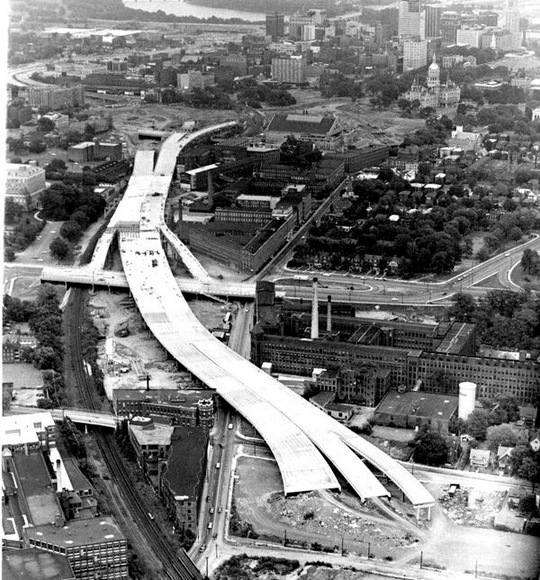
Can a piece of infrastructure literally kill a city? This is the question that writer Jim Krueger poses in his recent podcast, The Road That Killed a City. The place in question is Krueger’s current hometown—Hartford, Connecticut—which he grew up next to in the leafy suburb of West Hartford. Kruerger has lived in both towns, and that helps to balance the amazing story he uncovers about how Connecticut’s capital was impaled by a roadway (actually, two: east/west I-84 and north/south I-91 converge in Hartford in a sort of arterial highway ground zero). I spoke with Krueger about what prompted the podcast, some of what he uncovered about the history of this ill-fated urban “improvement,” and the legacy of a highway that continues to thwart Hartford’s rebirth—an inheritance shared by many cities across North America.