Created for the 2016 Milan Design Week, MAD Architects’ “Invisible Borders” installation is part of the “Open Borders” exhibition curated by Italian magazine Interni. Taking place in the traditional Cortile d’Onore courtyard of Università degli Studi di Milano, the installation is a canopy made from ribbons of ETFE in gradient colors, which has a lightness and flexibility that allows it to rustle in the wind and generate a subtle whistling sound. According to MAD, “The installation reflects the hues of the sky during the day, leaving glimpses of the columns and loggias. In the evening it becomes a luminous surface that brings the courtyard to live with new colors.”
Daniel Libeskind has unveiled plans for The Kurdistan Museum in Erbil, Iraq. With the building, Studio Libeskind seeks to create “the first major center in the Kurdistan Region for the history and culture of the Kurdish people.” The project was developed as a collaboration between the Kurdistan Regional Government (the KRG) and client representative RWF World. The 150,000 square-foot museum will feature exhibition spaces for both permanent and temporary exhibitions, a lecture theatre, state-of-the-art multimedia educational resources, an extensive digital archive of Kurdish historical assets, as well as community center and landscaped outdoor spaces for public use.
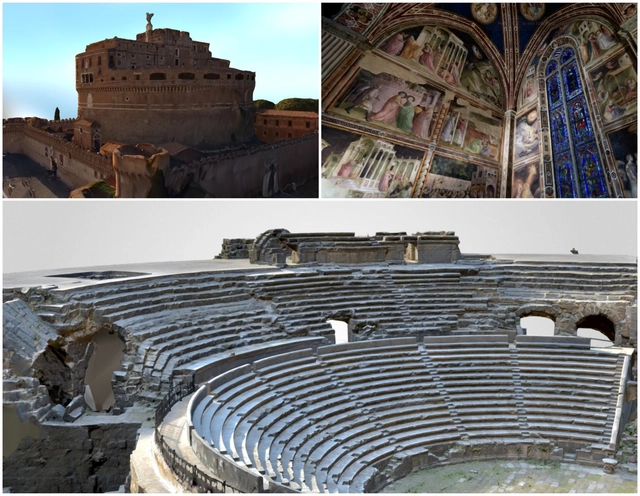
Using photogrammetry to capture and model existing buildings is a fantastic way to share cultural treasures with the world, and with VR features cropping up everywhere even enables us to give people virtual tours of a site of cultural significance from thousands of miles away. But beyond that, capturing a model of a building is also a great way to digitally preserve that structure at a given point in time - this technique is even being used by Harvard and Oxford to protect structures placed at risk by the ongoing wars in Syria and Iraq.
In that spirit, our friends over at Sketchfab have compiled a selection of cultural treasures that have been immortalized on their platform. Read on to see all seven models, and don't forget that you can view all of them in virtual reality using Google Cardboard.
On April 2nd, the jury of the 10th Ibero-American Architecture and Urbanism Biennial DESPLAZAMIENTOS / DESLOCAMIENTOS met in Madrid to select the winner of the Ibero-American Award for Architecture and Urbanism.
https://www.archdaily.com/785352/eduardo-souto-de-moura-wins-the-ibero-american-award-for-architecture-and-urbanismPola Mora
The AIA has kicked off National Architecture week, which will run from April 10-April 16. The week aims to "elevate the public's appreciation of design," while also recognizing those architects who have impacted local communities through design and collaboration. In support of the celebration, the AIA will reveal the winners of the AIA/ALA Library Building Awards on April 12.
ArchDaily is looking for motivated architecture lovers to join our team of interns for Summer 2016! An ArchDaily internship is a great opportunity to learn about our site and get exposed to some of the latest and most interesting ideas shaping architecture today.
Interested? Then check out the requirements below.
https://www.archdaily.com/785363/call-for-archdaily-interns-summer-2016AD Editorial Team
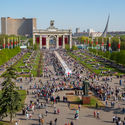
The Russian contribution to the 2016 Venice Biennale has been revealed to be "an account of how the V.D.N.H. (the 'Exhibition of Attainments of the National Economy’)—a unique complex in both scale and architecture—is being transformed into a multi-format cultural and educational space, accessible to all." Entitled V.D.N.H. Urban Phenomenon, the show will examine the park's global significance "given that the whole world is concerned by the question of how to develop society’s intellectual potential and how to create effective mechanisms for cultural assimilation." Following the Biennale, the exhibition will be permanently relocated to the V.D.N.H. in Moscow.
What would some of our favorite buildings do if they could stand up and walk around? From the Leadenhall building to the Petronas Towers and One Central Park, designer and illustrator Michael William Lester has taken 20 architectural landmarks from around the world and brought them to life in a series of animated GIFs.
“Good architecture interacts with its surroundings,” writes Lester on his website. “It gives off energy, sparks interaction and pulls so much life in that the building itself lives and breaths.”
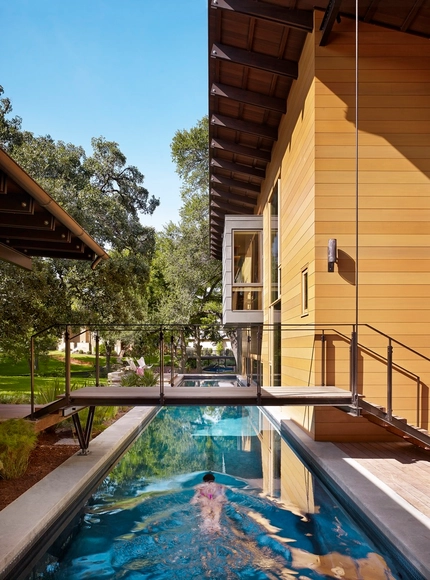
Custom Housing: Hog Pen Creek Retreat; Austin, Texas / Lake|Flato Architects. Image Courtesy of AIA
The American Institute of Architects (AIA) has selected ten recipients for the 2016 Housing Awards. The AIA’s Housing Awards program, now in its 16th year, was established to recognize "the best in housing design and promote the importance of good housing as a necessity of life."
Moleskine has announced a new product which it hopes will allow users to "bridge their analog and digital worlds." The Smart Writing Set is a system that includes the Paper Tablet, a specially-made Moleskin sketchbook which works in tandem with the Pen+, a digitally-enabled pen that recognizes the notebook and tracks the user's movement. The Pen+ then sends this information to the new Moleskine Notes App (for Apple users) or Neo Notes (for Android) in order to record the user's notes digitally, in real time.
New images and information has been released regarding Santiago Calatrava's competition-winning design for Dubai's new "landmark" observation tower. Planned for a site in Dubai Creek Harbor, near the Ras Al Khor National Wildlife Sanctuary, the tower was inspired by the "natural forms of the lily and evokes the shape of a minaret, a distinctive architectural feature in Islamic culture."
"The building’s design is inspired by the Islamic tradition, evoking the same history that brought the world the Alhambra and the Mosque of Cordoba. These architectural marvels combine elegance and beauty with math and geometry," commented Calatrava. "The design of the tower of Dubai Creek Harbor is rooted in classical art and the culture of Dubai itself."
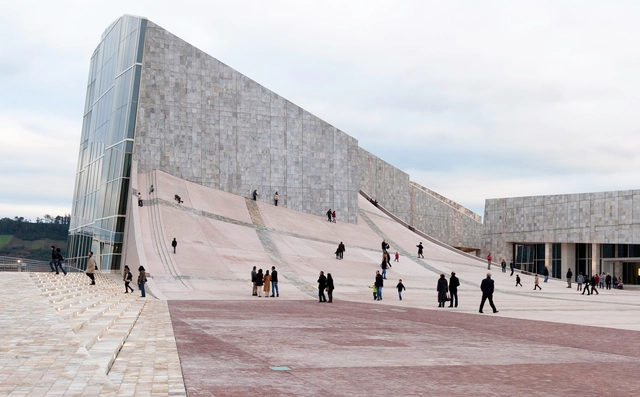
The City of Culture in Santiago de Compostela, Spain. Image Courtesy of Eisenman Architects
As one of the most revered and often reviled architects of the latter part of the 20th century, Peter Eisenman has courted controversy throughout his 50-year career, often attempting to distance himself from the work of his contemporaries and standing in firm opposition to popular trends. In this interview, Eisenman elaborates on his beliefs about architecture and the new direction he has taken in recent years – while simultaneously pulling no punches when discussing the work of others, including Rem Koolhaas, Richard Meier, and even his younger self.
The interview is a shortened version of the latest of three interviews with Peter Eisenman (from October 2003, June 2009, and February 2016) that comprise the upcoming book by Vladimir Belogolovsky “Conversations with Peter Eisenman.” The book, published by Berlin-based DOM Publishers will be presented during the opening days at the 15th Venice Architecture Biennale in late May this year.
New York-based ODA has revealed their design for new residential towers in Brooklyn's Williamsburg neighborhood. These three towers, called 416-420 Kent, aim to revitalize the neglected East River waterfront and will introduce a new sense of community, while providing ample natural light and green spaces for residents.
Italy has selected “Taking Care, Designing for the Common Good” as the theme of their pavilion for the 2016 Venice Biennale, examining architecture as a community service that takes care of individuals, spaces, places, principles and resources. The exhibit will present 20 projects by Italian architecture firms that address a range of problems from health to housing, education and culture. The exhibit will be curated by a team from TAMassociati comprised of Massimo Lepore, Raul Pantaleo and Simone Sfriso.
This episode of Section D, Monocle 24's weekly review of design, architecture and craft, examines the changing use and role of "one of the most simultaneously decried and admired materials in twentieth century architecture:" concrete. Exploring the "unlikely revival of a polarising product" in the cultural perception of many, this cheap, abundant and energy-hungry resource is studied as one of the most prolific and diverse building materials in history.
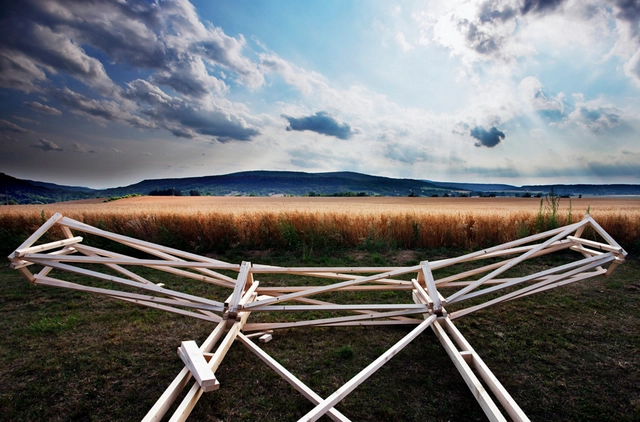
Budapest-based Hello Wood has announced an open call for team-leaders to participate in its award-winning summer school from July 14-22, 2016. The eight day Project Village program focuses on envisioning a design for a “new village model,” and then on building the imagined projects. The 2015 program brought together academics and students from more than 30 countries and 25 universities. This year, Project Village is looking for experienced architects, designers and artists to join the team in western Hungary, only two hours away from the capital.
The theme for the 2016 program is “Settling: The Rituals of Arrival,” which will explore the ways communities make themselves feel at home. Participants will be asked to build “a place of arrival, permanence, and connection," exploring in their designs the architectural aspects of settling, what makes a place feel like home, and the roles of hosts and guests.
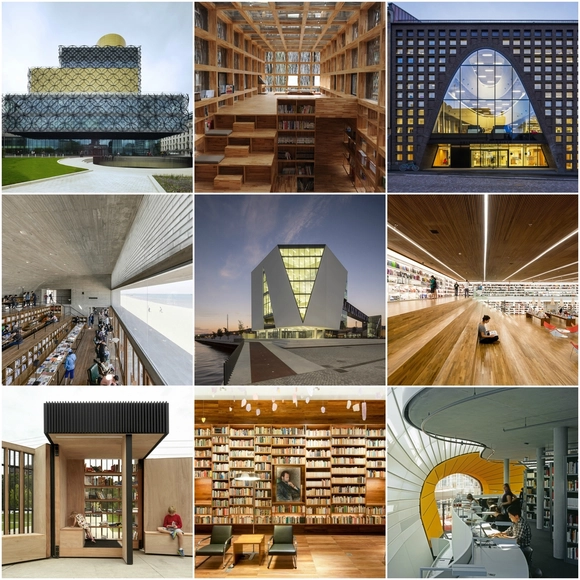
From community meeting hubs to secluded refuges, places to learn and places to study, libraries can be so much more than just a place to a check out a book. With this in mind, we’ve rounded-up 15 awe-inspiring libraries, including a Canadian church that was converted into a library, the first library in Muyinga, Burundi – built using participatory design and local materials – and the largest academic library in Finland. See what makes each of the libraries unique after the break.
The majority of our built environment is designed for people who hear, with little regard for how the hearing-impaired navigate a space. But what would a space look like if it were designed for the deaf? This video from Vox and Curbed focuses on Gallaudet University, the world’s only liberal arts institution for the deaf, and the ways the campus is tailored to the needs of its students. By analyzing what they refer to as “Deaf Space,” the university has been able to pinpoint techniques that not only make communication and wayfinding simpler for the deaf, but to produce spaces that function more effectively and comfortably for everyone. For more on the university and how its members are impacting the architecture world, read the full article over at Curbed here.
Renzo Piano's Proposed Tower at 87 Park in Downtown Miami. Image Courtesy of Terra
While certain cities in the world have instantly recognizable skylines, other burgeoning cities like Miami are still finding their architectural identity. A new online, 3D-map by the Miami Downtown Development Authority (DDA) outlines the over 100 new towers being erected in the city by architects including Renzo Piano and OMA, set against Miami’s existing cityscape. The projects are color-coded according to their status as either proposed, under construction or built. You can access the interactive map here.
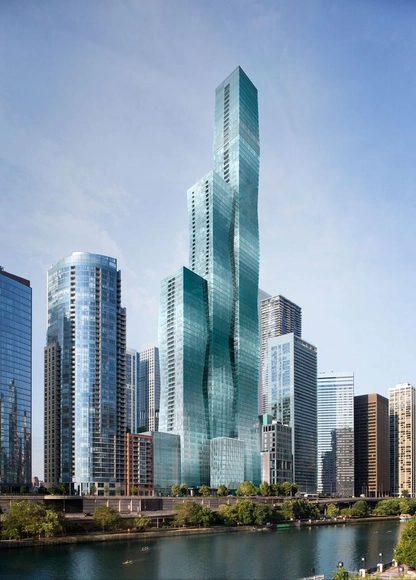
New interior images have been released of Studio Gang's's Vista Tower, a 95-story luxury residential high rise located in Chicago. Upon completion, Vista Tower will become the third tallest tower in the city.
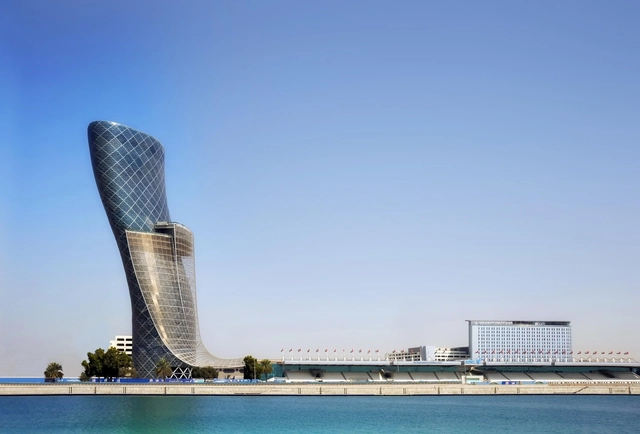
The British firm RMJM, founded in 1956 by Robert Matthew and Stirrat Johnson-Marshall with its first offices in London and Edinburgh, is celebrating its 60th anniversary. The international firm has grown considerably in six decades and now boasts offices and design studios in numerous cities – including New York, Buenos Aires, Santiago, Shanghai, Karachi, Dubai, Pretoria, Nairobi, and many more – on five continents.
The firm's early success in the United Kingdom led to international commissions in the Middle East and North Africa, with RMJM anticipating the impending globalism of the architecture profession, its actions allowing it to become "one of the largest and most geographically diverse architecture firms in the world." Read on for a small selection of RMJM's most notable designs, with one example taken from each decade of the firm's illustrious past.
UPDATE: The videos are no longer available on YouTube. :(
Over the past 20 years, many of the most renowned European cultural institutions - including ARTE France, Les Films d’Ici, the Louvre, the Ministry of Culture and Communication Department of Architecture and Heritage, Centre Pompidou, City of Architecture and Heritage, Musée d'Orsay and the Fundació Mies van der Rohe - have come together to produce more than 50 architecture documentaries devoted to the most significant achievements of architecture, its beginnings, and the latest creations of the great architects of today. Now, these videos are accessible to the public via the YouTube Channel ACB (Art and Culture Bureau).
Each documentary is approximately 26 minutes long, and focuses on the genesis and impact of a single building that has played a role in the evolution of architecture. Narration is in English, and many of the videos of newer buildings feature interviews with the architects themselves. Check out some of the videos below, or find the entire list here.
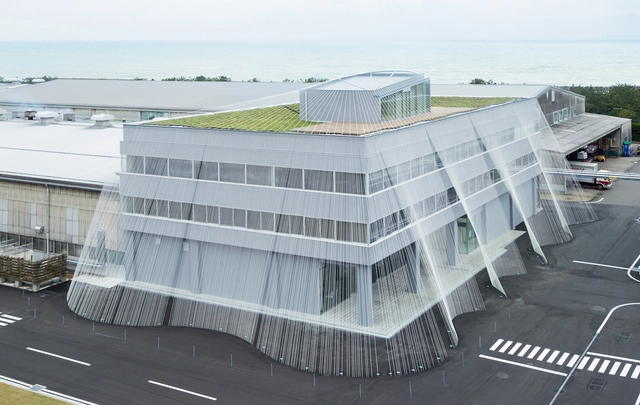
Japan-based Komatsu Seiten Fabric Laboratory has created a new thermoplastic carbon fiber composite called CABKOMA Strand Rod. The Strand Rod is a carbon fiber composite which is covered in both synthetic and inorganic fibers and finished with a thermoplastic resin. The material has been used on the exterior of Komatsu Seiten’s head office.
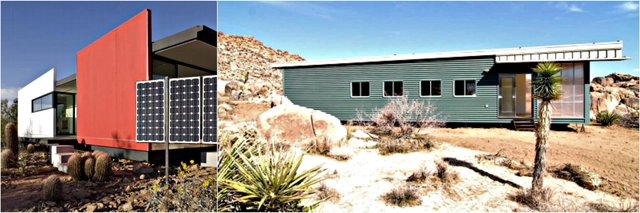
Jennifer Siegal, founder of Los Angeles-based Office of Mobile Design (OMD), has been announced as the winner of the fourth arcVision Prize – Women and Architecture, an international award to women’s architecture organized by Italcementi. Siegal was unanimously chosen by the jury for being “a fearless pioneer in the research and development of prefabricated construction systems, at low prices for disadvantaged users and areas, who has been able to invent and build practical solutions and a new language for mobile and low-cost housing."
"Innovation and unconventional thinking are both hardwired into my DNA. This shows in my body of work and research that questions everything, particularly the static, heavy, inflexible architecture that we somehow still expect in a world that is anything but," said Siegal in a press release.


.jpg?1460488417&format=webp&width=640&height=580)
.jpg?1460488383 "Courtesy of MAD Architects")
.jpg?1460488312 "Courtesy of MAD Architects")
.jpg?1460488393 "Courtesy of MAD Architects")
.jpg?1460488429 "Courtesy of MAD Architects")
.jpg?1460488417)
_Hayes_Davidson.jpg?1460469639&format=webp&width=640&height=580)
_Hayes_Davidson.jpg?1460469570 "Courtesy of Hayes Davidson")
_Studio_Libeskind.jpg?1460469294 "Courtesy of Studio Libeskind")
_Studio_Libeskind.jpg?1460469305 "Courtesy of Studio Libeskind")
_Crystal.jpg?1460469334 "Courtesy of Crystal")
_Hayes_Davidson.jpg?1460469639)





.jpg?1459424952 "© VDNH")




_Credit_Santiago_Calatrava.jpg?1460390254&format=webp&width=640&height=580)