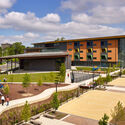
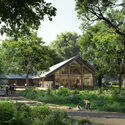
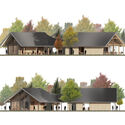
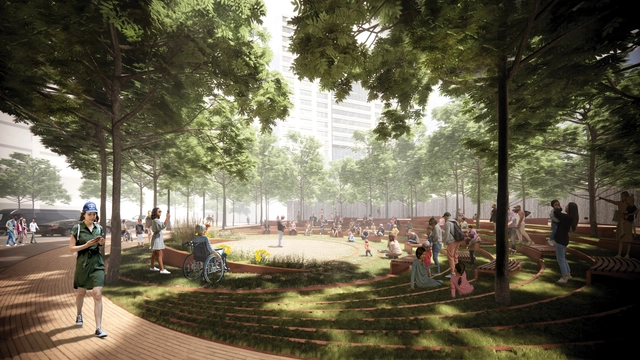
Ennead Architects and Kahler Slater have unveiled the design of a new 200,000 square-foot museum building in Milwaukee, Wisconsin. Set on a 2.4 acre site in the Haymarket neighborhood, the design is based on four core principles: community, nature, education, and the preservation of the museum’s vast collections. The project is expected to break ground in late 2023 and open to the public in 2026.
The New York City Senate and Assembly have passed the SIGH act, prohibiting the construction of new schools near major roadways. The act, named The Schools Impact by Gross Highways Act, aims to protect school-age children from air pollution. Under this law, the commissioner of education for the city will not be able to approve the plans for the construction of any new schoolhouse within 500 feet (150 meters) of a controlled-access highway unless the commissioner determines that space limitations are so severe that there is no other site to erect such new schoolhouse.
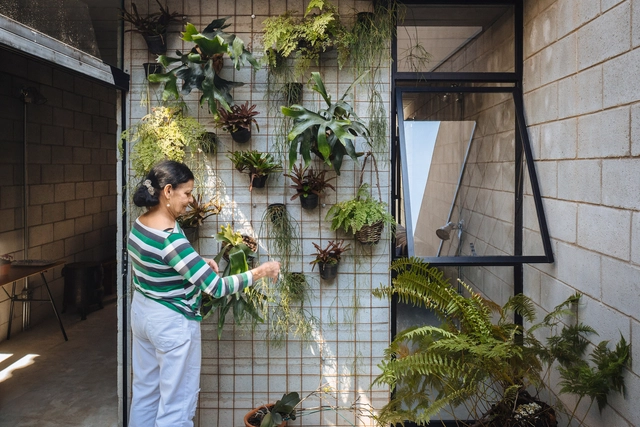
Earlier this year, I witnessed an intriguing situation. I followed, via an architect friend, the negotiation for the contracting of an architectural project for a single family home. The land owner, a public school teacher, sought professional help to build her dream home, estimated at about 60 square meters. It was a challenging terrain, with specific cutouts and a very steep topography that was compensated by the view of the city. The limited budget and the owner's history indicated that this would be the seaside version of the famous Vila Matilde House by Terra e Tuma.
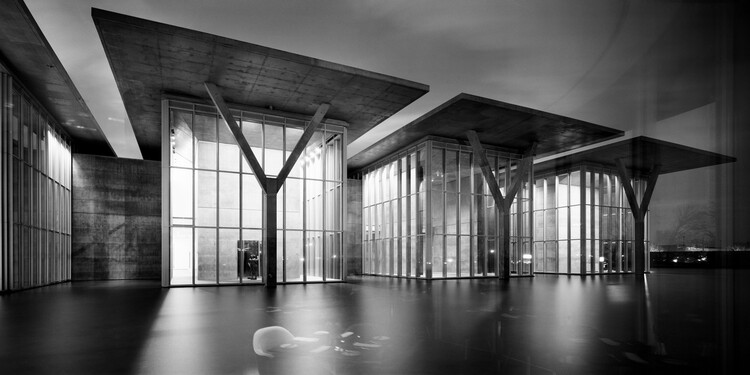
Few other materials can convey architectural atmosphere as well as the glass. A to-go choice for the modernists, due to its transparent nature, glass still holds a solid place within the material palette for architects around the globe. Such unique element is the subject of Archiving Flux / Stasis, a photographic exhibition by Erieta Attali hosted by the Greek Ministry of Culture in Casa Romana, Kos Island, Greece, set to open its doors in July 21st.
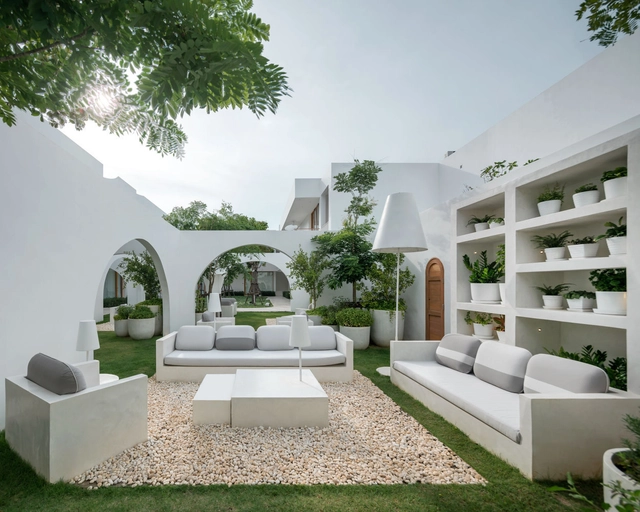
With all of the strange residential interior design trends that are making a comeback, conversation pits are probably one that you wouldn’t expect. This well-known 1970s design feature feels both very retro and modern, providing a comfortable place to lounge and a complete escape from the distractions of television and cinema. Instead of a design that supports and enhances a digital connection, having a large area to sit, and quite literally conversate, might be the space that we all need.
Finnish architect Juhani Pallasmaa once said that "architecture is essentially an extension of nature into the man-made realm, providing the ground for perception and the horizon of experiencing and understanding the world."
In the constant hustle and bustle of the modern surroundings, it is more than needed to take a step back and listen to the sounds of something as calmly powerful as nature. Moreover, listening to the beautiful harmonies created by birds chirping and sound waves can make our inner voice louder as well.
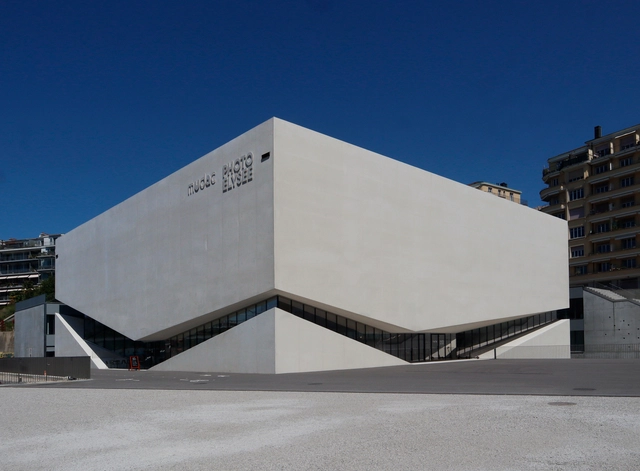
Following five years of construction, Portuguese architecture firm Aires Mateus has completed its awaited mudac: museum of Contemporary Design and Applied Arts in Lausanne, Switzerland. The sculptural building is part of a new cultural district and urban regeneration plan promoted by the Canton of Vaud, the City of Lausanne, and the CFF (Swiss Federal Railways), which features three art museums that translate the memory of the site, echoing its former industrial status with prismatic geometric forms, concrete surfaces, and sharp lines.
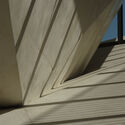
During his latest esplanade in Switzerland, architectural photographer Paul Clemence captured the newly inaugurated museum, highlighting its unique concrete geometry, play of shadow and light, and how the architecture complements its surroundings.
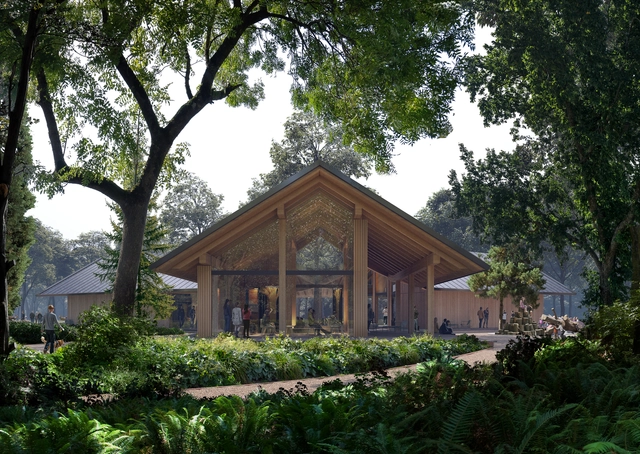
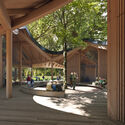
Powerhouse Company, in collaboration with landscape architecture office DELVA, has unveiled the design for a new visitor center for the Koekamp, which will play an essential role as a gateway to the new Hollandse Duinen national park. This intervention will open part of Koekamp, a green expanse near The Hague’s Central Station, to the public. The visitor center, commissioned by the Dutch forestry commission, is expected to be completed in 2024.
The threshold is a constructive element of the floor that serves to finish when there is a notable change in material or level. Much more prominent in the past, the piece today has a more discreet presence in architecture.
The thresholds and transition strips are applied directly to the floor and are responsible for making the transition when there is any change in the built space, whether it is in level, in the type of floor, or even when there is a door or passage.
Tying the Knot - Atlanta Legacy Makers by OBJ. Image Courtesy of OBJ
One of the central responsibilities of urban planners and designers is to create places within the city for gatherings, demonstrations, leisure, and relaxation. The following list of unbuilt public spaces presents projects that expand these spaces beyond the shores or riverfronts, return misused spaces back to the local communities and seek to optimize otherwise overlooked areas. These types of interventions are essential in improving the quality of life of the citizens and in making cities more enjoyable to live in.
This week's curated selection of Best Unbuilt Architecture highlights projects submitted by the ArchDaily community. Located near a UNESCO heritage site in Italy, on top of an illegal dumping site in Dallas, Texas, or in a medieval city in northern Spain, this round-up of unbuilt projects showcases how architects and urban planners recognize the potential of urban places.
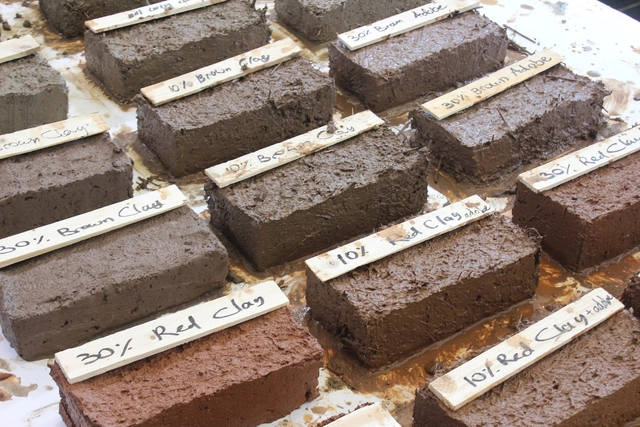
The bricks, showing a range of clay minerals and colors. . Image Courtesy of Lola Ben-Alon
The use of earth-based materials appears in two practices throughout history: in the construction of buildings and – far less commonly known or conclusively understood – in certain dietary consumption patterns. To put it simply – soil, the most important nutrient collector on earth, can be used for both building and for eating.
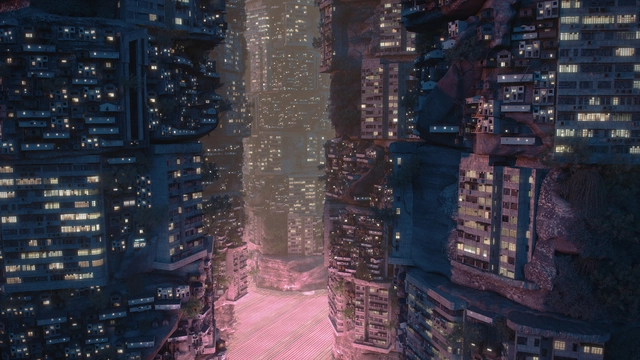
Liam Young is a speculative architect, product designer, and director who operates in the spaces between design, fiction, and futures. Young specializes in designing environments for the film and television industry, harboring the belief that creating imaginary worlds grants us the ability to connect emotionally to the ideas and challenges of our future.
Following the centuries of colonization, globalization, and never-ending economic extraction and expansionism, humans have remade the world from the scale of the cell to the tectonic plate. Young suggests in a TED Talk, “What if we radically reversed this planetary sprawl? What if we, as humans, reached a global consensus to retreat from our vast network of cities and entangled supply chains into one hyper-dense metropolis housing the entirety of the earth’s population?"
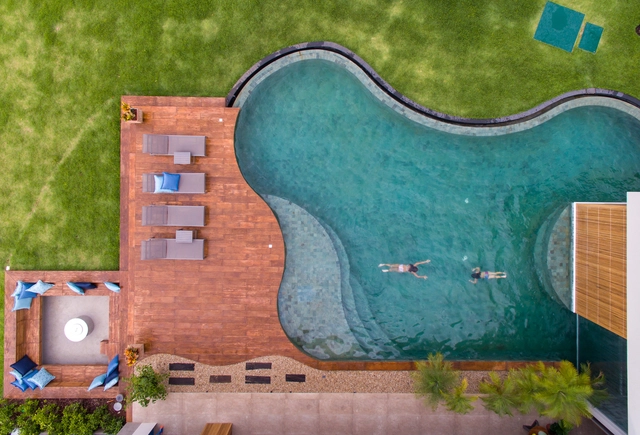
Few architectural typologies have the power to invoke a sense of being dual-natured quite as the modernist swimming pool can. The design of pools themselves implies that there are moments of activity both above and below the water. Above, and in the more obvious and visible sense, pools act as a space for leisure and athletic training. But underneath the surface, swimming pools have a long-standing history of acting as symbols of surveillance, death, and social conditions associated with an economic class.
Historic art movements and their visual characteristics have considerably paved the way for modern day architecture. For years, architects have been borrowing techniques and stylistic approaches to create their own architectural compositions, merging both disciplines together. Cubism, one of the most influential styles of the twentieth century, and heavily criticized for its experimentation with its non-representational art approach, is perhaps the most significant architecture inspiration. Just as the radical art movement rejected the then-rooted concept that art should mimic nature, architects found themselves following suit and designing structures that borrow Cubism’s avant-gardist features, creating buildings that, to this day, stand as iconic landmarks of the practice.
The 23rd Triennale Milano International Exhibition has officially opened its doors to the public today. Titled Unknown Unknowns. An Introduction to Mysteries, the Triennale is displaying a selection of artwork and installations designed by 400 international architects and designers, questioning "what we don’t know we don’t know". Celebrating 100 years since its foundation, this year's exhibition presents a new way of looking at the mysteries of the world, seeing it as an opportunity to investigate subjects such as the furthest universe to dark matter and the origin of our conscience.
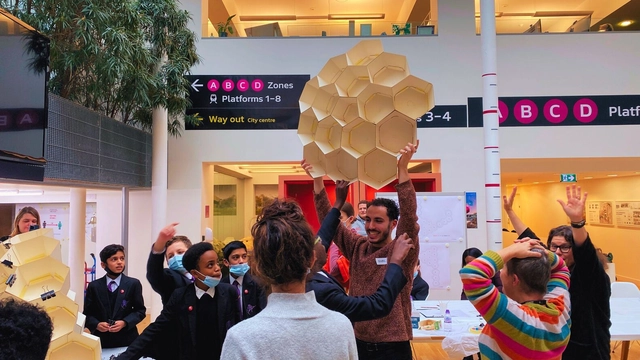
The Grimshaw Foundation is a charitable organization aiming to bring access to creative learning tools to a diverse range of young people. The organization was established by Sir Nicholas Grimshaw, in partnership with the partners of international architecture practice Grimshaw. The central purpose is to bring together a globally linked educational community of artists, architects, and designers to support and empower young people. It hopes to reach them at the stage of navigating their career options and help them discover the varied options and opportunities that the creative industry can offer. The Foundation officially launched on 6 July 2022 at the Royal Academy of Arts in London.
The current architectural production faces several paradigms and one of them is aesthetic. In a scenario of constant uncertainty, buildings with projections, holograms, or completely automatic ones that science fiction has shown so much, seem more and more distant from reality. Nowadays, the search for greater identification with the built space has been amplified instead of idealizing the new for the new. Therefore, looking at the past has presented different perspectives and it is in this scope that perhaps we can imagine a new futuristic aesthetic.
An ancient Indian folktale narrates the story of a demigod, Hiranyakashipu, who was granted a boon of indestructibility. He wished for his death to never be brought about by any weapon, human or animal, not at day or night, and neither inside nor outside his residence. To cease his wrathful ways, Lord Vishnu took the form of a half-human-half-animal to slay the demigod at twilight at the threshold of his house.
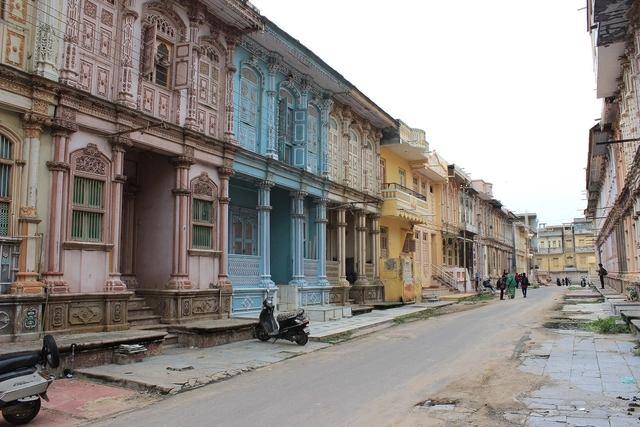
Threshold architectural spaces have always held deep cultural meaning to the people of India. In-between spaces are found in the midst of daily activities as courtyards, stairways, and verandas. The entrance to the house is revered by Indians of all social backgrounds. Throughout the country’s varied landscape, transitional entry spaces are flanked by distinctive front verandas that merge the street with the house.
Despite its dazzling collection of masterpieces, London’s National Gallery has been cursed with a series of ill-advised architectural schemes over its two-century existence. Only once have its leaders made a truly inspired and visionary choice: in the mid-1980s, the gallery held a competition, won by Venturi, Rauch and Scott Brown (VRSB) of Philadelphia, to build a special collections building.
The addition was constructed from 1988 to 1991, using funds donated by the Sainsbury family as a gift to the nation and was immediately hailed as one of the finest buildings of its type erected in the 20th century. It has remained popular with Londoners and has served well as an expansion of William Wilkins’s undistinguished classical building ever since. Experts on the work of Robert Venturi, John Rauch, and Denise Scott Brown consider it one of their masterpieces. Apparently, the National Gallery has a different opinion.
https://www.archdaily.com/985449/in-london-a-venturi-scott-brown-masterpiece-is-threatenedMark Alan Hewitt
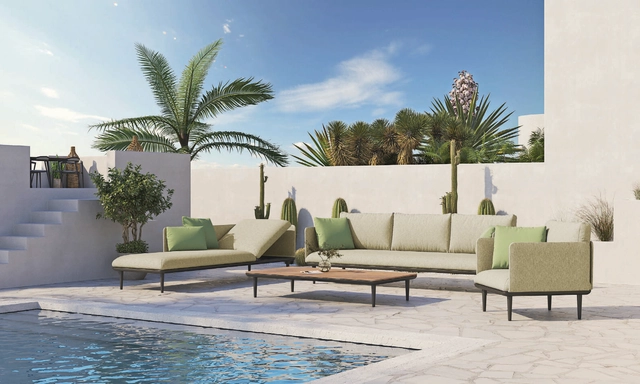
The new NOA outdoor living centre in Belgium offers boundless inspiration for the realisation of creative outdoor concepts, thanks to the collaboration of 24 high-end outdoor-living brands. Watch the video to find out more.
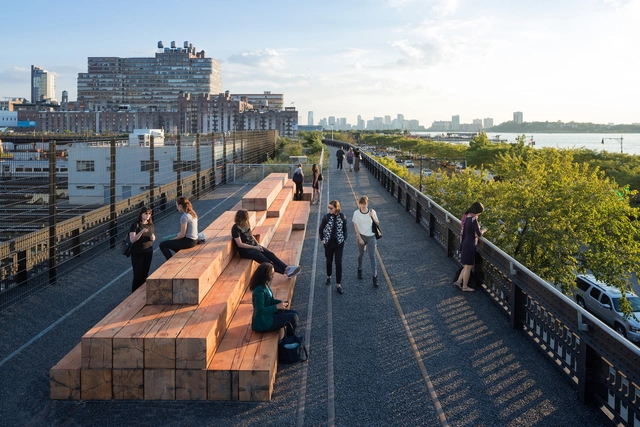
No city is like New York. As an amalgam of different cultures, it is one of the most diverse in the world. New York is also facing social and environmental challenges that range from the need for new housing and transportation demands, to rising sea levels and storm surges. As the global pandemic further underlined the importance of design in shaping public life, city officials and planners are looking at a range of approaches and models for urban development and renewed growth.
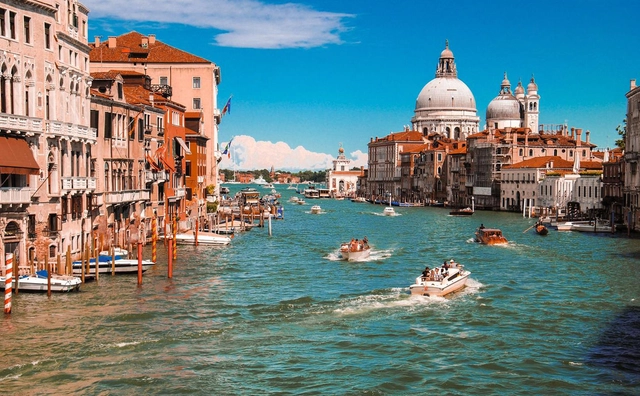
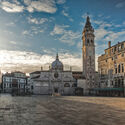
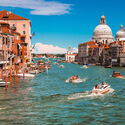
Following several initiatives to tackle the tourism and architectural heritage crisis, Venice authorities have announced that as of January 16th, 2023, visitors will have to book a visiting slot and an entrance fee to see the historic canal city. The newly proposed ticketing system, which is claimed to be the first of its kind in the world, hopes to control its "over-tourism" crisis, a challenge that has been affecting the lagoon's ecosystem, urban development, and local population.
Vantem is a startup construction company manufacturing high-efficiency, net-zero homes at competitive costs and low embodied carbon. The company recently raised a Series A round of investment from the Bill Gates-founded firm Breakthrough Energy Ventures. Net-zero homes, buildings that produce as much energy as they use, are typically cheaper to own than standard housing. Still, they often involve high construction costs since they require advanced building technologies and engineering. Vantem aims to change this dynamic by employing modular construction technology.
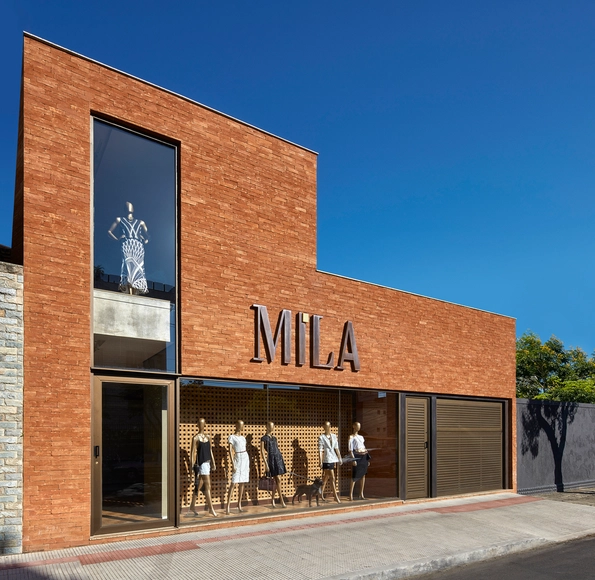
Window displays are the means of communication with the customers, the transition layer between the street and the store. From its emergence in the 2nd century, in the Roman Empire, until today, many changes have taken place until we reach the current windows, which not only display products, but also the identity of brands. Here is what to consider when designing a showcase.