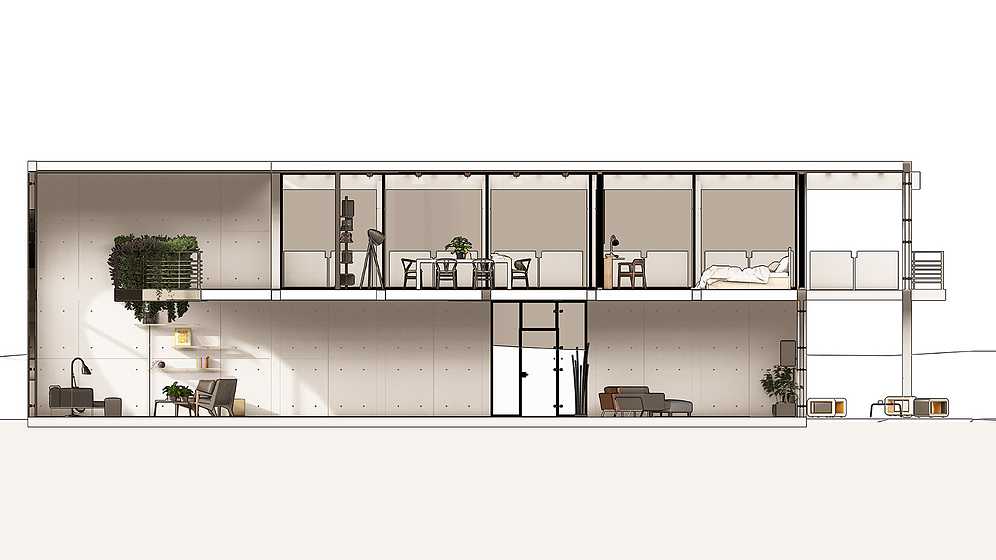
Produce personalized presentation boards that distill complex concepts into simple visual representations with a few helpful tools and effects.


Produce personalized presentation boards that distill complex concepts into simple visual representations with a few helpful tools and effects.
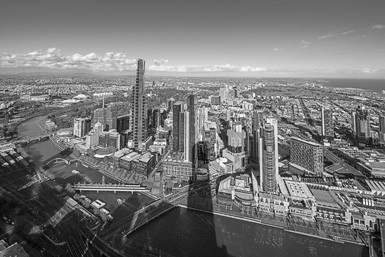
Once labeled 'an empty useless city center,' by architectural commentator Norman Day, the city of Melbourne's transformation since the 1980s has been dramatic. Today, Melbourne is internationally recognized as one of the world’s most liveable cities, with a vibrant, urbane downtown. Currently on show until December 21st at City Gallery in Melbourne, this exhibition examines the impact and legacy of the Postcode 3000 planning policy. Curated by Rob Adams, the exhibition looks at the genesis and typologies of this change and its ongoing impact on the form and vitality of central Melbourne. It asks the question: do we fully comprehend the impact of this latest boom? For more information, please visit here.
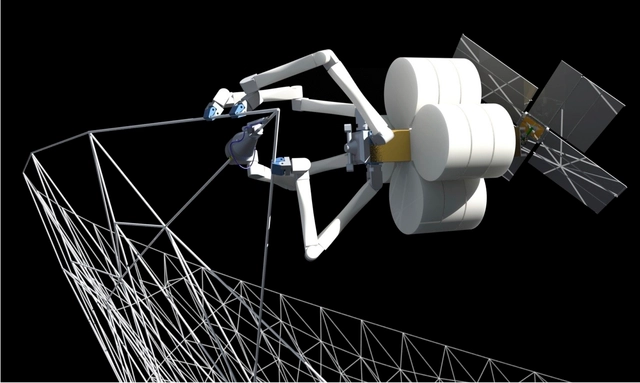
As revealed in an article on Gigaom, NASA has recently added an extra $500,000 into a collaboration with Tethers Unlimited, a company researching ways to 3D print and assemble structures whilst in orbit. Using this technology, their SpiderFab robots reduce the size of the rockets needed to launch materials into space, and also allow for much larger structures to be created than in any previous technique - opening up new possibilities for construction in space. You can read the full article here.
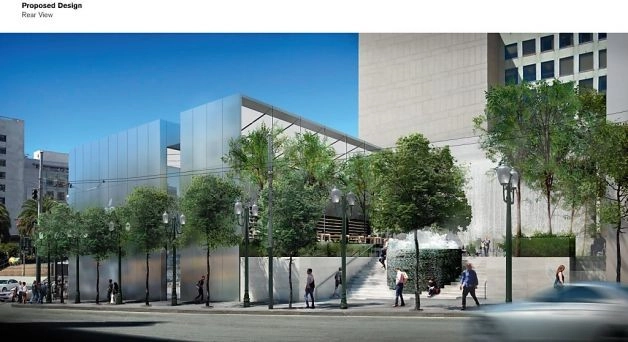
Earlier this summer we reviewed plans for a new Foster + Partners-designed Apple Store in the heart of San Francisco which received a considerable amount of backlash for its accused ubiquitous design that disregarded the city's historic Ruth Asawa Fountain. Since, Apple has decided to respond to the complaints and Foster + Partners have just released images of the revised design that preserves the fountain.

Developers in London are so afraid of encountering opposition from the Prince of Wales that they seek his approval before applying for planning permission - so says Richard Rogers, as revealed by this article in BD. Prince Charles, who is not shy about promoting his traditional tastes, has a sometimes difficult relationship with the architecture community, and Rogers previously accused him of "an abuse of power" when he was ousted from his Chelsea Barracks Project. You can read the full article here.
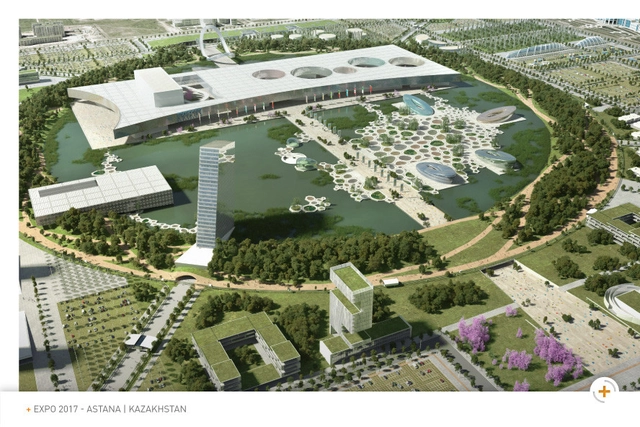
Designed for the Expo 2017 theme "The Energy of the Future", Saraiva + Associados' proposal was recently selected as one of the top 10 finalists in the competition. Their concept proposes an enduring landmark in Astana that integrates renewables, efficiency, clean technologies and sustainability into livable and feasible architecture where "Energy is Life". From the master plan to the individual buildings, this design embraces the idea that "Life should be built on the conservation of energy" and clearly makes a statement that energy concerns on Buildings and City Planning can be put immediately into action - and the best way to do it is by providing high quality contemporary concepts that efficiently integrates proven technology into feasible designs that can effectively make the difference today. More images and architects' description after the break.
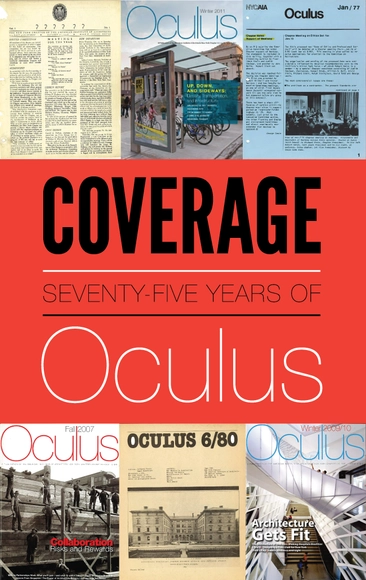
Taking place at the Center for Architecture September 3-23, AIA New York's 'Coverage: Seventy-Five Years of Oculus' Exhibition celebrates 75 years of Oculus and the 10 years since the 2003 re-launch. The exhibition will include original issues of Oculus from the AIA New York Chapter's archives dating back to 1938, and will trace the publication's history from an AIANY newsletter to the quarterly architectural journal it is today. The opening reception takes place 6:00-8:00pm EST. For more information, please visit here,
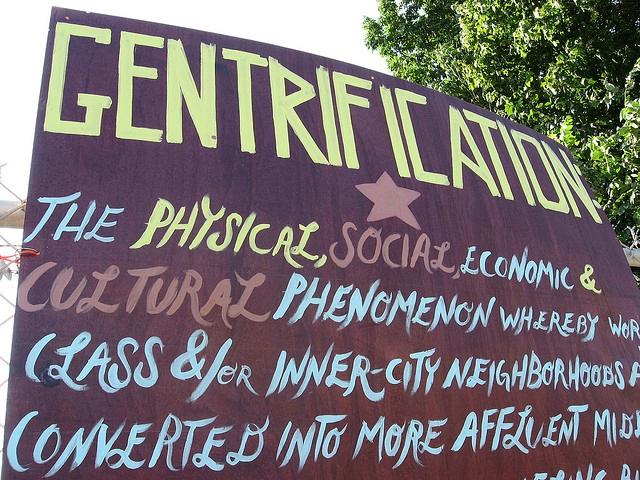
This article in the Atlantic Cities summarizes the work of John Joe Schlichtman, an urbanist who has set out to analyze the "elephant sitting in the academic corner" when it comes to contemporary urban theory: that many (middle-class) urbanists who criticize gentrification are themselves some of the worst culprits. Schlichtman wants to encourage urbanists "to locate themselves within their own literature" - you can read the full article here.
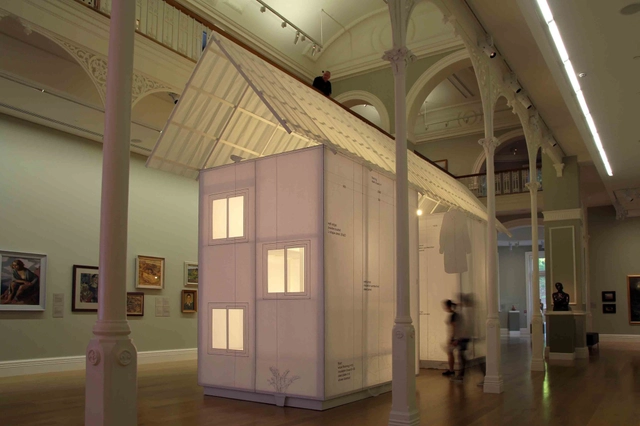
Installed in Auckland Art Gallery’s Lower Grey Gallery for the 5th Auckland Triennial, the Model Home 2013 by Michael Lin and Atelier Bow-Wow, with Andrew Barrie, responds to the specific design challenge of recreating the building that was also exhibited at the Rockbound Museum in Shanghai in 2012. Originally made of welded steel frames clad in structural insulated panels, they explored the potential to translate the house into the Kiwi timber-and-plywood construction idiom. This would have reduced the cost somewhat, but not solved the dilemmas of waste and conceptual inconsistency. More images and architects’ description after the break.
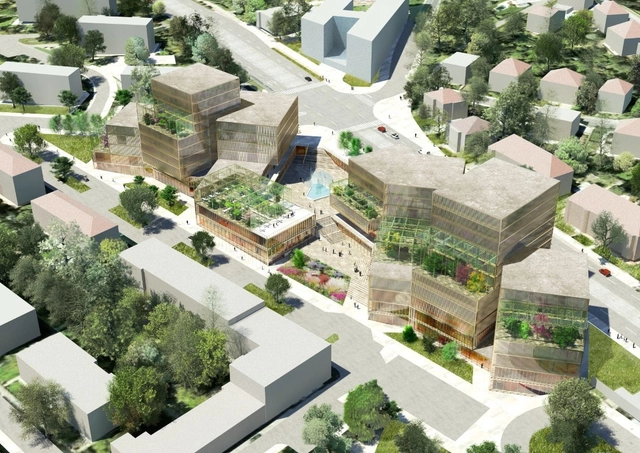
The Maxwan, in collaboration with MS architekti, designed Red Hill Rise proposal is a mixed use building on top of a metro station, which includes offices and retail located along a major spine road connecting the airport and historical city center of Prague. They came up with the idea of ‘breaking-up’ the building volume and inserting landscape and public space in between. More images and architects’ description after the break.
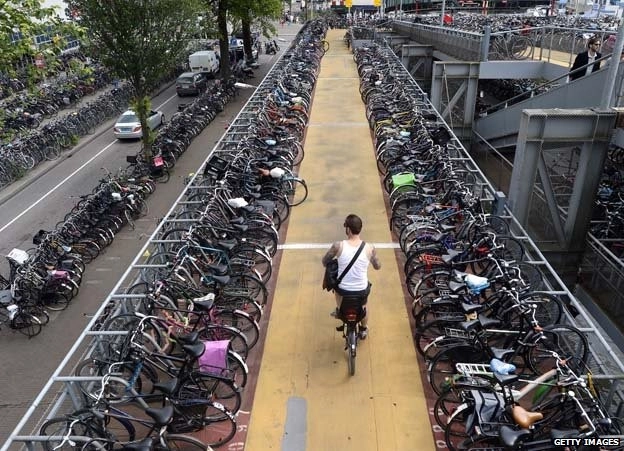
Did you know that there are more bicycles than residents in The Netherlands? You may be shocked to learn that up to 70% of all journeys are made by bike in cities like Amsterdam and The Hague. To accommodate such a huge number of bike-enthusiasts, bike parking facilities can be found everywhere - outside schools, office buildings and shops. Not to mention the fact that many Dutch cities even have special bike paths that are completely segregated from motorized traffic with signs that read "Bike Street: Cars are guests." Ever wondered why the Dutch are so bike crazy and how bicycles came to be such an important part of everyday life in The Netherlands? Click here to read all about it and look here for our story on Why Cycle Cities Are the Future!
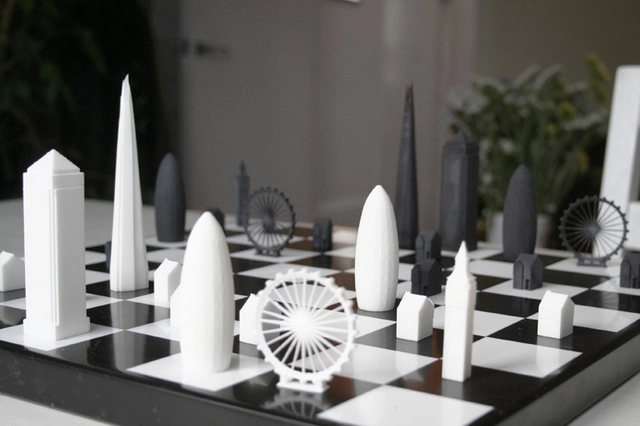
Imagine your city skyline as a chessboard battleground; which landmark would declare itself as the almighty king and who serve as its faithful pawn? Well, according to British designers Ian Flood and Chris Prosser, London’s Canary Wharf, Renzo Piano’s Shard and Norman Foster’s Gherkin would all deserve high ranks while the ubiquitous London terraced house fulfilled the role of the pawn.
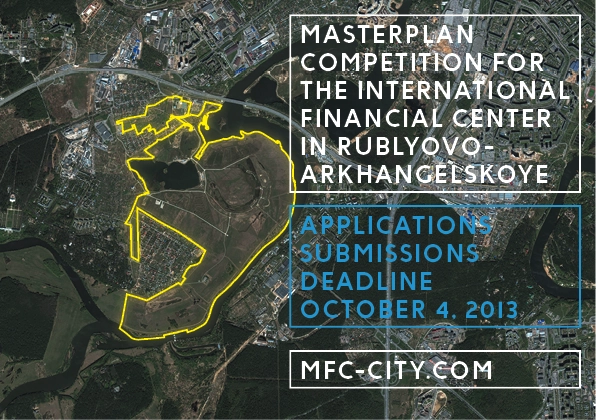
Organized by Rublyovo-Arkhangelskoye CJSC, part of Sberbank Russia group of companies, the two-stage open international competition for the development of the masterplan of the International Financial Centre in Rublyovo-Arkhangelskoye (Moscow, Russia) launches this Monday, September 2nd. The International Financial Centre is a 460 hectare mixed-use development project located in the west of ‘New Moscow’, in the floodplain of the Moscow River, five kilometers from the Moscow Outer Ring Road. The project involves the construction of offices, housing, hotels, commercial and social infrastructure. Applicants are required to have expertise in masterplanning of projects measuring over 30 hectares in order to qualify. The deadline for submissions is October 4th. For more information, please visit here.
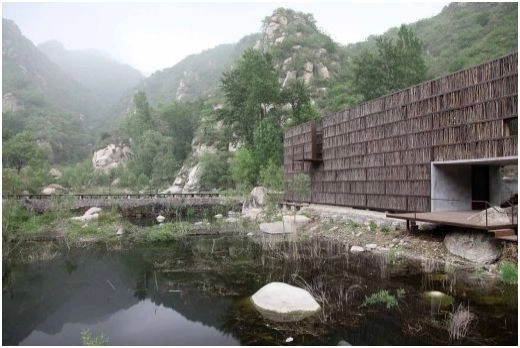
Currently on exhibit until October 6th at MAK Austrian Museum of Applied Arts / Contemporary Art in Vienna, the Eastern Promises, Contemporary Architecture and Spatial Practices in East Asia focuses on the promise of a pioneering architecture, which is especially associated with East Asian countries. Projects from China, Japan, Taiwan and South Korea reflect local traditions and conditions as well as a critical awareness of global media technologies leading to an architectural approach that is less interested in iconic objects and spectacular forms than in a structural realignment of society in its spatial dimensions. A program of selected short films rounds off the exhibition with moments of experimental city viewing and everyday appropriation of (public) space. More information after the break.
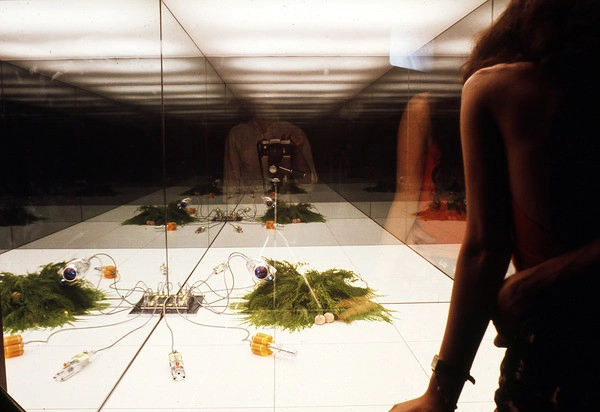
The Graham Foundation recently announced their upcoming exhibition, Environments and Counter Environments. “Italy: The New Domestic Landscape,” MoMA 1972, which opens to the public on September 18th with a short talk by curators Peter Lang, Luca Molinari, and Mark Wasiuta followed by a reception. This exhibition highlights the lasting significance of MoMA’s groundbreaking 1972 exhibition, Italy: The New Domestic Landscape. Presented for the first time in the United States outside of New York, the Graham Foundation's iteration of Environments and Counter Environments highlights both the dynamic context of radical Italian design and architecture in the 1970s, as well as the innovative exhibition that first presented this work in America. The exhibition will be on view until December 14th. More information provided by The Graham Foundation after the break.
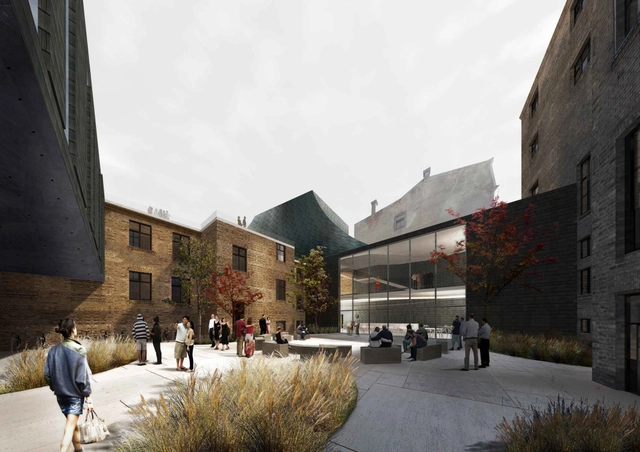
Designed by NRJA + IG Kurbads, their ‘Show Under Skin’ proposal for the reconstruction of the new Riga Theatre corresponds to the dynamism of the creative process within the theater - minimalist, smooth finish, combined with a twisted in a motion stopped volume.The skin is a multi-functional covering structure which is connected with the historical volume, covering it and combining various features and space dimensions in a single organic volume, also matching different adjacent building heights. More images and architects’ description after the break.
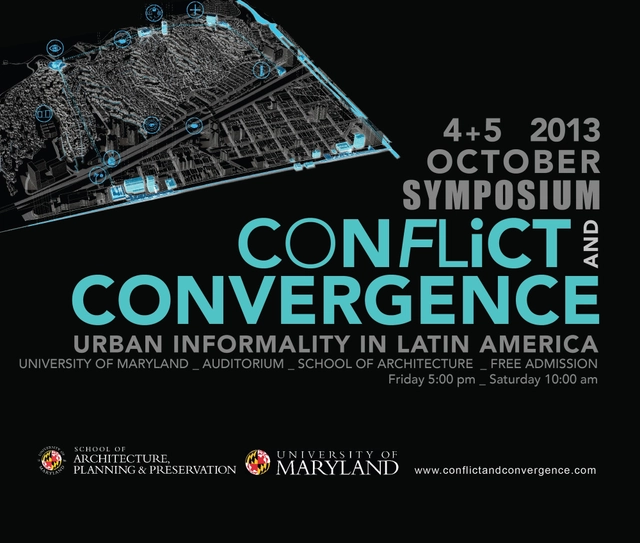
Presented by the University of Maryland's School of Architecture, Planning and Preservation, the 'Conflict and Convergence: Urban Informality in Latin America' Symposium aims to explore how recent experiences in cities such as Medellín, Bogotá, São Paulo, Rio de Janeiro and Caracas, among others, can serve as examples for multidisciplinary models to urban and social revitalization in other parts of the world. Taking place October 4th at 5:00pm until October 5th at 10:00am, the event will bring together participants representing a wide spectrum of disciplines and seeks to generate a conversation between professionals and academics to analyze the goals, methods, achievements and opportunities in Latin America. For more information, please visit here.
.jpg?1377663739&format=webp&width=640&height=580)
The Innovative Prototyping @ Dynamic Fields – Responsive Architecture Workshop, which took place in Bucharest, Romania July 16-29, resulted in five innovative prototypes. The workshop was benefited by the presence of Patrik Schumacher, Director of Zaha Hadid Architects, founder of AA Design Research Lab London and one of the most important figures in the world of computational design. The workshop’s purpose was the understanding of how the advancement of digital technology is helping architects respond to the complexity of the environment surrounding them. The five prototypes (Turbillon, Interactive Field, Dynamic Muqarnas, Project 86 and Wind Mapper) are to be exposed in the near future at different fairs or events. More images and information after the break.
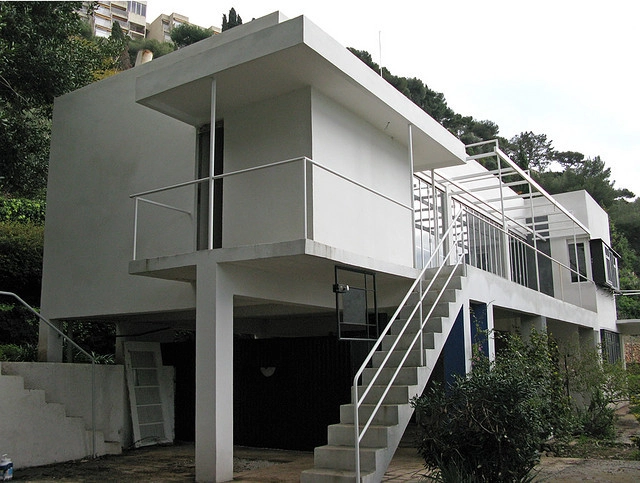
The Wall Street Journal recently detailed the complex history of E-1027, the house which Eileen Gray designed with her lover Jean Badovici in Southern France: from the murals which Le Corbusier painted on the walls (without Gray's permission) to the murder that happened there in 1996 to the restoration that has been going on for over a decade (a supposed "massacre" of the original). You can read the full article here.