1. ArchDaily
  2. Resiliency

Resiliency: The Latest Architecture and News

Why Should We Invest in Mitigation Instead of Reconstruction? Chile's Resiliency is a Good Example

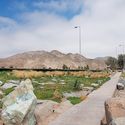
Chile is a country used to natural disasters as much as to the reconstruction process. However, the frequency of these cycles has increased over the years. According to the Ministry of Interior (Homeland), 43% of all natural disasters recorded in Chile since 1960 happened between 2014 and 2017. In fact, the government is already involved in several reconstruction processes across the country.

Why Should We Invest in Mitigation Instead of Reconstruction? Chile's Resiliency is a Good Example - Image 3 of 4Why Should We Invest in Mitigation Instead of Reconstruction? Chile's Resiliency is a Good Example - Image 4 of 4Why Should We Invest in Mitigation Instead of Reconstruction? Chile's Resiliency is a Good Example - Image 5 of 4Why Should We Invest in Mitigation Instead of Reconstruction? Chile's Resiliency is a Good Example - Image 6 of 4Why Should We Invest in Mitigation Instead of Reconstruction? Chile's Resiliency is a Good Example - More Images+ 2

Italian Pavilion Reflects on the Resiliency of Local Communities in the Face of Climate Change

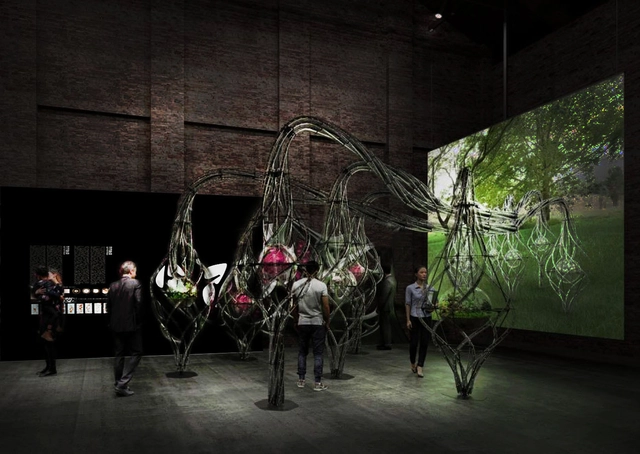
The Italian Pavilion for the 17th Venice Architecture Biennale explores the capabilities for transformation and adaptation of Italian communities in an attempt to define tangible solutions to current global challenges. Titled "Resilient Communities", the exhibition curated by Alessandro Melis presents Italian research and innovation across many fields, exploring ideas for improving the conditions of the built environment and addressing climate change, with the hope of defining the building blocks for a sustainable future.

Italian Pavilion Reflects on the Resiliency of Local Communities in the Face of Climate Change - Image 1 of 4Italian Pavilion Reflects on the Resiliency of Local Communities in the Face of Climate Change - Image 2 of 4Italian Pavilion Reflects on the Resiliency of Local Communities in the Face of Climate Change - Image 3 of 4Italian Pavilion Reflects on the Resiliency of Local Communities in the Face of Climate Change - Image 4 of 4Italian Pavilion Reflects on the Resiliency of Local Communities in the Face of Climate Change - More Images+ 6

Design Disruption Episode 8: Resilience and Community with Kai-Uwe Bergmann

The COVID-19 Pandemic is a disruptive moment for our world, and it’s poised to spur transformative shifts in design, from how we experience our homes and offices to the plans of our cities. The webcast series Design Disruption explores these shifts—and address issues like climate change, inequality, and the housing crisis— through chats with visionaries like architects, designers, planners and thinkers; putting forward creative solutions and reimagining the future of the built environment.

Balancing Preservation and Resiliency in Miami Beach

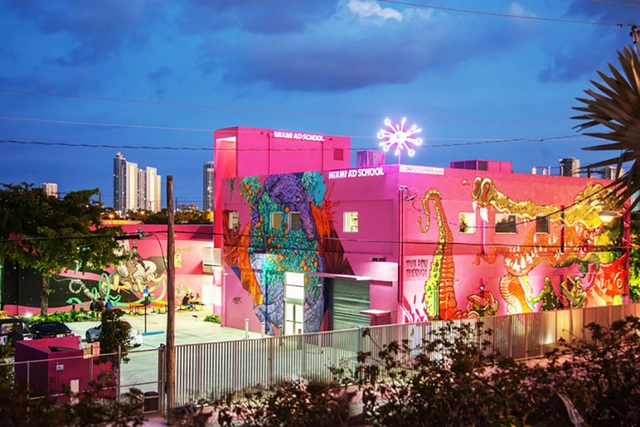
During the 20th century, Miami Beach reinvented itself several times, from Gilded Age mecca to Art Deco capital, to glamorous 1950s destination, only to become a faded has-been resort by the 1970s. The preservation movement that began in the 1970s and 1980s became its saving grace. By the 1990s Miami Beach, especially its South Beach neighborhood, was one of the hippest communities in the United States, drawing notable European residents like Gianni Versace.

Heatherwick Proposes New and Improved Waterfront Experience for San Francisco

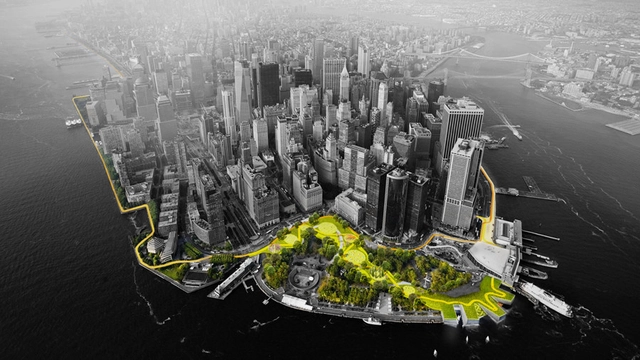
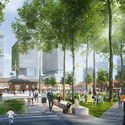
Heatherwick Studio has designed the Cove, a new waterfront experience for San Francisco. Seeking to activate and improve the beachfront, “while future-proofing the historic district and the City against the risks of earthquakes and climate change”, the Cove will put in place a next-generation, high-performance waterfront community that uniquely identifies with San Francisco.

Heatherwick Proposes New and Improved Waterfront Experience for San Francisco - Image 1 of 4Heatherwick Proposes New and Improved Waterfront Experience for San Francisco - Image 2 of 4Heatherwick Proposes New and Improved Waterfront Experience for San Francisco - Image 3 of 4Heatherwick Proposes New and Improved Waterfront Experience for San Francisco - Image 4 of 4Heatherwick Proposes New and Improved Waterfront Experience for San Francisco - More Images+ 1

How to Future-Proof Our Cities? 4 Key Initiatives to Increase Resilience

Our cities, vulnerable by nature and design, have generated the biggest challenge that humankind has to face. With the vast majority of the population expected to settle in urban agglomerations, rapid urbanization is going to raise the issue of adaptability with future social, environmental, technological and economic transformations.

In fact, the main problematic of the decade questions how our cities will cope with fast-changing factors. It also looks into the main aspects to consider in order to ensure long-term growth. In this article, we highlight major points that help future-proof our cities and create a livable, inclusive and competitive fabric that adapts to any unexpected future transformation.

Long-Term Plans: To Build for Resilience, We’ll Need to Design With—Not Against—Nature

Moving away from its early exclusive focus on natural disasters, resilient architecture and design tackles the much tougher challenge of helping ecosystems regenerate.

Thirty years ago, as a high school student at the Cranbrook boarding school in suburban Detroit, I wrote a research-based investigative report on the environmental crisis for the student newspaper. I had been encouraged to do so by a faculty adviser, David Watson, who lived a double life as a radical environmentalist writing under the pseudonym George Bradford for the anarchist tabloid Fifth Estate. His diatribe How Deep Is Deep Ecology? questioned a recurring bit of cant from the radical environmental movement: Leaders of groups like Earth First! frequently disparaged the value of human life in favor of protecting nature.

If Plan A is to Mitigate Climate Change, What’s Plan B?

This article was originally published on Washington Post, courtesy of Common Edge.

Hundred-year floods. Record-breaking Antarctic heat. Wildfires and drought. The stories appear with numbing regularity. And though the details differ, they all point to the same grim conclusion. We’re failing to address climate change. With carbon emissions continuing to rise, what were once dismissed as worst-case scenarios now look like the best we can hope for.

Sasaki Envisions a Sustainable, Equitable, and Resilient Kabul City

Imagined by Sasaki, the Kabul Urban Design Framework creates a vision of what the city can become. The project generates a set of guidelines that can transform the Afghan capital into a model of sustainable, equitable, and resilient development.

Sasaki Envisions a Sustainable, Equitable, and Resilient Kabul City - Image 1 of 4Sasaki Envisions a Sustainable, Equitable, and Resilient Kabul City - Image 2 of 4Sasaki Envisions a Sustainable, Equitable, and Resilient Kabul City - Image 3 of 4Sasaki Envisions a Sustainable, Equitable, and Resilient Kabul City - Image 4 of 4Sasaki Envisions a Sustainable, Equitable, and Resilient Kabul City - More Images+ 24

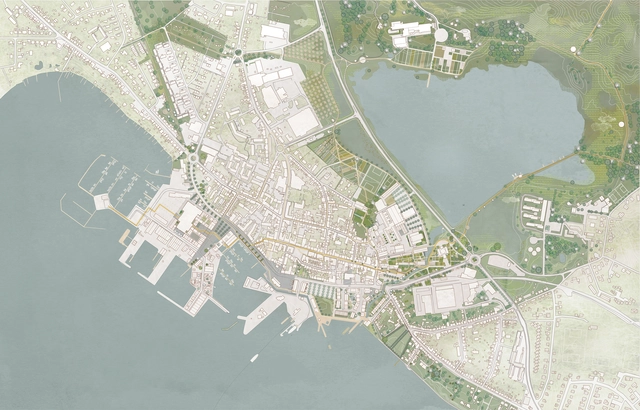
Kjellander Sjöberg Wins Competition to Climate Proof the Coastal Town of Faaborg in Denmark

Kjellander Sjöberg, one of the leading architectural practices in Scandinavia, in collaboration with GHB Landskabsarkitekter, Mogens A. Morgen, Realise and Tyréns, was selected to design a strategic development plan for Faaborg. The coastal town in southern Denmark is facing many challenges like a high risk of flooding and an important decrease in its population.

Kjellander Sjöberg Wins Competition to Climate Proof the Coastal Town of Faaborg in Denmark - Imagen 1 de 4Kjellander Sjöberg Wins Competition to Climate Proof the Coastal Town of Faaborg in Denmark - Imagen 2 de 4Kjellander Sjöberg Wins Competition to Climate Proof the Coastal Town of Faaborg in Denmark - Imagen 3 de 4Kjellander Sjöberg Wins Competition to Climate Proof the Coastal Town of Faaborg in Denmark - Imagen 4 de 4Kjellander Sjöberg Wins Competition to Climate Proof the Coastal Town of Faaborg in Denmark - More Images+ 11

Assessing Resiliency and Risk: We Can’t Save It All

This article was originally published on Common Edge.

Conversations around resiliency today seem to imply that planners and designers might be capable of—might even be expected to—save every building and public space at risk. The sad truth is, however, that we cannot, and perhaps we should not. Climate change and its attendant sea level rise will radically redraw urban edges, forcing us to make difficult decisions. Even if we had the vast sums of money required to protect the precarious status quo, that might not be enough to stave off the inevitable.

So, then: What are our priorities? How do we choose what to save? How do we responsibly chart this uncertain future? I believe the answers to these and similar questions should begin with an honest assessment of three essential considerations:

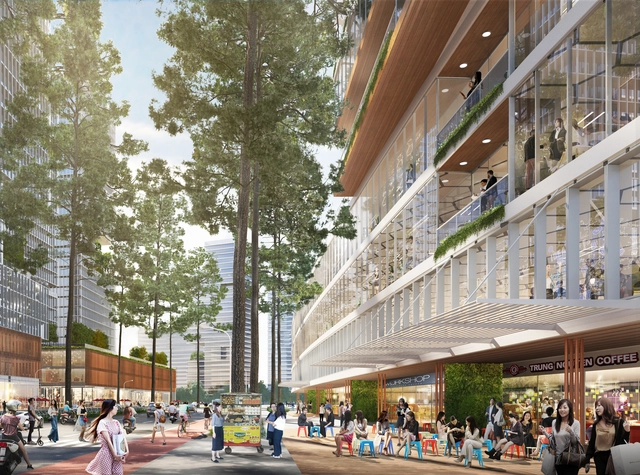
Sasaki to Design Ho Chi Minh City Innovation District in Vietnam

Sasaki has been selected by the government of Ho Chi Minh City to conceive the innovation district in the eastern part of the city, in collaboration with enCity, an international planning practice based in Singapore and Vietnam.

Sasaki to Design Ho Chi Minh City Innovation District in Vietnam - 1 的图像 4Sasaki to Design Ho Chi Minh City Innovation District in Vietnam - 2 的图像 4Sasaki to Design Ho Chi Minh City Innovation District in Vietnam - 3 的图像 4Sasaki to Design Ho Chi Minh City Innovation District in Vietnam - 4 的图像 4Sasaki to Design Ho Chi Minh City Innovation District in Vietnam - More Images+ 26

3rd International Conference on Amphibious Architecture, Design and Engineering

The International Conference on Amphibious Architecture, Design and Engineering (ICAADE) 2019 will bring together researchers, practitioners, authorities, students, NGOs, communities, and investors to discuss amphibious construction. Amphibious construction allows otherwise-ordinary structures to temporarily float in-place when flooding occurs.

The Cutting-Edge Materials Science Making Hurricane-Proof Construction Possible

Subscriber Access | 

This article was originally published on Autodesk's Redshift publication as "Hurricane-Proof Construction Methods Can Prevent the Destruction of Communities."

The four hurricanes that slammed into heavily populated areas from the Caribbean to Texas this summer are inching toward a half-trillion-dollar price tag in damages—to say nothing of the work and wages missed by shutting down entire cities. Buildings are the most visible marker of a place’s resilience after a disaster strikes. Surveying the catastrophic damage forces a difficult question: How can it be rebuilt better?

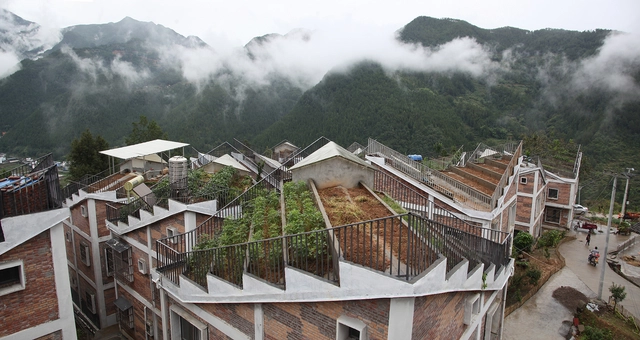
Jintai Village Reconstruction / Rural Urban Framework

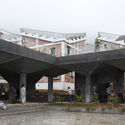
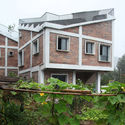
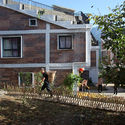
Jintai Village Reconstruction / Rural Urban Framework - Restoration, Facade, ForestJintai Village Reconstruction / Rural Urban Framework - Restoration, Facade, BeamJintai Village Reconstruction / Rural Urban Framework - Restoration, Garden, Facade, Fence, BalconyJintai Village Reconstruction / Rural Urban Framework - Restoration, Garden, Facade, Fence, DoorJintai Village Reconstruction / Rural Urban Framework - More Images+ 22

2016 Design Matters Conference presented by the Association of Architecture Organizations

The Design Matters Conference presented by the Association of Architecture Organizations is the world’s only dedicated annual meeting that seeks to bring top designers, journalists and civic leaders into exploratory dialogue with those not-for-profit professionals and volunteers charged with creating cultural programs (exhibitions, tours, lectures and symposia, festivals and films, youth outreach) to spur broader public interest in architecture and design.

Resilient Landscapes: Designing for Water, Risk, and Remediation

Our urban environment is in constant flux brought on by changes in economies and climate change. Issues of adaptation and resiliency are increasingly more relevant to all design disciplines. Jim Wasley and Jennifer Cooper-Sabo will discuss their design projects and research related to managing stormwater, revitalizing brownfields, and assessing climate change risk and adaptation in the Great Lakes and Bay Area regions.

reSITE 2016: 5th International Conference on a Hot Topic – “Cities in Migration”

On June 16-17, Prague will be hosting one of the leading architecture and urbanist events in Europe. Most of the 49 world renowned experts who will speak at reSITE 2016: Cities in Migration have experienced migration themselves. Coming from 20 countries, they will bring innovative solutions and successful strategies for European and Western cities to come to terms painlessly with the influx of new residents. Carl Weisbrod, Chairman of the City Planning Commission of NYC, Professor Saskia Sassen, sociologist at Columbia University, and Michael Kimmelman, the Architecture Critic for The New York Times will come from New York City. A huge number of speakers will come from Germany. Besides the famous landscape architect, Martin Rein-Cano from Topotek 1, Berlin, we will meet one of the city planner of Munich and the co-founders of the initiative “Refugees Welcome.”