1. ArchDaily
  2. Resiliency

Resiliency: The Latest Architecture and News

Media Round-Up: Hurricane Katrina, 10 Years On

Subscriber Access | 

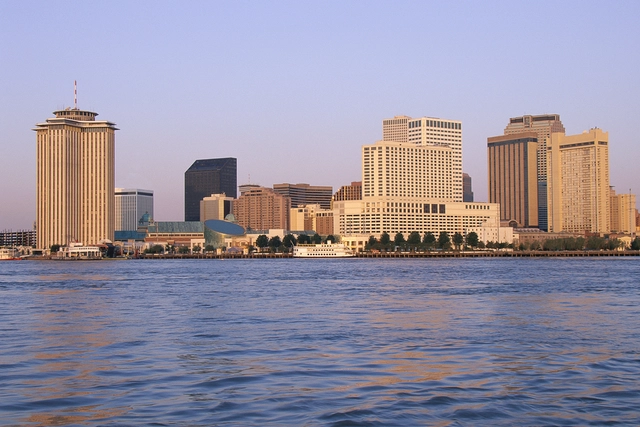
Today marks 10 years since Hurricane Katrina hit New Orleans, setting off what was among the most significant catastrophes to strike the United States in the 21st Century. New Orleans' flood defenses failed, causing the loss of over 1,400 lives and billions of dollars in property damage.

Naturally, such a disaster takes some time to recover from, for individuals but also for a city as a whole, and so for the past decade New Orleans has been a case study for cities to show them how to recover, rebuild and move on - at certain times serving as both an example of good practice and a warning of "what not to do." On the ten-year anniversary of Hurricane Katrina, here's a round-up of stories about the rebuilding of a city from around the web.

ASF Announces Winners of Inaugural International Awards

ASF Announces Winners of Inaugural International Awards - Featured Image
Espacios de Paz (Spaces for Peace) / PICO Estudio & Movimiento Por la Paz y la Vida. Image Courtesy of ASF International Awards

Architecture Sans Frontières has announced the winners of their inaugural ASF International Awards, which aim to recognize “efficient solutions developed by architects globally to the many social, environmental and economic challenges facing the built environment.”

From 68 submissions, three winners were selected: PICO Estudio & Movimiento Por la Paz y la Vida’s Espacios de Paz (Spaces for Peace) project in Venezuela; ASF France’s La Passerelle in Saint-Denis, France; and Building Trust International for their work in Asia and Africa.

Learn more about the winning projects after the break.

BIG-led Webinar to Discuss the Manhattan “Dry Line”

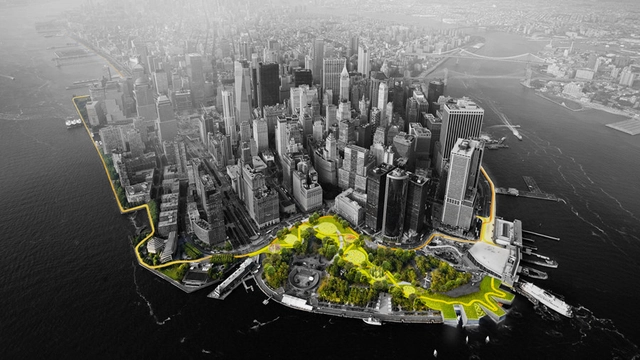
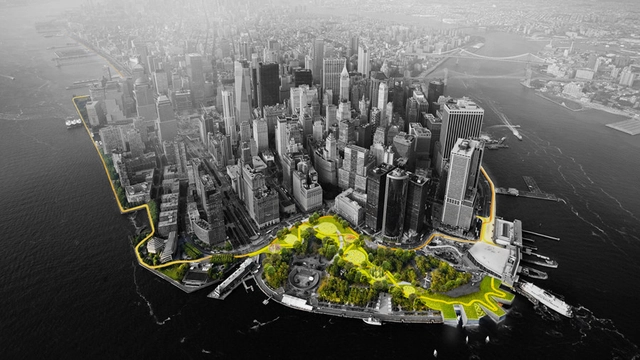
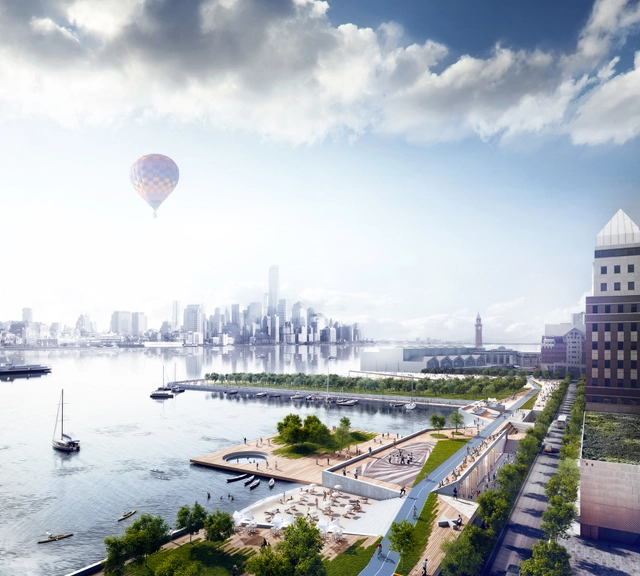
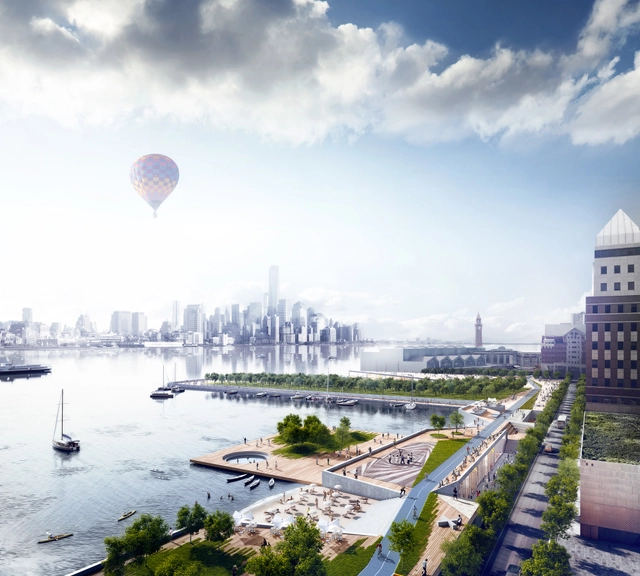
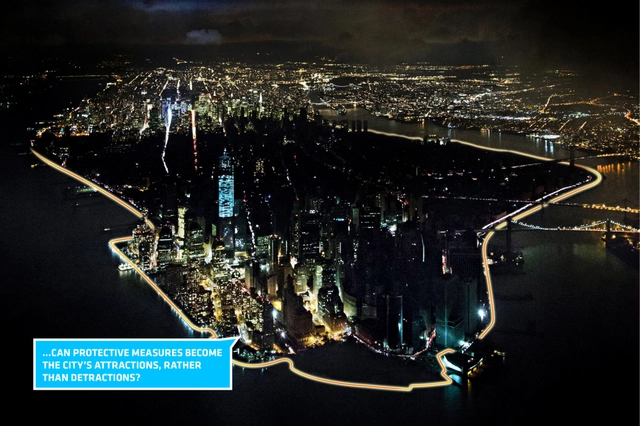
One of the six winners of the Rebuild by Design competition, Bjarke Ingels Group’s (BIG) “Dry Line” project aims to protect Manhattan from future storms like Hurricane Sandy by creating a protective barrier around lower Manhattan. The barrier will be formed by transforming underused waterfront areas into public parks and amenities. Now, you can learn more about the vision behind the project and how it was developed in a webinar led by Jeremy Alain Siegel, the director of the BIG Rebuild by Design team and head of the subsequent East Side Coastal Resiliency Project. The webinar will take place on Friday, June 12. Learn more and sign-up on Performance.Network.

Rockefeller Foundation Announces the Next 35 Cities to Join Its 100 Resilient Cities Challenge

The Rockefeller Foundation has announced the next group of cities that will be part of the 100 Resilient Cities Challenge, which aims to help prepare cities from around the world for the social, economic and physical challenges of the 21st century. After reviewing close to 350 applications from 90 countries across six continents, the Rockefeller Foundation selected 35 cities to join the 32 cities that were announced last year. The cities selected are addressing numerous challenges, ranging from flooding and extreme weather events to economic stress and strains on infrastructure and health systems, according to a press release.

“When you think about what makes a resilient city, you have to think in holistic terms. The reality is that resilience building is a multi-sector, multi-level kind of enterprise,” President of 100 Resilient Cities, Michael Berkowitz, told us earlier this year at the start of the inaugural Chief Resilience Officer summit in New Orleans.

Each city selected receives funding to hire a Chief Resilience Officer and assistance in developing and implementing a resilience strategy. Read on after the break to see which 35 cities were selected. 

100 Resilient Cities: How the Rockefeller Foundation is Addressing Resiliency on a Global Scale

Resiliency has become a keyword when it comes to city planning and development, so much so that former AIA president, Clark Manus, declared last year that “resilience is the new Green.” To address resiliency on a global level and help cities around the world become more resilient to social, economic and physical challenges, The Rockefeller Foundation kicked off its 100 Resilient Cities Challenge in 2013. Under the initiative,100 cities will be selected to be part of the challenge, where they will receive help and funding to hire a Chief Resilience Officer and assistance in developing and implementing a resilience strategy.

So far 33 cities have been selected and last week the first-ever Chief Resilience Officer summit was held in New Orleans. To learn more about the summit in New Orleans, the overall initiative, and how cities can become more resilient, we spoke with President of 100 Resilient Cities, Michael Berkowitz, who said: "When you think about what makes a resilient city, you have to think in holistic terms. The reality is that resilience building is a multi-sector, multi-level kind of enterprise."

Read the full interview with Berkowitz after the break

The Rockefeller Foundation Kicks Off its 100 Resilient Cities Challenge

The Rockefeller Foundation has kicked off its 2014 100 Resilient Cities Challenge, which aims to help “build resilience to the social, economic, and physical challenges that cities face in an increasingly urbanized world.” Each of the 100 cities selected will receive funding to hire a Chief Resilience Officer and assistance in developing and implementing a resilience strategy.

“We can't predict the next disruption or catastrophe. But we can control how we respond to these challenges. We can adapt to the shocks and stresses of our world and transform them into opportunities for growth,” the 100 Resilient Cities' site reads. While shocks include events like earthquakes, fires and floods, stresses include high unemployment, inefficient public transportation, endemic violence or chronic food and water shortages. The Challenge aims to help cities be better prepared for these adverse events and better able to deliver basic services in both good and bad times to all members of the population.  

 Learn more about the Challenge after the break…

OMA & BIG among 6 Winners in Rebuild By Design Competition

Yesterday, US Housing and Urban Development (HUD) Secretary Shaun Donovan announced OMA, BIG and four other teams as the winner of "Rebuild by Design", a competition aimed at rebuilding areas affected by Hurricane Sandy focusing on resilience, sustainability and and livability.

In total, HUD have allocated $920 million to the six projects in New York, New Jersey and Long Island to enable the completion of this vision.

Read more about the winning schemes after the break

OMA & BIG among 6 Winners in Rebuild By Design Competition - Urban Planning OMA & BIG among 6 Winners in Rebuild By Design Competition - Urban Planning OMA & BIG among 6 Winners in Rebuild By Design Competition - Urban Planning OMA & BIG among 6 Winners in Rebuild By Design Competition - Urban Planning OMA & BIG among 6 Winners in Rebuild By Design Competition - More Images+ 2

Rockefeller Foundation Selects 33 Cities for Resiliency Challenge

The Rockefeller Foundation has named the first group of cities selected in the “100 Resilient Cities Centennial Challenge.” Each city has been chosen for demonstrating “a commitment to building their own capacities to prepare for, withstand, and bounce back rapidly from shocks and stresses.” More than 1,000 registrations and nearly 400 formal applications from cities around the world were submitted. After careful review of each city's challenges, these 33 where chosen:

Rebuild Strategy for Hoboken / OMA

Rebuild Strategy for Hoboken / OMA - Master Plan
Resist, Delay, Store, Discharge: OMA's Comprehensive Strategy for Hoboken. Image Courtesy of OMA

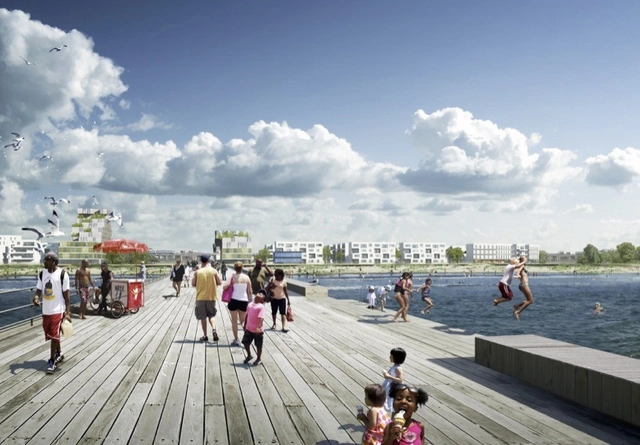
OMA’s comprehensive strategy to rebuild the New Jersey city of Hoboken, after the devastation of Hurricane Sandy, has been selected as one of ten initiatives moving forward in the Department of Housing and Urban Development’s (HUD) Rebuild by Design competition. The proposal, Resist, Delay, Store, Discharge, focuses on establishing resiliency through the integration of key infrastructural elements that not only protects coastal neighborhoods, but also the entire city of Hoboken.

10 Projects Advance to Rebuild by Design's Final Round

After three months of in-depth analysis and public outreach, the U.S. Department of Housing & Urban Development (HUD) has shortlisted 10 design “opportunities” for the third and final round of Rebuild by Design. The design competition, focused on making New York’s Sandy-effected regions more resilient, sustainable, and livable, will now have the final project teams collaborate with local and regional stakeholders in developing their projects over the next five months. The goal is to arrive at projects that are implementable and fundable, leveraging the variety of federal recovery investments being made in the region.

OMA, BIG and WXY are just a few practices involved in the final round. Read on to review a glimpse of each shortlisted proposal.

White Arkitekter Wins FAR ROC Design Competition

Stockholm-based White Arkitekter, along with partners ARUP and Gensler, has been announced as the winner of the two-phase “For a Resilient Rockaway” (FAR ROC) design competition in New York. Selected from a shortlist of four and an international pool of 117, White Arkitekter’s “untraditional” proposal aims to transform an 80-acre shoreline site in the Rockaways into a resilient and affordable community through a series of small interventions that can be tested, adjusted, or redesigned overtime during the development process.

What Happens When Smart Cities Malfunction?

An interesting essay by Anthony Townsend in Design Observer investigates a largely unconsidered aspect of smart cities: what happens if (or perhaps when) they malfunction? Townsend argues that as technology seeps into every aspect of our life within a complex system such as a smart city, glitches and bugs are likely to be magnified many times. He also explains that many of the communications systems that smart cities will rely on are insufficiently resilient, meaning entire cities could be vulnerable to failure or attack - an issue that will not sit well with the AIA. You can read the whole essay here.

"Designing Recovery" Winners: Resilient, Livable Homes for Vulnerable Cities

“Designing Recovery,” a competition focused on the planning and rebuilding of resilient and sustainable communities, has announced its three winning entries, by sustainable.to Architecture + Building, GOATstudio LLP, and Q4 Architects.

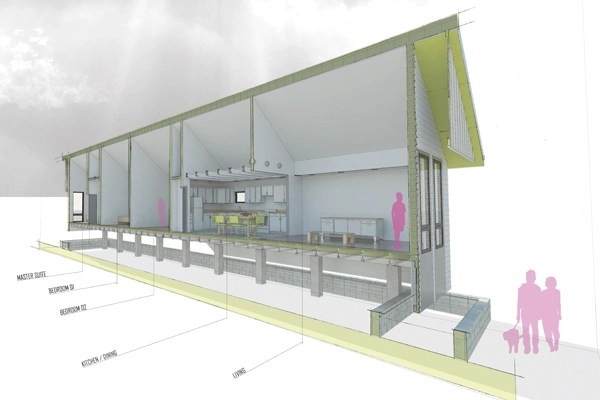
The competition, which was a collaboration between the American Institute of Architects (AIA), Make It Right, Architecture for Humanity, the St. Bernard Project, and Dow Building Solutions, was envisioned to aid communities affected by devastating natural disasters – in this case, New York City, New Orleans, and Joplin, MO.

Why This Is the Year of the Architect

Last week, we noted how the American Institute of Architect's (AIA) participation with the Clinton Global Initiative (CGI), as well as it's many other initiatives, signify the organization's commitment to putting resiliency on the agenda. The following article, written by Brooks Rainwater, the Director of Public Policy at the AIA, outlines these efforts and emphasizes how architects are tackling today's most pressing global challenges.

Architects are increasingly demonstrating their ability to help solve large-scale problems in the areas of resilience and health. At the same time the continued ascendancy of social impact design has helped elevate the conversation and prescribed a needed emphasis on equity considerations, uplifting global populations, and the idea that design should be for and impact all people. 

With more than 1,000 global leaders convened in New York last week for the Clinton Global Initiative Annual Meeting it is an ideal time to ask the question, how does design fit into the global conversation?

AIA Puts Resiliency on the Agenda: "Resilience Is the New Green"

The AIA has decidedly found its latest buzz word: Resiliency.

Just this week at the 2013 Clinton Global Initiative Annual Meeting, former-president Bill Clinton announced the American Institute of Architects' participation in the 100 Resilient Cities Commitment: an initiative of the Rockefeller Foundation to provide 100 cities with "chief resilience offers," responsible for developing and financing new, resilient urban infrastructures. So far, over 500 cities have requested to participate; on December 3rd, the Rockefeller Foundation will announce the winning cities.

Along with Architecture for Humanity, the AIA will then train those cities' resilience officers, "architects in their communities," by creating "five Regional Resilient Design Studios that build on our profession’s collective expertise in helping communities recover in the wake of major disasters."

But the "resilience" doesn't stop there.