1. ArchDaily
  2. Interviews

Interviews: The Latest Architecture and News

In Africa, A Modular Prototype School Combines the Practical and Utopian

Subscriber Access | 

The World Bank believes that urbanization will be “the single most important transformation that the African continent will undergo this century”, with over half of the population set to live in cities by 2040. This will manifest as 40,000 people moving to cities every day for the next 20 years. While much of the architectural discourse around Africa's future focuses on cities, rural areas are often ignored. This has however been the preoccupation of Italian architect Valentino Gareri, founder of Valentino Gareri Architectural Atelier and Senior Designer at Bjarke Ingels Group.

Pandemic Architecture Ideas Competition Open Call

On 17 November 2019, a COVID-19 case was first reported in Wuhan, Hubei, China. On March 11, 2020, the World Health Organization declared the outbreak a pandemic, as over 138,000 cases have been confirmed in more than 130 countries and territories and at least 3,300 people have died from the disease.

How Designing for Air Quality May Determine the Outcome of Your Meeting

Subscriber Access | 

Humans can survive for 30 days without eating, 3 days without drinking, yet only 3 minutes without breathing. Of course our need for air is also constant, we rely on it at all times indoors and outdoors although can often be less clean than we would hope. Unpleasant odors make us aware of bad air, but many irritants and unhealthy gases are not easily detectable by smell while still affecting our health. Smells are the most obvious signal, as they are consciously perceived by the brain and nervous system, allowing us to make judgements about our environment.

Learn more about where poor indoor air quality comes from, why it's important to address within the built environment, and how to design for good indoor air quality and comfort.

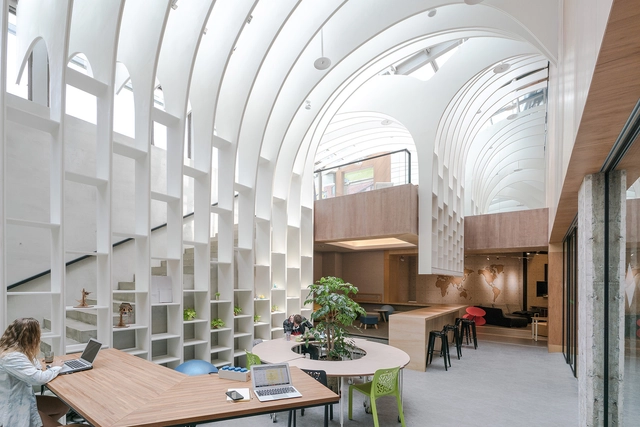
How Designing for Air Quality May Determine the Outcome of Your Meeting - Image 1 of 4How Designing for Air Quality May Determine the Outcome of Your Meeting - Image 2 of 4How Designing for Air Quality May Determine the Outcome of Your Meeting - Image 3 of 4How Designing for Air Quality May Determine the Outcome of Your Meeting - Image 4 of 4How Designing for Air Quality May Determine the Outcome of Your Meeting - More Images+ 12

Call for Entries: 2020 UK Passivhaus Awards

The 2020 UK Passivhaus Awards are free to enter for all certified Passivhaus & EnerPHit schemes that not only have architectural ambition but can also prove their impeccable eco credentials. We’re looking for ground-breaking schemes that will prove the Standard can tackle the climate crisis and create healthy environments.

The Top 25 Architecture Interviews of 2019

In a continued effort to deliver tools, inspiration, and knowledge for readers, 2019 saw ArchDaily editors and contributors engage in a wealth of conversations with distinguished individuals from all corners of the design world. Whether this be a discussion with Carlo Ratti and Winy Maas on artificial intelligence or a conversation with Mario Botta on Modernism, these interviews convey the remarkable variety of talent, ideas, and paradigms through which one can engage with architecture and design.

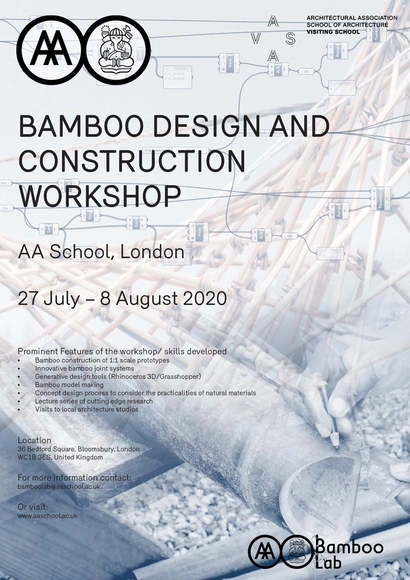
AA/ITB Advanced Bamboo Design and Construction Summer Workshop

This 12 day design and construction workshop at the AA School in London, teaches a design process which synthesises computational design tools and materials with natural variability such as bamboo, informed though first-hand experience of the material and 1:1 scale bamboo construction.

Sfera 2020: Biourbanism

SFERA 2020: BIOURBANISM is an international conference on building better cities using knowledge about the natural world around us.

Flores & Prats: "We Draw with the Responsibility to Build"

Subscriber Access | 

When we approached the Flores & Prats firm, we wanted to focus on their precise drawing just as much as their detailed mock-ups. We wanted to see a project that not only "values the time invested and accumulated in it but also sees said time as a virtue and not a defect;" an indication of paying attention to the process as well as the unexpected. (In this sense, it reminds me of reading about how to draw a forest, among other things, in "Las tardes de dibujo en el estudio Miralles & Pinós").

We conducted a long-distance interview with the Eva Prats and Ricardo Flores studio for this reason; to get a better idea of their thoughts on the impact of drawing on architectural representation.Their input makes clear the "why" of their decisions, and explains not only how they operate in a contemporary context but also indicates their relationship with construction among other disciplines.

Chad Oppenheim on Ayla Golf Club and and his Influencers

Subscriber Access | 

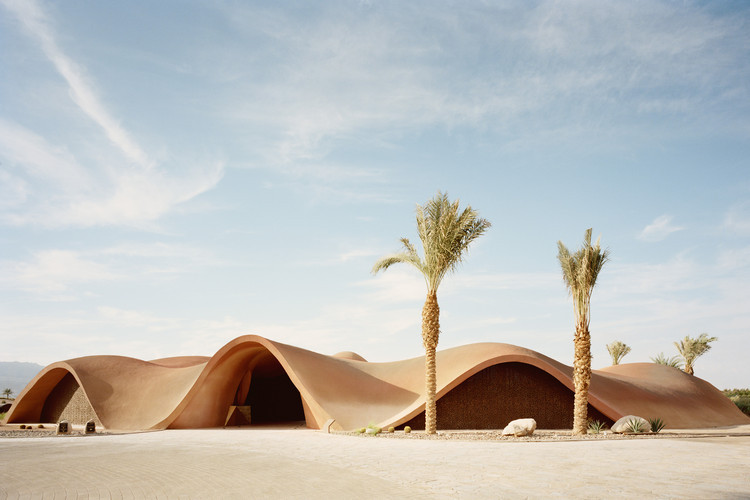
In this interview with Can Ziyal, Chad Oppenheim, founder of Oppenheim Architecture + Design, talks about architecture, their projects, his way of thinking on how to approach and solve problems, and his fascination with nature and its purity.

Chad Oppenheim on Ayla Golf Club and and his Influencers - Arch Daily InterviewsChad Oppenheim on Ayla Golf Club and and his Influencers - Arch Daily InterviewsChad Oppenheim on Ayla Golf Club and and his Influencers - Arch Daily InterviewsChad Oppenheim on Ayla Golf Club and and his Influencers - Arch Daily InterviewsChad Oppenheim on Ayla Golf Club and and his Influencers - More Images+ 28

Innovative, Car Free and Green: Images of the New IKEA Austria Store Revealed

IKEA Austria is establishing a car-free city center store, in the heart of Vienna. Addressing global issues, IKEA’s newest building will cater to the changes in customer and mobility behaviors.

Architecture Social Club: "We See Immersive Installations as Concentrated Architectural Experiences"

Subscriber Access | 

Architecture Social Club: "We See Immersive Installations as Concentrated Architectural Experiences" - Arch Daily InterviewsArchitecture Social Club: "We See Immersive Installations as Concentrated Architectural Experiences" - Arch Daily InterviewsArchitecture Social Club: "We See Immersive Installations as Concentrated Architectural Experiences" - Arch Daily InterviewsArchitecture Social Club: "We See Immersive Installations as Concentrated Architectural Experiences" - Arch Daily InterviewsArchitecture Social Club: We See Immersive Installations as Concentrated Architectural Experiences - More Images+ 6

As part of the activities that took place during the 16th MUTEK Mexico festival from November 16 to 24 in Mexico City, Adidas Originals presented 'Aether', an inverted installation by Max Cooper & Architecture Social Club. This installation represents an audiovisual mapping of abstract forms that works as an emotional instrument, and was presented in 'La Fábrica', a renovated 18,000-meter space serving as a reference for the electronic culture of the Eighties and Nineties.

Two Billion New Homes to be Created in the Next 80 Years

It is an inevitable truth that the world population is growing exponentially. Higher numbers can only lead to a higher demand for resources, food, and housing. By the year 2100, the 7.6 billion people currently living on earth will reach, according to the UN, a whopping 11.2 billion.

This increase can only mean that the need to accommodate these people will become an urgent priority, innovating and shifting from the household system that is present nowadays. Soon enough this will be a global pressing issue.

Iñaki Alday on the Climate Crisis: The Planet is "At the Limit of Collapse"

Iñaki Alday is the current dean of the School of Architecture of Tulane (New Orleans). Founder of Alday Jover arquitectura y paisaje, he also offers advice to the United Nations as an expert on the urban planning of rivers and deltas. In this context, he is a noted co-founder of the ‘Yamuna River Project’, a university research project for the recovery of the Yamuna River in New Delhi - one of the most polluted in the world.

Below, we talk with Iñaki Alday about innovations in cities related to the climate emergency, with questions that approach the urgency of research and how universities should prepare students to face the global challenge.

BIG Designs Toyota Woven City, the World’s First Urban Incubator

BIG unveiled its latest intervention, the Toyota Woven City, the company's first venture in Japan. Nestled at the foothills of Mt. Fuji, the project, in collaboration with Toyota Motor Corporation, is the world’s first urban incubator pushing forward the development and progress of mobility.

BIG Designs Toyota Woven City, the World’s First Urban Incubator - Image 1 of 4BIG Designs Toyota Woven City, the World’s First Urban Incubator - Image 2 of 4BIG Designs Toyota Woven City, the World’s First Urban Incubator - Image 3 of 4BIG Designs Toyota Woven City, the World’s First Urban Incubator - Image 4 of 4BIG Designs Toyota Woven City, the World’s First Urban Incubator - More Images+ 15

Cho Min-suk of Mass Studies on Ephemeral Architecture and Crisis in Korea

Seoul is considered one of the most densely-populated and over-priced cities in the world, reaching a staggering $ 80,000 per square meter. The extreme conditions of the city have forced local architects to operate, design, and build framing the city's urban issues, traditions, and history. This approach by architects has created the theoretical basis of “The Condition of Seoul Architecture”, a publication by multidisciplinary practice TCA Think Tank which sees the point of view of 18 innovative South Korean architects. In this interview, Pier Alessio Rizzardi, founder of the practice, interviewed Chi Min-suk of Mass Studies, explaining his point of view on ephemeral architecture and what influences the studio's work the most.

“To Work at Different Scales is the Architect's Wisdom”: Ricardo Bofill Interviewed for the Time Space Existence Video Series

Subscriber Access | 

In their recent interview for the Time Space Existence video series, Plane-Site, through the support from the European Cultural Centre, interviewed Spanish architect Ricardo Bofill. The series will be exhibited in the biennial exhibition in Venice, opening May 21-22, 2020.

Are Architects and Developers Finally Addressing the Same Global Concerns?

Subscriber Access | 

Architects and developers have always been on opposite ends of the construction world. While the first wanted to create dreamy spaces, the latter just wanted to cater to the basic needs. In these past few years, the world has witnessed significant changes, with the aggravation of climate-related issues, the evolution of technological solutions, and the newly acquired awareness and growth of the population.

While everything is transforming, building trends also evolved, mainly due to an alteration in people’s perceptions and priorities. However, one question remains unanswered: Could all these changes mean that the never-ending conflict between architects and developers reached some sort of common grounds? And could they finally be seeking one same goal, of a sustainable, resilient and inclusive future?

Are Architects and Developers Finally Addressing the Same Global Concerns? - Image 1 of 4Are Architects and Developers Finally Addressing the Same Global Concerns? - Image 2 of 4Are Architects and Developers Finally Addressing the Same Global Concerns? - Image 3 of 4Are Architects and Developers Finally Addressing the Same Global Concerns? - Image 4 of 4Are Architects and Developers Finally Addressing the Same Global Concerns? - More Images+ 19

Kliment Halsband Architects on Its New Ugandan Surgical Facility

This article was originally published on Common Edge.

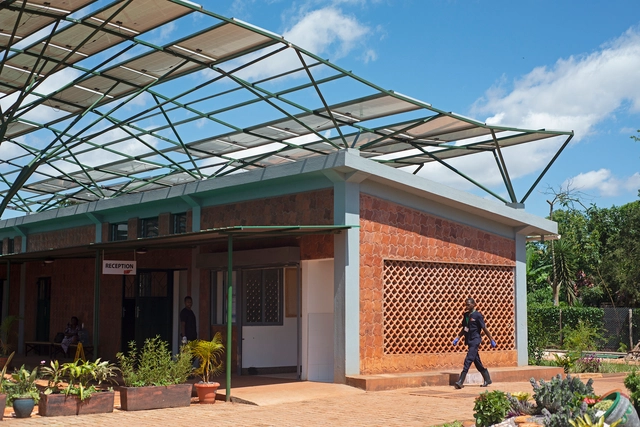
Ambulatory surgical procedures are routine in the U.S., but that’s not the case for most of the world. According to Dr. Michael Marin, head of surgery at Mount Sinai Hospital in New York City, 5 billion people have no access to safe and affordable surgery procedures, a reality that in 2010 led to nearly 17 million deaths across the globe. In search of a new model for surgical facilities that could serve local communities—a model that would be independent and self-sustaining, outside of the context of large urban hospital complexes—Dr. Marin reached out to Kliment Halsband Architects in New York, a firm that had no experience in healthcare design. Recently I talked to firm principal Frances Halsband about how the project came about, and what she and her team learned in the process.

 Kliment Halsband Architects on Its New Ugandan Surgical Facility  - Image 1 of 4 Kliment Halsband Architects on Its New Ugandan Surgical Facility  - Image 2 of 4 Kliment Halsband Architects on Its New Ugandan Surgical Facility  - Image 3 of 4 Kliment Halsband Architects on Its New Ugandan Surgical Facility  - Image 4 of 4 Kliment Halsband Architects on Its New Ugandan Surgical Facility  - More Images+ 6