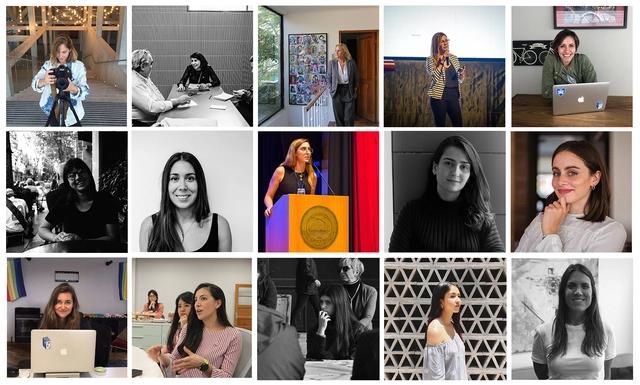
In the midst of International Women’s Day which was on March 8th, this year features a week-long curation of articles and editorials by ArchDaily, seeking to dissipate the gender disparity that exists in the world of architecture. In highlighting women's voices in architectural conversations - the following are 10 interviews from ArchDaily’s archived Youtube playlists that feature inspiring women figures in the world of architecture.
Many architects and designers have highlighted the importance of taking into account all five senses during the design process, in order to create a successful user experience. Fortunately, many strategies have been implemented to facilitate the experience of those who are physically impaired, however, little is being done to aid those who feel helpless and restricted due to mental illnesses and traumatic experiences.
Healing from these experiences is a journey that requires a lot of effort from both the individual and everything and everyone around him/her. Oftentimes, victims of trauma are advised to spend more time in the outdoors, embracing the restorative qualities of nature. But what about interiors? Since people are now spending almost 90% of their time indoors, it is only natural that these spaces contribute to the healing process as well. And while these spaces can look beautiful with an abundance of natural light and neutral color palettes, are they truly beneficial to their mental health?
Every March 8 at a global level, the struggle for equal rights and universal suffrage is commemorated as part of a date set by the UN in 1975. This commemoration brings together the efforts of women who demanded their right to vote, to work, to vocational training, to hold public office and to combat labor discrimination. This fight is the result of the work of women who sacrificed for the cause. Various events that we experience every day show that the social situation has changed. However, it is essential that both men and women, commit to progress and justice to make things happen.
https://www.archdaily.com/935252/women-of-archdaily-talk-about-the-future-of-architectureArchDaily Team
Another year and another International Women’s Day. Although recently, the gender debate has taken considerable attention, the battle for equality is far from over. Even in the 21st century, architecture can still be a challenging profession for women. Progress is happening though, and in 2020, Yvonne Farrell and Shelley McNamara became the 4th and 5th women to receive the Pritzker prize, ever since its inception in 1979.
Not limiting our coverage to the 8th of March, ArchDaily recognizes every day the female force that is shaping the built environment around the world. In fact, Women in Architecture is one of the main pillars of our content strategy. This year, for International Women’s Day, ArchDaily has decided to feature a week of curated content, with exclusive interviews and thought-provoking editorials. Join us as we highlight women that deserve a seat at the table, and share tools to achieve an inclusive world.
Chilean architect Miguel Eyquem, co-founder of the Institute of Architecture of the Pontifical Catholic University of Valparaíso and founding member of the Open City of Ritoque, passed away early this morning, according to social media updates from the Amereida Cultural Corporation - Open City.
Last March, we announced the winners of the 2020 Building of the Year award, which has celebrated the best of architecture built in Latin America and Spain since 2008. As is our tradition, we called upon our expert jury—our readers—to select their favorite buildings published throughout 2019.
In the coming weeks, we will announce the 2021 Building of the Year award. As a prelude to this new chapter, we have organized a series of virtual meetings with each of the 2020 Building of the Year winners to take an in-depth look at the three projects chosen by our readers. We will host the 2020 Building of the Year awards ceremony through a fully digital experience, made possible by the collaboration of our partners, Crest and Fundermax.
https://www.archdaily.com/1102292/take-a-closer-look-at-the-2020-building-of-the-year-winnersPola Mora
Despite all the hurdles and the pain, 2020 did not fail us in terms of content. Reacting to the global situation, ArchDaily's team of editors has tackled all the pressing issues that occurred this year and influenced the worldwide state of turmoil. While the whole planet was on pause, these writers were in search of critical substance, seeking to produce exclusive editorial pieces that highlight present-day topics and concerns. Generating articles in 4 languages, English, Spanish, Portuguese, and Chinese, this group of diverse individuals provided both local and global perspectives, reaching everyone that “talks architecture”.
Aspiring "to empower everyone who makes architecture happen to create a better quality of life", ArchDaily’s selection of best articles is the result of many aspects. Some of the choices explored distinctive subjects while others were very well-received among our readers. Emphasizing its academic standards, our platform focused its efforts on covering a vast range of ideas, from the consequences of the pandemic on the built environment, cities and their transformations, technical expertise and material specifications, to artificial intelligence and the future.
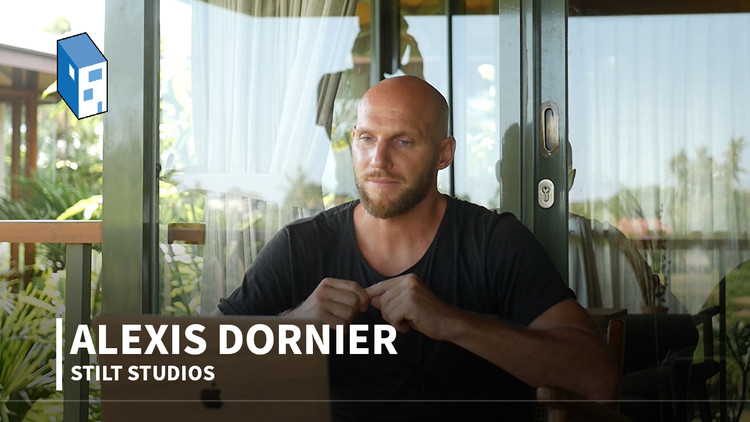
“It all started with the question: What if I’m going to build my own house?" It was this consideration that prompted Alexis Dornier to note that when he's providing architectural design service he's mostly catering, filtering and catalyzing input from other people that have budgets, preferences and tastes and it’s up to him to channel or organize that and let it "stream through" him. Using his craft to put it in order. "But what if you did not have that other hand [designer's help]? What would you do?”
Archdaily’s Hana Abdel, projects curator, sat down with Alexis Dornier to discuss his latest venture as co-founder of Stilt Studios, a company “focused on making Architectural design accessible to a greater audience of people. People who wouldn’t be able to afford an architect or don’t want to go through the trouble of working with an architect. So, what if we could create a product, or an architecture that almost works as a product.”
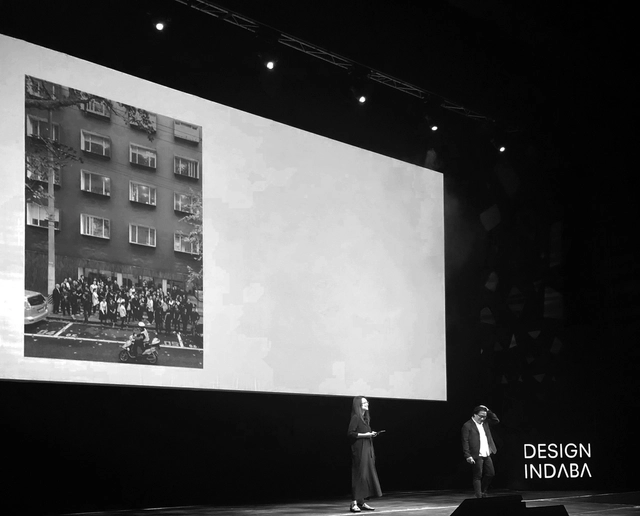
During the latest Design Indaba Festival, we have the chance to interview Lyndon Neri and Rossana Hu, from Neri&Hu Design and Research Office, a Shanghai-based inter-disciplinary architectural design practice, about their work and way of thinking about architecture.
The Brundtland Report, 1987 - "Our Common Future" - introduced the notion that the sustainable use of natural resources must "meet the needs of the present generation without affecting the ability of future generations to meet theirs." Since then, the term sustainability has been popularized and, often, trivialized in our daily lives. In the construction industry, this is no different. As much as we know that to build, we need to destroy, how is it possible to mitigate the effects of construction during the useful life and demolition of buildings? A sustainable building, in its design, construction, and operation, must reduce or eliminate negative effects overall and may even generate net positive impacts on the climate and environment – preserving resources and improving the quality of life of the occupants simultaneously. To say that a building is sustainable is easy and even seductive. But what exactly makes sustainable construction?
Answering this question is not a simple exercise. That is why, in the last 30 years, several building sustainability certifications have been created. Through outsourced and impartial evaluations from different sources, they aim to verify the sustainable aspects of any construction. Each of them addresses particular building elements and is typically focused on certain regions of the world. While there are some certifications that verify whether the building meets certain efficiency criteria, others create different classifications, assigning a score based on these evaluations. Below, we list some of the primary sustainability certifications around the world – ranked alphabetically – and include their main architectural applications alongside a brief explanation:
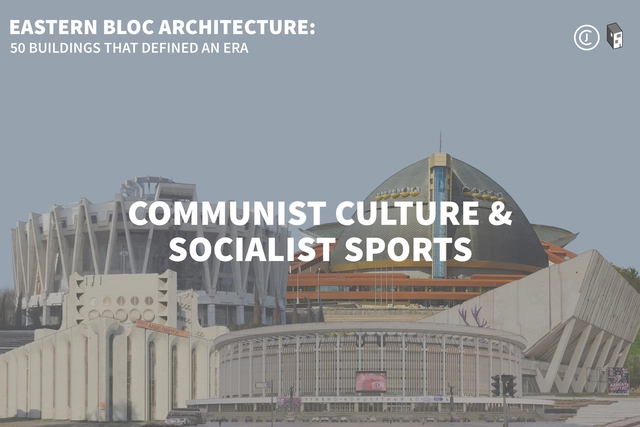
This article is part of "Eastern Bloc Architecture: 50 Buildings that Defined an Era", a collaborative series by The Calvert Journal and ArchDaily highlighting iconic architecture that had shaped the Eastern world. Every week both publications will be releasing a listing rounding up five Eastern Bloc projects of certain typology. Read on for your weekly dose: Communist Culture and Socialist Sports.
Eight years ago today, we began this adventure called ArchDaily México, sharing the same mission as the global ArchDaily platform: to continue providing inspiration, knowledge, and tools to architects, but through a local lens, recognizing the value that national talent has to offer to the world.
“I’ve known since I was a child that change would never happen on its own. My dream was to make a positive change as a woman architect and urban planner.” Architect, Activist, and Founder of Warch(ée) NGO, Anastasia Elrouss has been involved in architecture and advocating for women in the field, for nearly 15 years. Through her own practice, she is always seeking to create interventions that are constantly adapting to the users and the environment, “putting the human layer at the center of the architectural experience”. Through her platform, she is encouraging an ongoing conversation about gender equality and the role of women in the workplace and the world.
Archdaily’s Hana Abdel, project curator and Christele Harrouk, senior editor, had the chance to sit with Anastasia to discuss her journey, her creative process, her deeply-rooted involvement with women in the field and the inception of both her NGO and architectural practice.
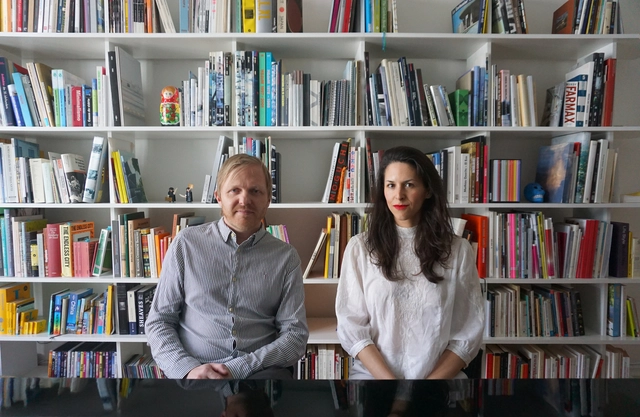
In this exclusive interview with ArchDaily, Ingrid Moye and Christoph Zeller, founders of the Mexico City- and Berlin-based firm Zeller & Moye, discuss the history of the practice, as well as how their personal and professional interests have evolved over the years regarding their way of living and making architecture.
At ArchDaily, engaging with architects through conversations that reveal their working methods, histories, and reflections—both personal and collective, within their teams and the broader professional community—has always been a core priority. This dialogue not only brings knowledge to the professionals building our world, but also provides future generations with tools and experiences as they enter the workforce, always maintaining a critical eye on architectural practice.
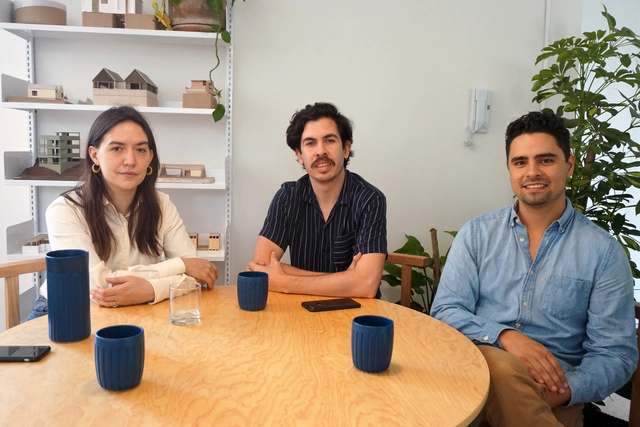
In this exclusive interview with ArchDaily, Ilse Cárdenas, Diego Escamilla, and Juan Luis Rivera—who, along with Regina de Hoyos, make up the firm PALMA—discuss the history of their practice and its evolution over the years, reflecting on how their personal and professional interests shape the way they inhabit and create architecture.
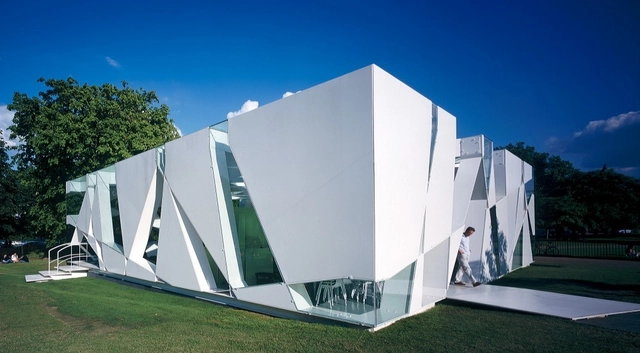
As one of the leading architects of Japan's increasingly highly-regarded architecture culture, 2013 Pritzker LaureateToyo Ito (born June 1, 1941) has defined his career by combining elements of minimalism with an embrace of technology, in a way that merges both traditional and contemporary elements of Japanese culture.

.jpg?1615322008&format=webp&width=640&height=580)