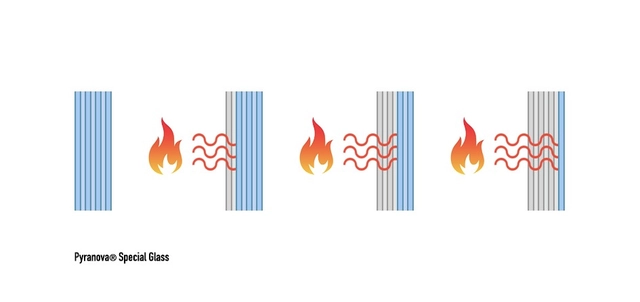
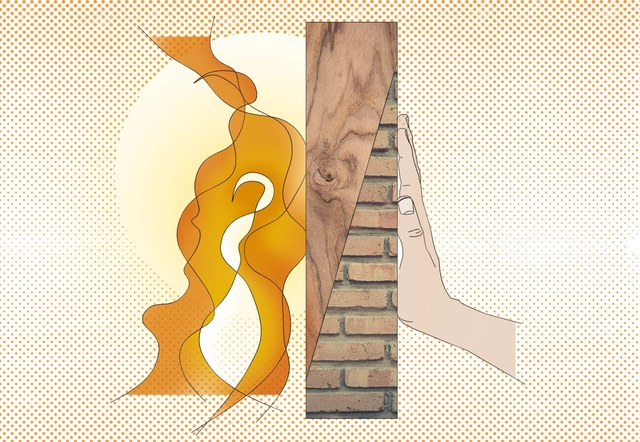
Insufficiently regulated in much of the world, the fire resistance of glass is an important issue that is often poorly resolved, endangering people's lives. What characteristics must a glass have to resist a fire? What options are there to choose from? We talked with the experts of Cristales Dialum to investigate these essential questions.
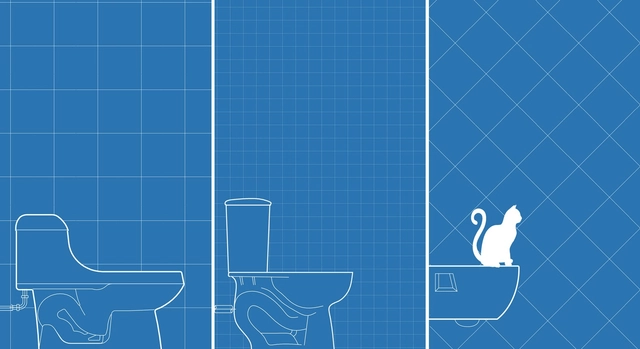
We may not give them the importance they deserve, but toilets are fundamental to our daily lives and our health. There are two "golden rules" that articulate their usefulness: they 'separate' us immediately from our waste, and they transport them for treatment, preventing them from contaminating the environment or making people sick.
In addition to being a good place to think about new ideas, browse Instagram, and answer emails, the toilet helps us stay healthy, an attribute we take for granted until we lose access to it.
On the occasion of the 8th VELUX Daylight Symposium held on October 9 and 10 of 2019 in Paris, we talked with David Briggs, CEO at The Velux Group, to learn about the present and future of the company. We wanted to know how they address innovation and new technologies – especially through the biennial event – to improve quality of life for people who incorporate Velux's products and services into their homes and other spaces in more than 46 countries around the world.
https://www.archdaily.com/930770/we-cant-innovate-alone-as-manufacturers-we-need-to-listen-to-researchers-david-briggs-ceo-at-the-velux-groupAD Editorial Team
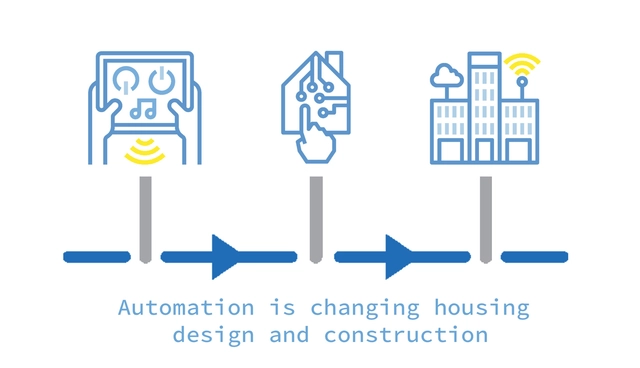
Throughout the past year, the concepts of Smart Homes (+160% YoY) and Domotics (+450% YoY) have been gaining traction as they define the automation and connectivity between devices found within homes, and which constitute the basic units of the growing Smart Cities concept.
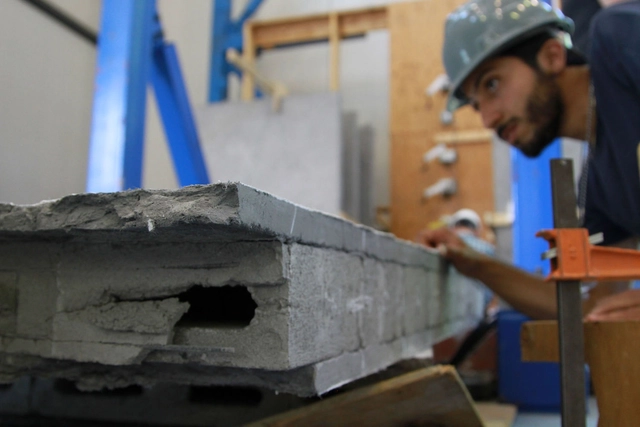
The history of concrete dates back to ancient Rome, approximately 2,000 years ago. The so-called “Roman Concrete” is composed of limestone, volcanic ash, and seawater and it permitted the construction of aqueducts, highways, and temples; many of them still stand to this day. Some time ago, this original mix was discovered to form a mineral called aluminum tobermorite, which gets stronger as time goes by.
In the context of the AIA Conference on Architecture 2019, Turkish architect Emre Arolat (EAA) gave ArchDaily some insights about technologies in architecture, how will the future role of the architect evolve, and the importance of the materials in his projects.
https://www.archdaily.com/920301/you-dont-choose-the-material-the-material-appears-itself-with-the-idea-in-conversation-with-emre-arolatAD Editorial Team
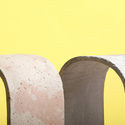
Terrazzo is made by combining a cement base (sand, water, and cement) with a mixture of ground minerals - like marble, granite, and quartz - and can be applied to almost any surface, vertical or horizontal. The technique, produced using a completely hand-crafted method, was used worldwide in the construction of modern buildings and is noted for its durability, resistance (to water and abrasion), and easy maintenance. This made it a go-to material in the creation of flooring for houses and the common areas of residential and office buildings.
Today, terrazzo is experiencing a revival as one of the key trends in contemporary architecture. Here, we will discuss the whats and hows of terrazzo and illustrate some of its uses in current projects.
It is expected that within the next few of decades, Earth will have absolutely nothing left to offer whoever/whatever is capable of surviving on it. Although the human race is solely responsible for the damages done to the planet, a thin silver lining can still be seen if radical changes were to be done to the way we live on Earth and how we sustain it.
Since architects and designers carry a responsibility of building a substantial future, we have put together an A-Z list of every sustainability term that you might come across. Every week, a new set of letters will be published, helping you stay well-rounded on everything related to sustainable architecture and design. Here are the terms that start with letters G, H, and I.
As architects, we are on an endless journey of discovery, open to new experiences that fuel our creativity. We explore our surroundings and beyond, we travel to expand our views and open our mind, being often exposed to the unexpected. All these experiences are stored in our mental hard drive until the inspiration moment comes, drawing random non-linear connections between them and putting us into a state of divergent thinking, from where new ideas appear.
According to a statement published on the UNESCO page, the UNESCO World Heritage List is a legacy of monuments and sites of great natural and cultural wealth that belongs to all of humanity. The Sites inscribed on the World Heritage List fulfill a function of milestones on the planet, of symbols of the awareness of States and peoples about the meaning of those places and emblems of their attachment to collective property, as well as of the transmission of that heritage to future generations.
In case of fire, protecting the lives of people is the most important. All occupants of the building should have the opportunity to evacuate on time, and the time available depends largely on the materials chosen and their behavior during fire exposure.
In order to facilitate and optimize this process, the European Union has adopted the Standard EN 13501[1], introduced in the 2000s, which specifies a series of classes that determines the anti-fire properties of different materials. Their classifications are unified and compared based on the same test methods, and are currently used as a reference in many countries around the world.
Because of the architect’s role in choosing materials for projects, we have compiled the most important nomenclature to better understand the level of security of our built environment.
It is expected that within the next couple of decades, Earth will have absolutely nothing left to offer whoever/whatever is capable of surviving on it. Although the human race is solely responsible for the damages done to the planet, a thin silver lining can still be seen if radical changes were to be done to the way we live on Earth and how we sustain it.
Since architects and designers carry a responsibility of building a substantial future, we have put together an A-Z list of every sustainability term that you might come across. Every week, a new set of letters will be published, helping you stay well-rounded on everything related to sustainable architecture and design. Here are the terms that start with letters A, B, and C.
Designers at this year's Milan Design Week drew inspiration from everything and anything around them. Many were inspired by the serenity of nature, some by picturesque vintage pieces, and others by tokens from their youth. Although inspiration often comes unannounced in the most unexpected places, the inspiration behind Sancal’s pavilion at this year’s Salone del Mobile, was encouraged by one simple, very common mistake.
During the 2017 Milan Design Week, the Spanish brand’s eccentric duo Esther and Elena made a wrong turn on Milan's metro station, ending up at the Turati station. That is when the light-bulb illuminated, and the duo found the backdrop for their upcoming collection, emerging from none other than the depths of Milan's underground systems.
Mariam Kamara is the founder and director of Atelier Masōmī in Niamey, Niger, an architecture firm whose interests lie in designing solutions relevant to spatial problems inherent in the developing world, in a cultural, historical and climatic way. She is a founding member of the united4design collaborative office in Seattle, where she worked on two major projects in West Africa. Her tenure as Associate Associate Professor of Urban Studies at Brown University began in the spring of 2017.
As users of ArchDaily demonstrate certain affinities and greater interest in particular subjects, these topics emerged as trends. Inclusive Architecture was one of the most searched concepts on ArchDaily in 2018.
https://www.archdaily.com/915588/trends-report-march-2019-inclusive-designAD Editorial Team
As users of ArchDaily demonstrate certain affinities and greater interest in particular subjects, these topics emerged as trends. Gender Equality is one of the trends that will influence urban and architectural discussion in 2019.
https://www.archdaily.com/915576/trends-report-february-2019-gender-equalityPola Mora
ArchDaily has become the most consulted architecture website in the world and the volume of our traffic reveals key data about the topics that architects consider relevant. In the past few months, user behavior has shown a growing interest in various concepts related to comfort in architecture.
There's a certain rare feeling that all architects share once they leave school: they don't know what they know. Design? Not really. Technical details? You'll need a specialist for that. Can you build this from scratch? I still need some practice. So, what do you really know?
In this article, we'll share six skills that you learned as an architect that you probably aren't even aware of.
https://www.archdaily.com/906218/what-should-architects-be-good-atArchDaily Team





_0466.jpg?1555015039&format=webp&width=640&height=580)
_0480.jpg?1555015259&format=webp&width=230&height=230&crop=true)
_0438.jpg?1555014874&format=webp&width=230&height=230&crop=true)
_0474.jpg?1555015163&format=webp&width=230&height=230&crop=true)
_0468.jpg?1555015070&format=webp&width=230&height=230&crop=true)
_0466.jpg?1555015039)
_13.49.37.jpg?1552593271&format=webp&width=640&height=580)