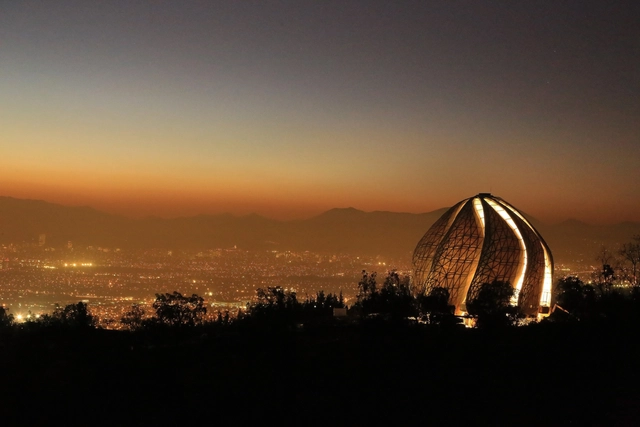
Located in the foothills of the Andes Mountains outside Santiago, Chile, the domed building was designed and built using computer modeling, measuring, and fabrication software, as well as custom glass, all of which culminated in nine monumental veils that frame an open worship space for up to 600 visitors. Completed in 2016, the project took 14 years to realize.
Now nearing completion just outside Santiago, Hariri Pontarini Architects' Bahá'í Temple of South America is currently one of the most significant religious construction projects in the world. In this article, originally published by Metropolis Magazine as "Sacred Structure," Guy Horton relates how - despite being in progress for almost a decade already - the design has changed remarkably little from the initial design sketch, using the latest technology to create a spiritual and emotional space.
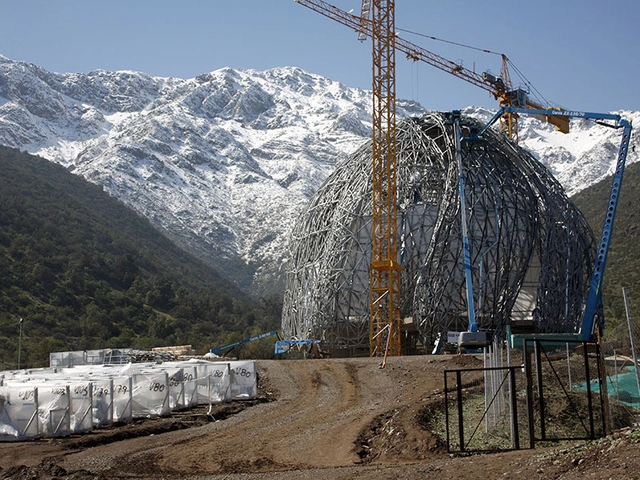
For the last few years, in the Andean foothills just outside Santiago, Chile, a mysterious orb-like structure has been slowly rising under construction cranes. The new Bahá’i Temple of South America will be the first of its kind on the continent when it opens in 2016. It has been a historic journey for the Bahá’i faith in this part of the world—Bahá’i first arrived in Chile in 1919—and a patient journey for the architects, engineers, and builders who have brought the temple to life through a decade-long process of innovation.




















.jpg?1461384876&format=webp&width=640&height=580)
.jpg?1461384769&format=webp&width=230&height=230&crop=true)
.jpg?1461384699&format=webp&width=230&height=230&crop=true)
.jpg?1461384911&format=webp&width=230&height=230&crop=true)
.jpg?1461384642&format=webp&width=230&height=230&crop=true)
.jpg?1461384876)